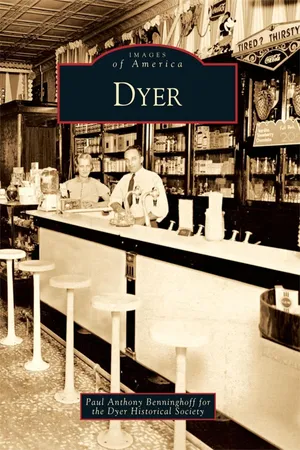
- 128 pages
- English
- ePUB (mobile friendly)
- Available on iOS & Android
eBook - ePub
About this book
What had once been an ancient shoreline of Lake Michigan, mired with swamp and sand dunes, is today the town of Dyer, Indiana.
Dyer's history consists of the old Sauk Trail turned-highway, strong-willed and hardworking visionaries such as Aaron Hart who drained the swamps and created farmlands, entrepreneurs who developed the early businesses and established Dyer as a town in 1910, and events such as the arrival of the locomotive and automobile that altered the lives of its citizens and shaped Dyer into the populated and bustling town it is today. From a sleepy farming community to a distant suburb of Chicago, the town of Dyer has a history both rich in its own right and very much tied to American history.
In Images of America: Dyer, one will see how a small American town unique to its geological location is impressed onto the land and how influences by events unfolding beyond its borders can help create, and sometimes jeopardize, its identity. Through the photographic collection of the Dyer Historical Society, Dyer's history unfolds in a beautiful latticework of visuals and text combined.
Trusted by 375,005 students
Access to over 1.5 million titles for a fair monthly price.
Study more efficiently using our study tools.
Information
One
DYER RESIDENTS AND FAMILIES
Many of Dyer’s first residents were German Catholic immigrants. They spoke Hoecherwelsch, a mix of low and high German. Those who spoke low German (Plotz Deutch) came from the northwestern part of Germany, near the Hanover area. Those who spoke high German (Hoech Deutch) were from the eastern part of Germany near Berlin.
These immigrants lived as farmers in the area. Some, however, chose professions such as carpenter, miller, saloonkeeper, shoemaker, doctor, and mason. Some of the families that resided in or around Dyer at this time were the Schallers, Overhages, Davises, Stommels, Beirigers, Keilmans, Gettlers, Hoffmans, Seidlers, Jaegers, Dubuerils, Kiesels, Mangolds, Kleins, Margrafs, Peschels, Scheidts, Nondorfs, Berenses, Millers, Hilbrichs, and Austgens. Today, one may find many of their descendants still living in Dyer.
The genealogy of these families is a complex, intertwining web. Many of the first families in Dyer are related by blood or by marriage. The following images are of the industrious people who plowed the fields, harvested the crops, built and ran the businesses, constructed the first churches and schools, incorporated Dyer as a town, and contributed to the town’s identity and rich history.
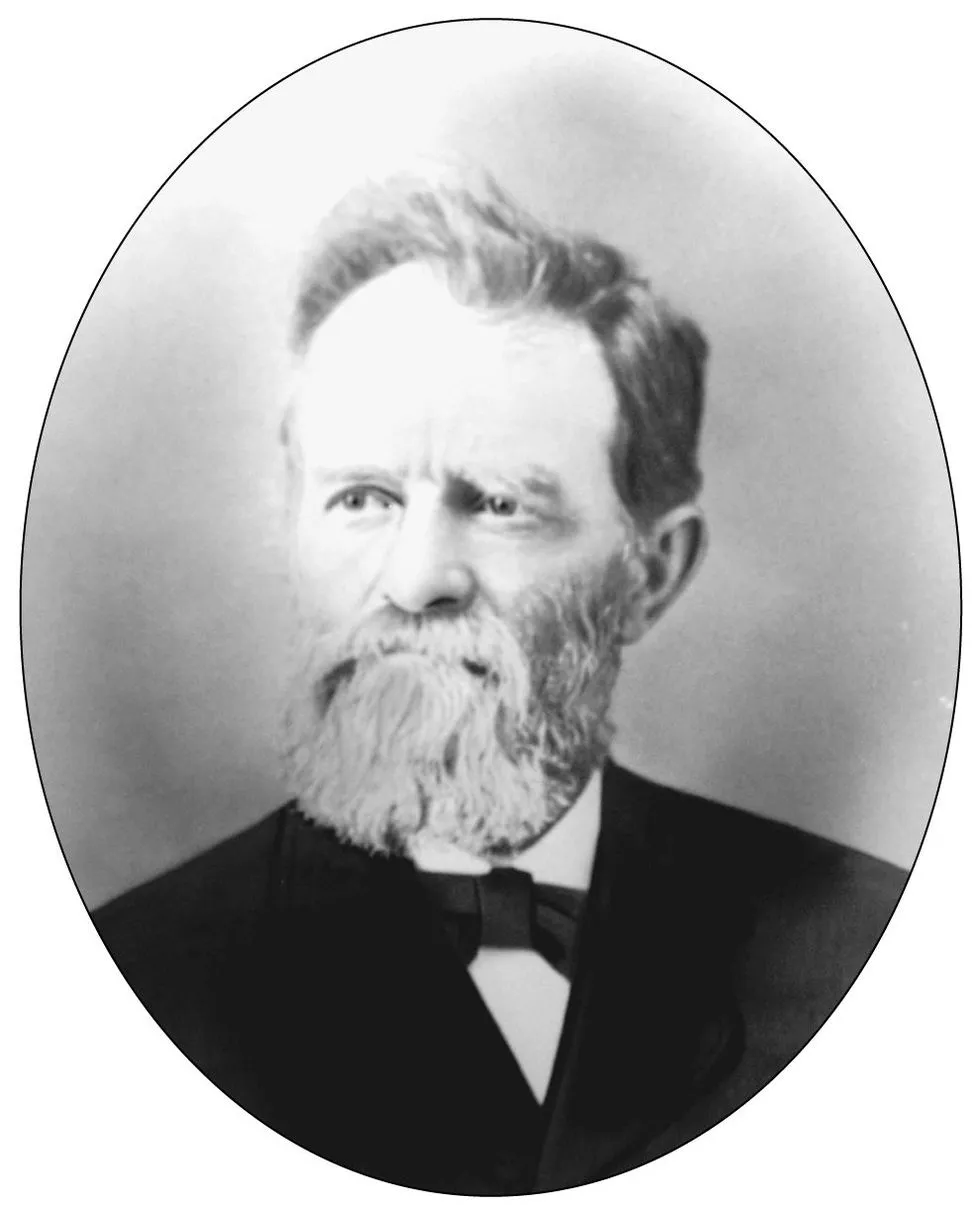
This photograph features Aaron Norton Hart. In 1857, he purchased 17,000 acres of swamp and marshlands, costing from 75¢ to $1.50 an acre, and drained it by digging a system of ditches and widening Plum Creek. This operation left the lands rich with fertile soil. This attracted many farmers to the area that became known as Dyer.
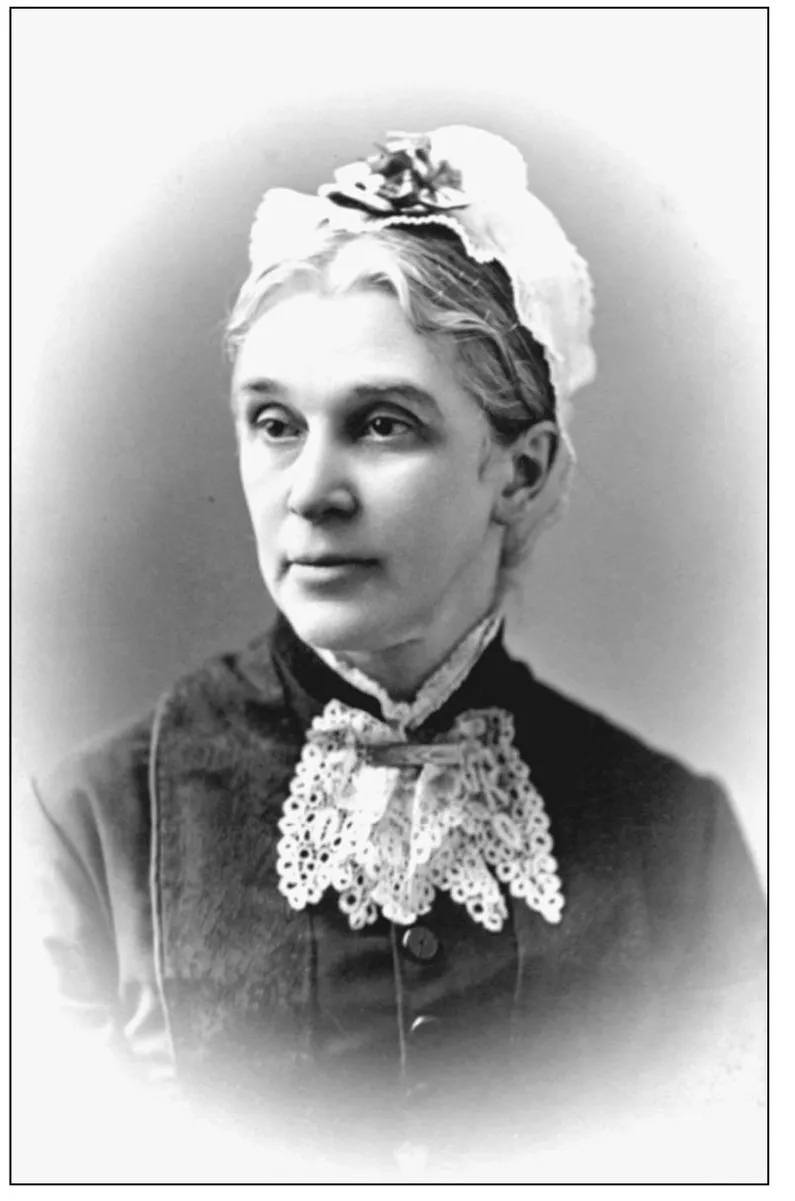
Martha Reed (Dyer) Hart was born in New Bedford, Massachusetts, on February 11, 1824. She and Aaron Hart were married on April 25, 1844. Aaron and Martha had four children, Flora Norton, James West, Milton Rhodes, and Malcolm. The family owned a home in town and on their farm in Hartsdale, located in the northeast section of Dyer.

Pictured is an ice harvest on Plum Creek. The creek played an important role in Dyer history. Not only was it a source of water for cooking, cleaning, and drinking, but a water source for putting out fires, ice harvesting, and a main system for draining the swamp and marshlands.

Plum Creek, also known as Hart’s Ditch, originates in Goodenow, Illinois, and empties into the Little Calumet River in Munster. It was Aaron Hart’s efforts at widening the creek and creating other ditch systems that drained the area of the wetlands, exposing good farming soil. This photograph was taken in 1883.

Here is another image of Plum Creek, also known as Hart’s Ditch. The Lincoln Highway crosses this section just east of the Dyer business district. The drainage system runs north, emptying into the Little Calumet River in Munster. From there the water flows west into the Calumet River and east to Lake Michigan.

This picture features men from the community building a barn in Dyer during the early 1900s. Farming was very good in Dyer because of its fertile soil that was left behind after Aaron Hart drained the land of the standing water. Until the construction of the grain elevator in Dyer, farmers had to take their harvest by wagon to Chicago for shipping.

Pictured here in the early 1900s are friends Sis Keilman, lower left, and Florence Dumbsky. Friendships grew large in a small community. In Dyer, a small farming town, everyone knew everybody. A stranger stopping by a tavern or restau...
Table of contents
- Title Page
- Copyright Page
- Dedication
- Table of Contents
- ACKNOWLEDGMENTS
- FOREWORD
- INTRODUCTION
- One - DYER RESIDENTS AND FAMILIES
- Two - BUSINESSES
- Three - CHURCHES
- Four - SCHOOLS
- Five - THE POLICE DEPARTMENT, VOLUNTEER FIRE DEPARTMENT, AND TOWN HALL
- Six - THE RAILROADS AND GRAIN ELEVATOR
- Seven - THE LINCOLN HIGHWAY AND THE IDEAL SECTION
- ABOUT THE DYER HISTORICAL SOCIETY
Frequently asked questions
Yes, you can cancel anytime from the Subscription tab in your account settings on the Perlego website. Your subscription will stay active until the end of your current billing period. Learn how to cancel your subscription
No, books cannot be downloaded as external files, such as PDFs, for use outside of Perlego. However, you can download books within the Perlego app for offline reading on mobile or tablet. Learn how to download books offline
Perlego offers two plans: Essential and Complete
- Essential is ideal for learners and professionals who enjoy exploring a wide range of subjects. Access the Essential Library with 800,000+ trusted titles and best-sellers across business, personal growth, and the humanities. Includes unlimited reading time and Standard Read Aloud voice.
- Complete: Perfect for advanced learners and researchers needing full, unrestricted access. Unlock 1.5M+ books across hundreds of subjects, including academic and specialized titles. The Complete Plan also includes advanced features like Premium Read Aloud and Research Assistant.
We are an online textbook subscription service, where you can get access to an entire online library for less than the price of a single book per month. With over 1.5 million books across 990+ topics, we’ve got you covered! Learn about our mission
Look out for the read-aloud symbol on your next book to see if you can listen to it. The read-aloud tool reads text aloud for you, highlighting the text as it is being read. You can pause it, speed it up and slow it down. Learn more about Read Aloud
Yes! You can use the Perlego app on both iOS and Android devices to read anytime, anywhere — even offline. Perfect for commutes or when you’re on the go.
Please note we cannot support devices running on iOS 13 and Android 7 or earlier. Learn more about using the app
Please note we cannot support devices running on iOS 13 and Android 7 or earlier. Learn more about using the app
Yes, you can access Dyer by Benninghoff, Paul Anthony,Dyer Historical Society in PDF and/or ePUB format, as well as other popular books in History & North American History. We have over 1.5 million books available in our catalogue for you to explore.