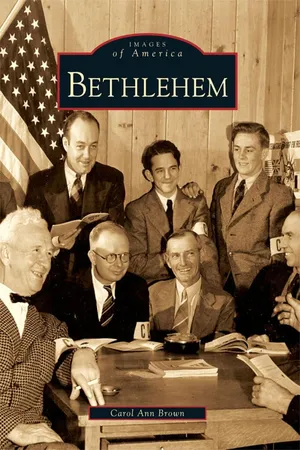
Settled in 1734, Bethlehem is a typical Litchfield hill town and retains much of its rural charm. Around its green are an old post tavern at the Woodward House, two historic churches, and the Bellamy-Ferriday House and Garden. Rev. Joseph Bellamy came to Bethlehem in 1738 and stayed to establish the first theological school in the country, educating Aaron Burr, James Morris, and later John C. Calhoun. In 1938, postmaster Earl Johnson designed a rubber stamp to adorn cards sent from the post office attached to his familys general store. This first cachet became an annual project and established Bethlehem as the Christmas town. In 1946, two Benedictine nuns came to stay with artist Lauren Ford while establishing the Abbey of Regina Laudis in a factory donated by local businessman Robert Leather. Every September for the last 85 years, the Bethlehem Fair has welcomed more than 60, 000 people to apple pies and horse draws at its scenic fairgrounds.
- 128 pages
- English
- ePUB (mobile friendly)
- Available on iOS & Android
eBook - ePub
Bethlehem
About this book
Trusted by 375,005 students
Access to over 1.5 million titles for a fair monthly price.
Study more efficiently using our study tools.
Information
Ten
PEOPLE
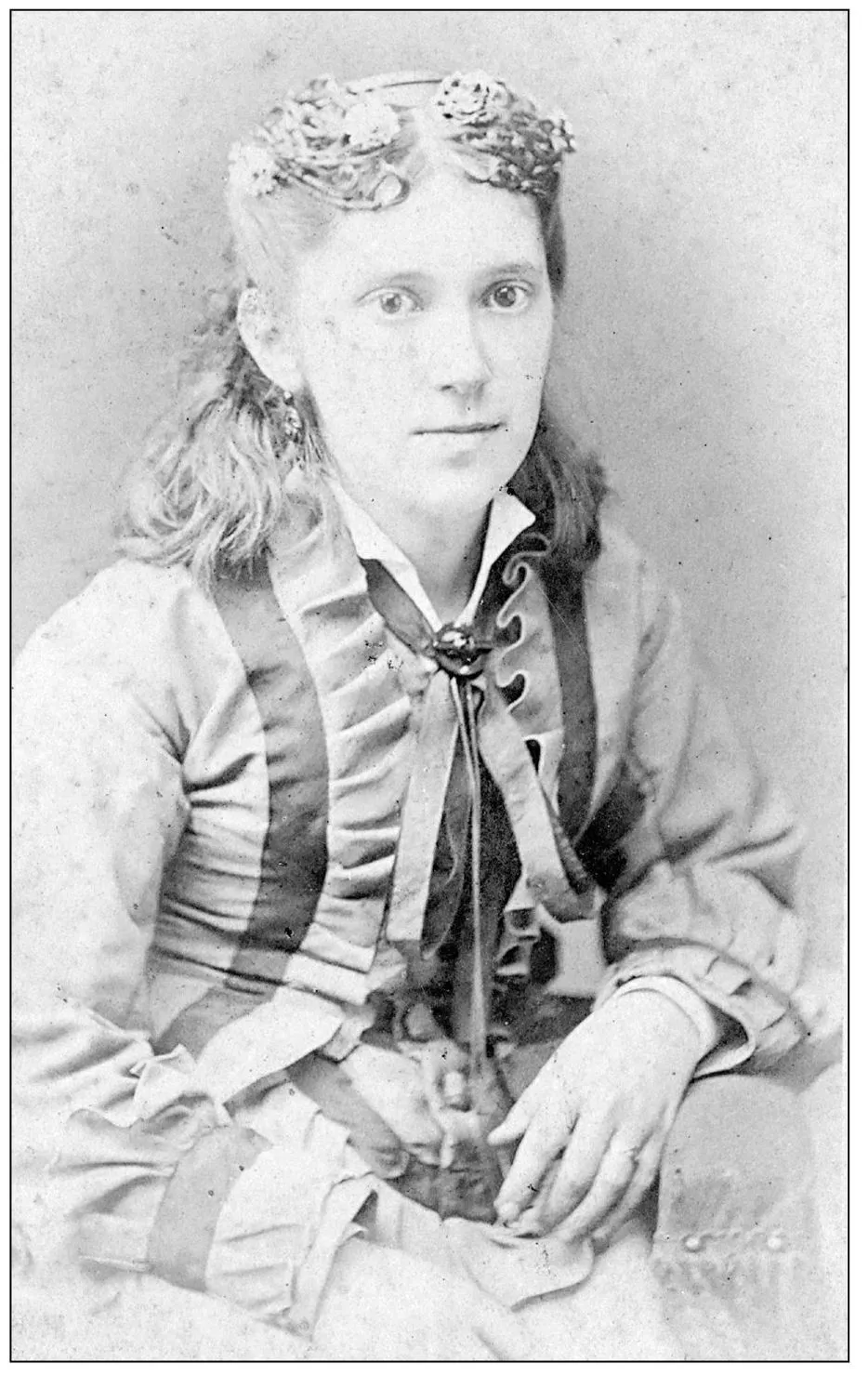
Mattie Doolittle is pictured here in 1875 at age 20, the daughter of David E. and Mary Jane (Taylor) Doolittle. The Doolittles lived in the area of Carmel Hill North and Wood Creek Road near Wood Creek Pond, later called Zeigler’s Pond. (OBHS.)

Simeon Gitteau’s tombstone in the old burial ground on Bellamy Lane notes that when he died in 1815, he bequeathed Christ Episcopal Church $333.34. Joshua Gitteau was one of the early settlers to come to Bethlehem. His grandson Charles Julius Gitteau became famous when he assassinated Pres. James A. Garfield in 1881 and was later hanged for his crime. (WRA.)

Judge Charles Wiltshire (1847–1935) and his wife, Sarah J. Wiltshire (1841–1924), stand in front of their home at 27 Judge Lane. Justice of the peace Arnold E. Smith built a new house on the foundation of the Wiltshire home. (OBHS.)
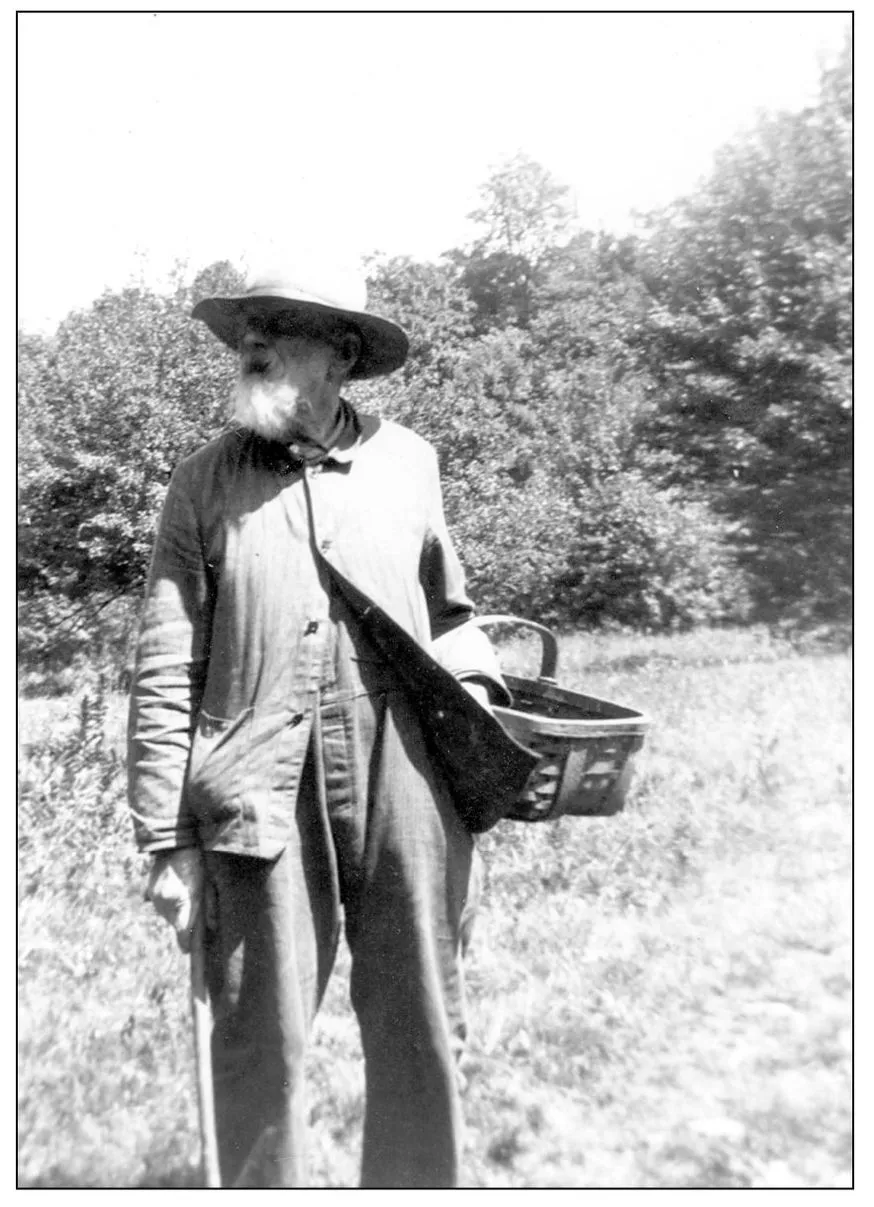
Henry Hubbard was born in Morris in 1840. After the Civil War, he settled in Bethlehem on a 70-acre farm on North Main Street near the Beardsley property, which is now Kasson Grove. Hubbard’s land ran down to Long Meadow Pond, and in his later years when he was blind, he rented out boats and allowed camping on his lake property. (OBHS.)

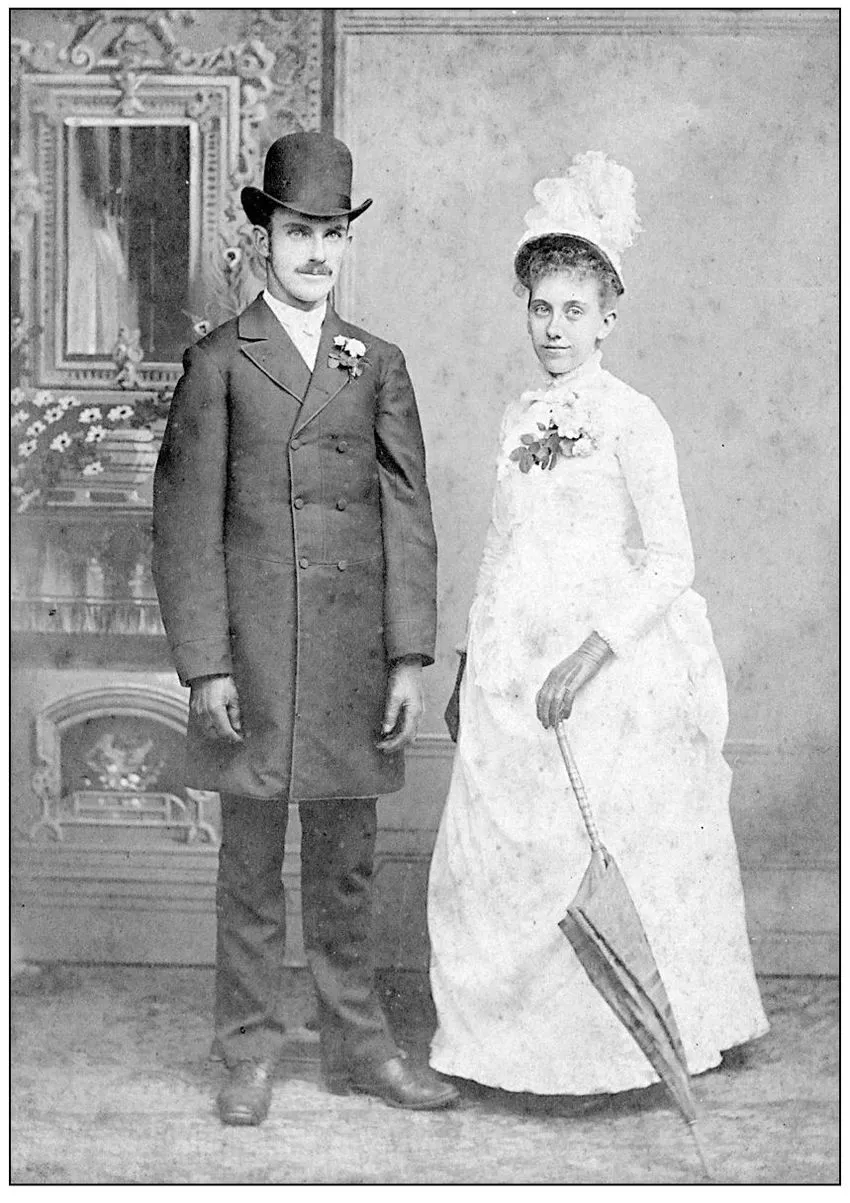
Charles and Nancy (Lambert) Bloss are pictured after they were married. They were Nathan Bloss’s parents, Walter Bloss and Arthur Bloss’s grandparents, and Betty Bloss’s great-grandparents. (Betty Bloss Barbour.)
Nathan and Dora Bloss are pictured on their wedding day. (Betty Bloss Barbour.)

Here is the Bloss home at 18 East Street, with Arthur Bloss and Dora Hill Bloss (1868–1951) in the front yard. She was an active Grange member for over 60 years and a founder of the Bethlehem Fair, which began as a Grange activity in memorial hall. (Betty Bloss Barbour.)
Betty Bloss was the daughter of Walter F. and Marjorie (Atwood) Bloss. She married her neighbor Ron Barbour and moved to Florida in 1946. (Betty Bloss Barbour.)
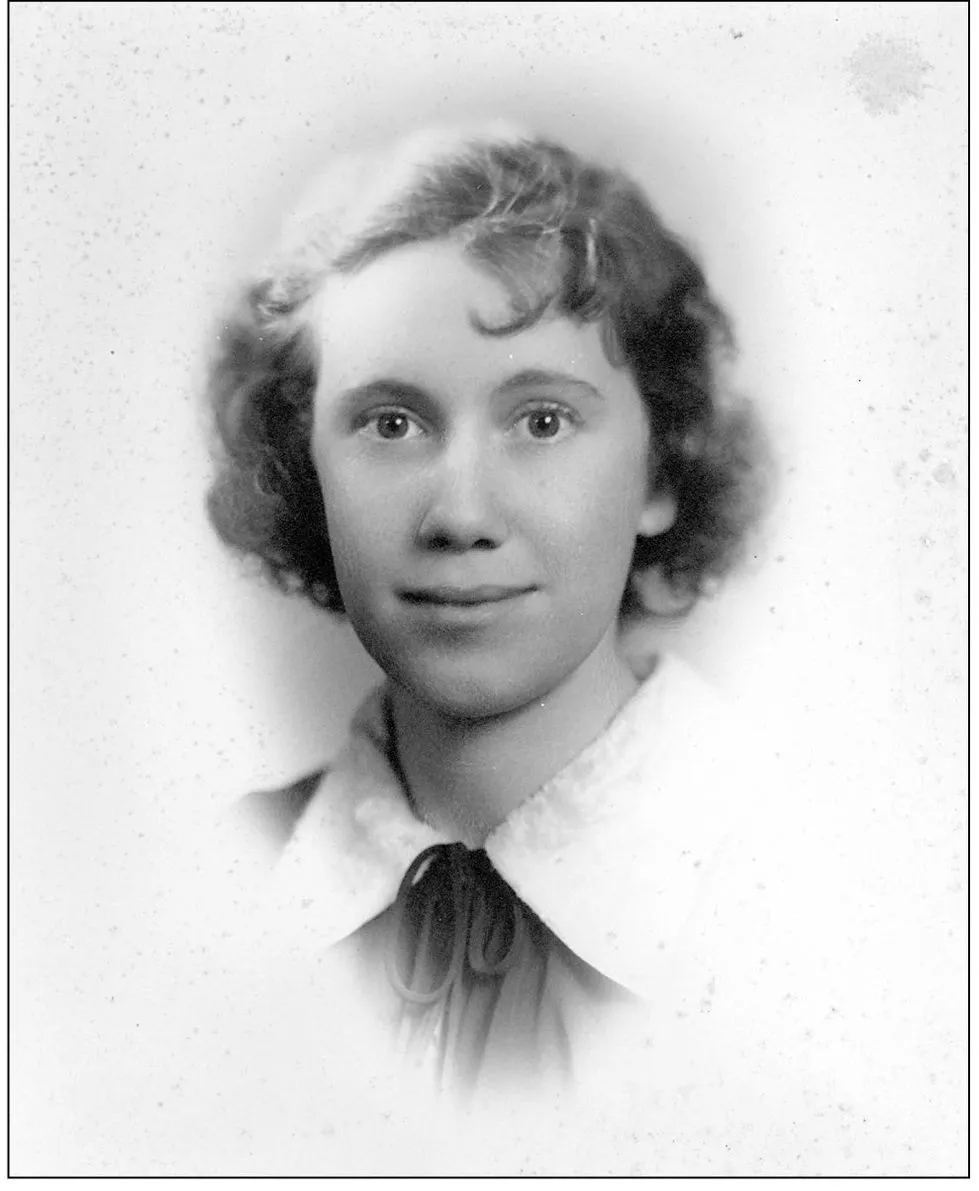

Fairview Farm was the name of the Thomson family’s home. It was located at the end of Thomson Road, which used to go through Guilds Hollow over Mill Pond Road, connecting with Arch Bridge Road (then called Addie Griswold Road), across Carmel Hill Road, through Arrowhead Farm, and into Washington, Connecticut. (OBHS.)
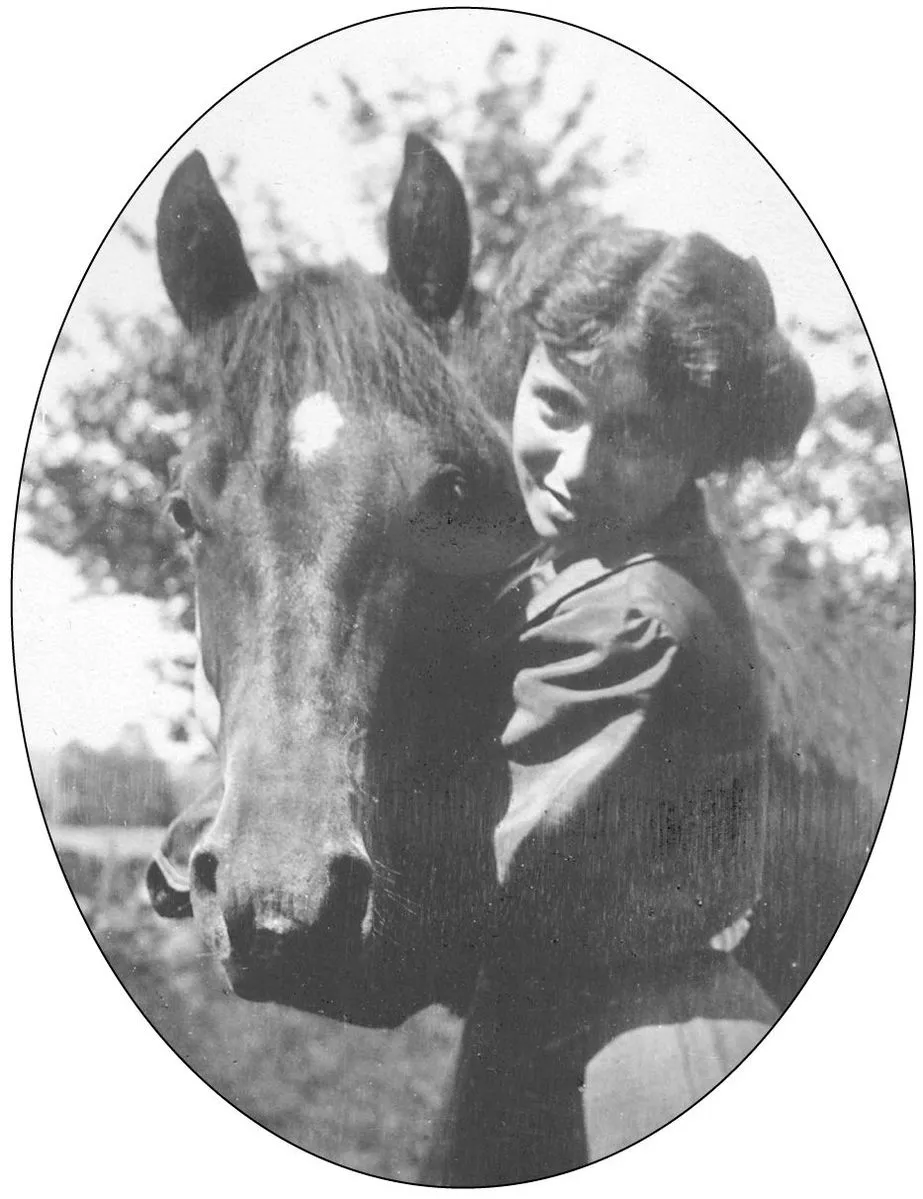
Christine Thomson Bloss, shown in this 1909 photograph, always remembered her girlhood in Bethlehem. Her generosity made the new library built in 1968 possible. She also instituted a college scholarship fund that still bears her name. (OBHS.)
Pi...
Table of contents
- Title Page
- Copyright Page
- Dedication
- Table of Contents
- ACKNOWLEDGMENTS
- INTRODUCTION
- One - EARLY HOMES
- Two - BUSINESS AND INDUSTRY
- Three - RELIGION
- Four - EDUCATION
- Five - AGRICULTURE
- Six - ROADS AND PUBLIC BUILDINGS
- Seven - ORGANIZATIONS
- Eight - IMMIGRANTS
- Nine - ARTISTS
- Ten - PEOPLE
Frequently asked questions
Yes, you can cancel anytime from the Subscription tab in your account settings on the Perlego website. Your subscription will stay active until the end of your current billing period. Learn how to cancel your subscription
No, books cannot be downloaded as external files, such as PDFs, for use outside of Perlego. However, you can download books within the Perlego app for offline reading on mobile or tablet. Learn how to download books offline
Perlego offers two plans: Essential and Complete
- Essential is ideal for learners and professionals who enjoy exploring a wide range of subjects. Access the Essential Library with 800,000+ trusted titles and best-sellers across business, personal growth, and the humanities. Includes unlimited reading time and Standard Read Aloud voice.
- Complete: Perfect for advanced learners and researchers needing full, unrestricted access. Unlock 1.5M+ books across hundreds of subjects, including academic and specialized titles. The Complete Plan also includes advanced features like Premium Read Aloud and Research Assistant.
We are an online textbook subscription service, where you can get access to an entire online library for less than the price of a single book per month. With over 1.5 million books across 990+ topics, we’ve got you covered! Learn about our mission
Look out for the read-aloud symbol on your next book to see if you can listen to it. The read-aloud tool reads text aloud for you, highlighting the text as it is being read. You can pause it, speed it up and slow it down. Learn more about Read Aloud
Yes! You can use the Perlego app on both iOS and Android devices to read anytime, anywhere — even offline. Perfect for commutes or when you’re on the go.
Please note we cannot support devices running on iOS 13 and Android 7 or earlier. Learn more about using the app
Please note we cannot support devices running on iOS 13 and Android 7 or earlier. Learn more about using the app
Yes, you can access Bethlehem by Carol Ann Brown in PDF and/or ePUB format, as well as other popular books in History & North American History. We have over 1.5 million books available in our catalogue for you to explore.