- 96 pages
- English
- ePUB (mobile friendly)
- Available on iOS & Android
eBook - ePub
Museum of the American Railroad
About this book
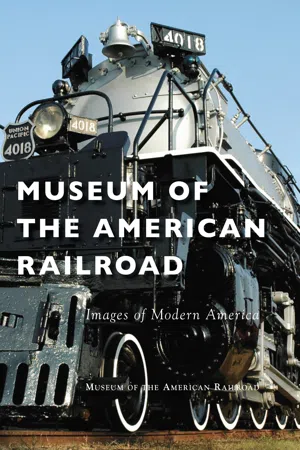
Establishing its collection as the Age of Steam exhibit at Dallas's Fair Park in 1963, the Museum of the American Railroad would go on to acquire over 45 locomotives and railcars. By 2006, the museum needed to move from its first home to a larger facility to allow more space to exhibit the collection of railcars, documents, and other artifacts. One of the keystone pieces is the GG-1 electric locomotive that pulled Robert Kennedy's funeral train in 1968. It has been restored to its original Pennsylvania Railroad appearance. The museum also houses the Centennial--the world's largest diesel-electric locomotive--as well as the rare and famous Santa Fe Alco PA-1 locomotive, acquired from the Smithsonian Institution.
Trusted by 375,005 students
Access to over 1.5 million titles for a fair monthly price.
Study more efficiently using our study tools.
Information
One
HEAVYWEIGHT PASSENGER
EQUIPMENT
EQUIPMENT
American rail passenger service began in the 1830s when early trips were short and occurred primarily during the day. As electric locomotive headlights came into use and the rail network grew, trains began traveling longer distances overnight. Soon, rudimentary accommodations for passengers to lie down and sleep appeared in passenger cars. These were not very comfortable at first, and many companies began designing improvements. George M. Pullman, the man whose name eventually became synonymous with luxury passenger travel, created his first two sleeping cars in 1859. His refinement of existing technologies coupled with the utilization of personal finances allowed him to aggressively pursue this endeavor. Pullman and his cars became the standard for the next 100 years.
Nine Pullman heavyweight cars built during the standard steel-car era (1910–1932) form the nucleus of the museum’s passenger car collection. Most were donated in the 1960s straight from revenue service or from an interim owner who made no changes to the cars, while others had whole second lives before becoming museum pieces. The museum also has one composite, or wood/steel car, Santa Fe parlor-club car No. 3231, and one original all-wooden passenger car, the Texland, which was later rebuilt with a steel underframe and side sheeting.
Eventually, passenger cars were constructed entirely of steel, brought about by the need for increased safety and fire concerns. One of the earliest examples, the museum’s Glengyle (1910) is the oldest surviving all-steel compartment car in existence. The 180,000-pound cars like this one were a mainstay on passenger trains over the next 30 years. Some survived into the 1960s, 30 years after the introduction of the streamlined stainless-steel passenger car. The remainder of the museum’s heavyweight passenger car collection is comprised of coaches, lounge cars, and a dining car.
Most locomotives from this period were steam powered; however, the 1940s saw the introduction of diesel-electric and electric locomotives into mainline passenger service. World War II prolonged the Age of Steam for a few years before newer technology became the standard. The museum owns multiple examples of these three forms of locomotive power used in passenger service during this transitional period.

In 1900, Pullman built Texland, the oldest car in the museum’s collection, as a wooden, truss-rod café and observation car for the Colorado & Southern. It was rebuilt as a business car in 1910, and then in 1925 it was reinforced with steel. The car contains two staterooms, a shower, kitchen, and dining room, crew quarters, and an observation room. It spent most of its time of service with the Fort Worth & Denver Railway.

Business cars like this one were the private jets of their day. Politicians, railroad executives, famous athletes, world-class musicians, wealthy individuals, and movie stars owned or could rent private cars. Sen. Harry S. Truman traveled in this particular car in 1942 through West Texas. Railroad executives C.D. Peckenpaugh, Gen. John A. Hulen, and R. Wright Armstrong also used this car in their travels. The Fort Worth & Denver Railway donated the car to the museum in 1966.
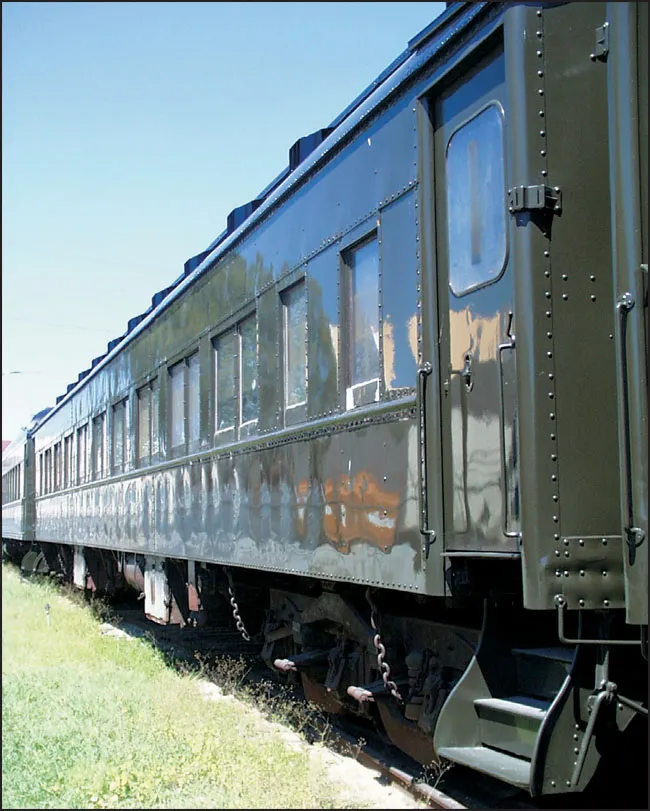
Glengyle is the oldest surviving all-steel, all-compartment Pullman sleeping car in existence. The car features two drawing rooms and seven compartments. The American Society of Mechanical Engineers designated it a National Historic Mechanical Engineering Landmark in 1987.
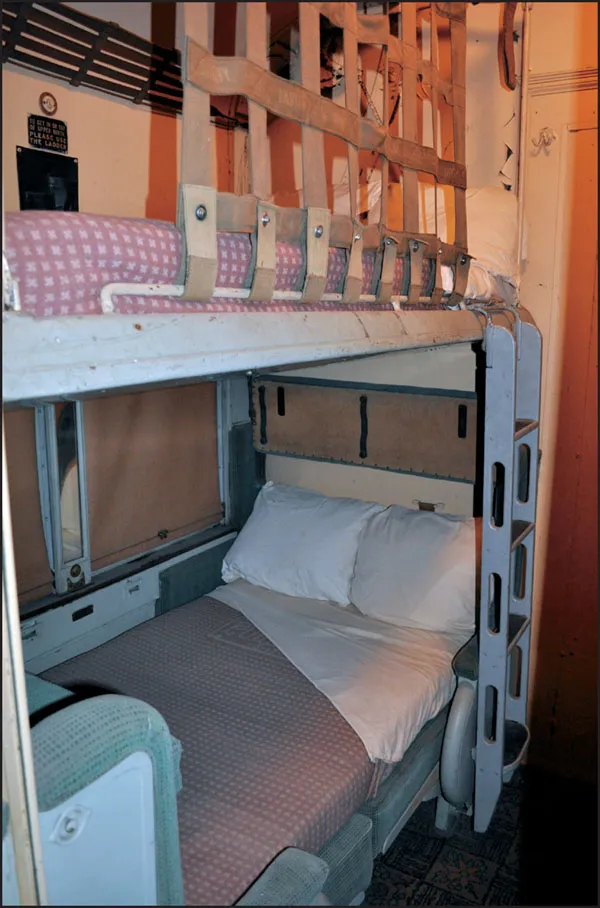
Glengyle ran on the Atlantic Coast Line between New York and Florida, a popular route for discriminating first-class travelers. In April 1945, it provided sleeping accommodations for dignitaries and members of the press on Franklin D. Roosevelt’s funeral train. It ended mainline service on the Southern Railway in the 1950s.
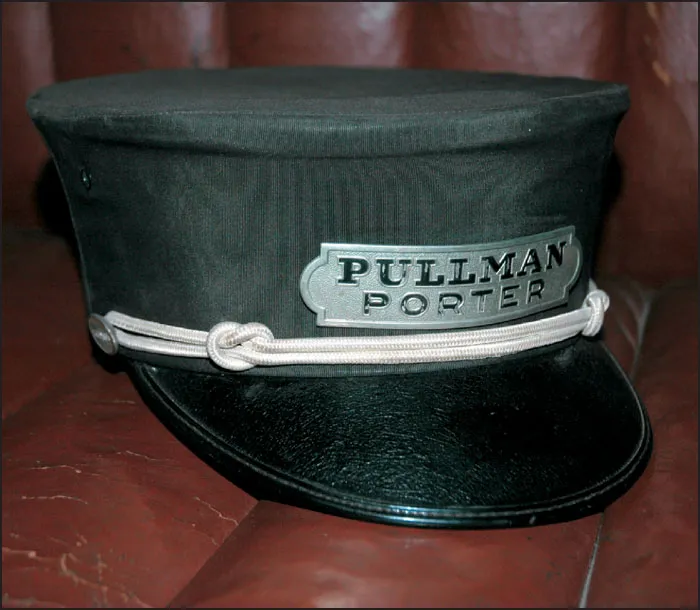
Pullman staffed their sleeping cars almost exclusively with African American males. Known as porters, they assisted riders with their luggage, boarding and detraining the car, making up the beds, serving meals in the rooms, and handling various needs around the train. (Courtesy of Newberry Library.)

The Pullman porters would eventually form into the first African American labor union, the Brotherhood of Sleeping Car Porters. This organization set the stage for a series of civil rights victories leading up to the passage of the 1964 Civil Rights Act. Their stories will be a focal point of future museum exhibits.

The St. Louis–San Francisco (Frisco) Railway car No. 759 is the museum’s oldest coach car. Built in 1912, the car spent a majority of its revenue runs on Frisco’s Firefly and Oklahoman. The car is divided, having a segregated sect...
Table of contents
- Cover Page
- Title Page
- Copyright Page
- Dedication
- Table of Contents
- Acknowledgments
- Introduction
- 1. Heavyweight Passenger Equipment
- 2. Lightweight Passenger Equipment
- 3. Early Freight
- 4. Contemporary Freight
- 5. Structures and Other Equipment
Frequently asked questions
Yes, you can cancel anytime from the Subscription tab in your account settings on the Perlego website. Your subscription will stay active until the end of your current billing period. Learn how to cancel your subscription
No, books cannot be downloaded as external files, such as PDFs, for use outside of Perlego. However, you can download books within the Perlego app for offline reading on mobile or tablet. Learn how to download books offline
Perlego offers two plans: Essential and Complete
- Essential is ideal for learners and professionals who enjoy exploring a wide range of subjects. Access the Essential Library with 800,000+ trusted titles and best-sellers across business, personal growth, and the humanities. Includes unlimited reading time and Standard Read Aloud voice.
- Complete: Perfect for advanced learners and researchers needing full, unrestricted access. Unlock 1.5M+ books across hundreds of subjects, including academic and specialized titles. The Complete Plan also includes advanced features like Premium Read Aloud and Research Assistant.
We are an online textbook subscription service, where you can get access to an entire online library for less than the price of a single book per month. With over 1.5 million books across 990+ topics, we’ve got you covered! Learn about our mission
Look out for the read-aloud symbol on your next book to see if you can listen to it. The read-aloud tool reads text aloud for you, highlighting the text as it is being read. You can pause it, speed it up and slow it down. Learn more about Read Aloud
Yes! You can use the Perlego app on both iOS and Android devices to read anytime, anywhere — even offline. Perfect for commutes or when you’re on the go.
Please note we cannot support devices running on iOS 13 and Android 7 or earlier. Learn more about using the app
Please note we cannot support devices running on iOS 13 and Android 7 or earlier. Learn more about using the app
Yes, you can access Museum of the American Railroad by Museum of the American Railroad in PDF and/or ePUB format, as well as other popular books in History & North American History. We have over 1.5 million books available in our catalogue for you to explore.