- 128 pages
- English
- ePUB (mobile friendly)
- Available on iOS & Android
eBook - ePub
Around Dewey-Humboldt
About this book
Nestled in the Arizona mountains are several small, unassuming towns that belie the importance of their heyday. These towns are all intrinsic to each other for one reason: mining. The nearby ranches were established to feed the miners, and in many cases, residents moved back and forth among them depending on which mines were prosperous or closed. Some no longer exist, evidenced now by rock walls or other harder-to-find clues. Some have turned into tourist attractions. The first legislative meetings of the Arizona Territory were held at the Woolsey Ranch in nearby Dewey, where the first building in Yavapai County was constructed. Indian wars occurred here, and many of the natural resources used to support the growing country came from iron and copper mines found deep within the bowels of the Dewey-Humboldt area. The towns of Cherry, Dewey, Humboldt, Mayer, Cordes Junction, Crown King, and Bumble Bee still exist. Others, like Agua Fria, Chaparral, Stoddard, McCabe, Poland, and Cleator, have mostly vanished, but their pioneering spirit and importance will never be forgotten.
Trusted by 375,005 students
Access to over 1.5 million titles for a fair monthly price.
Study more efficiently using our study tools.
Information
One
DEWEY
AGUA FRIA, CHERRY SIDING
If only one word could be used to describe Dewey, it would be “ranching.” For lack of a better description, Dewey initially grew because of the ever-growing needs of area miners. As, next door, Humboldt boomed from its mines and support services, Dewey quietly continued to expand the size and efficiency of its cattle and farming operations. From the time King Woolsey moved to the area, clearing it of hostile natives and starting an irrigation system from the Agua Fria River to farm the fertile soil, cattle and produce were its main commodities.
One by one, families began moving in with the intention of staying. Sharlot Hall, the famous writer and first woman elected to public office in Arizona, lived here at the Orchard ranch for many years beginning in 1882. The Human family homesteaded here in the late 1890s and married into the Henderson family, who would have a huge impact on the area for decades to come. Perry Henderson started the Dewey Rodeo in 1926 at the age of 19, building it into “The Biggest Little Rodeo in the World,” renowned in rodeo circles in its day. When a new homesteader would move into the area, it was often Perry who showed up first and offered assistance in plowing, seeding, fence building, or anything else that would help them be successful. It was neighbors like this and many others who developed the helpful and friendly character of the community.
Nowadays, while the area maintains a rural atmosphere, most residents go to jobs that let them earn the money for their basic needs. For a long time, however, the residents needed to be as self-sufficient as possible to survive the constant pendulum swings of the volatile mining industry on which their goods and services depended.
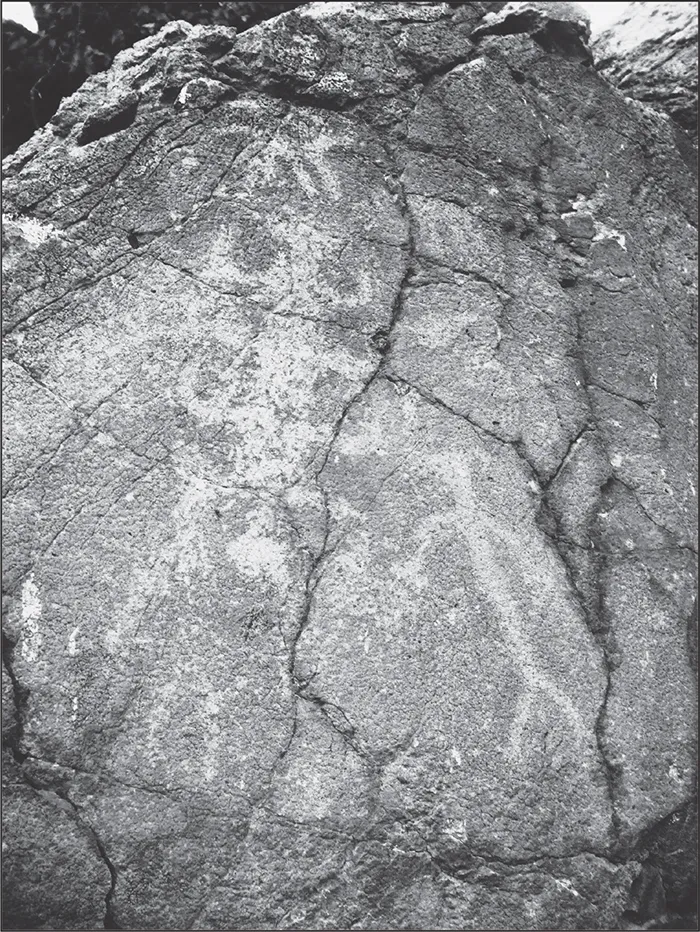
Petroglyphs can still be found in and around the area, but were most likely created before the Yavapai tribe arrived. The Yavapai did not write on walls in general. Hohokam and Anasazi tribes were prevalent from about 900 A.D. to 1300 A.D., when they mysteriously disappeared. Evidence shows a buildup of Hohokam people much farther south in the latter part of this period, suggesting that drought drove them out of the area, never to return. The other tribes in the area referred to the local natives as “The tribe with the white dogs,” but were never very abundant here. This photograph was taken on the steep banks of the Agua Fria River.

This mortar and pestle, found along the Agua Fria River, is now housed at the Dewey-Humboldt Historical Museum. The Hohokam were hunters and gatherers, and some evidence of farming has been found. The population, never very large, is estimated to have been about one person per 13 miles on average. Ruins on the Henderson Ranch were excavated in 1969 to make way for Highway 169, but very little evidence is left today. In 1875, the remaining native peoples were rounded up and marched on a “trail of tears” to the San Carlos Reservation.
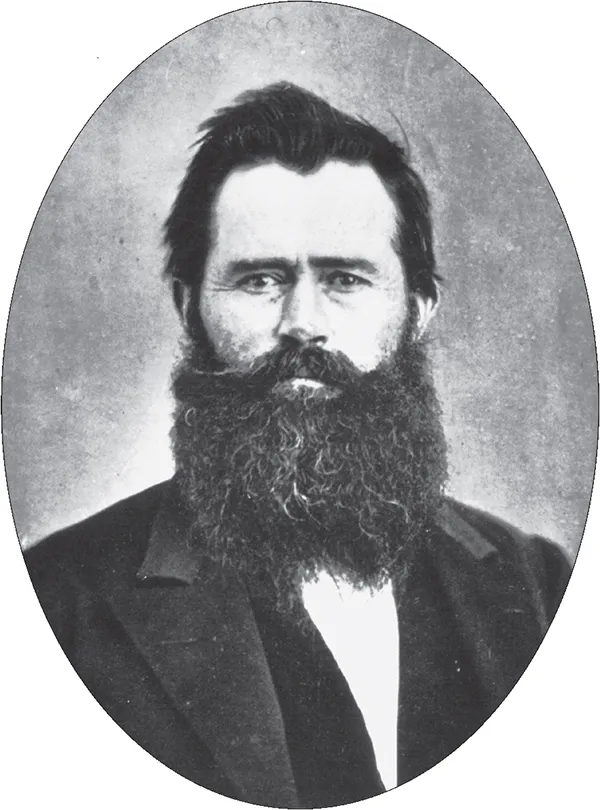
King Woolsey, the first white settler in the area, arrived in 1863. He was considered by many early residents to be the most influential person in the Arizona territory. He is certainly controversial today because of his pivotal role in eradicating the hostile Apache tribe, clearing the way for mining and ranching industries. Woolsey’s house was often referred to as a fort. While not technically true, the home certainly fulfilled all the requirements of a fort, including a well within its walls. Woolsey passed away on June 29, 1879, in Phoenix.

The Bower house, shown here, was halfway between Camp Verde and Prescott, earning it the nickname “halfway house.” The Bower brothers made improvements to the original Woolsey dwelling. They grew hay and produce for the expanding mining market. While making a contribution to the local economy, the Bowers never approached the influence Woolsey had on the area. It is fitting that only the Woolsey ruins remain today.

This is an aerial photograph of the Bower ranch, bought from King Woolsey in 1871 and run by the Bower brothers for many years. The fertile land produced many crops, and still does to this day. Corn, barley, and other agricultural products were grown here originally, enhanced by the irrigation system built by King Woolsey from the nearby Agua Fria River. The Bowers had been sutlers (civilian merchants who provided goods to the army) at Fort Whipple in Prescott prior to acquiring the property.
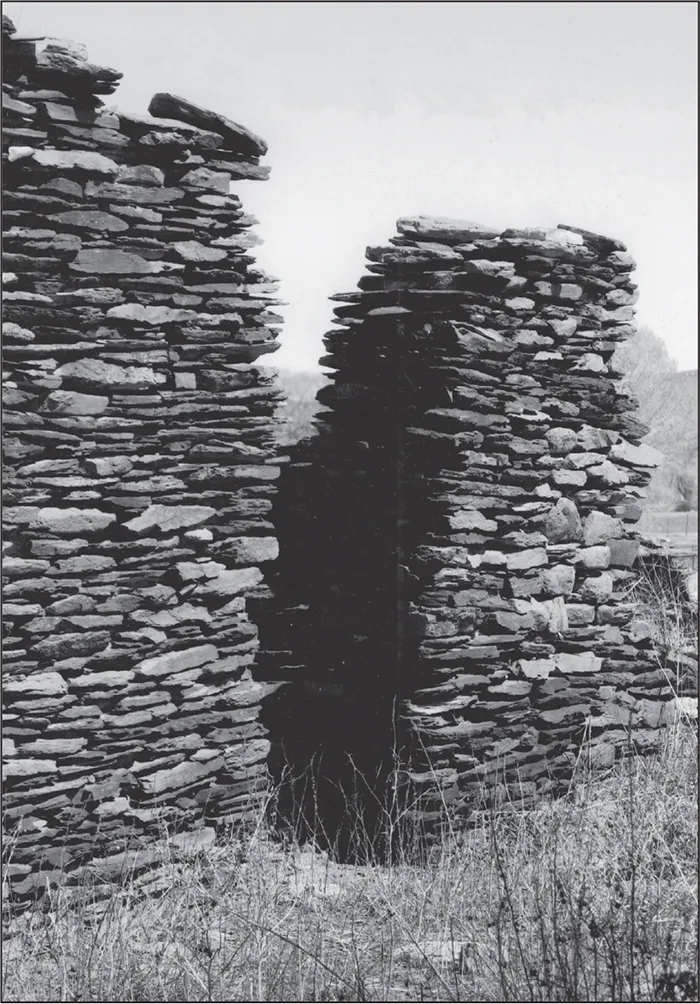
The Woolsey ruins are still visible along the Old Black Canyon Highway. Although the Woolsey house was expanded upon by the Bowers, only the ruins of the original house remain. It was built by hired hands with stones from long-abandoned native dwellings. For years, arrowheads and other remnants were found around the property, telling of its storied history.
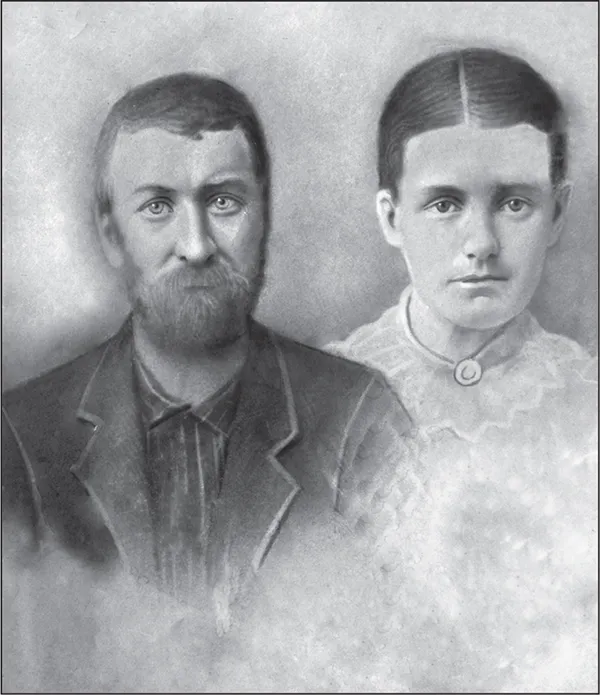
James an...
Table of contents
- Cover Page
- Title Page
- Copyright Page
- Dedication
- Table of Contents
- Acknowledgments
- Introduction
- 1. Dewey: Agua Fria, Cherry Siding
- 2. Humboldt: Val Verde
- 3. Surrounding Areas: Cherry, Poland, Mayer, Cleator, Crown King, and Bumble Bee
Frequently asked questions
Yes, you can cancel anytime from the Subscription tab in your account settings on the Perlego website. Your subscription will stay active until the end of your current billing period. Learn how to cancel your subscription
No, books cannot be downloaded as external files, such as PDFs, for use outside of Perlego. However, you can download books within the Perlego app for offline reading on mobile or tablet. Learn how to download books offline
Perlego offers two plans: Essential and Complete
- Essential is ideal for learners and professionals who enjoy exploring a wide range of subjects. Access the Essential Library with 800,000+ trusted titles and best-sellers across business, personal growth, and the humanities. Includes unlimited reading time and Standard Read Aloud voice.
- Complete: Perfect for advanced learners and researchers needing full, unrestricted access. Unlock 1.5M+ books across hundreds of subjects, including academic and specialized titles. The Complete Plan also includes advanced features like Premium Read Aloud and Research Assistant.
We are an online textbook subscription service, where you can get access to an entire online library for less than the price of a single book per month. With over 1.5 million books across 990+ topics, we’ve got you covered! Learn about our mission
Look out for the read-aloud symbol on your next book to see if you can listen to it. The read-aloud tool reads text aloud for you, highlighting the text as it is being read. You can pause it, speed it up and slow it down. Learn more about Read Aloud
Yes! You can use the Perlego app on both iOS and Android devices to read anytime, anywhere — even offline. Perfect for commutes or when you’re on the go.
Please note we cannot support devices running on iOS 13 and Android 7 or earlier. Learn more about using the app
Please note we cannot support devices running on iOS 13 and Android 7 or earlier. Learn more about using the app
Yes, you can access Around Dewey-Humboldt by J.P. Gorham in PDF and/or ePUB format, as well as other popular books in History & North American History. We have over 1.5 million books available in our catalogue for you to explore.