- 128 pages
- English
- ePUB (mobile friendly)
- Available on iOS & Android
eBook - ePub
Syracuse University
About this book
Syracuse University details the beginnings of this historic school, describing its rise to present day prestige.
Syracuse University was founded in 1870 as a private, coeducational university in Syracuse, New York. Classes began the following year in temporary quarters until the university moved to its current location on "The Hill" in 1873, occupying the Hall of Languages, which is still the iconic center of SU. Syracuse University provides a photographic journey from the late 1800s to the present, highlighting its growth from a small Methodist college to a university of national importance with more than 20,000 students and over 240,000 living alumni. Always committed to diversity, SU has embraced opportunity--be it with the Syracuse-in-China program in the 1920s, the enrollment of thousands of veterans after World War II, or cofounding the Say Yes to Education scholarship program for urban schools. Championship football, basketball, and lacrosse teams have also brought prestige to SU, and fans around the nation and world "bleed orange" along with those who work, teach, or study at the university.
Trusted by 375,005 students
Access to over 1.5 million titles for a fair monthly price.
Study more efficiently using our study tools.
Information
One
KNOWLEDGE CROWNS
THOSE WHO SEEK HER
THOSE WHO SEEK HER

In May 1871, the Syracuse University Board of Trustees Executive Committee agreed to rent space downtown in the Myers Block for Syracuse University classes and offices. On September 1, some 41 students attended the university’s opening, officiated by Dr. Daniel Steele, vice president of the College of Liberal Arts. Classes continued in the Myers Block until the Hall of Languages was finished in 1873.
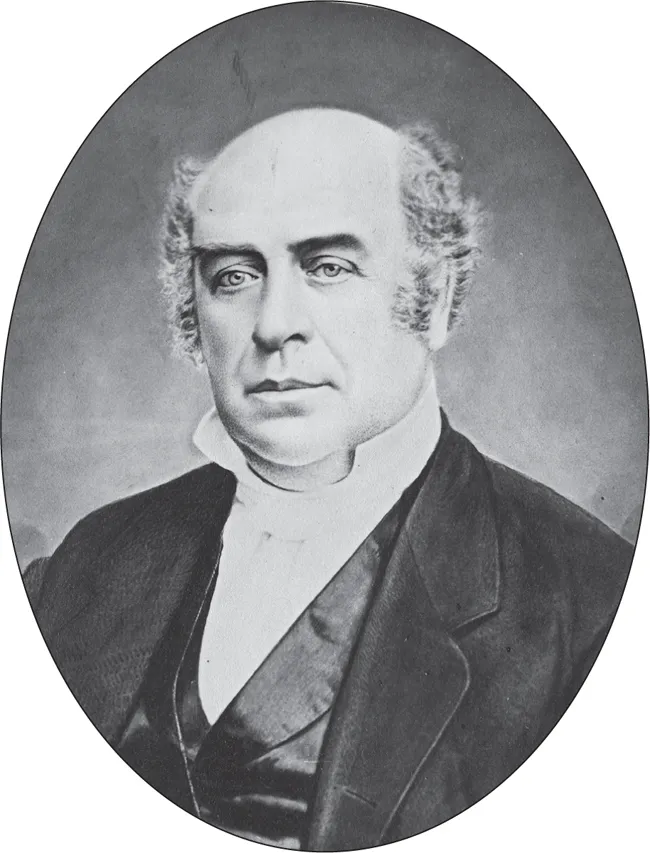
A Methodist Episcopal bishop, Jesse Truesdell Peck (1811–1883) was a founding father of Syracuse University. In 1870, Peck and three others each donated $25,000 to start the institution. He served as president of the board of trustees (1870–1873) and was a member until his death. Peck Hall was named for him, as is the Peck Professorship of Literature in the College of Arts and Sciences.
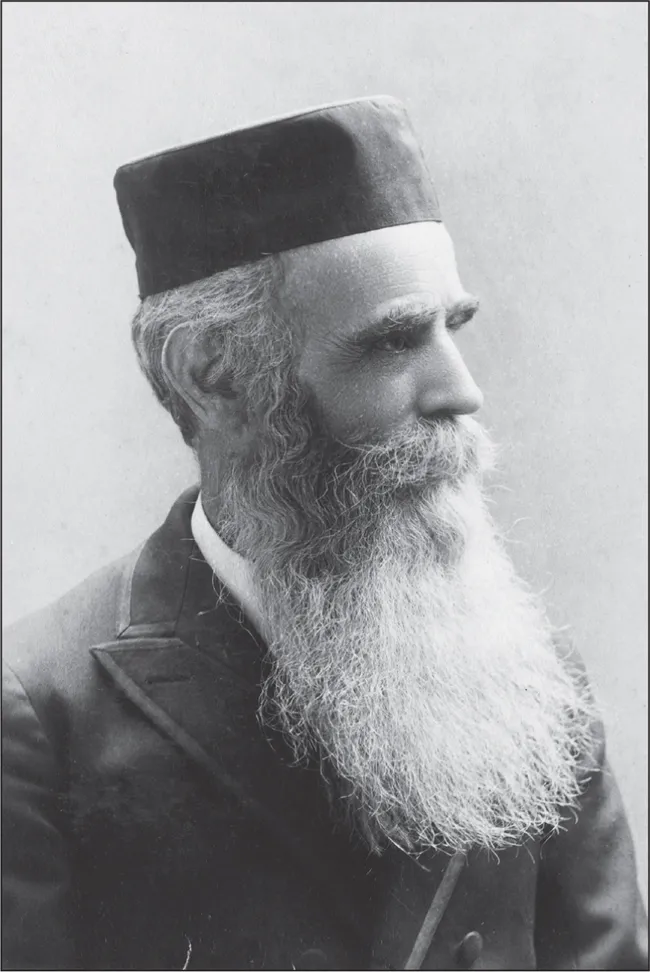
In 1873, Syracuse University founded the College of Fine Arts, the first four-year, degree-granting college of fine arts in the nation. George F. Comfort (1833–1910) was the founding dean. He also helped establish the Metropolitan Museum of Art. Offering degrees in architecture, art, and music, the college continued under that name until the mid-20th century, eventually becoming the College of Visual and Performing Arts.
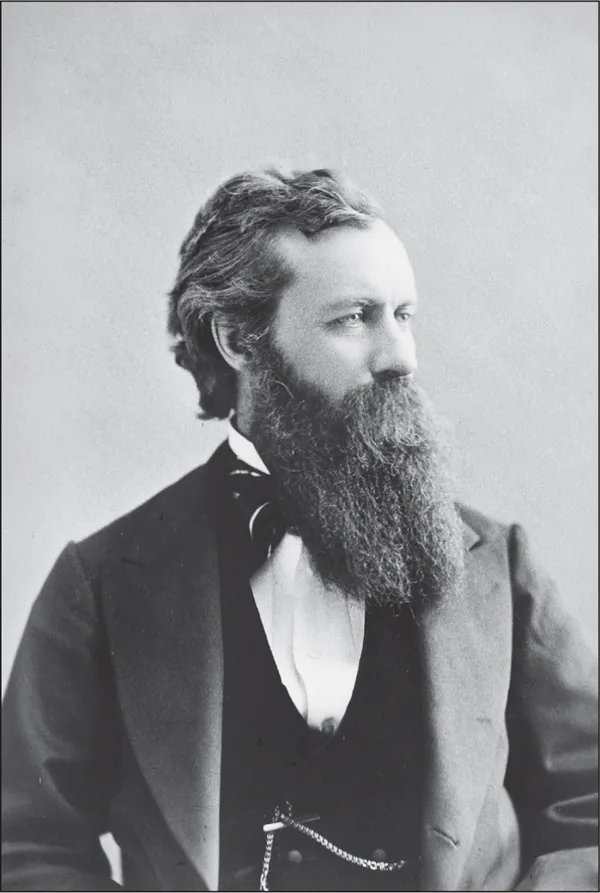
Alexander Winchell (1824–1891) was appointed the first chancellor of Syracuse University in 1872. Previously a geology and zoology professor at the University of Michigan, he was inaugurated in February 1873. He oversaw the founding of the College of Medicine and the College of Fine Arts and the construction of the Hall of Languages. Winchell resigned in June 1874, after the Panic of 1873, which brought financial hardship to the university.

This stereopticon slide, dated 1872 or 1873, is the earliest known image of the Hall of Languages, Syracuse University’s first building on campus. Designed by Horatio Nelson White, the building cost $136,000. The cornerstone was laid in August 1871; by May 1873, the Hall of Languages was dedicated and in use. Initially home to the College of Liberal Arts, the edifice has since housed other schools and departments.
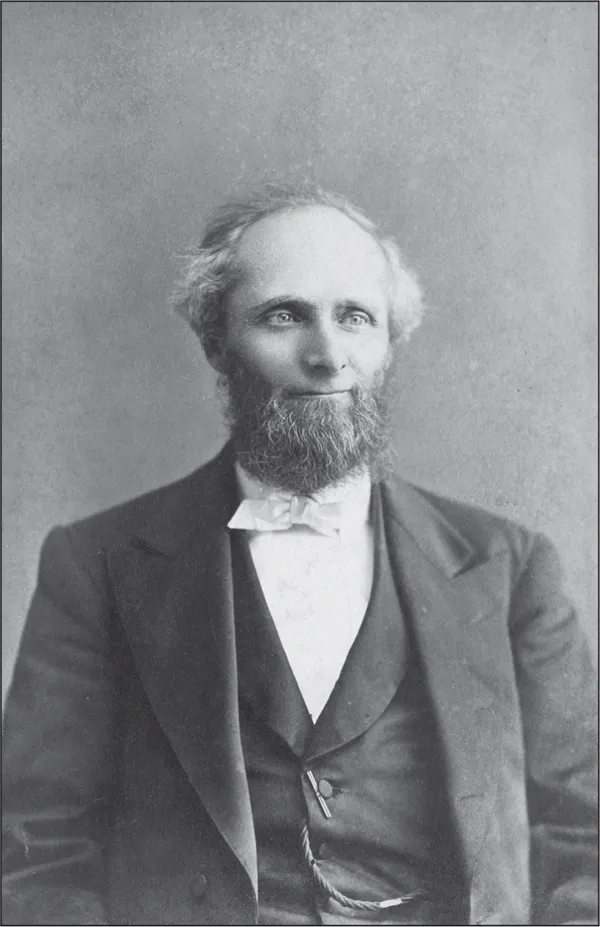
Erastus O. Haven (1820–1881) succeeded Winchell as chancellor of Syracuse University in 1874. Haven had previously served as president of the University of Michigan and Northwestern University. Syracuse University’s financial burdens left Haven little room to improve it organizationally; instead, he focused his energies on strengthening both the curriculum and the university’s relationship to the city of Syracuse. In 1880, Haven left Syracuse University to become a Methodist Episcopal bishop.
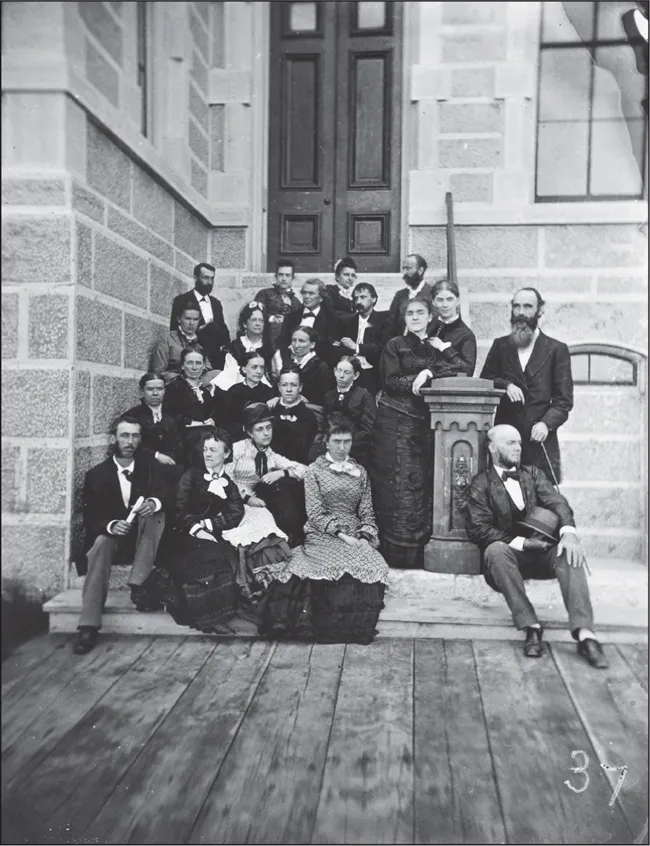
Class of 1876 graduates and professors pose on the steps of the Hall of Languages, at that time the only building on campus. These students are part of Syracuse University’s fifth graduating class, numbering 53, who had attended either the College of Liberal Arts, the College of Fine Arts, or the College of Physicians and Surgeons. They became teachers, physicians, clergymen, newspaper editors, and lawyers throughout the United States.

This early view looking north from campus down University Avenue shows the growth on the hill after Syracuse University built the Hall of Languages in 1873. Note the wooden plank sidewalks. The large building on the left is the Hospital of the Good Shepherd on Marshall Street. Enlarged several times, it is now part of the university and known as Huntington Hall.
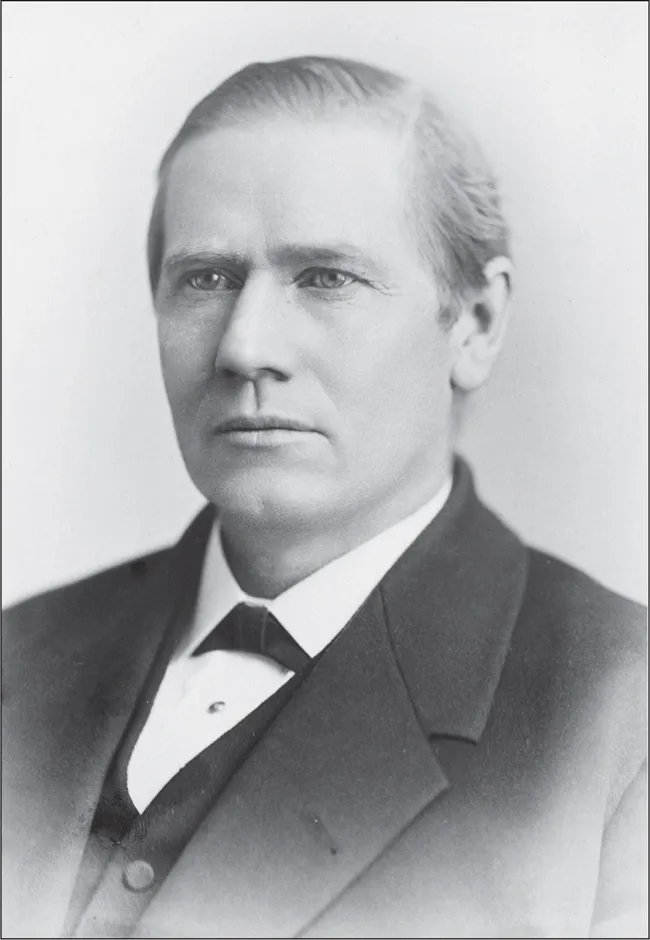
An educator, administrator, and minister, Charles N. Sims (1835–1908) was inaugurated as chancellor on June 28, 1881. During his tenure, the university charter was amended to establish the university senate, reorganize the board of trustees, and create a separate fund for endowments. Sims also established a building program, which included Holden Observatory and Crouse College. He retired in 1893, but was made a university trustee in 1903.

Informal games played among students led to the formation of the Syracuse University Baseball Association on April 20, 1872, preceding the Athletic Association of Syracuse University by four years. While many games were played on whatever flat land was available, the baseball association pushed for the construction of a diamond on the campus. Here, a game takes place below the hill of Mount Olympus.

Students did not reside on campus until the first dormitory was built in 1900. Until then, they lived in fraternity or sorority houses, rented a room in boardinghouses or other residences in the city of Syracuse, or resided with their families. Howard D. Mitchell (class of 1887) posed with his fellow housemates at his boardinghouse. He is probably one of the two young men in the front row.

Competitions between freshman and sophomore classes were the source of many traditions at Syracuse University. The tradition of the “rush” first emerged when sophomores began to throw salt at the freshmen and even rub it into their hair. The ritual then evolved into the second-year students thumping the freshmen with bags of salt. This then developed into sophomores defending Crouse College Hill against charging freshmen, whose object was to reach the summit. After a while, many different rushes were occurring on campus—Flour, Salt, Snow, Cane, and Orange—but the Salt and Flour Rushes were the most popular. World War I put the tradition on hold, but by the 1940s, it appears to have stopped altogether, especially after a sophomore was injured in a 1941 rush. In this 1885 photograph, sophomores and freshmen wallop each other with canes.
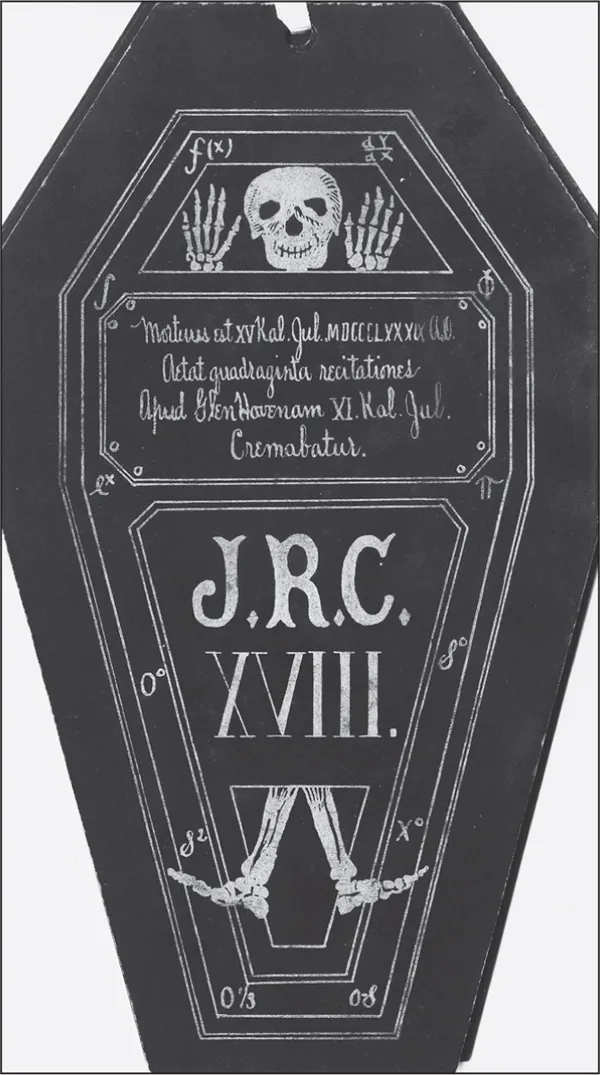
Liberal arts sophomores had to take calculus, a course most students loathed. At the school year’s end, they gathered to ceremonially “dispose of” the character Calculus, a tradition dating from 1873. Housed in a coffin, he met his demise through burial on Crouse College Hill, cremation, balloon air launch, or watery grave. Shown here is the 1889 program fo...
Table of contents
- Cover Page
- Title Page
- Copyright Page
- Dedication
- Table of Contents
- Acknowledgments
- Introduction
- 1. Knowledge Crowns Those Who Seek Her
- 2. Flag We Love! Orange!
- 3. A Forward-Looking University
- 4. A Victory University
- 5. An Open Institution
- 6. Excellence Achieved
- 7. The Soul of Syracuse University
Frequently asked questions
Yes, you can cancel anytime from the Subscription tab in your account settings on the Perlego website. Your subscription will stay active until the end of your current billing period. Learn how to cancel your subscription
No, books cannot be downloaded as external files, such as PDFs, for use outside of Perlego. However, you can download books within the Perlego app for offline reading on mobile or tablet. Learn how to download books offline
Perlego offers two plans: Essential and Complete
- Essential is ideal for learners and professionals who enjoy exploring a wide range of subjects. Access the Essential Library with 800,000+ trusted titles and best-sellers across business, personal growth, and the humanities. Includes unlimited reading time and Standard Read Aloud voice.
- Complete: Perfect for advanced learners and researchers needing full, unrestricted access. Unlock 1.5M+ books across hundreds of subjects, including academic and specialized titles. The Complete Plan also includes advanced features like Premium Read Aloud and Research Assistant.
We are an online textbook subscription service, where you can get access to an entire online library for less than the price of a single book per month. With over 1.5 million books across 990+ topics, we’ve got you covered! Learn about our mission
Look out for the read-aloud symbol on your next book to see if you can listen to it. The read-aloud tool reads text aloud for you, highlighting the text as it is being read. You can pause it, speed it up and slow it down. Learn more about Read Aloud
Yes! You can use the Perlego app on both iOS and Android devices to read anytime, anywhere — even offline. Perfect for commutes or when you’re on the go.
Please note we cannot support devices running on iOS 13 and Android 7 or earlier. Learn more about using the app
Please note we cannot support devices running on iOS 13 and Android 7 or earlier. Learn more about using the app
Yes, you can access Syracuse University by Edward L. Galvin,Margaret A. Mason,Mary M. O'Brien in PDF and/or ePUB format, as well as other popular books in History & Education General. We have over 1.5 million books available in our catalogue for you to explore.