eBook - ePub
Kalama
About this book
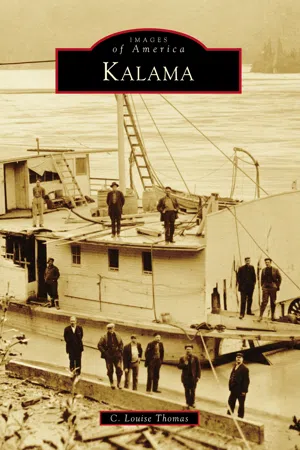
Pioneers had first settled in the area along the Columbia River by 1847, but Kalama was not officially incorporated there until 1890. Early riverboats stopped in Kalama to obtain timber to fire their boilers. The Northern Pacific Railroad chose Kalama as the site to land its rail-transfer ferry, and it also became the terminus for Northern Pacific Railroad to complete a rail line to Puget Sound. The city grew and flourished around these industries. However, it also endured many hardships, surviving devastating floods, a fire that destroyed the business district, and the loss of its agricultural base, but each time, the citizens rebuilt. With the second-largest port by volume in Washington State and a growing industrial base, Kalama continues to prosper today. People are drawn to its small-town charm and advantageous location along the I-5 corridor and the Columbia River, where rail, road, and river meet.
Trusted by 375,005 students
Access to over 1 million titles for a fair monthly price.
Study more efficiently using our study tools.
Information
One
BEGINNINGS
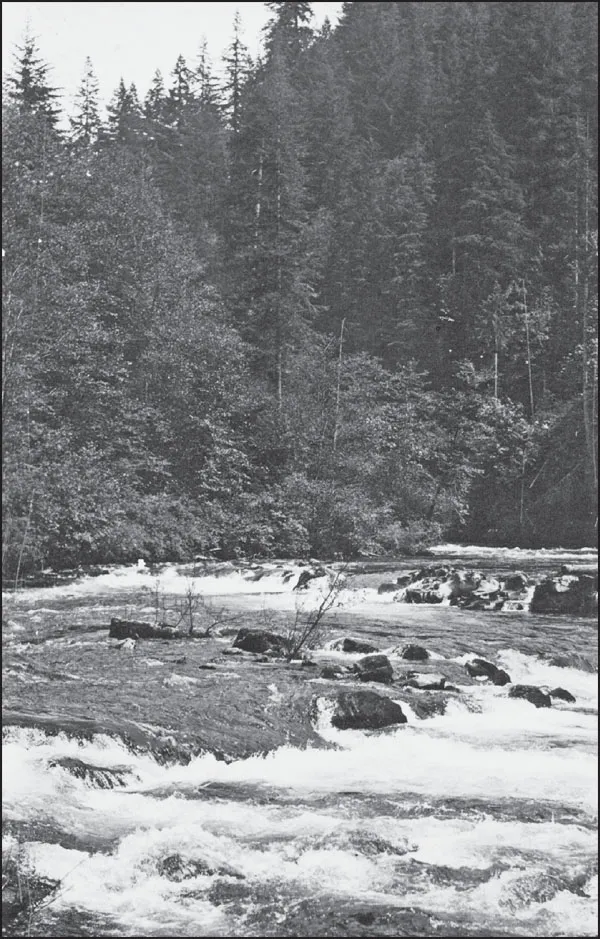
The Kalama River is located two miles north of the city that bears its name. The waterway originates in springs and is fed by small streams to become a river. Many residents live along the Kalama River, and it is a site for recreation for not only the citizens of Kalama but also the surrounding population of Cowlitz County. The river is also the source of the city’s water. (Courtesy of Lee Bunn.)
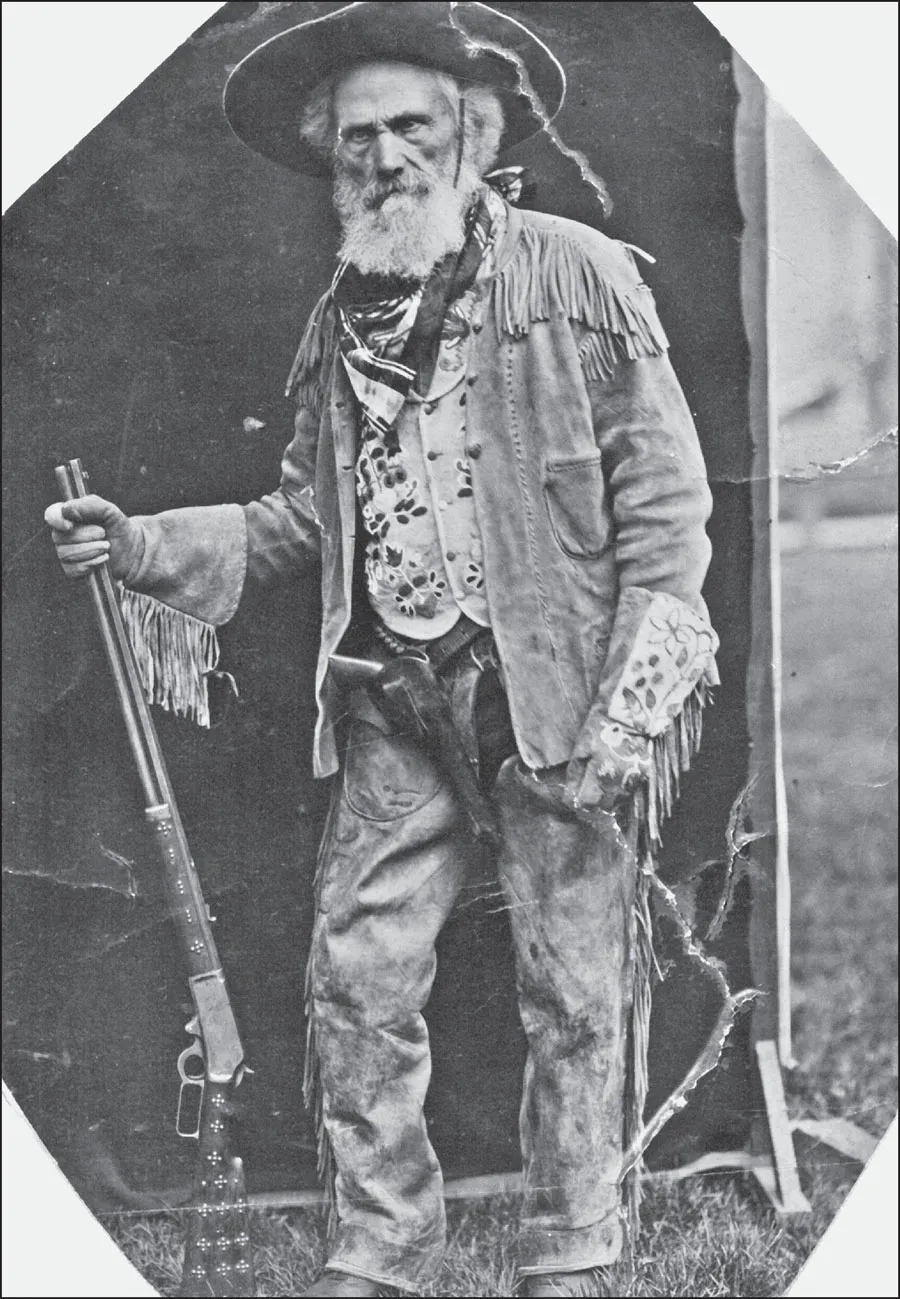
Ezra Meeker is a well-known pioneer of the Pacific Northwest. Meeker first settled in St. Helens, Oregon, where he ran a boardinghouse. When this business failed, he moved to Washington. On January 20, 1853, he filed a land claim in what is now Kalama, Washington. Ezra built a log cabin, and he and his brother logged timber from the surrounding hills. They floated the logs down the Columbia River to the Abernethy Mill at Oak Point and from there to Astoria, Oregon. With the money he received from the sale of the logs, Ezra moved his family to Puyallup, Washington. (Courtesy of Mary Norton.)

This photograph is a visual representation of why Kalama was chosen by the Northern Pacific Railroad as the point from which it would build a railroad north to Puget Sound. Kalama had a wide expanse of flatland for easy development, with good access to the Columbia River. The surrounding forested hills provided a ready source of timber to harvest and sell as cordwood to passing boats for fuel. (Courtesy of John Norton.)

The city of Kalama in the 1870s was sparsely settled on lowland adjacent to the Columbia River and two miles south of the Kalama River. The houses were built on stilts to keep them above high water, and elevated boardwalks crisscrossed the city for the same reason. (Courtesy of Joanna Boatman.)

This is a view of Kalama from the train depot, which was located along the waterfront. The photograph was taken in the early part of the 20th century, and the business district is seen thriving. Note that the roads are covered with planks. (Courtesy of Lee Bunn.)

To the right in this picture of early Kalama is the Kazano House. This three-story hotel was built by the Northern Pacific Railroad. It served the Kalama community first as a hotel and then, after it was sold to the city of Kalama, became the Cowlitz County Courthouse. (Courtesy of Cleone Kockritz.)

This is Kalama around 1900. The first building on the left was Reardon’s Saloon, located on Fir Street. The Kalama Hotel is to the right in the picture. Note the shadow of the photographer at the bottom of the picture. He is taking the picture from behind the rail lines. (Courtesy of Joanna Boatman.)

This photograph was taken looking down Kalama’s main street (First Street) in the early 1900s. Although cars are making an appearance, many people are still using horses and wagons. The barber pole to the left of the picture identifies the location of the barbershop. (Courtesy of Lee Bunn.)

The road in this picture is paved with boards. This plank road went from the business district of downtown Kalama to Cloverdale, which was about 1.5 miles away. (Courtesy of Art Godfrey.)

Taken in the early 1920s, this photograph depicts the residential district of Kalama. To the left on the hill is the Congregational church, and the parsonage is the white house in front of it. Elm Street is the road going up what was called Schoolhouse Hill. (Courtesy of Janice Whiteaker.)

Here, an unidentified man sits astride his motorcycle. Behind him, an event is taking place farther down the street. Bunting is draped across the street, and a crowd has gathered. In the early part of the 20th century, cars are now common, and so are the light poles that line the street. (Courtesy of Cleone Kockritz.)

Horses and buggies are gone in the mid-1920s. Light poles are more complicated, and sidewalks have replaced boardwalks. The business district of Kalama is thriving with a wide variety of stores available for its citizens. (Courtesy of Art Godfrey.)

The building at the right was erected by Bob Springer, and the dark structure in the background was an old skating rink. The road is now paved, and sidewalks have been put in. (Courtesy of Lee Bunn.)

At left in this 1902 picture is the Congregational church, built on the steep hillside behind the city of Kalama. On the right is the LaRoy family’s float (boathouse), docked in the Columbia River. (Courtesy of Brian LaRoy.)
Two
...Table of contents
- Cover Page
- Title Page
- Copyright Page
- Dedication
- Table of Contents
- Acknowledgments
- Introduction
- 1. Beginnings
- 2. People
- 3. Logging
- 4. Fishing
- 5. The Port of Kalama
- 6. Building Kalama
- 7. Faith and Fellowship
- 8. School Days
- 9. Celebrations
- 10. Meeting Challenges
Frequently asked questions
Yes, you can cancel anytime from the Subscription tab in your account settings on the Perlego website. Your subscription will stay active until the end of your current billing period. Learn how to cancel your subscription
No, books cannot be downloaded as external files, such as PDFs, for use outside of Perlego. However, you can download books within the Perlego app for offline reading on mobile or tablet. Learn how to download books offline
Perlego offers two plans: Essential and Complete
- Essential is ideal for learners and professionals who enjoy exploring a wide range of subjects. Access the Essential Library with 800,000+ trusted titles and best-sellers across business, personal growth, and the humanities. Includes unlimited reading time and Standard Read Aloud voice.
- Complete: Perfect for advanced learners and researchers needing full, unrestricted access. Unlock 1.4M+ books across hundreds of subjects, including academic and specialized titles. The Complete Plan also includes advanced features like Premium Read Aloud and Research Assistant.
We are an online textbook subscription service, where you can get access to an entire online library for less than the price of a single book per month. With over 1 million books across 990+ topics, we’ve got you covered! Learn about our mission
Look out for the read-aloud symbol on your next book to see if you can listen to it. The read-aloud tool reads text aloud for you, highlighting the text as it is being read. You can pause it, speed it up and slow it down. Learn more about Read Aloud
Yes! You can use the Perlego app on both iOS and Android devices to read anytime, anywhere — even offline. Perfect for commutes or when you’re on the go.
Please note we cannot support devices running on iOS 13 and Android 7 or earlier. Learn more about using the app
Please note we cannot support devices running on iOS 13 and Android 7 or earlier. Learn more about using the app
Yes, you can access Kalama by C. Louise Thomas in PDF and/or ePUB format, as well as other popular books in History & North American History. We have over one million books available in our catalogue for you to explore.