eBook - ePub
Chatham
About this book
In 1987, the hungry Atlantic Ocean broke the barrier beach protecting Chatham, swallowing a handful of shorefront houses. But in the last half century, most of the change that has come to this town on the elbow of Cape Cod has been more subtle. Historic houses gave way to hotels when Chatham became an attractive vacation destination for motorists, and then the hotels became homes again as summer visitors sought to have a place of their own for retirement. Amid real estate booms, Chathamites struggled to keep the town's history and natural beauty from being erased. Treasures like the Godfrey gristmill, the Marconi wireless station, and even the Main Street School fell into disrepair but were later preserved. Chatham continues its wrestle with nature, confronting old challenges like erosion and new ones like water quality--and now great white sharks.
Tools to learn more effectively

Saving Books

Keyword Search

Annotating Text

Listen to it instead
Information
One
SUMMER LIFE

As they are today, summer visitors and people who live here year-round are both drawn to the lighthouse overlook to gaze at the Atlantic and the shifting sands of the barrier beach offshore. Joan Aucoin (seated, foreground) remembers visiting in 1958. (Courtesy of Joan Tacke Aucoin.)

Independence Day parades have long been a staple of summertime in Chatham. The date of this photograph is not certain, but the Cold War was still being waged. The sign in front of the prison bars reads, “We’re in Russia. Wish we were in America.” (Courtesy of Nancy Whalen Rude.)

The Fourth of July was particularly festive in Chatham in 1976, thanks to the nation’s bicentennial. The crowds on the sidelines were very enthusiastic, even if the boy in colonial garb was not. (Courtesy of Jane Powers.)

For more than a decade, a staple of Chatham life was the Ms. Eelgrass contest, a fundraiser for local children’s charities. The contestant with the gaudiest fashion sense took the coveted title and was mate to Captain Eelgrass, local trap fisherman Paul Lucas. They are featured here in the 1992 Independence Day parade. (Courtesy of Nancy Whalen Rude.)
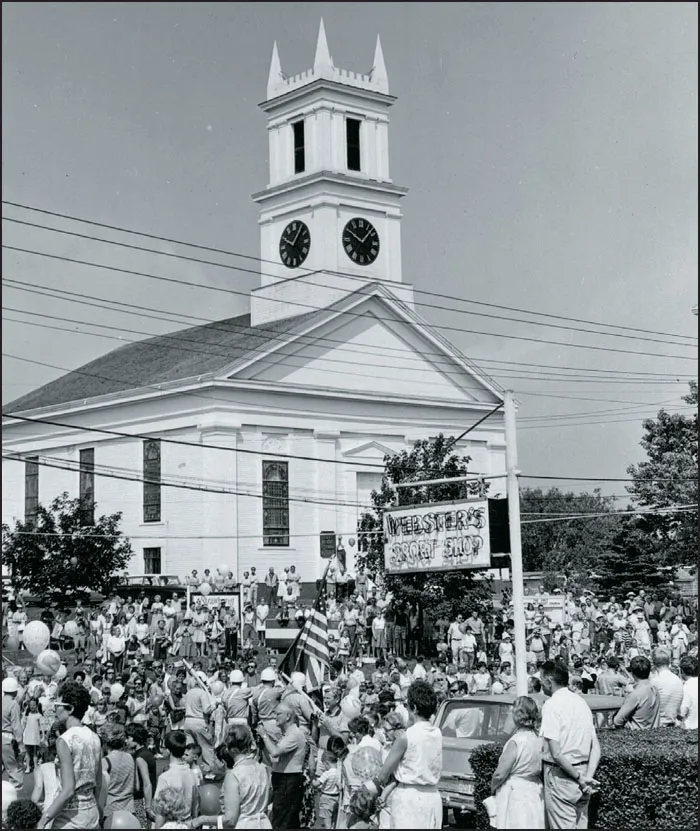
The Fourth of July parade passes in front of the Methodist church sometime during the 1960s. The picture was taken from the vicinity of what is now the Chatham branch of the Cape Cod Five Cents Savings Bank. A neon sign—which would make today’s preservationists cringe—marked Webster’s Sport Shop.

The old Chatham Drop-in Center, the precursor to Monomoy Community Services, provided activities and services for local teens, including cookouts and “rap sessions.” On the right is one of the founders of the center, Dorothy Harned, with a group of teens trying—with mixed results—to look cool sitting on a parade float. The year is 1982. (Courtesy of Faith Twombly.)
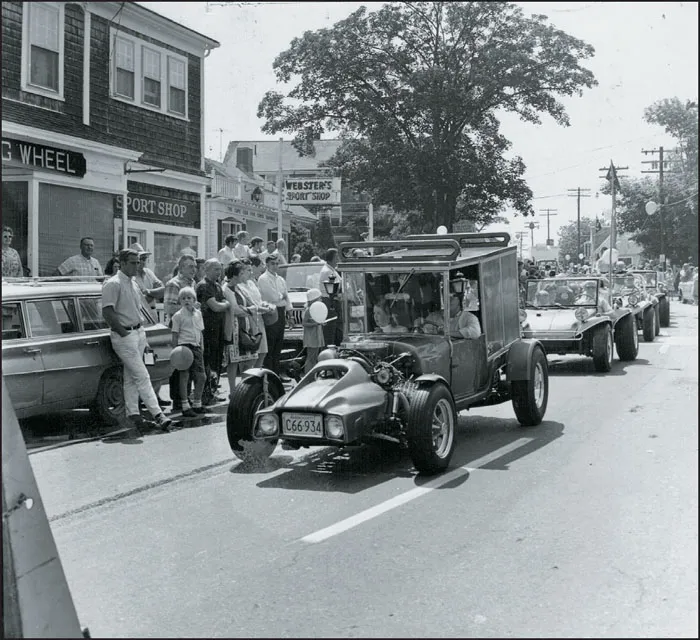
A procession of hot rods and dune buggies approaches the intersection of Main and Cross Streets sometime during the 1960s. The building on the left is gone, but it was once next to the stately Eldredge Public Library.
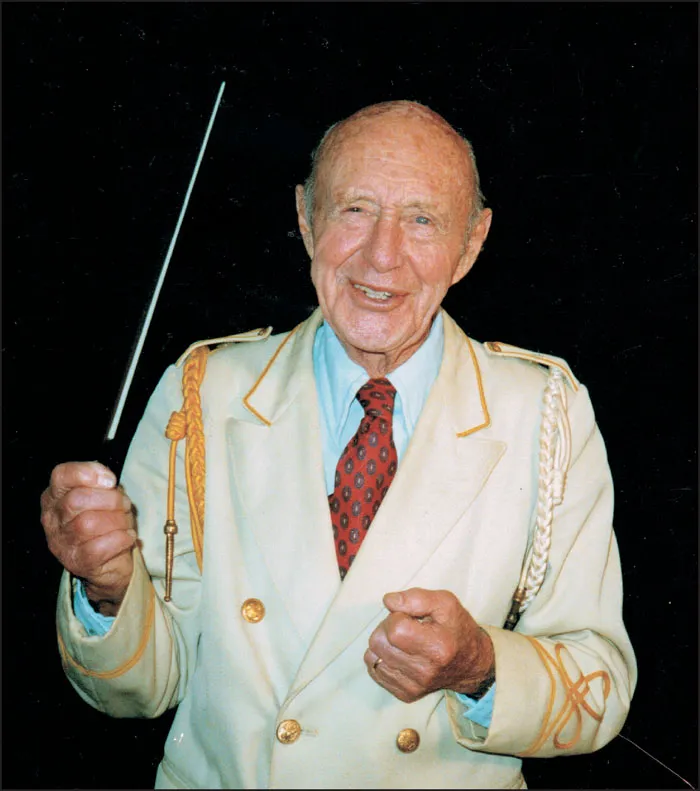
For 48 years, Whit Tileston, right, was the iconic conductor of the Chatham Town Band. Known as “Mr. Music,” “The Man in the White Suit,” or the “Hi-de-ho Man,” Tileston developed the traditional Friday-night music programs. After the maestro’s death in 1995, the town named the Kate Gould Park bandstand in his honor. Tileston was most likely wielding the baton when the photograph below was taken in 1976. The park looks a bit different than it did then, owing to the expansion of the Chatham Wayside Inn. (Below, courtesy of James J. Dempsey.)


For many people, the downtown area and the Old Village represent Chatham. But like every other town on Cape Cod, Chatham is divided into villages, each with its own distinct identity. Many vacationers came year after year to cottage colonies in places like South Chatham and spent most of their time in their village. Here, beachgoers cross a footbridge to Cockle Cove and Ridgevale Beach on Nantucket Sound. Though the sands have shifted somewhat, a more modern footbridge stands in the same area today. Visible in the distance are towers for the Marconi wireless transmitting station near Forest Beach. The towers are now gone, and the land is preserved by the town as open space. (Courtesy of M. Miklus.)

The view from the opposite side of the footbridge on the previous page shows how Cockle Cove Creek has shifted. For many years, Buck’s Creek had a separate outlet to Nantucket Sound, apparently just visible in the background. On the bluff behind it is the Harding Shores development, which was relatively new at the time. (Courtesy of M. Miklus.)
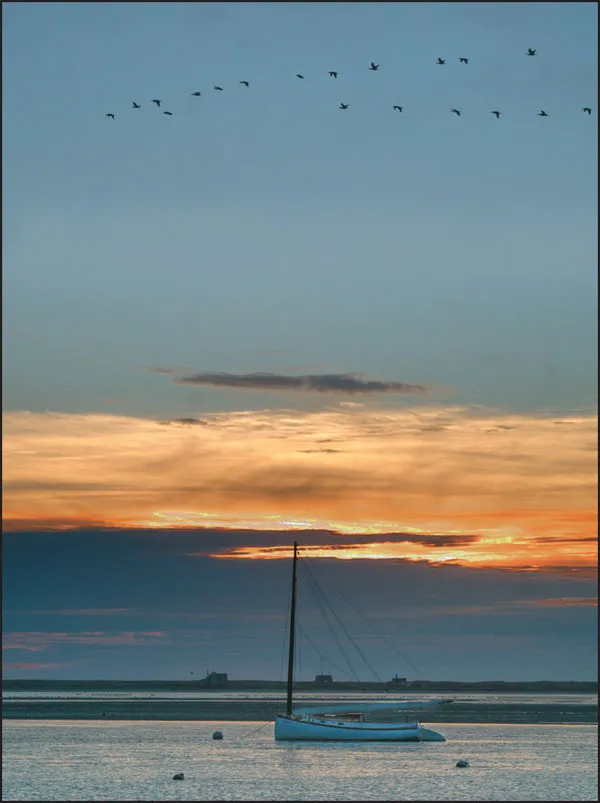
A timeless summertime scene in Chatham involves the catboat. Built originally as sturdy, stable, near-shore fishing boats, catboats have become the classic wooden sailboat of choice for many Cape-sailing enthusiasts. This one is pictured off Cow Yard Landing at sunrise.

Sun and surf simply are not enough. Summertime in Chatham has always meant playing in the sand, as members of the Stone family were photographed doing in the late 1980s. (Courtesy of Jason and Martha Stone.)

The first-place winner of the 1962 Independence Day parade was a float entitled “Alaska or Bust,” featuring “Doc” Smith’s 1930 Model A Ford. Lee Marden of Sears Point Road played the part of “Pa,” and “Ma” was Peter Small, son of Mary and (selectman) Everett Small. The judges were particularly impressed at the six live borrowed chickens in the rumble seat. (Courtesy of Lee Marden.)

Chatham’s beaches have always lured people in summertime. Beaches on the Nantucket Sound side have relatively warm water for swimming, and the water is even warmer in protected areas like Oyster Pond, pictur...
Table of contents
- Cover Page
- Title Page
- Copyright Page
- Dedication
- Table of Contents
- Acknowledgments
- Introduction
- 1. Summer Life
- 2. The Year-Round Economy
- 3. Culture and Community
- 4. Preserving History
- 5. Wind and Waves
- 6. Natural Heritage
Frequently asked questions
Yes, you can cancel anytime from the Subscription tab in your account settings on the Perlego website. Your subscription will stay active until the end of your current billing period. Learn how to cancel your subscription
No, books cannot be downloaded as external files, such as PDFs, for use outside of Perlego. However, you can download books within the Perlego app for offline reading on mobile or tablet. Learn how to download books offline
Perlego offers two plans: Essential and Complete
- Essential is ideal for learners and professionals who enjoy exploring a wide range of subjects. Access the Essential Library with 800,000+ trusted titles and best-sellers across business, personal growth, and the humanities. Includes unlimited reading time and Standard Read Aloud voice.
- Complete: Perfect for advanced learners and researchers needing full, unrestricted access. Unlock 1.4M+ books across hundreds of subjects, including academic and specialized titles. The Complete Plan also includes advanced features like Premium Read Aloud and Research Assistant.
We are an online textbook subscription service, where you can get access to an entire online library for less than the price of a single book per month. With over 1 million books across 990+ topics, we’ve got you covered! Learn about our mission
Look out for the read-aloud symbol on your next book to see if you can listen to it. The read-aloud tool reads text aloud for you, highlighting the text as it is being read. You can pause it, speed it up and slow it down. Learn more about Read Aloud
Yes! You can use the Perlego app on both iOS and Android devices to read anytime, anywhere — even offline. Perfect for commutes or when you’re on the go.
Please note we cannot support devices running on iOS 13 and Android 7 or earlier. Learn more about using the app
Please note we cannot support devices running on iOS 13 and Android 7 or earlier. Learn more about using the app
Yes, you can access Chatham by Alan Pollock in PDF and/or ePUB format, as well as other popular books in History & North American History. We have over one million books available in our catalogue for you to explore.