- 96 pages
- English
- ePUB (mobile friendly)
- Available on iOS & Android
eBook - ePub
Bricktown
About this book
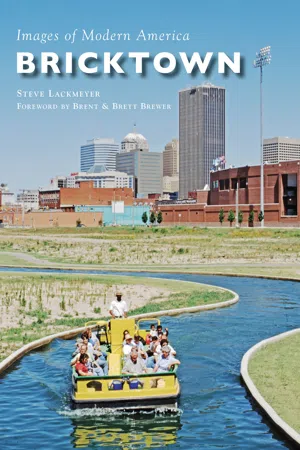
Bricktown, once an area reserved for federal troops, was given to Oklahoma City for development in 1898. Brick warehouses originally were built along rail lines to house wholesale operations, but a half century later, the district was abandoned as industry moved farther away from the urban core. The forgotten warehouse district was rediscovered by Neal Horton, who started the movement of transforming the area in 1979. Jim Brewer carried out Horton's vision, enabling Bricktown to become a regional destination where historic preservation and modern entertainment would merge. Excursion boats traverse a modern man-made recreational canal built in 1999 that flows between century-old brick warehouses. Bricktown's restaurants, shops, and attractions have hosted some of the biggest names in politics and entertainment. The transformation continues with the opening of The Criterion concert hall in 2016 and the construction of more retail space and restaurants, 400 apartments, and several hotels.
Trusted by 375,005 students
Access to over 1.5 million titles for a fair monthly price.
Study more efficiently using our study tools.
Information
One
BRICK TOWN USA
Neal Horton’s interest in development began while he was a banker, and during trips to Colorado in the late 1970s, Horton saw the success of historic preservation in Denver’s Larimer Square.
He concluded a similar opportunity existed in a fading warehouse district east of downtown. Where others saw the brick warehouses as an eyesore, Horton saw a historic district that would draw people yearning to experience the city’s past. Attorney Bill Peterson, meanwhile, saw a similar opportunity with the former Iten Biscuit plant and commissioned an architect to draw up plans to convert the warehouse into a retail mall. Peterson lost the deal to U-Haul. Peterson’s effort, however, caught the attention of Horton, and they teamed with former city land attorney John Michael Williams to form the Warehouse Development Company. They then began doing deals with wholesale district property owners, many of whom were living out of state.
The plan for Bricktown (initially marketed as “Brick Town USA”) assumed the oil boom of the early 1980s would continue and downtown office space would remain at full occupancy. The partners agreed to double-digit interest rates on construction loans, fully anticipating they could capture a lease rate of $15 a square foot or better. They dreamed up lists of potential tenants—shops selling candies, antiques, clothing, music, and art, along with restaurants, bars, delis, and a radio station.
Renovations started in 1982, just as the boom turned to bust; energy prices dropped, and energy loans took down dozens of banks. Downtown occupancy rates plummeted. Horton, Peterson, and Williams continued on, hoping the downturn would be short-lived. They continued to promote Bricktown as the state’s first urban entertainment district and tried to negotiate deals for offices and restaurants.
Horton was mocked behind his back. City planners suggested he might have fared better by razing all the warehouses and starting from scratch with a new office park. Warehouse Development Company was going broke, and Horton’s car was reposed as he was negotiating a grant with the Department of Housing and Urban Development to build a parking garage. The partnership declared bankruptcy on September 18, 1984.
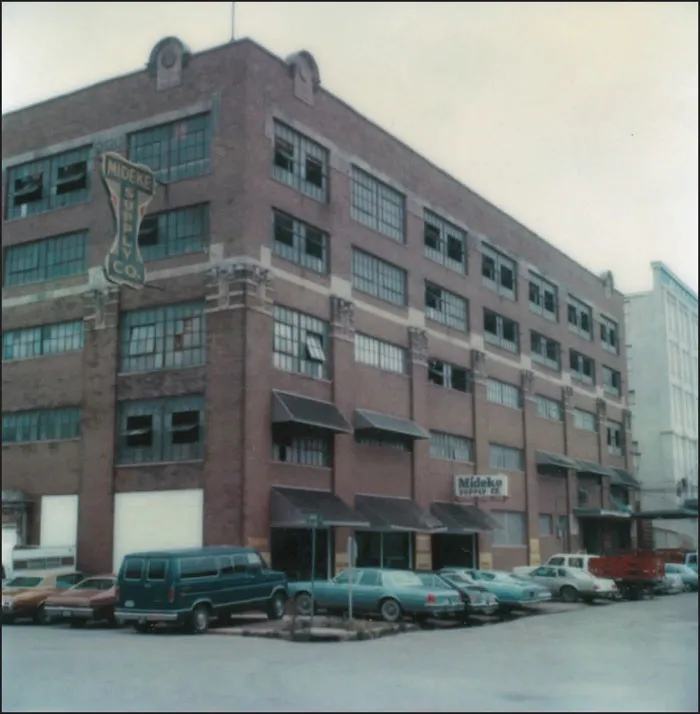
The Mideke Building at 100 East Main Street was constructed in 1919 and was home to the Mideke Supply Co. for 87 years. The company operated as a supply house for grain elevators, cotton mills, power plants, oil fields, plumbers, and bridge and road builders, and later, for refrigerators and air-conditioning. The operation closed during the 1980s oil bust. (Courtesy of Beck Design.)
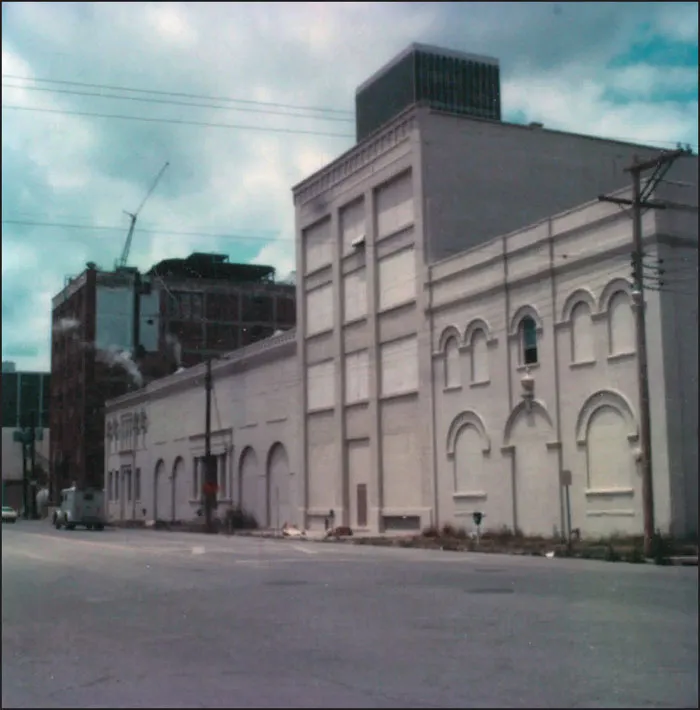
Decades-old warehouses at 1 and 27 East Sheridan and 1 North Oklahoma Avenues were acquired by R.T. McLain for his Bunte Candy Company, which dated back to a non-chocolate confection company founded by two German brothers in 1876 in Chicago. The operation continued through the 1980s before moving to a new plant in north Oklahoma City. (Courtesy of Beck Design.)
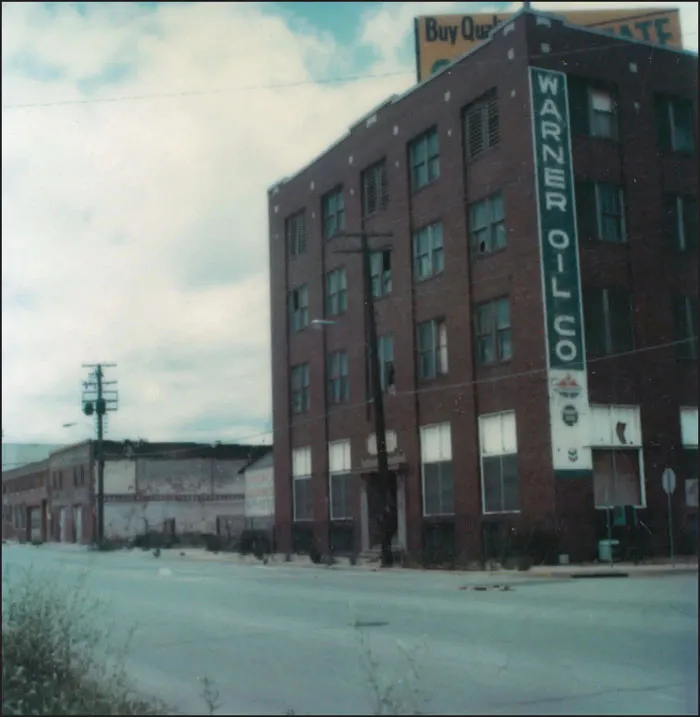
The Rock Island Plow Building, 29 East Reno Avenue, was already empty when Neal Horton started developing Bricktown in 1979. The building was constructed in 1909 by the Rock Island Railroad Corporation of Chicago. The company, which specialized in farm implements, collapsed in 1932 during the Great Depression. (Courtesy of Beck Design.)
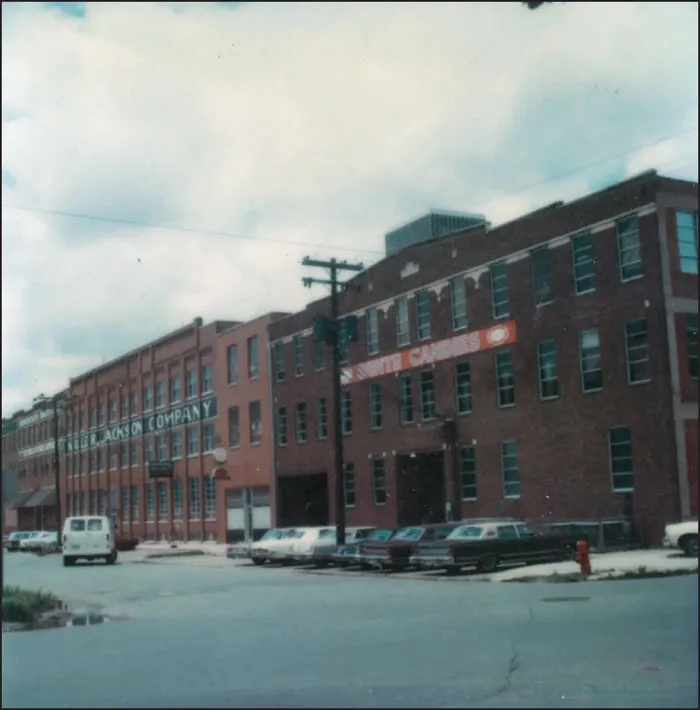
The three-story building at 129 East California Avenue was built in 1928 and home to several tenants, including Bunte Candy Company. The building was eyed for acquisition by Neal Horton and his partners but was never a part of his Warehouse Development Company. In later years, the facade was stripped off, a new floor was added, and the property was renamed the JDM Building. (Courtesy of Beck Design.)
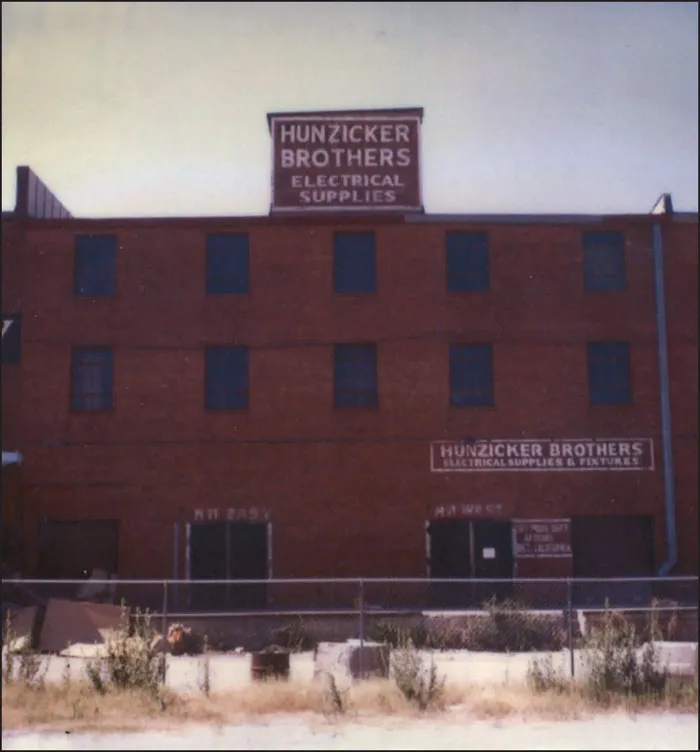
One of the largest buildings acquired by Neal Horton’s Warehouse Development Company was the former home of Hunzicker Brothers, a firm established in 1920 with a train carload of light bulbs. The sales operation expanded to automotive accessories, wiring supplies, light fixtures, and appliances. The company moved from its home at 101 East California Avenue in 1960 to a new home at 501 North Virginia Avenue. (Courtesy of Beck Design.)

The three-story building at 121 East Sheridan Avenue dates back to at least 1904, when it was used for mattress assembly and sales by the Oklahoma Furniture Manufacturing Company. The building was one of several for which Neal Horton secured an option to buy the property but lost the deal when his company later went bankrupt. (Courtesy of Beck Design.)
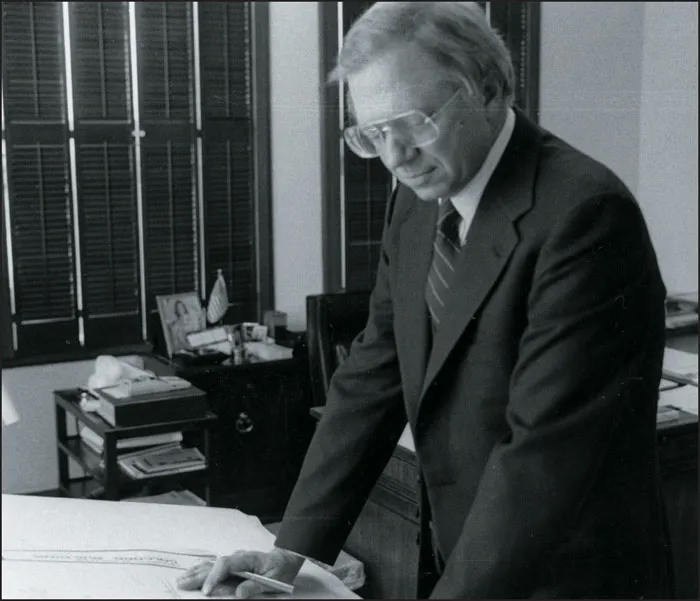
Neal Horton started as a banker but fell in love with developing historic buildings. He sought to create a master plan for redeveloping Bricktown after spotting the brick warehouses from his office window at the Colcord Building. (Courtesy of the Oklahoma Historical Society.)

The warehouse district east of the Central Business District still had a few viable industrial operations left when Neal Horton started acquiring properties in the early 1980s. Several buildings were vacant, some for years, and the district started to decline in the 1960s. (Courtesy of the Greater Oklahoma City Chamber.)

Bill Peterson sought to acquire the former Iten Biscuit factory for redevelopment as a mall. U-Haul bought the property, and Peterson partnered with Neal Horton in acquiring and redeveloping other properties in Bricktown. (Courtesy of Bill Peterson....
Table of contents
- Cover Page
- Title Page
- Copyright Page
- Dedication
- Table of Contents
- Foreword
- Acknowledgments
- Introduction
- 1. Brick Town USA
- 2. Jim Brewer
- 3. Boom
- 4. Baseball and Water Taxis
- 5. The New Millennium
- 6. The Music
Frequently asked questions
Yes, you can cancel anytime from the Subscription tab in your account settings on the Perlego website. Your subscription will stay active until the end of your current billing period. Learn how to cancel your subscription
No, books cannot be downloaded as external files, such as PDFs, for use outside of Perlego. However, you can download books within the Perlego app for offline reading on mobile or tablet. Learn how to download books offline
Perlego offers two plans: Essential and Complete
- Essential is ideal for learners and professionals who enjoy exploring a wide range of subjects. Access the Essential Library with 800,000+ trusted titles and best-sellers across business, personal growth, and the humanities. Includes unlimited reading time and Standard Read Aloud voice.
- Complete: Perfect for advanced learners and researchers needing full, unrestricted access. Unlock 1.5M+ books across hundreds of subjects, including academic and specialized titles. The Complete Plan also includes advanced features like Premium Read Aloud and Research Assistant.
We are an online textbook subscription service, where you can get access to an entire online library for less than the price of a single book per month. With over 1.5 million books across 990+ topics, we’ve got you covered! Learn about our mission
Look out for the read-aloud symbol on your next book to see if you can listen to it. The read-aloud tool reads text aloud for you, highlighting the text as it is being read. You can pause it, speed it up and slow it down. Learn more about Read Aloud
Yes! You can use the Perlego app on both iOS and Android devices to read anytime, anywhere — even offline. Perfect for commutes or when you’re on the go.
Please note we cannot support devices running on iOS 13 and Android 7 or earlier. Learn more about using the app
Please note we cannot support devices running on iOS 13 and Android 7 or earlier. Learn more about using the app
Yes, you can access Bricktown by Steve Lackmeyer in PDF and/or ePUB format, as well as other popular books in History & North American History. We have over 1.5 million books available in our catalogue for you to explore.