- 128 pages
- English
- ePUB (mobile friendly)
- Available on iOS & Android
eBook - ePub
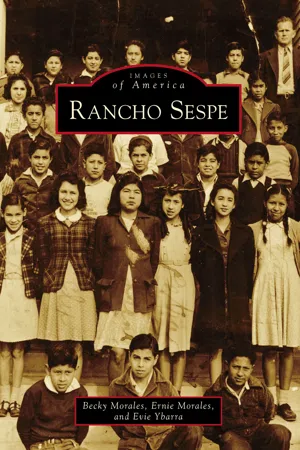
Rancho Sespe
About this book
In 1833, Rancho Sespe began as a Mexican land grant with 8,881 acres stretching along the Santa Clara River from Piru to Santa Paula. The face of Rancho Sespe is not just the bunkhouse or the family housing that stood on this land; it is, rather, seen in the stories of those who lived and worked on the ranch. Their struggles and triumphs are shared in this book and illustrated with many vintage photographs. The Spaldings developed Rancho Sespe into a very successful ranch for citrus and livestock for over 30 years, and it became a quasi-feudal society as a self-contained working ranch in the 20th century. When the ranch later sold, it ushered in changes for Rancho Sespe to become a part of the modern age, and gone was the worker housing along with other remnants of the past. Many of the families continue to live in the surrounding area generation after generation.
Trusted by 375,005 students
Access to over 1 million titles for a fair monthly price.
Study more efficiently using our study tools.
Information
One
A MEXICAN LAND GRANT
AND THE T. WALLACE
MORE MURDER
AND THE T. WALLACE
MORE MURDER
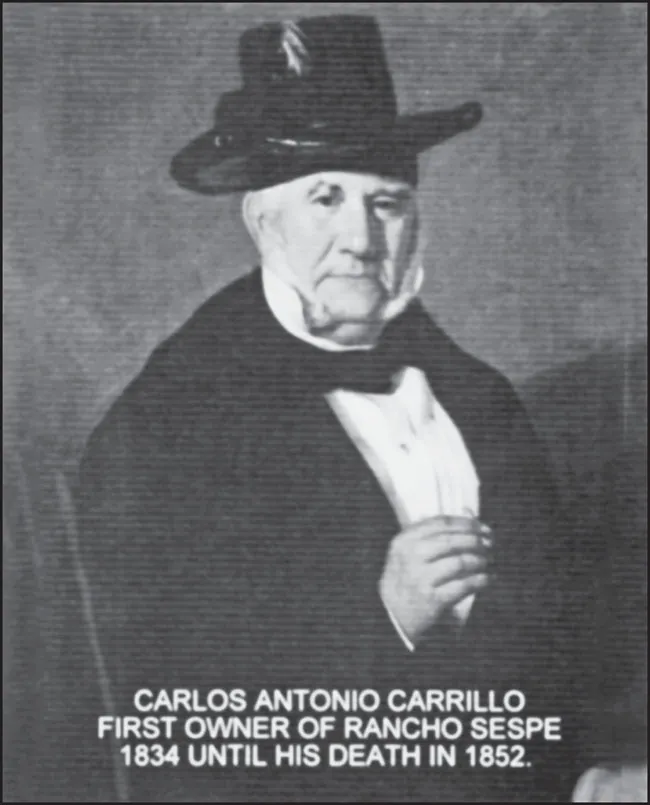
Rancho Sespe was granted to Don Carlos Antonio Carrillo in 1833, and he built an adobe south of today’s Highway 126 near Hall Road. The adobe no longer exists. The sycamore tree at the intersection of Hall Road, Sycamore Road, and Highway 126 is California Historical Landmark No. 756. The bronze plaque located in front of the tree commemorates where John C. Frémont and his men passed on their march through the Santa Clara valley in January 1847. In 1825, Carlos Carrillo quit military service to enter politics. When the secularization of the missions began, Don Carlos was appointed comissionado, with orders to hand Mission San Buenaventura back to the Indians. Don Carlos Carrillo supported Gov. Juan Alvarado’s revolution of 1836, but when Carrillo was appointed governor of California, Alvarado refused to leave his office. Alvarado, with a force of 200 men, engaged Carrillo’s troops in a final showdown, and ultimately, Carrillo surrendered. Thereafter, word came from Mexico City designating Alvarado governor instead of Carrillo, and Carrillo retreated to San Diego. He died in 1852 at the age of 69, and his wife, Josefa Castro Carrillo, died one year later. Don Carlos Antonio Carrillo was buried in the Mission Santa Barbara cemetery. (Courtesy of FHM.)

Thomas Wallace More and his two brothers, Andrew and Henry, purchased Rancho Sespe at the administrator’s public sale in Santa Barbara. This is an early map of the Mexican land grant that Don Carlos Carrillo had made. The California Agriculture Census indicates that by 1860, Thomas More had become the largest single landowner in Santa Barbara County, which at the time included all of present-day Ventura County. During this time, many settlers looked to claim land in accordance with the Homestead Act of 1862, and many of those people ended up near the junction of Sespe Creek and the Santa Clara River. Thomas More’s ranch house was nearby, ad a dispute soon arose with the settlers about the ownership of the land. (Courtesy of Huntington Library, San Marino, California.)
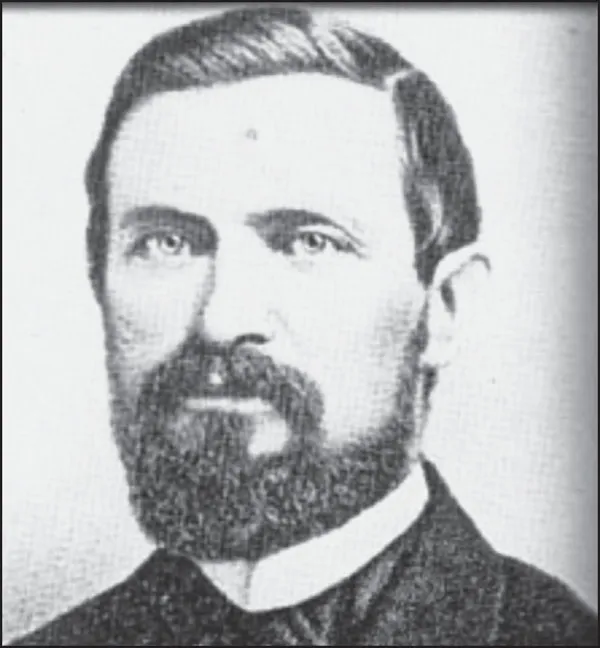
Thomas Wallace More was murdered late in the night of March 23, 1877. Seven men allegedly met at Frank Sprague’s store at Rancho Sespe, used gunny sacks as masks, and made their way to the More house. Two of them positioned themselves at the gate of the corral while the others set the barn on fire. The commotion awakened More and his employees. More rushed out to the barn to save the animals. After he retrieved some harnesses, he came out into the open and was shot. As he tried to struggle to his feet, several of the men pumped shotgun lead into his head. More lay dead. Eventually, seven men were indicted. Sprague was the only man convicted, and he spent seven years in San Quentin before he was pardoned by the governor and released.
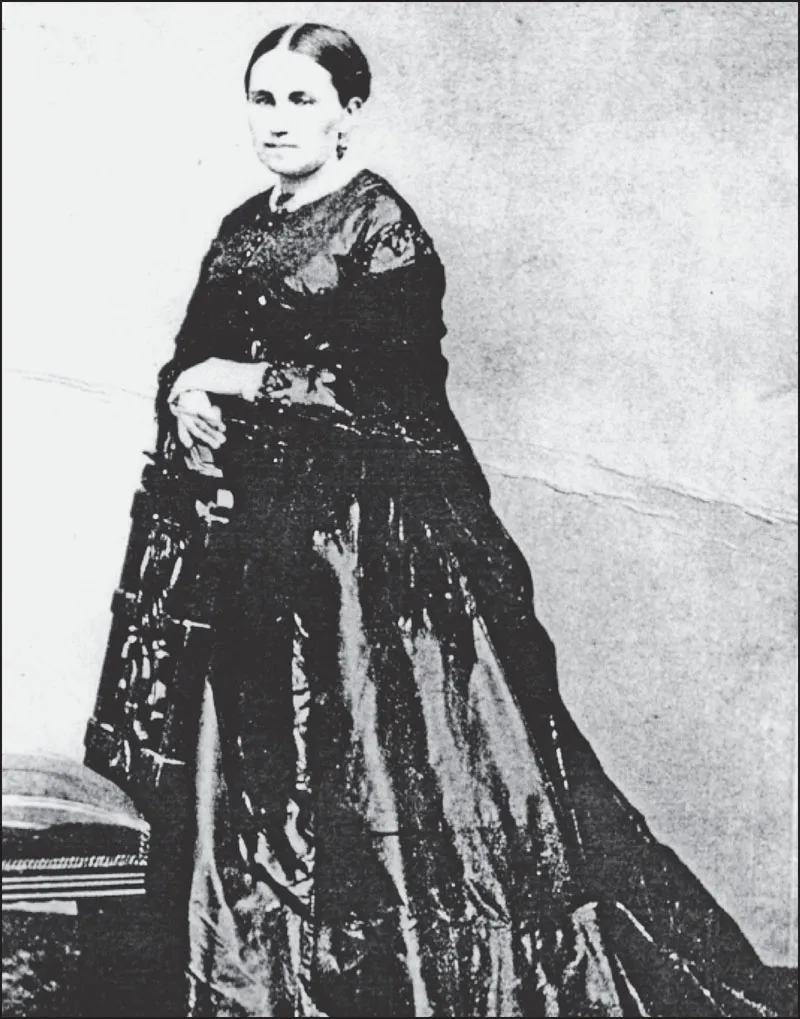
Susana Hill More, Thomas More’s wife, was the daughter of Daniel Hill and Rafaela Sabina Luisa Ortega. Susana’s maternal grandfather was Capt. Jose Francisco Ortega, who founded the San Francisco Presidio. He was also instrumental in founding Mission Santa Barbara. Susana and Thomas More had four sons and a daughter. Their daughter, Mattie, married Charles A. Storke, who assisted the More descendants with business transactions after Thomas’s murder in 1877 and after Susana’s death in 1879. (Courtesy of Evie Ybarra collection.)

This photograph shows a view overlooking Rancho Sespe and facing north toward San Cayetano Mountain. California condors could be seen flying near San Cayetano Mountain before they became endangered. Now, this bird is protected and has an area labeled the Sespe Condor Sanctuary, which is back in the Sespe wilderness.
Two
EUDORA HULL SPALDING
AND KEITH SPALDING
AND KEITH SPALDING
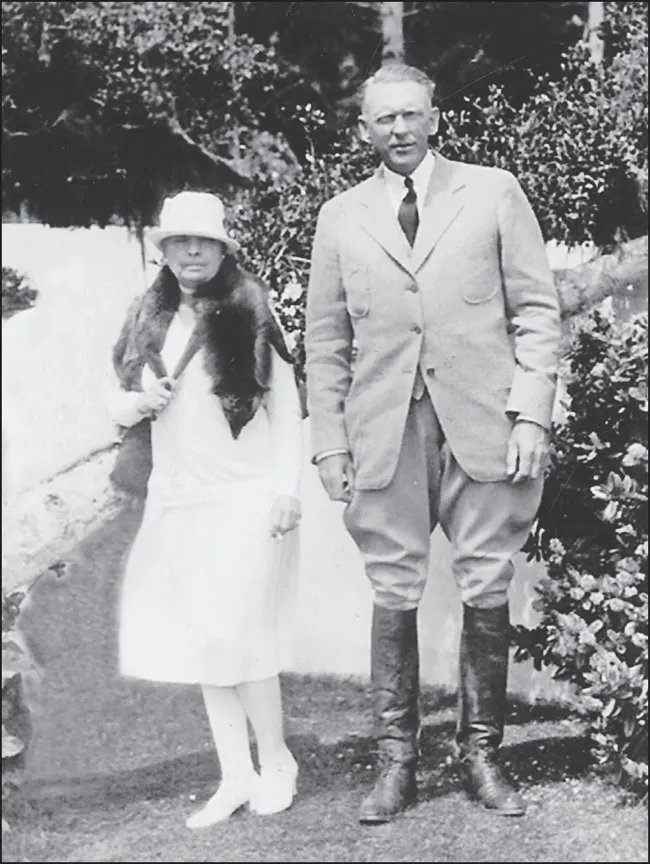
In 1888, Morton Hull from Chicago, a financier and businessman, foreclosed on the Rancho Sespe mortgage, and in 1895, he gave half of this property to his daughter, Eudora Hull, and the other half to his son, Morton. Later, Eudora purchased her brother’s half, and she became the sole owner. Eudora and Morton were twins, born on January 13, 1867. Eudora married Keith Spalding on December 29, 1906; he was 10 years younger than she. Together, they made Rancho Sespe a working citrus ranch in the early 20th century. Keith and Eudora Spalding spent time living at Rancho Sespe and at their home in Pasadena. Married until her death in 1942, they enjoyed the outdoors and traveling to numerous locales throughout the world. (Courtesy of FHM.)
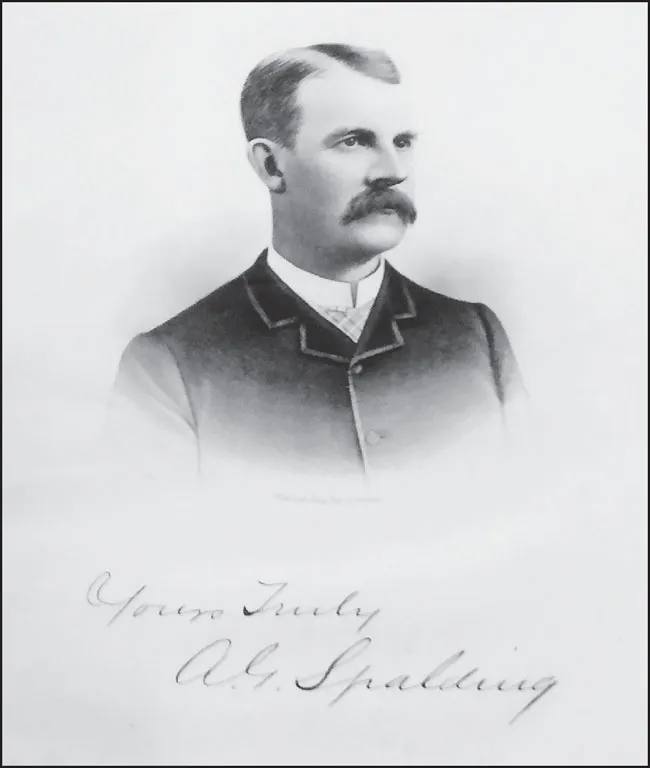
Albert Goodwill Spalding was Keith Spalding’s father. Albert transformed the game of baseball into a professional sport. Albert was a star pitcher in his early years, and following the 1888 season, he led a group of 20 National League players on a “round the world” tour to eight countries, including Egypt and France. They posed with the Sphinx, and Albert viewed this trip as a public relations vacation, since he wanted good men whose clean habits would reflect well on the United States and the game of baseball. He designed sports equipment for the game and a rule book. He is the founder of the Spalding sporting goods company, which has since been sold. Albert Spalding died in 1915 in San Diego, and he was elected to the National Baseball Hall of Fame in 1939. (Courtesy of FHM.)

Keith is shown with his car in front of the Spalding bungalow on the Rancho Sespe property. He hired the architectural firm of Green and Green to design the bungalow and guesthouse as well as the first bunkhouse for the workers. (Courtesy of FHM.)

The Spalding ranch house was built in 1910 and it is now California Historical Landmark No. 135, along with the guesthouse and a stone wall on the Rancho Sespe property. Keith Spalding hired Harry Payton and Roy C. Wilson to build the ranch house. They constructed the singlestory wooden main house and a nearby guesthouse. The main bungalow was a dark-stained wood until 1934, when it was painted white. Also at that ...
Table of contents
- Cover Page
- Title Page
- Copyright Page
- Dedication
- Table of Contents
- Foreword and Acknowledgments
- Introduction
- 1. A Mexican Land Grant and the T. Wallace More Murder
- 2. Eudora Hull Spalding and Keith Spalding
- 3. Life on Rancho Sespe
- 4. Childhood Memories
- 5. Heroes
- 6. Rancho Sespe and Fillmore in the Modern Age
- Afterword
- Bibliography and Contributors
- Index
Frequently asked questions
Yes, you can cancel anytime from the Subscription tab in your account settings on the Perlego website. Your subscription will stay active until the end of your current billing period. Learn how to cancel your subscription
No, books cannot be downloaded as external files, such as PDFs, for use outside of Perlego. However, you can download books within the Perlego app for offline reading on mobile or tablet. Learn how to download books offline
Perlego offers two plans: Essential and Complete
- Essential is ideal for learners and professionals who enjoy exploring a wide range of subjects. Access the Essential Library with 800,000+ trusted titles and best-sellers across business, personal growth, and the humanities. Includes unlimited reading time and Standard Read Aloud voice.
- Complete: Perfect for advanced learners and researchers needing full, unrestricted access. Unlock 1.4M+ books across hundreds of subjects, including academic and specialized titles. The Complete Plan also includes advanced features like Premium Read Aloud and Research Assistant.
We are an online textbook subscription service, where you can get access to an entire online library for less than the price of a single book per month. With over 1 million books across 990+ topics, we’ve got you covered! Learn about our mission
Look out for the read-aloud symbol on your next book to see if you can listen to it. The read-aloud tool reads text aloud for you, highlighting the text as it is being read. You can pause it, speed it up and slow it down. Learn more about Read Aloud
Yes! You can use the Perlego app on both iOS and Android devices to read anytime, anywhere — even offline. Perfect for commutes or when you’re on the go.
Please note we cannot support devices running on iOS 13 and Android 7 or earlier. Learn more about using the app
Please note we cannot support devices running on iOS 13 and Android 7 or earlier. Learn more about using the app
Yes, you can access Rancho Sespe by Becky Morales,Ernie Morales,Evie Ybarra in PDF and/or ePUB format, as well as other popular books in History & Agribusiness. We have over one million books available in our catalogue for you to explore.