- 128 pages
- English
- ePUB (mobile friendly)
- Available on iOS & Android
eBook - ePub
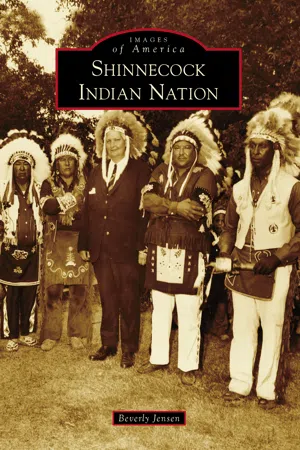
Shinnecock Indian Nation
About this book
The history of the "People of the Shore" detailed in Shinnecock Indian Nation.
The Shinnecock have resided along the shores of eastern Long Island for more than 10,000 years. These hunter-gatherers were also skilled whalers who first tackled the Atlantic in their dugout canoes and later became highly regarded crew members on 19th-century whaling ships that sailed the globe. The Shinnecock were also noted wampum makers, using the northern quahog hard-shelled clam and whelk shells to craft some of the finest-quality wampum beads to be found anywhere along the eastern seaboard. Since the first tall ships sailed into the local waters in the 1500s, new settlers and shifty land deals have diminished the ancestral territory of the Shinnecock Indian Nation. Despite overwhelming odds, however, and in the midst of immense privilege and wealth of their Hamptons neighbors, the Shinnecock remain. They are a federally recognized tribe with more than 1,500 enrolled members and are governed by a seven-member council of trustees.
Trusted by 375,005 students
Access to over 1.5 million titles for a fair monthly price.
Study more efficiently using our study tools.
Information
One
PEOPLE OF THE SHORE

Shown here is a small replica of a traditional Shinnecock dwelling that was built by a Shinnecock tribal member sometime between 1890 and 1900. Up through the 1840s, some Shinnecock still used these dwellings as well as timber-framed houses. This photograph is one of only two known historic visual records of a traditional Native American, pre-European-style home on Long Island. (Courtesy of the Shinnecock Nation Cultural Center and Museum.)
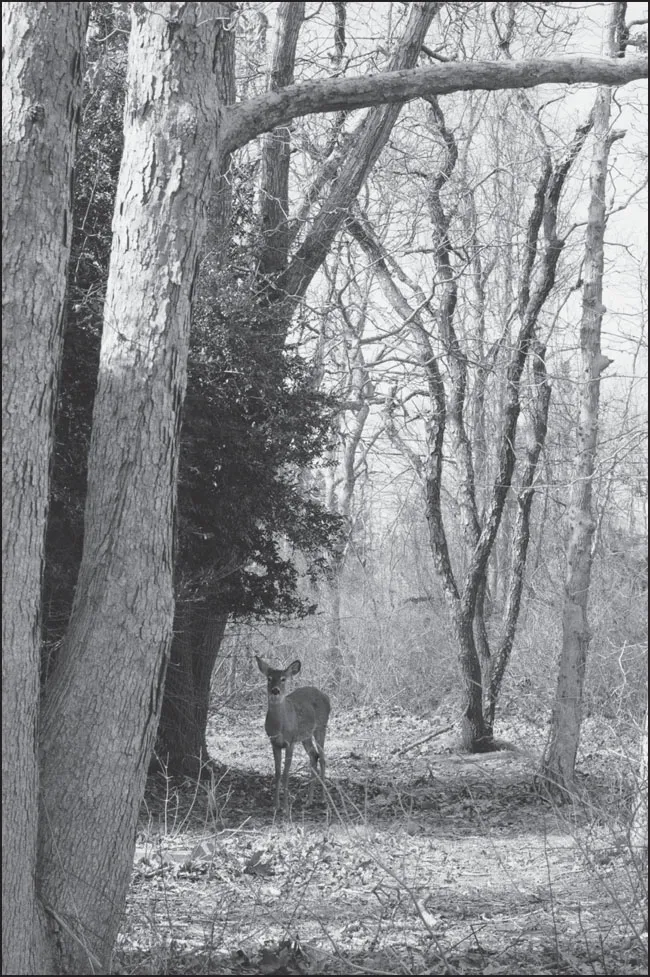
Deer was important to people of tradition. In addition to being a mythical symbol in some creation stories, deer has and continues to be a source of food. The meat can be cooked in a variety of ways, and deer dishes often show up on dining tables during winter months. One Shinnecock recently perfected a recipe for deer chili. Deer hide is used for male and female articles of clothing as well as moccasins and boots. In fact, every part of the deer is useful. (Photograph by Beverly Jensen.)

The turtle is also a mythical symbol appearing in many Native American myths and creation stories. In many, the turtle represents the Earth Mother. Some believe that there were 13 tribes on Long Island and that the 13 markings on box turtle’s back represent those tribes. (Photograph by Beverly Jensen.)

For residents of the Atlantic side of Long Island, the ocean is a mighty and unpredictable presence, with gentle waves tumbling in or thunderous waves crashing to shore loudly broadcasting its mood. Ancient Shinnecock, who sought whales and other denizens of the deep from their dugout canoes, knew when to relocate to higher ground, moving away from oceanic tides and thrashing ocean winds. Pictured here is an Atlantic Ocean sunfish, photographed by the author off Montauk Point in the summer of 2014. (Photograph by Beverly Jensen.)

Originally crafted as strings of one-quarter-inch-wide cylindrical beads for making belts, wampum has become a defining cultural icon for Long Island and southern New England tribes. One reason is because the basic raw material—the hard shell of the northern quahog clam—has been so readily available throughout history in the saltwater bays and ponds between Cape Cod and Long Island. In Colonial times, strings of wampum were used as currency to seal deals. Today, along with eastern coastal tribes, native artisans from across the country have found favor with the thick shell and have joined the eastern brethren in creating rich purplish and white rings, earrings, necklaces, bracelets, and any number of jewelry items. These shells were polished by wampum artist Herman “Chuck” Quinn (Shinnecock). (Photograph by Beverly Jensen.)

Painted by Shinnecock artist David Bunn Martine, this is a full-color oil portrait of a Shinnecock Indian at his campsite with wife and child at twilight in early fall. He is dressed in typical Native American clothing of the Algonquian woodlands culture of Long Island during the early years of European contact in the late 17th and 18th centuries. The clothing includes a wampum belt. Shinnecock craftspeople were noted throughout the Northeast and beyond for manufacturing wampum beads of superior quality. His traditional home, seen in the background, is made of thatched meadow grass. (Photograph by Richard T. Slattery; courtesy of David Bunn Martine.)

Seen here is the official seal of the Shinnecock Indian Nation. The gold flag of the Shinnecock carries the tribe’s official seal, which was designed by Shinnecock artist David Bunn Martine and approved by the nation. The seal depicts the history of the Shinnecock, the People of the Shore. It includes a wampum belt; four wickiups (houses) representing early Shinnecock families; three prehistoric symbols of the Shinnecock—thunderbird, deer, and turtle; two right whales representing the tribe’s whaling history; and a rising sun, promising a bright future. (Courtesy of the Shinnecock Indian Nation.)

At the beginning of the European contact period, there were more than a dozen Long Island tribal nations, including the Montauk and Manhasset on the eastern end of the island and the Unkechaug, Setauket, Massapequa, Matinecock, Rockaway, and Canarsee to the west. Today, the federally recognized Shinnecock and the state recognized Unkechaug Nation at Poospatuck occupy the island’s only two reservations. (Map of Long Island, NY; 29.08.2006; NY; Author: Timo Forcheim [Tzign].)

The Shinnecock are known as the “People of the Shore” and the “People of the Stony Shore,” interchangeably. This picture shows that area beaches and cleansing waters where the Shinnecock have harvested fish and shellfish for centuries are also rich with plankton and stones smoothed and polished by the tides. (Photograph by Beverly Jensen.)
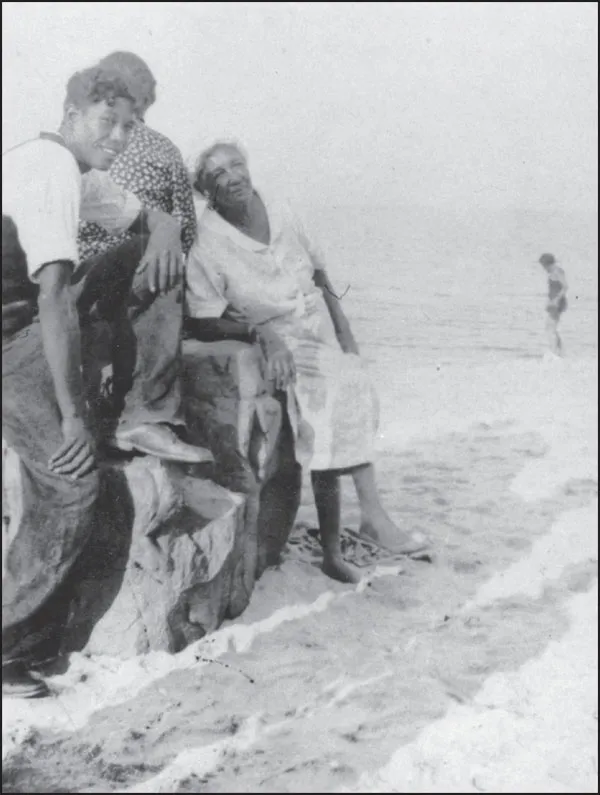
Giant rocks appear on tribal lands in Westwoods, Hampton Bays. This site off the Peconic Bay has large rocks along the shore, which have been a part of tribal shore lore for generations. In the 1940s, tribal member Lace Eleazer (left) was photographed with relatives there, including Nettie Cuffee Eleazer (facing the camera). (Courtesy of Eugene E. Cuffee II.)

A rock of ages can be found at the shoreline of the tribal beach in Westwoods. It has probably been there since the last Ice Age and if left undisturbed will remain a distinguished and familiar marker for future generations of Shinnecock. (Photograph by Beverly Jensen.)

Another such rock was removed from the tribal beach at Westwoods, placed at the reservation flagpole, and embellished with a plaque honoring the Shinnecock men and women who served in the US military defending the Mother L...
Table of contents
- Cover Page
- Title Page
- Copyright Page
- Dedication
- Table of Contents
- Acknowledgments
- Introduction
- 1. People of the Shore
- 2. A Seafaring Heritage
- 3. Art for a Purpose
- 4. A Future from the Past
- 5. Place of the Heart
- 6. Women of the Shore
- 7. Men of the Shore
- 8. Wickiup to Wood
- 9. Gatherings
- 10. Powwows
Frequently asked questions
Yes, you can cancel anytime from the Subscription tab in your account settings on the Perlego website. Your subscription will stay active until the end of your current billing period. Learn how to cancel your subscription
No, books cannot be downloaded as external files, such as PDFs, for use outside of Perlego. However, you can download books within the Perlego app for offline reading on mobile or tablet. Learn how to download books offline
Perlego offers two plans: Essential and Complete
- Essential is ideal for learners and professionals who enjoy exploring a wide range of subjects. Access the Essential Library with 800,000+ trusted titles and best-sellers across business, personal growth, and the humanities. Includes unlimited reading time and Standard Read Aloud voice.
- Complete: Perfect for advanced learners and researchers needing full, unrestricted access. Unlock 1.5M+ books across hundreds of subjects, including academic and specialized titles. The Complete Plan also includes advanced features like Premium Read Aloud and Research Assistant.
We are an online textbook subscription service, where you can get access to an entire online library for less than the price of a single book per month. With over 1.5 million books across 990+ topics, we’ve got you covered! Learn about our mission
Look out for the read-aloud symbol on your next book to see if you can listen to it. The read-aloud tool reads text aloud for you, highlighting the text as it is being read. You can pause it, speed it up and slow it down. Learn more about Read Aloud
Yes! You can use the Perlego app on both iOS and Android devices to read anytime, anywhere — even offline. Perfect for commutes or when you’re on the go.
Please note we cannot support devices running on iOS 13 and Android 7 or earlier. Learn more about using the app
Please note we cannot support devices running on iOS 13 and Android 7 or earlier. Learn more about using the app
Yes, you can access Shinnecock Indian Nation by Beverly Jensen in PDF and/or ePUB format, as well as other popular books in History & North American History. We have over 1.5 million books available in our catalogue for you to explore.