eBook - ePub
Whitehall
About this book
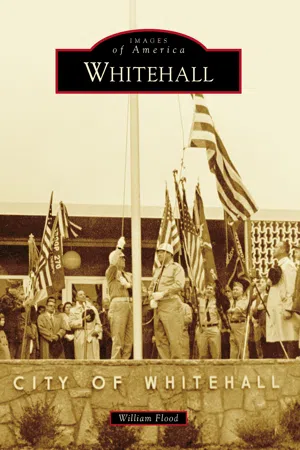
The city of Whitehall, skirting the eastern edge of Columbus, Ohio, is an undiscovered treasure of postwar America. The Lustron Corporation, based in Whitehall, lays claim to the origins of the prefabricated housing industry. The nation's first shopping center, the Town and Country, was built in the village in the late 1940s. The National Road passes through Whitehall, which helped create businesses offering lodging, meals, and entertainment on par with those along the storied Route 66. Images of America: Whitehall also pays homage to one of the most beloved tiki restaurants ever to grace the country: the famed Kahiki. This chronicle seeks to honor the amazing history of the "City of Pride."
Trusted by 375,005 students
Access to over 1 million titles for a fair monthly price.
Study more efficiently using our study tools.
Information
One
A WHITEHALL VIGNETTE
Whitehall’s history reaches back over 100 years, or over 2,000 considering the presence of the Adena culture or the Native Americans who came before them. Yet, the real story of Whitehall is decidedly 20th century, particularly the second half.
The decades before 1950 brought early development, with notable places and organizations like Norton Air Field, the Defense Construction Supply Center, Curtiss-Wright Aviation, the Columbus Country Club, and the Port Columbus Airport. Even more of Whitehall’s story is post-war. It is not until the housing crisis of the late 1940s, the subsequent boom, and the emergence of American car culture that Whitehall evolved from a rural village to a thriving Columbus suburb.
The generations who grew up here before the chain stores and rental houses reminisce about good jobs with employers like North American Aviation or about travelers coming from miles around to shop the “Miracle Mile” or sleep in one of US Route 40’s many motor hotels as they passed through town. They speak of ice cream at Stewart’s Root Beer and spending summer days at Swimland with their friends or of riding their Schwinns on bucolic streets past the blocks of tidy post-war homes and the farm fields yet to be developed.
Those who “know” Whitehall remember what once put the area on the map: the Town and Country Shopping Center, considered the nation’s first and a testament to how the automobile changed where and how people lived and shopped; the Lustron Corporation and its goal to mass-produce prefabricated steel homes to solve the post-war housing crisis; the Norton Homes Addition, which was a destination for post-war housing; landmark restaurants like Emil’s, the Desert Inn, and the beloved Kahiki tiki restaurant, which was sadly lost in 2000; and, finally, Whitehall’s stretch of US Route 40, also known as the National Road, which served as an oasis of gas, food, and lodging for travelers prior to the completion of the interstate.
Today, Whitehall is in a struggle familiar to so many first-ring suburbs. Trapped between progress and decline, it is trying to retain a sense of its history before too much of its identity is lost.

THE WHITEHALL INN. This photograph is of the Whitehall Inn and Tavern, probably in the 1940s. The inn sat on East Main Street across from where the Walmart gas station sits today. It stood from approximately the 1830s to 1963, when it was replaced by apartments. (Courtesy of the Whitehall Historical Society.)

ADENA MOUND. This Adena mound in Columbus, Ohio, is similar, though larger, to the one found on the grounds of the Columbus Country Club. These earthen mounds range in size from around 20 to 300 feet in diameter and served as burial or ceremonial sites. Only a small number of Adena earthen mounds remain today. (Author’s collection.)
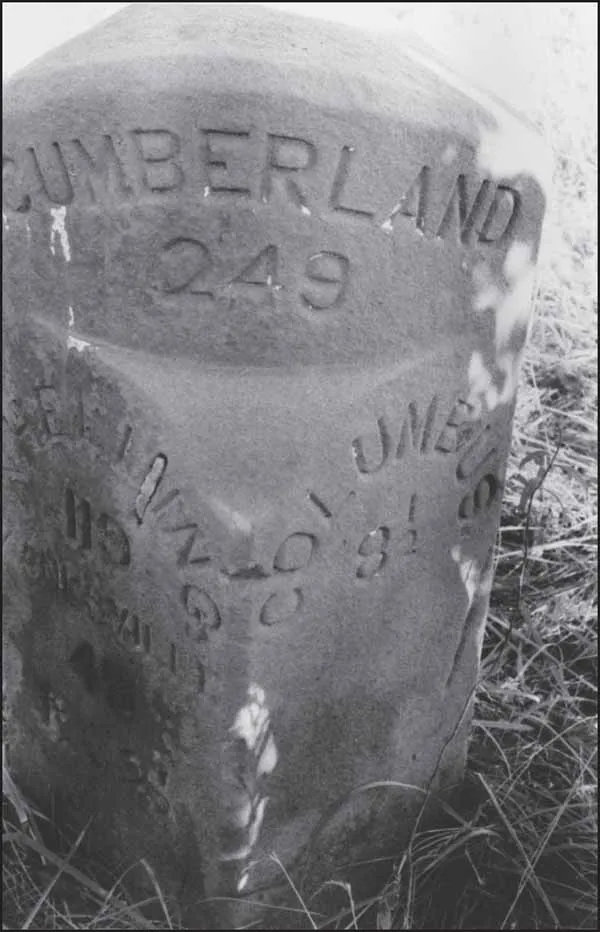
NATIONAL ROAD MILE MARKER. East Main Street in Whitehall is part of US Route 40, also known as the National Road. The National Road was the first major improved road in the United States. Construction began in 1811 in Cumberland, Maryland, and the road eventually terminated in Vandalia, Illinois. (Courtesy of the Whitehall Historical Society.)

EARLY SCHOOLS. This class photograph was taken at the Cedarhurst School (eventually the East Broad Street School) in the area of what was then called Cedarhurst. It shows either the class of 1919–1920 or 1920–1921. (Courtesy of the Whitehall Historical Society.)

WHITEHALL PLACES OF WORSHIP. In the 1950s, there were 16 churches in Whitehall. Whitehall United Methodist Church on Bernhard Road was founded in 1955. It originated as a congregation on South Ohio Avenue in Columbus and was called Evangelical United Brethren Church before becoming Whitehall United Church. In the 1960s, it reformed as the Whitehall United Methodist Church. The building shown was constructed in 1969. (Author’s collection.)

NORTON FIELD. The field was established around 1920 on 100 acres of farmland leased to the Aero Club of Columbus by the Pure Oil Company and was dedicated in 1923. This image is from 1936, showing one of the original hangars and possibly the Aero Club itself. (Courtesy of the Whitehall Historical Society.)

PORT COLUMBUS INTERNATIONAL AIRPORT. Port Columbus’s origins can be traced back to 1929, with a site selected by Charles Lindbergh as part of the Transcontinental Air Transport Service. This 1941 photograph shows a still-small Port Columbus. The original hangar in the background still stands. (Author’s collection.)

DEFENSE CONSTRUCTION SUPPLY CENTER. Dating to 1918, the Defense Construction Supply Center of Columbus was originally called the Columbus Quartermaster Reserve Depot and informally known as “the Depot.” The facility is used as a logistics hub for military equipment and supplies going overseas. (Courtesy of the Whitehall Historical Society.)

NAVAL AIR STATION COLUMBUS. This 1940s-era aerial view shows the Port Columbus Airport and the C...
Table of contents
- Cover Page
- Title Page
- Copyright Page
- Dedication
- Table of Contents
- Acknowledgements
- Introduction
- 1. A Whitehall Vignette
- 2. Roots of the Community
- 3. The War Decades
- 4. Post-War Housing and Post-War Growth
- 5. Diners, Drive-ins, and Polynesia!
- 6. The Times Were A-Changing
- 7. Where Has Whitehall Gone?
Frequently asked questions
Yes, you can cancel anytime from the Subscription tab in your account settings on the Perlego website. Your subscription will stay active until the end of your current billing period. Learn how to cancel your subscription
No, books cannot be downloaded as external files, such as PDFs, for use outside of Perlego. However, you can download books within the Perlego app for offline reading on mobile or tablet. Learn how to download books offline
Perlego offers two plans: Essential and Complete
- Essential is ideal for learners and professionals who enjoy exploring a wide range of subjects. Access the Essential Library with 800,000+ trusted titles and best-sellers across business, personal growth, and the humanities. Includes unlimited reading time and Standard Read Aloud voice.
- Complete: Perfect for advanced learners and researchers needing full, unrestricted access. Unlock 1.4M+ books across hundreds of subjects, including academic and specialized titles. The Complete Plan also includes advanced features like Premium Read Aloud and Research Assistant.
We are an online textbook subscription service, where you can get access to an entire online library for less than the price of a single book per month. With over 1 million books across 990+ topics, we’ve got you covered! Learn about our mission
Look out for the read-aloud symbol on your next book to see if you can listen to it. The read-aloud tool reads text aloud for you, highlighting the text as it is being read. You can pause it, speed it up and slow it down. Learn more about Read Aloud
Yes! You can use the Perlego app on both iOS and Android devices to read anytime, anywhere — even offline. Perfect for commutes or when you’re on the go.
Please note we cannot support devices running on iOS 13 and Android 7 or earlier. Learn more about using the app
Please note we cannot support devices running on iOS 13 and Android 7 or earlier. Learn more about using the app
Yes, you can access Whitehall by William Flood in PDF and/or ePUB format, as well as other popular books in History & North American History. We have over one million books available in our catalogue for you to explore.