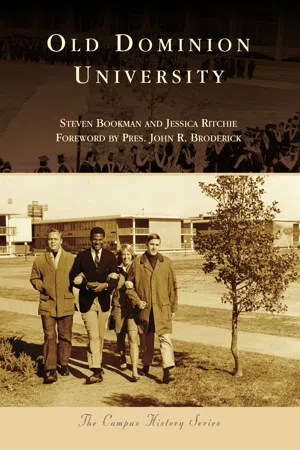
- 128 pages
- English
- ePUB (mobile friendly)
- Available on iOS & Android
eBook - ePub
Old Dominion University
About this book
The story of Old Dominion University began during one of the most uncertain times in American history. In 1930, as the country sank deeper into the Great Depression, the College of William and Mary opened a two-year extension school in nearby Norfolk, Virginia, to provide affordable, quality education to the community. Embracing its founding spirit of innovation, the school rapidly evolved into an independent, four-year college and adopted Virginia's nickname "Old Dominion." As the country transformed during the 1960s, so did the college, and by 1969, it had progressed into a dynamic public university. Now with over 250 academic programs, nine colleges, and approximately 25,000 students representing over 100 countries, Old Dominion University continues to pride itself on forward-thinking research, inclusiveness, and strategic partnerships.
Trusted by 375,005 students
Access to over 1.5 million titles for a fair monthly price.
Study more efficiently using our study tools.
Information
One
THE START OF
SOMETHING BIG
SOMETHING BIG
The story of Old Dominion’s founding is one of hope, perseverance, and progress. During the 1920s, leading citizens in Norfolk, Virginia, worked to bring a local higher education institution to the densely populated city. Based in Williamsburg, Virginia, W&M seemed like a natural choice for establishing an extension school in Norfolk, since it had been offering courses there since 1919. It also helped that that a number of its supporters had strong ties to Norfolk and the college was within driving distance. When Norfolk city leaders began exploring other options in neighboring Virginia Beach, W&M decided to act and officially established the Norfolk Division in 1930.
The next step in the process was identifying a place to house the division. Joseph E. Healy, the director of W&M’s extension program and junior high school principal, recommended using the abandoned Larchmont School on Hampton Boulevard. Other stakeholders in the project agreed and persuaded the Norfolk City Council to turn the school over to the college. After acquiring additional 12 acres and renovating the schoolhouse, the Norfolk Division registered 125 men and 81 women for its first semester in September 1930.
The Great Depression played a significant role in attracting people to the Norfolk Division. Tuition was only $50 per semester, and students could live at home with their parents. In 1931, the Virginia Polytechnic Institute (VPI), also known as Virginia Tech, offered two years of its standard engineering program at the Norfolk Division. The following year, enrollment increased at the division to 480 students. The quality of the faculty at the new Norfolk Division also contributed to its success, and many made long-lasting contributions to the school.
Throughout the next several decades, the Norfolk Division flourished. In 1962, the division gained its independence from W&M and became Old Dominion College. By 1969, it achieved another major milestone by offering master’s degrees and became a university. As Old Dominion looks toward the future, it continues to embrace the optimism, determination, and creative vision of its founders.

The original site for the Norfolk Division was the old Larchmont School at the northwest corner of Bolling Avenue and Hampton Boulevard. The site was known as “Science Hall” or the “Science Building” from the 1940s to 1954, when a new science building was constructed. During the 1960s and early 1970s, the building was used for various classes, such as English, art, and political science, but it was demolished in 1975.
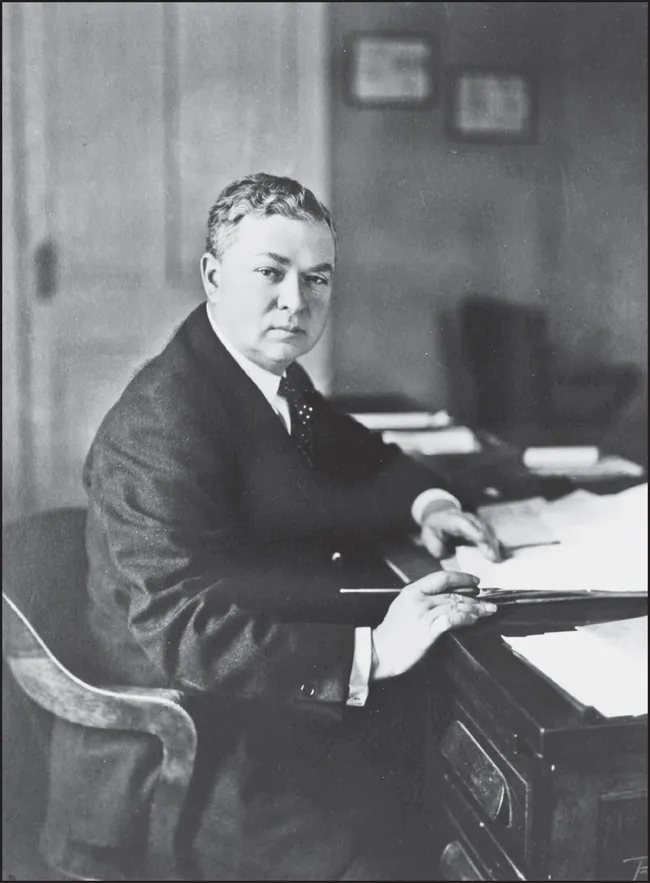
The president of W&M from 1919 to 1934, J.A.C. Chandler, was one of the driving forces behind the formation of the Norfolk Division along with Robert Morton Hughes. Faced with the threat of Tidewater-area students enrolling at another university, Dr. Chandler swiftly decided on the old Larchmont School off Hampton Boulevard as the site of the Norfolk Division. J.A.C. Chandler Memorial Hall, now Constant Hall, was named in his honor.
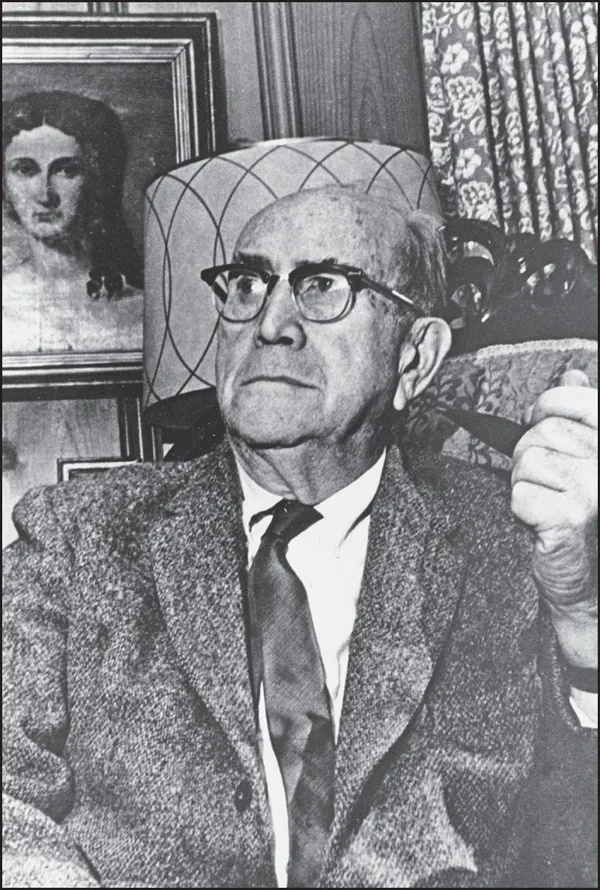
One of the founders of the Norfolk Division, Joseph E. Healy, served as director of the W&M extension in Norfolk from 1924 to 1930. In 1930, along with Norfolk attorney Robert Morton Hughes, Healy proposed the old Larchmont School as a site for the division to W&M president J.A.C. Chandler. Chandler accepted the site, and in September 1930, the Norfolk Division opened with 206 registered students.
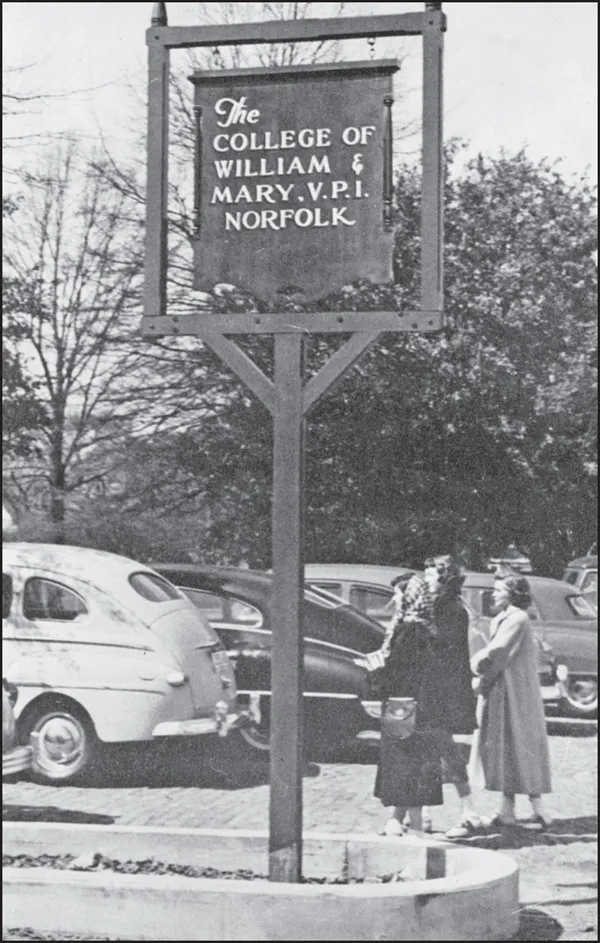
In 1931, the Norfolk Division established a partnership with VPI to offer the first two years of its standard engineering program to students in Norfolk. Edward White, who would serve as a professor of engineering at Old Dominion for 42 years, became the first director of the program. As a result of this partnership, which lasted until 1963, Old Dominion now has an internationally recognized engineering program.
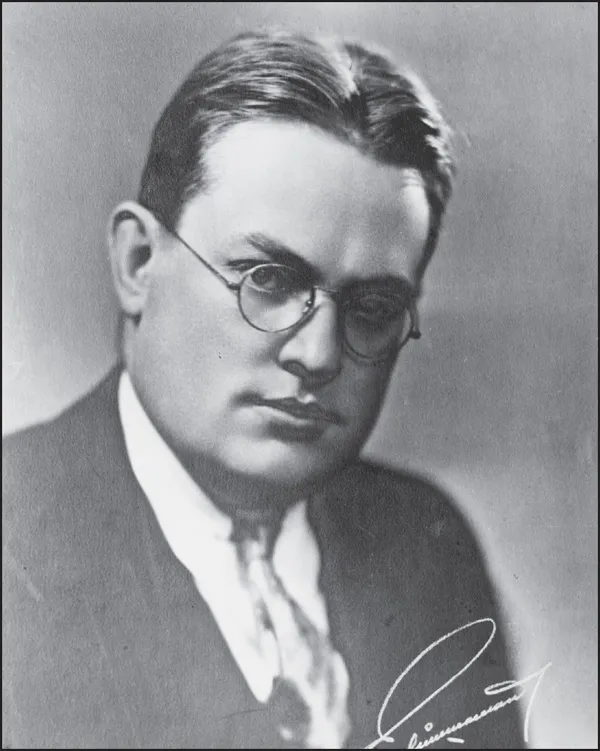
Appointed the first director of the Norfolk Division, H. Edgar Timmerman was just 29 when he came to Norfolk in the fall of 1930. Prior to the appointment, Timmerman was a doctoral candidate at Columbia University and an instructor in the History Department at New York University. He was well liked by both students and faculty and was known as an efficient administrator. Timmerman resigned in 1932 and later became a lawyer in New York.

When the Norfolk Division opened its doors in September 1930, the old Larchmont School was the only building on campus, seen here in the middle of the photograph on the far right. South of Bolling Avenue stood a large recreational field, which would soon be the location of the Administration Building and Foreman Field, both opening in 1936. Across Hampton Boulevard from the field was the site of the new Larchmont Elementary School.
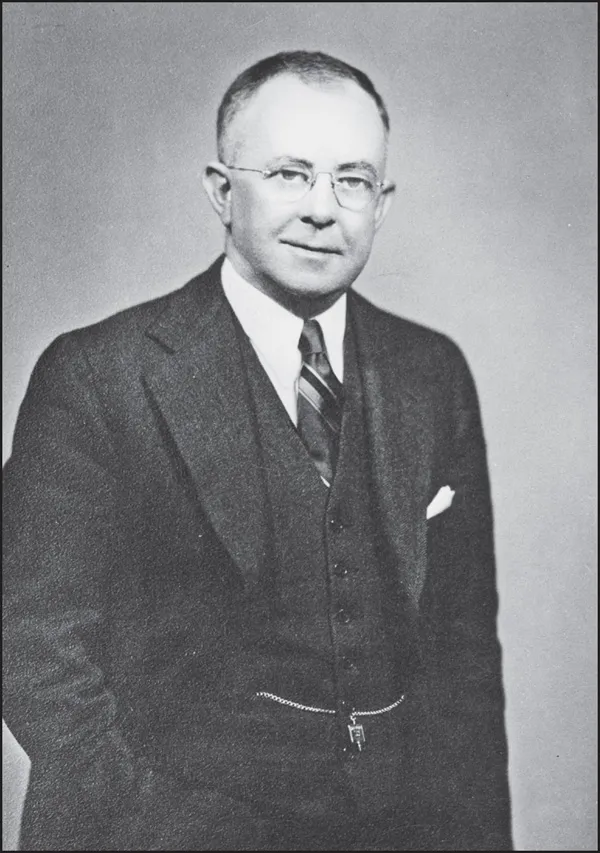
William T. Hodges, former dean of men at W&M, came to the Norfolk Division in 1933 to serve as director of the Norfolk Division. In 1941, W&M president John Stewart Bryan asked for the resignation of Hodges due to a scandal regarding fixing grades and credit hours for select students. Despite the tremendous support from students and the community, Hodges resigned in April 1941.

The Norfolk Division established free classes during World War II for students to attain the skills necessary to help with the war effort. Some of the classes included aircraft mechanics, topographic mapping, and civil aeronautics. By the end of the war, over 5,000 students had taken war training courses at the Norfolk Division, including women, and it was one of the largest programs on the East Coast.

An outgrowth of the war training program, the Technical Institute was established in 1945 to provide vocational skills for those over 16 in areas such as auto mechanics, drafting, photography, and air-conditioning. The Technical Institute opened in 1948 in an appropriated Army barrack complete with six classrooms and workshops as well as space for offices. With Virginia’s growing community college system and other vocational schools, the Technical Institute was phased out in the 1960s.

Established in 1946 by Lewis W. Webb Jr., the Norfolk Division Advisory Board was made up of local citizens and acted as a liaison between the Norfolk Division and the community. The advisory board was created to help grow the Norfolk Division and improve its service to the community. From 1946 to 1962, the advisory board raised funds for buildings, salaries, and the library. Board members included Charles L. Kaufman, Frank Batten, and E.T. Gresham.

In 1953, the W&M Board of Visitors approved the Norfolk Division’s request to add its first four-year programs in business administration, nursing, and teacher education. By 1960, a dozen more four-year programs were added...
Table of contents
- Cover Page
- Half Title
- Title Page
- Copyright Page
- Table of Contents
- Foreword
- Acknowledgments
- Introduction
- 1. The Start of Something Big
- 2. Evolution of a Campus
- 3. The Monarch Way of Life
- 4. A Mission of Diversity and Inclusion
- 5. Emphasis on Academics and Innovation
- 6. Monarch Madness
- 7. Community Matters
- 8. A Thriving Arts Village
- 9. Legacy of Leadership
- Bibliography
Frequently asked questions
Yes, you can cancel anytime from the Subscription tab in your account settings on the Perlego website. Your subscription will stay active until the end of your current billing period. Learn how to cancel your subscription
No, books cannot be downloaded as external files, such as PDFs, for use outside of Perlego. However, you can download books within the Perlego app for offline reading on mobile or tablet. Learn how to download books offline
Perlego offers two plans: Essential and Complete
- Essential is ideal for learners and professionals who enjoy exploring a wide range of subjects. Access the Essential Library with 800,000+ trusted titles and best-sellers across business, personal growth, and the humanities. Includes unlimited reading time and Standard Read Aloud voice.
- Complete: Perfect for advanced learners and researchers needing full, unrestricted access. Unlock 1.5M+ books across hundreds of subjects, including academic and specialized titles. The Complete Plan also includes advanced features like Premium Read Aloud and Research Assistant.
We are an online textbook subscription service, where you can get access to an entire online library for less than the price of a single book per month. With over 1.5 million books across 990+ topics, we’ve got you covered! Learn about our mission
Look out for the read-aloud symbol on your next book to see if you can listen to it. The read-aloud tool reads text aloud for you, highlighting the text as it is being read. You can pause it, speed it up and slow it down. Learn more about Read Aloud
Yes! You can use the Perlego app on both iOS and Android devices to read anytime, anywhere — even offline. Perfect for commutes or when you’re on the go.
Please note we cannot support devices running on iOS 13 and Android 7 or earlier. Learn more about using the app
Please note we cannot support devices running on iOS 13 and Android 7 or earlier. Learn more about using the app
Yes, you can access Old Dominion University by Steven Bookman,Jessica Ritchie in PDF and/or ePUB format, as well as other popular books in History & Education General. We have over 1.5 million books available in our catalogue for you to explore.