eBook - ePub
Irving
About this book
Irving, Texas, was founded in 1903 by two eager individuals, J.O. Schulze and Otis Brown, of the Chicago, Rock Island & Gulf Railway Company. Beginning as an agrarian area of farmland, cotton, and cattle, Irving grew to include industrial facilities while persevering through the financial difficulties resulting from the Civil War and the two world wars. Irving maintained its growth when other cities in the United States could not. Schulze and Brown recognized the importance of utilizing both agricultural and industrial resources in creating and sustaining a successful city. Remnants of early communities, such as Bear Creek, Elm, Estelle, Kit, Sowers, Twin Wells, and Union Bower, can still be identified. Situated between Dallas and Fort Worth, Irving is a robust and thriving city that has greatly contributed to the creation and preservation of Texas history.
Trusted by 375,005 students
Access to over 1 million titles for a fair monthly price.
Study more efficiently using our study tools.
Information
One
TRIBUTARIES OF DALLAS
COUNTY PRIOR TO 1900
COUNTY PRIOR TO 1900
Early settlers referred to western Dallas County as “the three forks region” because of the three major tributaries, which are streams of water that empty into a river. Two of the forks, Elm and West, merged in northwest Dallas County, forming the Trinity River. The West Fork converged in Wise and Tarrant Counties before moving into northwest Dallas County. The Elm Fork begins in Montague County and flows south into western Dallas County.
Settlers began moving into the area during the 1850s. The city of Irving was established between the West and Elm Forks of the Trinity River. During the second half of the 19th century, more settlers arrived and began small farming communities throughout the town. The communities were Bear Creek, Elm, Estelle, Kit, Sowers, Twin Wells, and Union Bower.

In 1842, Sam Houston, president of the republic, met with Indian tribal leaders on the Texas frontiers at Fort Bird and negotiated the Bird Fort Treaty. The terms of the treaty, signed in 1843, included peace and friendship between the republic of Texas and nine tribes: Chickasaw, Waco, Tiwocano, Keechie, Caddo, Anadaka, Ionie, Biloxie, and Cherokee. Indians camped at California, crossing on the Elm Fork of the Trinity River. They often traveled to this area along the Trinity River to hunt game and fish. Pictured here is the first page of the Bird Fort Treaty.

Located northwest of Dallas County, the Eagle Ford Bridge spanned the West Fork of the Trinity River. This bridge served as the major route to the town of Irving. (Courtesy of Portal to Texas History, University of North Texas.)

The Eagle Ford community was small. The sleepy community was known in Dallas County for having wild women, gambling, saloons, and gunslingers. The railroad came from Dallas with plans to expand to Fort Worth; however, construction came to a halt at Eagle Ford, creating a rail terminus. This terminus attracted a number of travelers, making this a popular community. When the Texas & Pacific Railway came to town, the terminus went away, and Eagle Ford went back to its quiet roots.

This photograph is titled “Sunday afternoon at the Trinity River.” Irving was established between the West Fork and the Elm Fork that converged to form the Trinity River. Many local residents enjoyed day and weekend trips camping at various sites along Trinity River, as seen here in 1910.
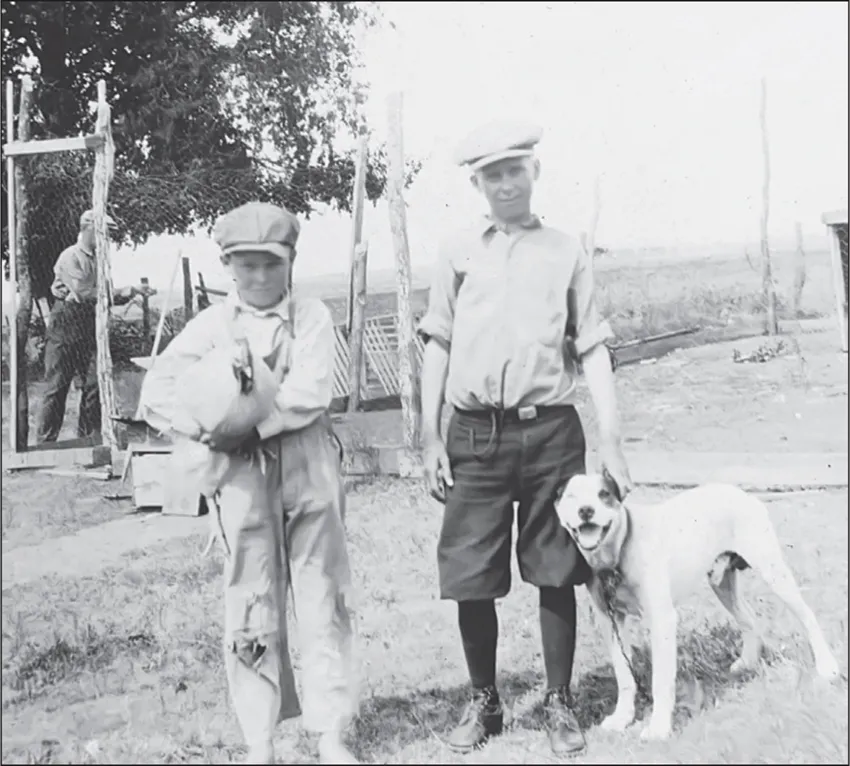
Raising poultry was common during this time. Children often adopted the chickens as pets until it was time to relinquish them to the dinner table. Farming communities ensured that these pets were fed and protected from the wild. Tommie Evans is pictured holding his prize-winning chicken.

Cotton and wheat were important crops for many pioneer families in the Kit community. Families picked cotton on their farms and sold it in Dallas, recognized as the world’s largest inland cotton market. Farmers could find hired hands for a dollar a day. Pictured here are cotton farmers in the Kit community. Cotton was the cash crop of the community.
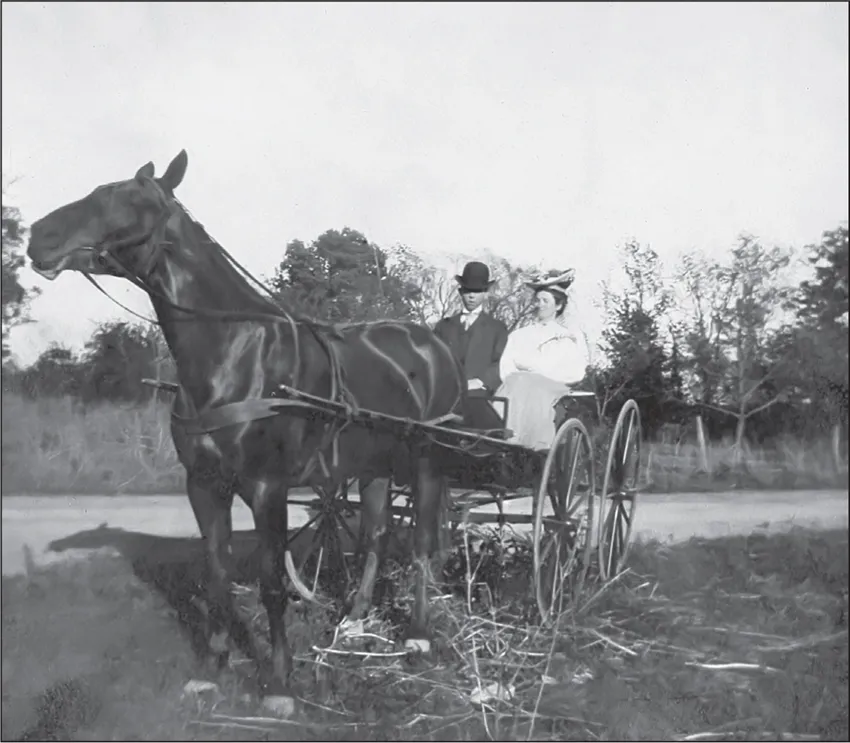
Horse-drawn vehicles were the main mode of transportation in the 1900s. Pictured here is a man and woman enjoying the scenery as they park on the side of the road in their vehicle.

Mail was delivered on horse and buggy, sometimes in poor conditions. The rain caused dirt roads to become muddy, which made delivering the mail virtually impossible. Earl Steel is pictured in his two-wheel mail buggy.

Freed slaves established Bear Creek in 1850, making it one of the oldest black communities in Dallas County. By 1900, nine black landowners had established homesteads in Bear Creek. These families sharecropped and farmed their own land. Bear Creek remained a separate entity from the rest of Irving. During the era of Jim Crow laws and segregation, African American residents settled in this community. Electricity was not available there until the mid-1940s. Among the first black pioneer landowners were Pinky Holmes and Jim Green. Children of Bear Creek are shown here posing on a wagon in 1925. These children played together and went to school together, but they were segregated from the rest of the communities. Members of the Bear Creek community stayed close to their homes during the time of segregation.

In 1850, settlers arrived in the Elm community, about 12 miles northwest of Dallas. Other settlers came from France and originally immigrated as members of the La Réunion colony, which was located right outside of Union Bower, southeast of Irving near the Elm community. When the colony failed, they moved to the Elm community. Elm farmers raised cotton, hay, dairy, fruits, and vegetables. In 1899, the first post office was established. The Finley Post Office served over 75 families until 1902, when the mail service was discontinued. The Elm community was annexed by the city of Irving in the 1950s. The Elm community store is pictured here in 1905.

The Estelle community was established in 1881 from a land grant to Henry Burgoon from the State of Texas. Estelle got its name from Burgoon, who decided to call this area Estell after a Grapevine Prairie architect while on a journey between Tarrant and Dallas Counties. As the community was in the beginnings of its establishment, a post office location was requested. However, the US Postal Service misnamed the post office as Estelle rather than Estell, as it was listed on the application. This community was located far northwest of Dallas County. Early Estelle community farmers raised wheat, corn, and cotton, also establishing large farmlands to raise cattle. Pictured here is a map of Estelle.

A form of matchmaking took place at this Estelle community picnic in 1907. At this gathering, single young men “threw their hats into the ring.” A hat was selected by a single young woman who had prepared a picnic lunch that was shared with the lucky owner of the hat.
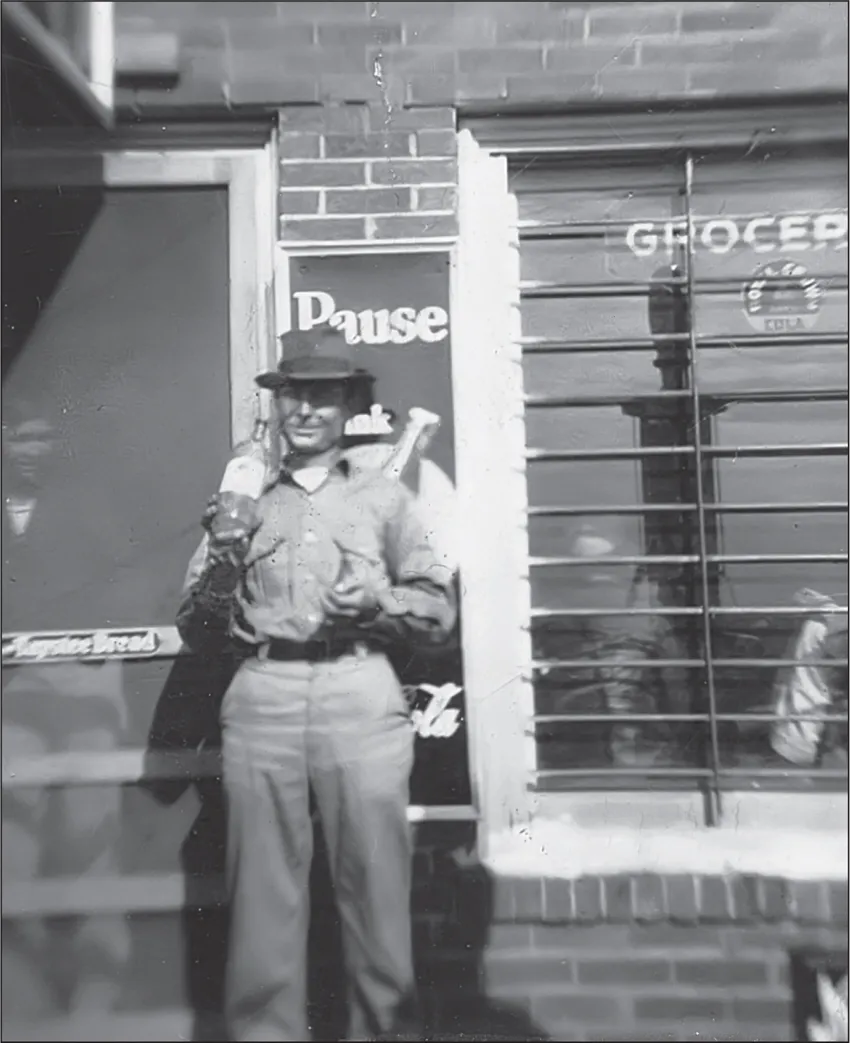
Each community provided conveniences such as a general store, post office, and specialty shops to its residents to ensure that they would frequent their community center. Pictured here is a local resident standing in front of a store in the Estelle community.

The settlers of the Kit community farmed and sold cordwood. Their far...
Table of contents
- Cover Page
- Title Page
- Copyright Page
- Dedication
- Table of Contents
- Acknowledgments
- Introduction
- 1. Tributaries of Dallas County Prior to 1900
- 2. Influential Founding Pioneers and Their Families
- 3. Inspiring Contributions of Irving Women
- 4. From Irving’s Redbrick House to the University of Dallas
- 5. Entering the Modern Era
- Bibliography
Frequently asked questions
Yes, you can cancel anytime from the Subscription tab in your account settings on the Perlego website. Your subscription will stay active until the end of your current billing period. Learn how to cancel your subscription
No, books cannot be downloaded as external files, such as PDFs, for use outside of Perlego. However, you can download books within the Perlego app for offline reading on mobile or tablet. Learn how to download books offline
Perlego offers two plans: Essential and Complete
- Essential is ideal for learners and professionals who enjoy exploring a wide range of subjects. Access the Essential Library with 800,000+ trusted titles and best-sellers across business, personal growth, and the humanities. Includes unlimited reading time and Standard Read Aloud voice.
- Complete: Perfect for advanced learners and researchers needing full, unrestricted access. Unlock 1.4M+ books across hundreds of subjects, including academic and specialized titles. The Complete Plan also includes advanced features like Premium Read Aloud and Research Assistant.
We are an online textbook subscription service, where you can get access to an entire online library for less than the price of a single book per month. With over 1 million books across 990+ topics, we’ve got you covered! Learn about our mission
Look out for the read-aloud symbol on your next book to see if you can listen to it. The read-aloud tool reads text aloud for you, highlighting the text as it is being read. You can pause it, speed it up and slow it down. Learn more about Read Aloud
Yes! You can use the Perlego app on both iOS and Android devices to read anytime, anywhere — even offline. Perfect for commutes or when you’re on the go.
Please note we cannot support devices running on iOS 13 and Android 7 or earlier. Learn more about using the app
Please note we cannot support devices running on iOS 13 and Android 7 or earlier. Learn more about using the app
Yes, you can access Irving by Roxanne Del Rio in PDF and/or ePUB format, as well as other popular books in Historia & Historia de Norteamérica. We have over one million books available in our catalogue for you to explore.