- 128 pages
- English
- ePUB (mobile friendly)
- Available on iOS & Android
eBook - ePub
The Scopes Monkey Trial
About this book
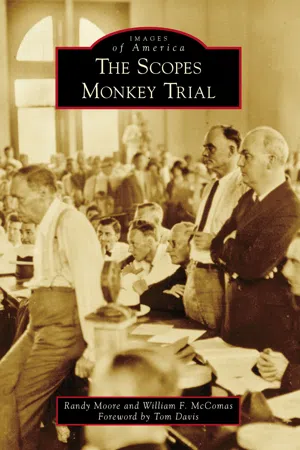
The 1925 case against high school coach and science teacher John Scopes, arrested for teaching evolution in defiance of a Tennessee state law, was America's original "Trial of the Century." The proceedings began as a publicity stunt but grew into a landmark event in the nation's history. The trial featured three-time presidential candidate and fundamentalist leader William Jennings Bryan, who argued on behalf of the prosecution, and famed agnostic attorney Clarence Darrow, who helped defend Scopes. Although the Scopes case produced no legal precedent, the trial has been analyzed by historians, praised and vilified by politicians and preachers, cited in countless legal, political, and theological skirmishes, and retold in plays, movies, museum exhibits, and television documentaries. Images of America: The Scopes Monkey Trial examines the events that captured the attention of the world and still have much to teach us today.
Trusted by 375,005 students
Access to over 1.5 million titles for a fair monthly price.
Study more efficiently using our study tools.
Information
One
THE ROAD TO DAYTON
Evolution is the greatest menace to civilization in the world today.
—John Washington Butler,
the legislator who drafted Tennessee’s antievolution law
the legislator who drafted Tennessee’s antievolution law
As the crusade against evolution gained momentum, its leaders grew impatient for results. Riley’s World Christian Fundamentals Association (WCFA), whose membership eventually exceeded five million, began several high-visibility campaigns to combat the teaching of evolution. In 1923, Oklahoma banned textbooks that included “the Darwin Theory of Creation versus the Bible Account of Creation.” That same year in Florida, legislators declared it “improper and subversive to the best interests of the people” for public school teachers to teach evolution “or any other hypothesis that links man in blood relationship to any form of lower life.” However, neither of these victories had a significant impact; the Oklahoma law applied only to grades in which evolution was not taught, and Florida’s nonbinding resolution lacked the force of law.
Fundamentalists wanted a law banning the teaching of human evolution in public schools, and they got it in Tennessee. In early 1925, legislator John Washington Butler—who believed evolution was “the greatest menace to civilization in the world today”—introduced legislation banning the teaching of human evolution in Tennessee’s public schools; violations were punishable by a fine of $100 to $500, a point that would become important during the appeal of Scopes’s conviction. Butler’s bill initially languished, and after a legislative recess in February, many observers believed the bill would die. But during that recess, fundamentalist preacher Billy Sunday’s 18-day revival in Memphis drew more than 200,000 attendees, who heard Sunday denounce evolution as Satanic and evolutionists as “godforsaken cutthroats.” When the legislature reconvened, it quickly passed Butler’s bill and sent it to Gov. Austin Peay, who had earlier warned Tennessee that “something is shaking the fundamentals of the country.” Harcourt Morgan, a biologist and the president of the University of Tennessee, feared that opposing Butler’s legislation would hurt funding for the university, and he urged his faculty to remain silent about the bill. As he wrote to Governor Peay, “The subject of Evolution so intricately involves religious beliefs, concerning which the University has no disposition to dictate, that the University declines to engage in the controversy.”
Although Peay wondered if Butler’s legislation was necessary, he admitted that citizens “must have the right to regulate what is taught in their schools,” and he signed the bill on March 21, 1925, in part to guarantee passage of another bill requiring teachers to read the Bible in class every day. Butler’s bill, which became known as the Butler Act (chapter 27 of 1925’s Public Acts of Tennessee), became the most famous of all the antievolution laws. Soon after its passage, Butler’s legislation became the starting point of the Scopes Trial.
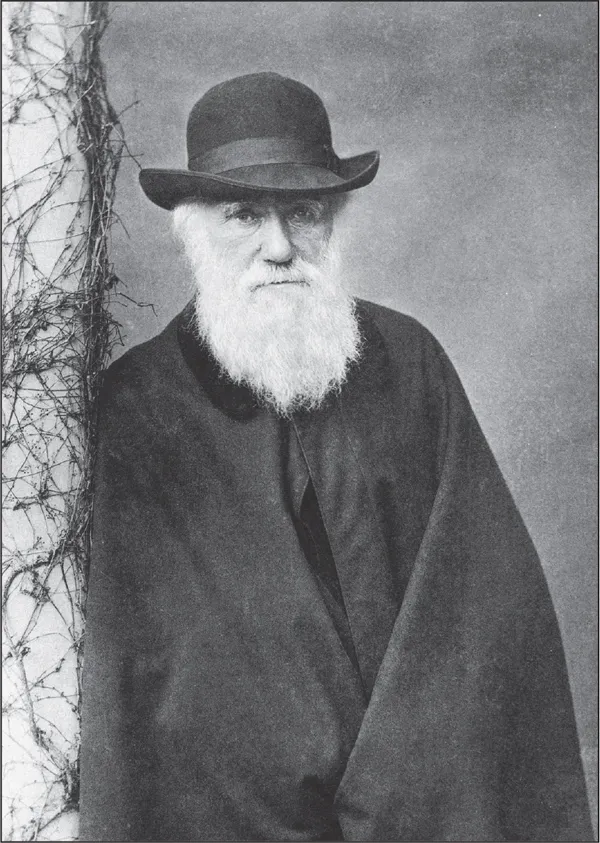
In 1859, British naturalist Charles Robert Darwin published On the Origin of Species, in which he proposes a mechanism for evolution, commonly known as natural selection. Although Darwin’s book was controversial among the British clergy, it was relatively noncontroversial in the United States because the public was reassured by several leading scientists that Darwin’s ideas were compatible with mainstream Christianity. (The American public was also preoccupied with events that would lead to the American Civil War less than two years later.) By the time he died in 1882, Darwin had written six editions of his famous book. Before long, some American theologians were blaming the teaching of evolution for a variety of societal ills. Forty-three years after Darwin’s death, the Scopes Trial began in Dayton, Tennessee. (LC.)
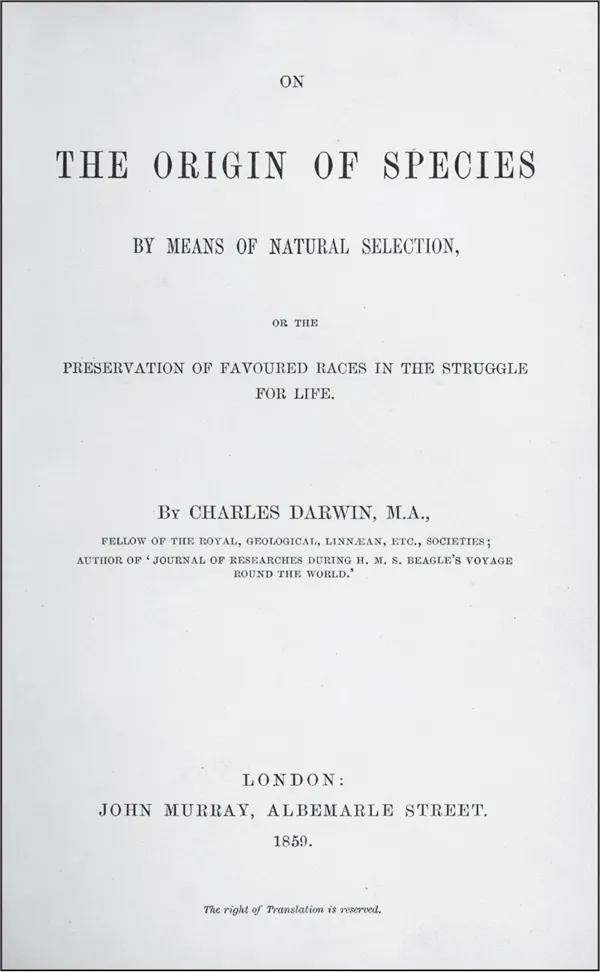
Although On the Origin of Species includes only one sentence about human evolution (“Light will be thrown on the origin of Man and his history.”), contemporary readers understood that Darwin was replacing the notion of a perfectly designed and benign world with one based on an unending, amoral struggle for existence. Darwin offered no purpose for life except the production of fertile offspring. In Darwin’s world, natural selection replaced divine benevolence as an explanation for adaptation. (LC.)
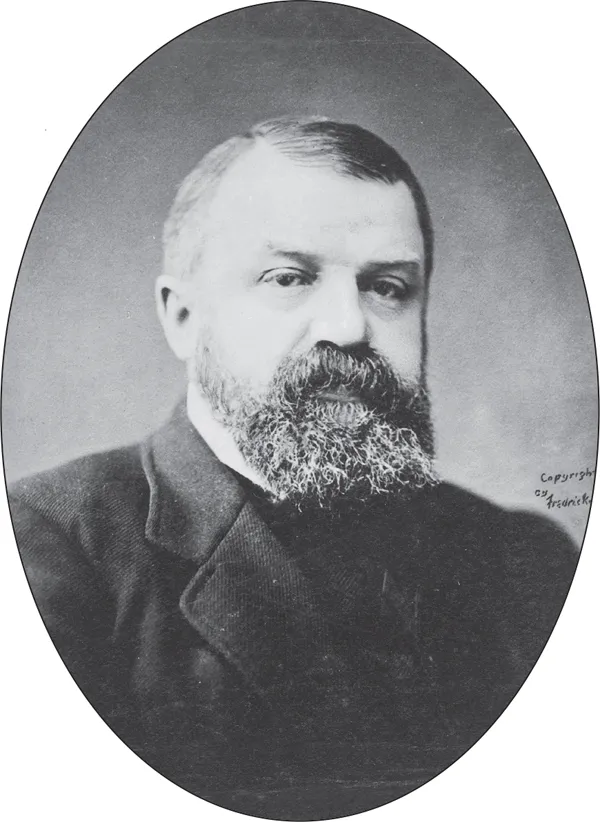
Dwight Lyman Moody was the first prominent American theologian to promote biblical inerrancy. Moody, a progenitor of fundamentalism, condemned theater, the disregard for the Sabbath, Sunday newspapers, and what he considered the atheistic doctrine of evolution. Moody, who avoided controversy, strongly influenced the fundamentalists who began the antievolution movement in America, including Billy Sunday and William Bell Riley. (LC.)
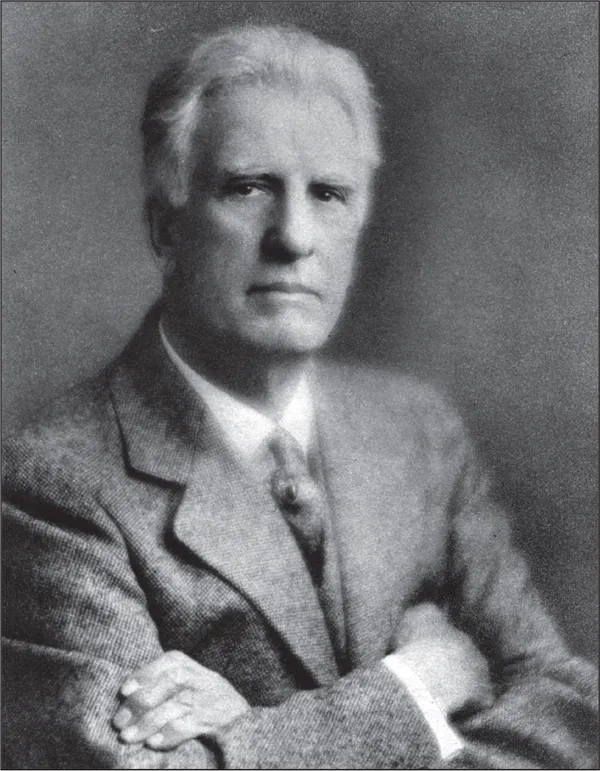
In 1919, Minnesota preacher William Bell Riley founded the World Christian Fundamentals Association (WCFA), the first and most formidable of the many early organizations to unite fundamentalists of all denominations in the United States. The WCFA sought to eradicate the teaching of evolution “not by regulation, but by strangulation,” a campaign that Riley described as “a war from which there is no discharge.” (FBC.)
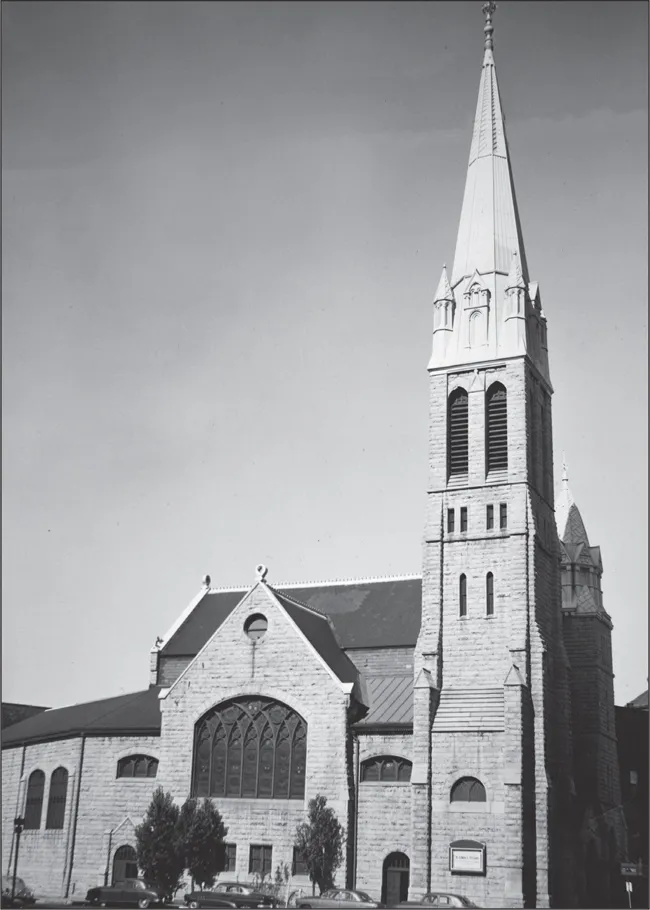
Riley’s WCFA was housed in First Baptist Church of Minneapolis, Minnesota, and by the early 1920s, Riley’s speeches throughout the country condemning evolution were attracting thousands of people. On May 13, 1925, Riley invited William Jennings Bryan to represent the WCFA at John Scopes’s upcoming trial in Dayton, Tennessee. The next day, Clarence Darrow volunteered to defend Scopes, thereby creating worldwide interest in the trial and prompting Scopes to conclude, “some Class-A sluggers were willing to champion our cause.” (Both, FBC.)

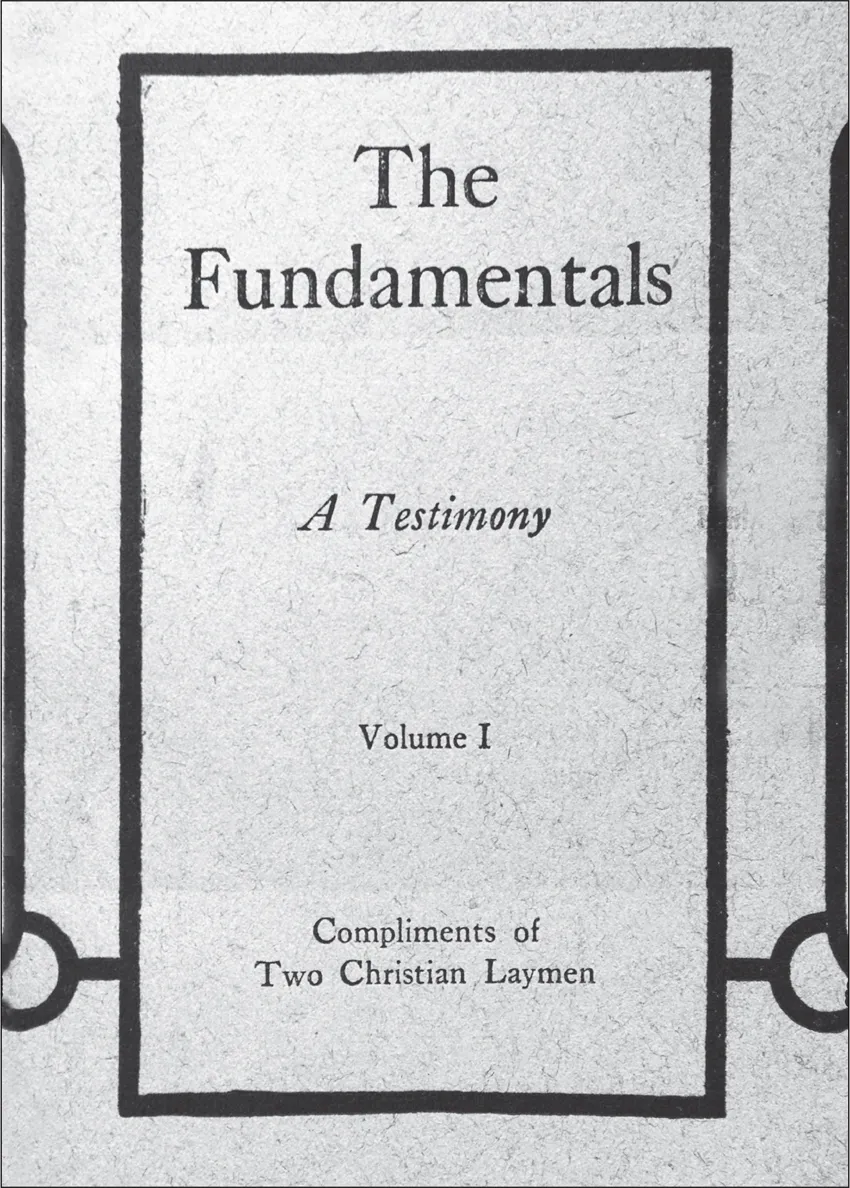
The Fundamentals is a series of 12 books published from 1910 to 1915 by the Bible Institute of Los Angeles (now Biola University). The books were given to “every pastor, evangelist, missionary, theology professor, theology student” and others to proclaim “a new statement of the fundamentals of Christianity.” All costs were paid by California businessmen Lyman and Milton Stewart (the founders of Union Oil), who are described in the books as “two intelligent, consecrated Christian laymen.” Fundamentalists, who opposed the adaptation of Christian theology to modern thought and secular society, believed in the inerrancy of the Bible, the Virgin birth, Christ’s substitutionary atonement for sin on the cross, the physical resurrection, and Christ’s eminent return. Although The Fundamentals do not focus on evolution, their publication became a symbolic reference point for the fundamentalist movement that, in 1925, produced the Scopes Trial in Dayton, Tennessee. (William McComas.)

By the early 1920s, famed baseballplayer-turned-fundamentalist-evangelist William “Billy” Sunday was using his energetic, theatrical, and sometimes violent services to link evolution with prostitution, eugenics, and crime. Sunday, who claimed that Darwin was burning in hell, proclaimed that “education today is chained to the Devil’s Throne” and that evolution was endorsed by “godless bastards and godless losers.” William Jennings Bryan asked Sunday to testify at Scopes’s trial, but Sunday declined. (LC.)
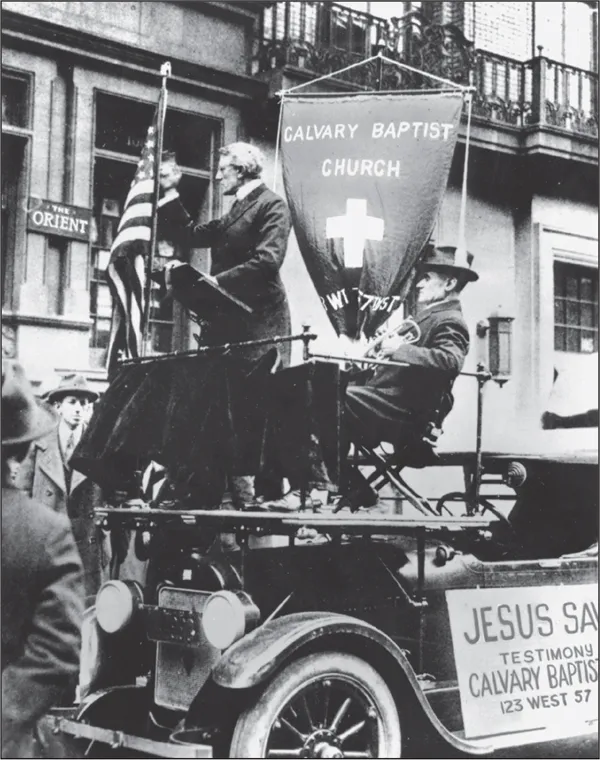
In the Northeast, the antievolution movement was led by militant fundamentalist John Roach Straton, the pastor of New York City’s Calvary Baptist Church. Straton warned his congregation, “The great battle of the age is now on between Christianity and evolution . . . it is better to wipe out all the schools than undermine the Bible by permitting the teaching of evolution.” This photograph shows Straton preaching in the streets of Manhattan. (American Baptist Historical Society.)
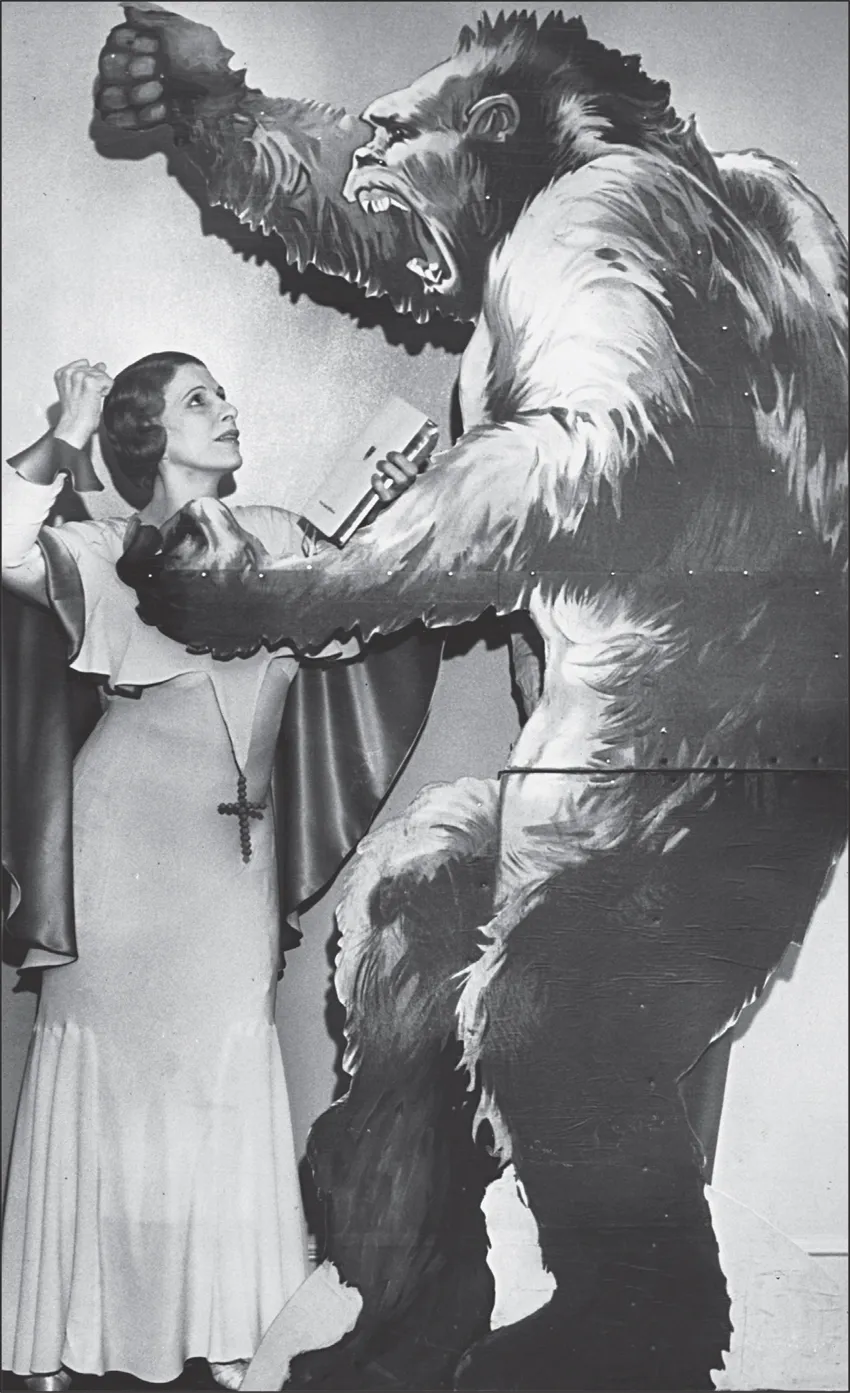
In the West, the fundamentalists’ antievolution crusade was led by the flamboyant evangelist Aimee Semple McPherson. McPherson, whose marketing of her theatrical services rivaled even nearby Hollywood, attracted huge crowds to her church (Angelus Temple) in Los Angeles. Her most popular service featured depictions of Darwin, Hitler, and other villains, after which McPherson would emerge and read the national anthem. McPherson denounced evolution as “Satanic intelligence” that was “poisoning minds of children” and responsible for “jazz, crime, student suicides . . . and the peculiar behavior of the younger generation.” McPherson, the first woman to deliver a sermo...
Table of contents
- Cover Page
- Title Page
- Copyright Page
- Dedication
- Table of Contents
- Foreword
- Acknowledgments
- Introduction
- 1. The Road to Dayton
- 2. The Path to John Scopes
- 3. The Cast of Characters Grows
- 4. The Trial of the Century Begins
- 5. The Defense Calls Mr. Bryan
- 6. The Verdict, Bryan’s Death, and the Appeal
- 7. A Reunion in Dayton
- 8. Beyond the Scopes Trial
- Bibliography
- Index
Frequently asked questions
Yes, you can cancel anytime from the Subscription tab in your account settings on the Perlego website. Your subscription will stay active until the end of your current billing period. Learn how to cancel your subscription
No, books cannot be downloaded as external files, such as PDFs, for use outside of Perlego. However, you can download books within the Perlego app for offline reading on mobile or tablet. Learn how to download books offline
Perlego offers two plans: Essential and Complete
- Essential is ideal for learners and professionals who enjoy exploring a wide range of subjects. Access the Essential Library with 800,000+ trusted titles and best-sellers across business, personal growth, and the humanities. Includes unlimited reading time and Standard Read Aloud voice.
- Complete: Perfect for advanced learners and researchers needing full, unrestricted access. Unlock 1.5M+ books across hundreds of subjects, including academic and specialized titles. The Complete Plan also includes advanced features like Premium Read Aloud and Research Assistant.
We are an online textbook subscription service, where you can get access to an entire online library for less than the price of a single book per month. With over 1.5 million books across 990+ topics, we’ve got you covered! Learn about our mission
Look out for the read-aloud symbol on your next book to see if you can listen to it. The read-aloud tool reads text aloud for you, highlighting the text as it is being read. You can pause it, speed it up and slow it down. Learn more about Read Aloud
Yes! You can use the Perlego app on both iOS and Android devices to read anytime, anywhere — even offline. Perfect for commutes or when you’re on the go.
Please note we cannot support devices running on iOS 13 and Android 7 or earlier. Learn more about using the app
Please note we cannot support devices running on iOS 13 and Android 7 or earlier. Learn more about using the app
Yes, you can access The Scopes Monkey Trial by Randy Moore,William McComas in PDF and/or ePUB format, as well as other popular books in History & North American History. We have over 1.5 million books available in our catalogue for you to explore.