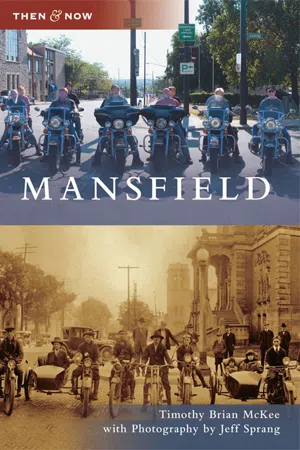
Mansfield began in 1808 when its public square was carved out of a wilderness inhabited only by Wyandots, wild animals, and an itinerant nurseryman named Johnny Appleseed. Throughout the 200 years since then, the character and appearance of the city has transformed many times as new generations remade it into their home. Driving around Mansfield today, there is enough remaining of historical times to compare with old photographs in order to make the past come alive.
- 96 pages
- English
- ePUB (mobile friendly)
- Available on iOS & Android
eBook - ePub
Mansfield
About this book
Trusted by 375,005 students
Access to over 1.5 million titles for a fair monthly price.
Study more efficiently using our study tools.
Information
CHAPTER 1
GLASS PLATE NEGATIVES
EARLY IMAGES

The Square is where Mansfield originated, and it was the public forum. This early photograph of a campaign rally in Central Park, for the presidential candidate Winfield Hancock in 1880, is a good example of the place where voices have been raised over politics, labor, religion, and government in protest or celebration. (Ohio Genealogical Society, Richland County Chapter collection.)

The historic Blockhouse has been in five different locations during its long lifetime. It was built in the Square in 1812, then moved to Second Street for 90 years, then rebuilt next to the courthouse for the 1908 centennial observations, then placed in South Park for almost 100 years, and finally restored on higher ground in 2008 for the city’s bicentennial celebration. These two photographs show the restoration committees from 1908 and 2008.


These two images contrast Central Park from the earliest known drawing of it in 1839 to what it has evolved into today. Conspicuously absent in the early rendering are the herds of cows and pigs that residents from those days complained about when farmers brought their livestock to market on the hoof and Mansfield’s public green was more of a muddy barnyard. The structure seen in the center of the Square was a farmers’ marketplace and hay scales.


In the early 1870s, a photographer captured the Square when it was surrounded by a fence that had been erected in order to keep livestock from grazing in Central Park. None of the buildings on South Park Street seen in this photograph are still in existence today, and the boundaries of the Square itself have migrated, but the gate in the fence serves to reference the place where Park Avenue was eventually cut through the Square. (Mark Hertzler collection.)
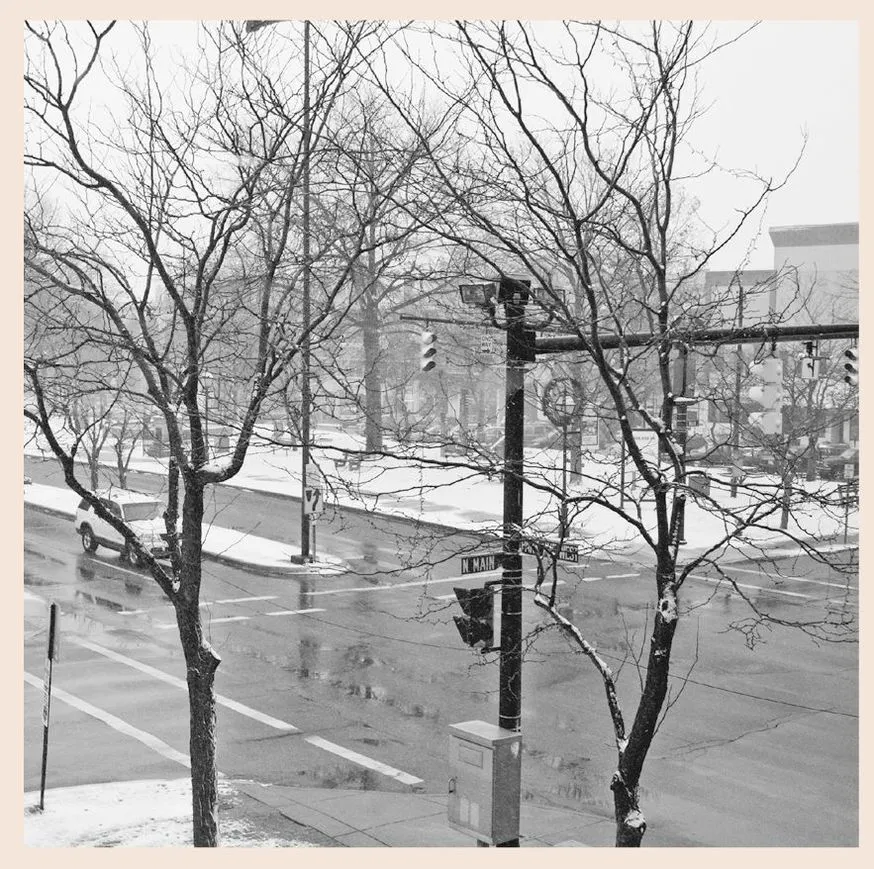

The Richland County Courthouse seen today is the fifth one to stand in downtown, and this photograph from 1873 serves to pinpoint the location of two earlier ones. The courthouse in the foreground was built in 1829 and removed after the one in the background rose in 1872. The photographer who took the picture was E. J. Potter, whose studio was on North Park Street, and he got this view standing on his own roof. (Phil Stoodt collection.)


The First United Methodist Church has been on the Square since the earliest days of Mansfield, and it has been in this particular building at the corner of Park Avenue and Diamond Street since 1870, but the building’s appearance has transformed dramatically since then. The central spire was removed in 1910, a tower was built on the corner of the building, and the entire brick structure was covered in limestone. (Ohio Genealogical Society, Richland County Chapter collection.)

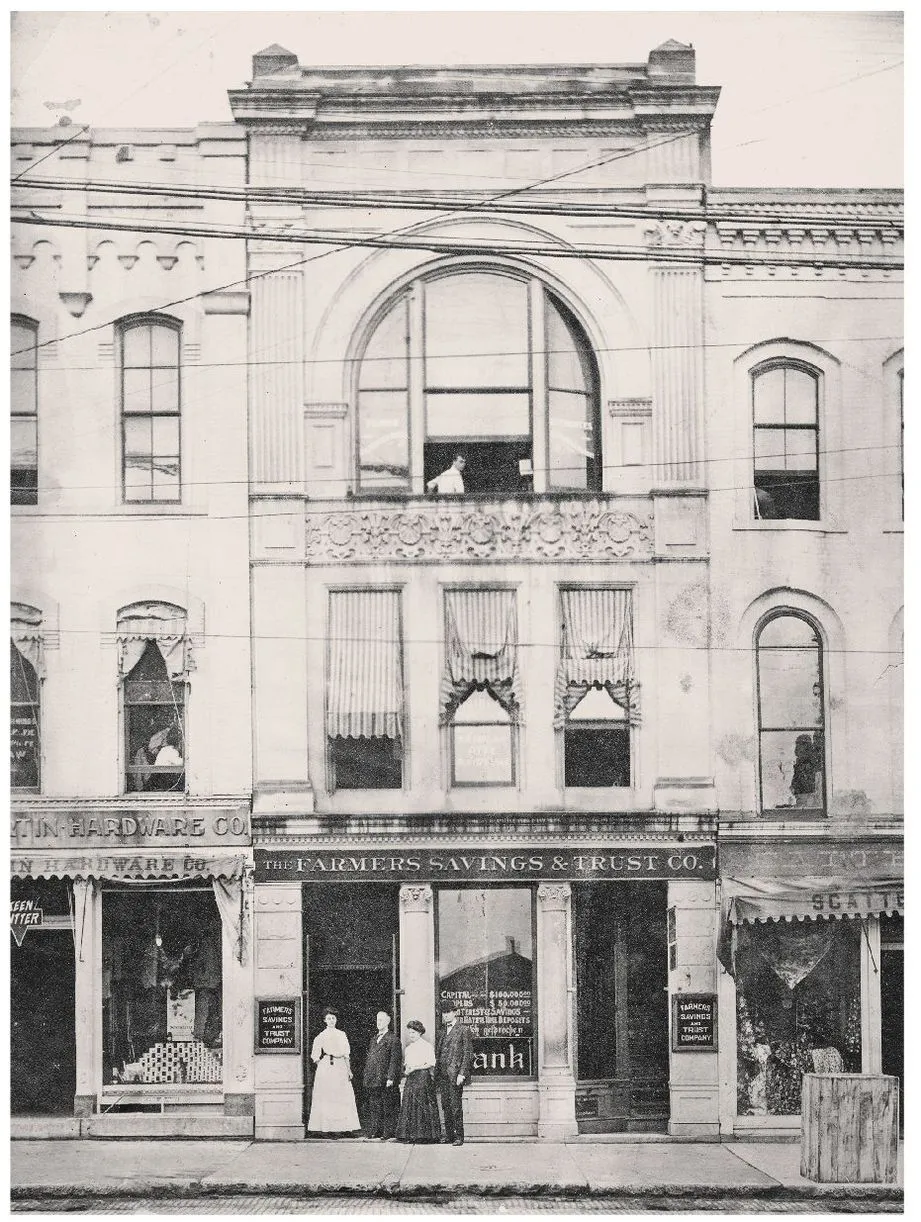
For recent generations, the Farmers Bank was a tall building on Park Avenue (now called the Chase Tower), but Mansfielders before 1928 knew Farmers Bank at this site on the Square. Located on Main Street at the end of North...
Table of contents
- Title Page
- Dedication
- Copyright Page
- Table of Contents
- ACKNOWLEDGMENTS
- INTRODUCTION
- CHAPTER 1 - GLASS PLATE NEGATIVES
- CHAPTER 2 - STEREOSCOPE VIEWS
- CHAPTER 3 - ROTOGRAVURES
- CHAPTER 4 - KODAKS
- CHAPTER 5 - SNAPSHOTS
Frequently asked questions
Yes, you can cancel anytime from the Subscription tab in your account settings on the Perlego website. Your subscription will stay active until the end of your current billing period. Learn how to cancel your subscription
No, books cannot be downloaded as external files, such as PDFs, for use outside of Perlego. However, you can download books within the Perlego app for offline reading on mobile or tablet. Learn how to download books offline
Perlego offers two plans: Essential and Complete
- Essential is ideal for learners and professionals who enjoy exploring a wide range of subjects. Access the Essential Library with 800,000+ trusted titles and best-sellers across business, personal growth, and the humanities. Includes unlimited reading time and Standard Read Aloud voice.
- Complete: Perfect for advanced learners and researchers needing full, unrestricted access. Unlock 1.5M+ books across hundreds of subjects, including academic and specialized titles. The Complete Plan also includes advanced features like Premium Read Aloud and Research Assistant.
We are an online textbook subscription service, where you can get access to an entire online library for less than the price of a single book per month. With over 1.5 million books across 990+ topics, we’ve got you covered! Learn about our mission
Look out for the read-aloud symbol on your next book to see if you can listen to it. The read-aloud tool reads text aloud for you, highlighting the text as it is being read. You can pause it, speed it up and slow it down. Learn more about Read Aloud
Yes! You can use the Perlego app on both iOS and Android devices to read anytime, anywhere — even offline. Perfect for commutes or when you’re on the go.
Please note we cannot support devices running on iOS 13 and Android 7 or earlier. Learn more about using the app
Please note we cannot support devices running on iOS 13 and Android 7 or earlier. Learn more about using the app
Yes, you can access Mansfield by Timothy Brian McKee in PDF and/or ePUB format, as well as other popular books in History & North American History. We have over 1.5 million books available in our catalogue for you to explore.