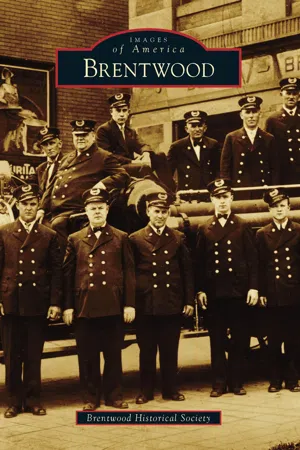
- 128 pages
- English
- ePUB (mobile friendly)
- Available on iOS & Android
eBook - ePub
Brentwood
About this book
Brentwood Borough, established in 1915, spans one of the highest ridges in Allegheny County, Pennsylvania, just six miles southeast of Pittsburgh. In the 19th century, three small villages, four inns, and several blacksmith shops clustered along the rural ridge. A popular and primitive roadway, now known as Brownsville Road, connected these three hamlets with the wider world. This major artery carried coaches, wagons, livestock, and even escaping slaves to Pittsburgh. At least one of the four inns was a stop on the Underground Railroad. Many years later, the community established a 28-acre park, complete with shelter house and swimming pool, as well as the later additions of ball fields, tennis courts, and a football stadium. In keeping with its original focus on education, the community has maintained its own school district. Brownsville Road, as a main street, has supported several viable shopping districts. Brentwood is renowned for its annual Fourth of July parade, attracting tens of thousands of spectators each year. Today, Brentwood encompasses 1.45 square miles. The strength of this small community lies with its residents, who value service and commitment. For 100 years, Brentwood has maintained its own distinct character and charm, combining the elements of a modern community with the friendliness of a small town.
Trusted by 375,005 students
Access to over 1.5 million titles for a fair monthly price.
Study more efficiently using our study tools.
Information
One
TAVERNS AND INNS
The early Redstone Road carried passengers, mail, freight, food, and livestock. One can imagine the dust thrown up by farmers and drovers as they herded 100 or more head of hogs, sheep, or cattle along the road to Pittsburgh. At the local inns, horses were changed, and passengers could stop to rest and refresh themselves. There were four such inns located in what would become Brentwood. The Varner existed for a short time, and the White Hall disappeared before the end of the 19th century. Only the Point View and the Windsor witnessed the events of the 20th century.
The property and building known as the Point View Hotel supported a tavern and probably an inn on that site from as early as 1822. According to deeds, maps, and tavern licenses, the inn has been known by various names: Flowers Tavern Stand, Union Hotel, J. Cowan’s Hotel, and the Farmers & Drovers Exchange. The designation Point View Hotel appears on an 1896 county map. When the building sold in 1935, it was described as a “rambling frame structure,” containing 17 rooms on an acre and a half with a large garage that was originally a stable.
Famous names were connected with the old Point View in the mid-1800s. These include individuals who would later become presidents of the United States: Gen. Andrew Jackson, Gen. Zachary Taylor, and James Buchanan Jr.; US congressman Thaddeus Stevens of Pennsylvania, a noted abolitionist, also stayed at the inn.
It is believed that the inn was a stop on the Underground Railroad. Many individuals sympathetic to the abolitionist cause in Pennsylvania worked as “conductors” on this clandestine route. It is interesting to imagine weary “passengers” concealed in wagons with false bottoms and finding refuge in the hidden cellar and tunnels at the Union Hotel. One can envision the frightening conditions under which those passengers moved from one secret spot to the next, trusting in the kindness of anonymous conductors who themselves risked discovery and imprisonment for breaking the law. It is powerful to consider that some of those intrepid conductors lived right here in Brentwood.
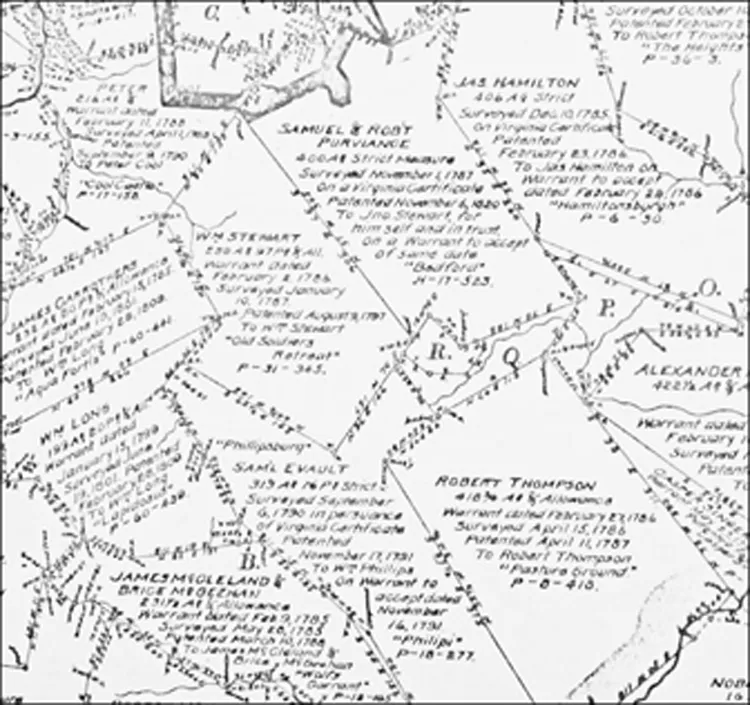
As seen on this map of original landowners in Allegheny County, William Stewart’s warrant for 289 acres and 97 perches is dated February 2, 1786. He called his land “Old Soldiers Retreat.” The Point View Hotel would later stand on part of that land. The land “Philipi” deeded to William Phillips measured 313 acres and 16 perches (160 perches equals an acre). The land where Slater’s Funeral Home is located was originally the property of William Phillips. (Warrantee Atlas of Allegheny County, Pennsylvania, 1914.)

It is believed that the building many remember as the Point View Hotel was constructed perhaps around 1822. In April of that year, Jacob Flowers was granted a tavern license, the earliest indication that a tavern or inn stood on the property. But as these license records did not exist prior to 1822, it is entirely possible that a tavern existed on this site at an even earlier date. In 1825, when Flowers purchased another 29 acres, his occupation was listed as “inn keeper.” Here is a winter view of this famous Brentwood landmark about 1920 when it was owned by Herman Gartner. Note the watering trough in front. (Ruth Vickless.)

Here is an inside view of the lowest level of the Point View taken about 2004. Beneath the old inn’s parlor, a secret cellar led to an extensive tunnel system that opened to the woods on the opposite side of Brownsville Road. There, fugitive slaves could hide until the next part of their journey led them down the hill toward Hays and then across the Monongahela River, especially when the river was frozen over. Or they could continue along Brownsville Road to the South Side. From there, they would cross the river at night and disappear within the network of safe houses in Pittsburgh. (Ruth Vickless.)

The Point View Hotel was known by many names over the decades and had many owners. On an 1876 map, the name is recorded as the Farmers & Drovers Exchange, owned by John Gehring. The name Point View appears as early as 1886 on a printed dinner invitation. It also appears on an 1896 map, when the property was owned by Peter Slicker, as seen here. (G.M. Hopkins Company Atlas, 1896.)

Successive owners of the Point View provided varying degrees of hospitality, comfort, and entertainment as an inn or tavern. Known for its tasty fish dinners and jazz concerts, the Point View was a gathering spot for many decades in the mid-20th century. Here is a modern image that most Brentwood residents will recognize. The most recent owners were James and Ruth Vickless, who purchased the property in 1976. (Pittsburgh History & Landmarks Foundation.)

Another inn stood along the Redstone Road as early as 1834 when Silas D. Pryor purchased the property. An 1851 map shows both J. Cowan’s hotel and S.D. Pryor’s inn in Baldwin Township. Cowan married Pryor’s daughter. On the 1850 census, Silas is listed as an “innkeeper.” Upon his death in 1851, Pryor’s estate inventory included multiple sets of serving ware, mantel clocks, copper kettles, tables, and chairs, as well as 10 gallons each of brandy and gin, confirming that his property indeed supported an inn. Total value of the estate was given as $1,585.64. (1851 Map of Allegheny County, Pennsylvania With the Names of Property-holders.)

At some point, Pryor’s Inn became known as the White Hall Tavern. Beginning in 1791, this property was owned by multiple individuals: William Phillips, Conrad Katz, Philip Yent, Jacob Harshberger, Silas D. Pryor (1834–1852), Henry Beltzhoover (1852), James M. Pryor, Henry Beltzhoover (1855), William Young, John W. Snee, Joseph Schultz, Thomas and Ella D. Coffin (1876–1901), Gustave A. Reich, Jacob Delp, Andrew C. Weisberg, C.B. Hurt, Philip Braun, John E. McCalmont, R.J. Wysor, Ross J. Thomas, and John H. Slater Sons (1937). This exceptional image is dated to 1877, when the tavern was owned by the Coffins. Note the man holding a shotgun. This property now supports the Slater Funeral Home. (John F. Slater.)

John Henry Cowan’s nephew William T. Cowan married Anna M. Bell. In his early career, William T. ran the Bell House for three years. The inn was located at the base of what is now West Liberty Avenue (then the Pittsburgh and Washington Road). Here is an extremely rare image of the Bell House from an undated tintype. It is interesting to note that it was not unusual for members of tavern-owning families to intermarry. (LaVerne Cowan Short.)
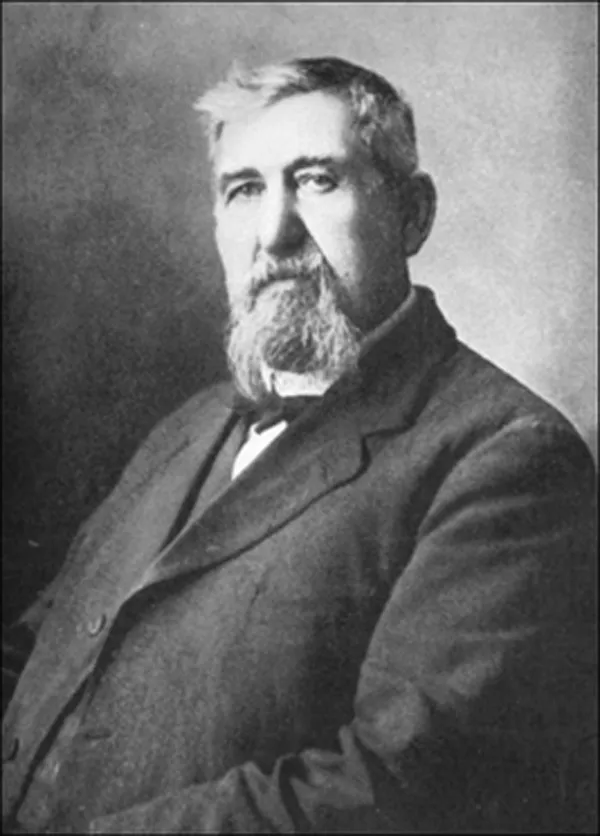
William T. Cowan (1840–1918), pictured here in his maturity, was born in Baldwin Township, the son of William Cowan and Margaret Calhoun. He and wife, Anna, had eight children. After operating two inns, William T. worked as a real estate developer, livestock broker, and manufacturer. He also held the post of justice of the peace in Baldwin Township. (Genealogical and Personal History of Western Pennsylvania, 1915.)

The Cowan house still stands at 4111 Brownsville Road. William T. inherited the house and 45 acres of Cowan property upon the death of his father in 1883. The house remained in the Cowan family until 1922. This image is dated 1979. (Pittsburgh History & Landmarks Foundation.)
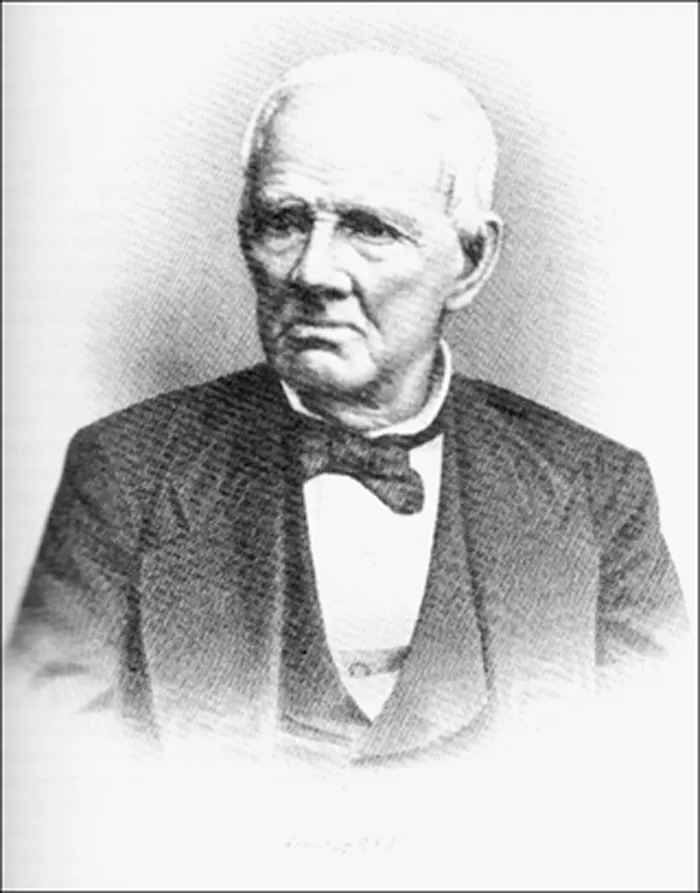
Thomas Varner stood tall in the annals of Allegheny County. It is interesting to note that Varner, according to the Pittsburgh Gazette, died August 23, 1883, the same day as his neighbor William Cowan (father of William T.). (History of Allegheny County, Pennsylvania, 1889.)

Thomas Varner built the first Windsor Hotel in about 1882. The building, ...
Table of contents
- Cover Page
- Title Page
- Copyright Page
- Dedication
- Table of Contents
- Acknowledgments
- Introduction
- 1. Buddy Bolden’s New Orleans
- 2. Creole Jazz
- 3. Dixieland Goes Nationwide
- 4. “A Brownsville Road Beauty”
- 5. School Days
- 6. Childhood Memories
- 7. Families, Friends, and Fun
- 8. To Market, to Market
- 9. Faith and Service
- 10. A Brentwood Tradition
Frequently asked questions
Yes, you can cancel anytime from the Subscription tab in your account settings on the Perlego website. Your subscription will stay active until the end of your current billing period. Learn how to cancel your subscription
No, books cannot be downloaded as external files, such as PDFs, for use outside of Perlego. However, you can download books within the Perlego app for offline reading on mobile or tablet. Learn how to download books offline
Perlego offers two plans: Essential and Complete
- Essential is ideal for learners and professionals who enjoy exploring a wide range of subjects. Access the Essential Library with 800,000+ trusted titles and best-sellers across business, personal growth, and the humanities. Includes unlimited reading time and Standard Read Aloud voice.
- Complete: Perfect for advanced learners and researchers needing full, unrestricted access. Unlock 1.5M+ books across hundreds of subjects, including academic and specialized titles. The Complete Plan also includes advanced features like Premium Read Aloud and Research Assistant.
We are an online textbook subscription service, where you can get access to an entire online library for less than the price of a single book per month. With over 1.5 million books across 990+ topics, we’ve got you covered! Learn about our mission
Look out for the read-aloud symbol on your next book to see if you can listen to it. The read-aloud tool reads text aloud for you, highlighting the text as it is being read. You can pause it, speed it up and slow it down. Learn more about Read Aloud
Yes! You can use the Perlego app on both iOS and Android devices to read anytime, anywhere — even offline. Perfect for commutes or when you’re on the go.
Please note we cannot support devices running on iOS 13 and Android 7 or earlier. Learn more about using the app
Please note we cannot support devices running on iOS 13 and Android 7 or earlier. Learn more about using the app
Yes, you can access Brentwood by Brentwood Historical Society in PDF and/or ePUB format, as well as other popular books in History & North American History. We have over 1.5 million books available in our catalogue for you to explore.