- 128 pages
- English
- ePUB (mobile friendly)
- Available on iOS & Android
eBook - ePub
Allentown State Hospital
About this book
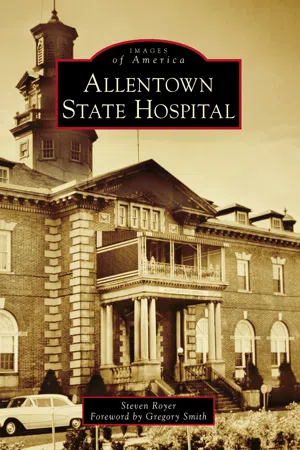
Allentown State Hospital, formerly known as the Homoeopathic State Hospital for the Insane at Allentown, was the first homeopathic state hospital for the treatment of the mentally ill in Pennsylvania. On October 3, 1912, under the direction of its superintendent, Dr. Henry I. Klopp, the hospital opened its doors to receiving patients. In 1930, Dr. Klopp opened a children's ward on the hospital's grounds, one of the first of its kind in the world. Built to alleviate overcrowding in the state mental health system, the hospital quickly exceeded its own occupancy. By 1954, the population of the hospital hit its peak of 2,107 patients. However, Allentown State Hospital would consistently pioneer change in the mental health system until its closure in 2010. In 1993, a dedicated group of employees created the Psychiatric Emergency Response Team (PERT) process to provide a safer response to supporting patients in crisis. By 1998, this approach helped put the spotlight on Allentown State Hospital when it became the first hospital in the United States to go seclusion free.
Trusted by 375,005 students
Access to over 1.5 million titles for a fair monthly price.
Study more efficiently using our study tools.
Information
One
BUILDING PENNSYLVANIA’S
FIRST HOMEOPATHIC
STATE HOSPITAL
FIRST HOMEOPATHIC
STATE HOSPITAL
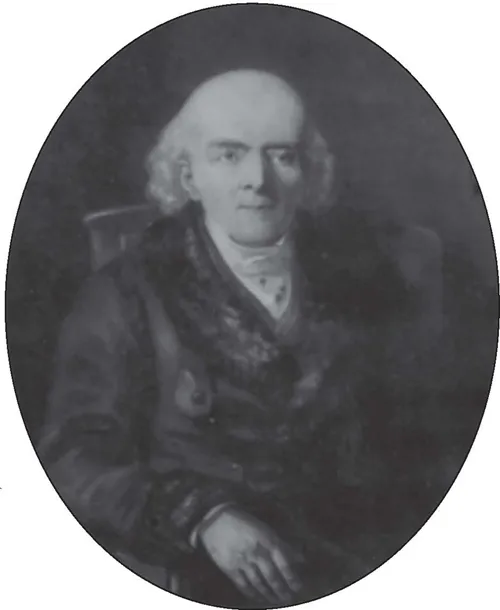
Christian Friedrich Samuel Hahnemann, the founder of homeopathy, was born on April 10, 1755, in Meissen, Saxony, which is now located in Germany. As a child, Hahnemann studied multiple languages including Latin, Greek, and Hebrew. His studies also expanded into history, physics, and botany. When he reached his early 20s, he began taking an interest in the study of medicine and attended the Universities of Leipzig, Vienna, and Erlangen. On August 10, 1779, at the age of 24, he received his medical degree from the University of Erlangen. (Courtesy of the Pennsylvania State Archives.)
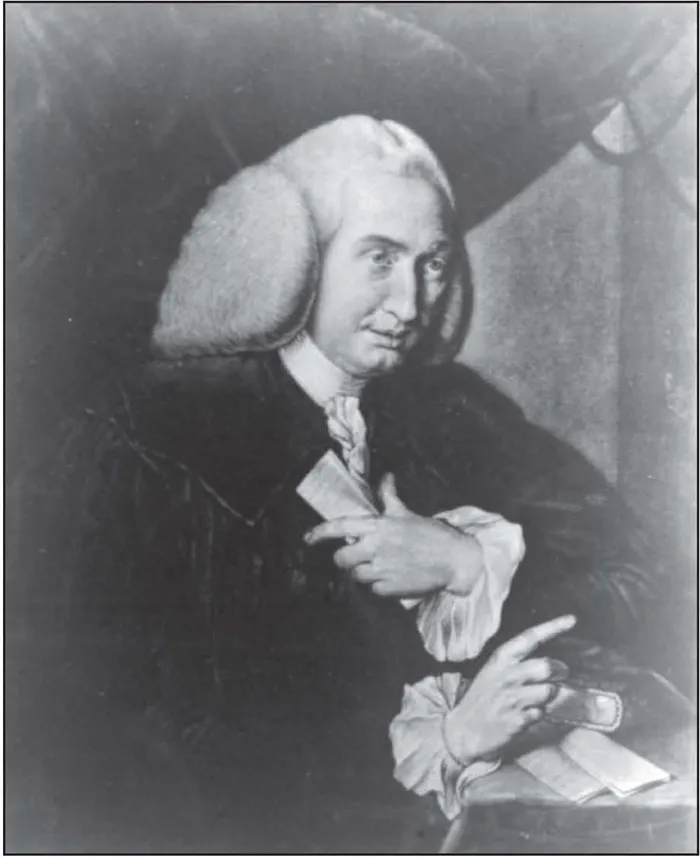
Scottish physician William Cullen’s work A Treatise on the Materia Medica is what exposed Hahnemann to the basic principles of what would eventually evolve into homeopathy. Hahnemann became familiar with Cullen’s work around 1781, when he relocated to the village of Mansfeld, Saxony, to become the village’s doctor. In 1784, Hahnemann gave up practicing medicine and made his living solely on translating and writing. While translating A Treatise on the Materia Medica, he came across the statement that cinchona (a type of Peruvian tree bark) was an acceptable treatment for malaria. (Courtesy of the Wellcome Collection.)
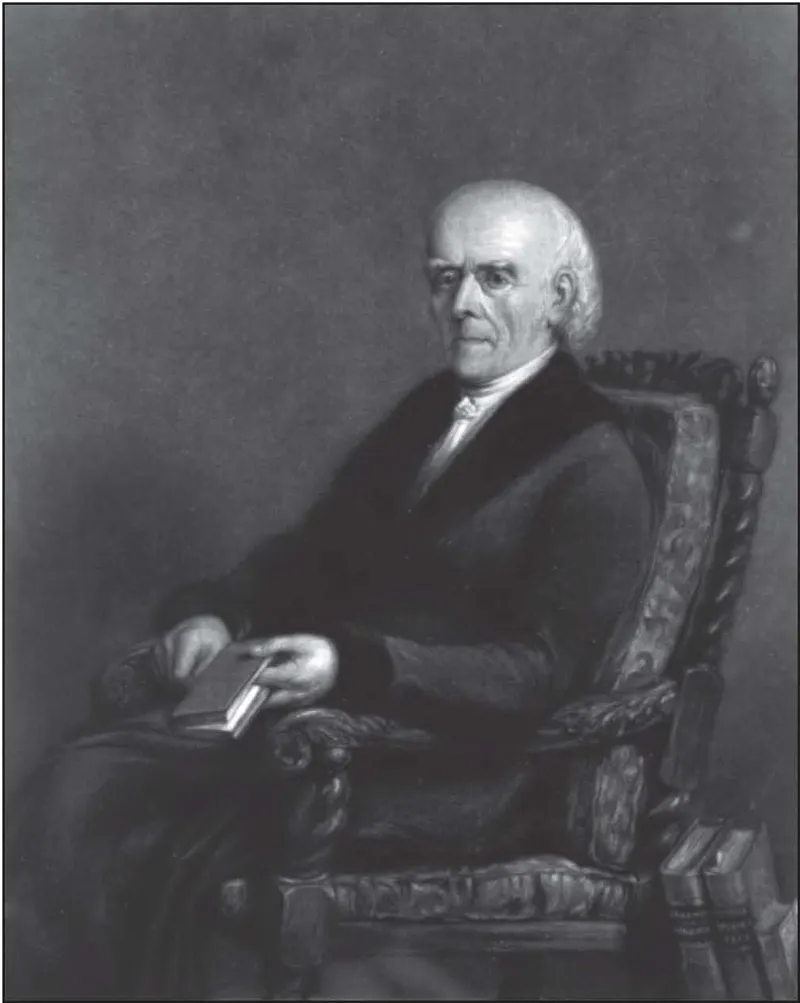
Hahnemann began experimenting on himself with cinchona to see how it would affect someone who was healthy. As a result of ingesting cinchona, Hahnemann claimed to experience many of the same symptoms malaria produced. It was at this moment he formed the idea that what causes a healthy person to have symptoms can be used to treat those same symptoms in an unhealthy person. Hahnemann coined the Latin term similia similibus curentur, which means “like cures like.” When Edward Jenner discovered the smallpox vaccine in 1798, Hahnemann was convinced that this was even more proof that his theories were correct. (Courtesy of the Wellcome Collection.)
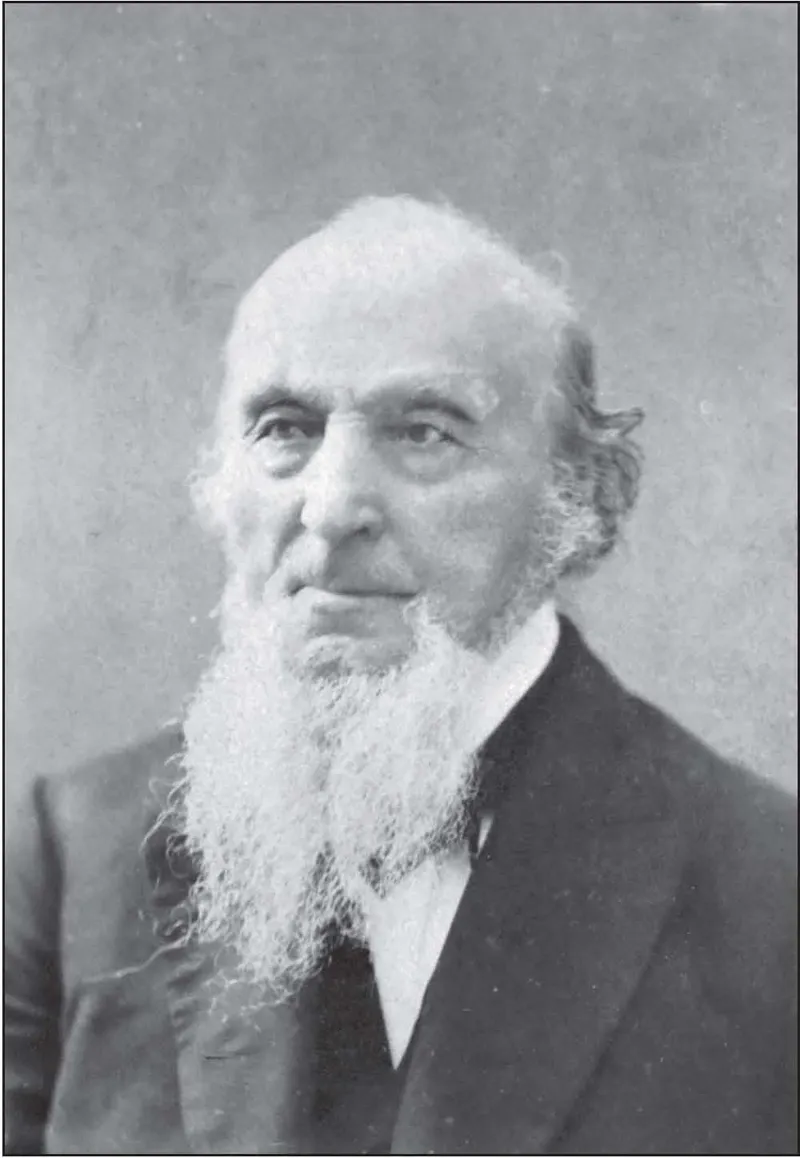
Dr. Henry Detweiler (pictured), William Wesselhoeft, Dr. John Eberhard Freitag, and Dr. John Romig are responsible for bringing homeopathy to the Lehigh Valley. Each of these men found their way to the practice of homeopathy with ease. The group created an informal school of homeopathy in Bath, Pennsylvania, at the home of Wesselhoeft in 1828 that ran from 1829 to 1835. The school was proving to be a success, and the physicians were looking to convert it into a degree-granting institution. In order to achieve this, the organization required a homeopath with an established reputation. Dr. Constantine Hering, a prominent European homeopath, had just arrived in Philadelphia and was a perfect fit for the institution. (Courtesy of the Pennsylvania State Archives.)

Known as “the father of American homeopathy,” Constantine Hering first encountered homeopathy during his studies at the University of Leipzig. While performing an examination of a cadaver, he injured himself. The treatment at the time was amputation; however, Hering chose a homeopathic method and was healed. He became a strong advocate of Samuel Hahnemann and his work. Hering received his doctorate in medicine in 1826 from the University of Wurzburg. The homeopathic kit pictured here contained small amounts of animal, plant, synthetic, and mineral substances that would be diluted to a minute dose to treat an illness. (Author’s collection.)

The cornerstone of the North American Academy of Homeopathic Healing Art at Allentown was laid on May 27, 1835, at 27–29 South Penn Street in Allentown. The academy ran from 1835 to 1839. On June 14, 1843, the Allentown Academy made a formal announcement declaring bankruptcy and closed its doors. The building was later purchased by the Allentown School District and demolished. Today, the school district’s administration building sits at the site of the former academy. (Author’s collection.)
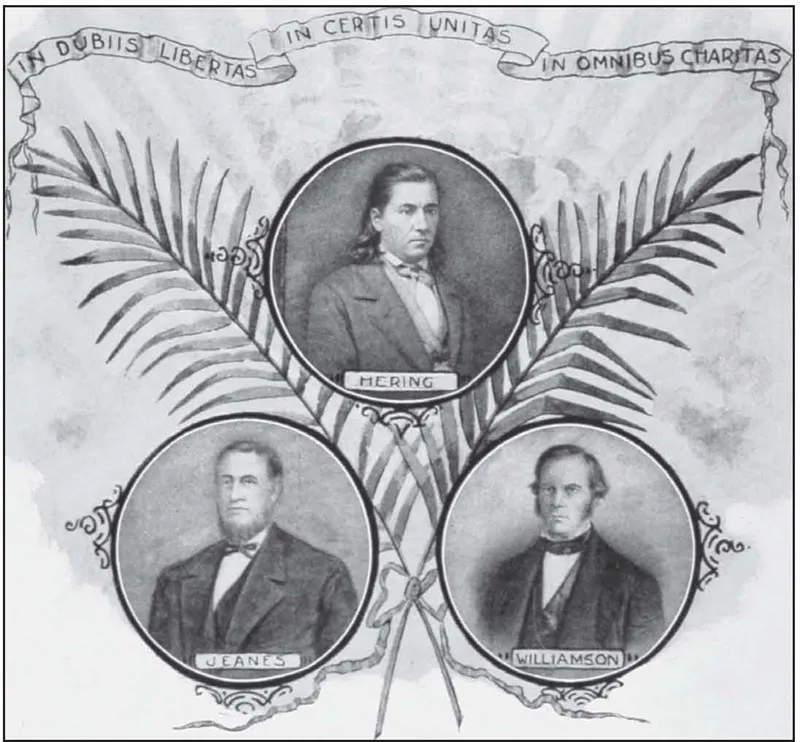
Dr. Hering was determined to keep the study and lessons of homeopathy alive. In 1848, he, along with Dr. Jacob Jeanes and Dr. Walter Williamson, rented rooms in the back of a Philadelphia pharmacy and established the Homeopathic Medical College of Pennsylvania. The college started with only 15 students and 8 instructors. By 1869, the college changed its name to the Hahnemann Medical College of Philadelphia in honor of Dr. Samuel Hahnemann. (Courtesy of the Francis A. Countway Library.)
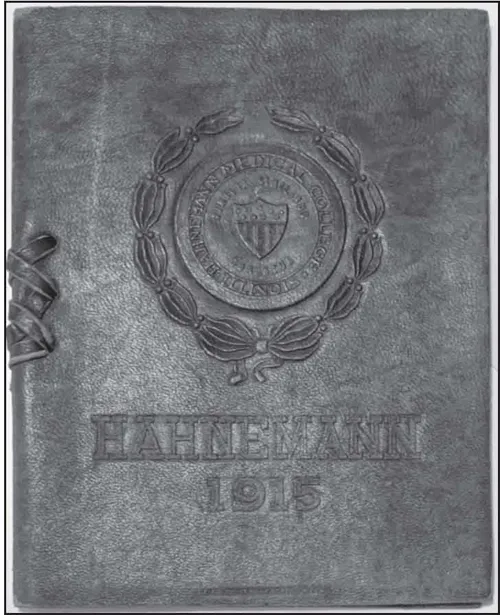
The Hahnemann Medical College of Philadelphia had many connections to Allentown State Hospital. When ASH opened its school for nurses in 1913, students were sent to the Hahnemann Hospital for three months to study medical and surgical nursing. Several of ASH’s staff, including the first superintendent, Dr. Henry I. Klopp, and the second superintendent, Harry F. Hoffman (previously assistant superintendent), received their medical degrees from the Hahnemann Medical College and Hospital in Philadelphia. Dr. Klopp and Dr. Hoffman also lectured at Hahnemann Medical College during their tenure at ASH. (Author’s collection.)
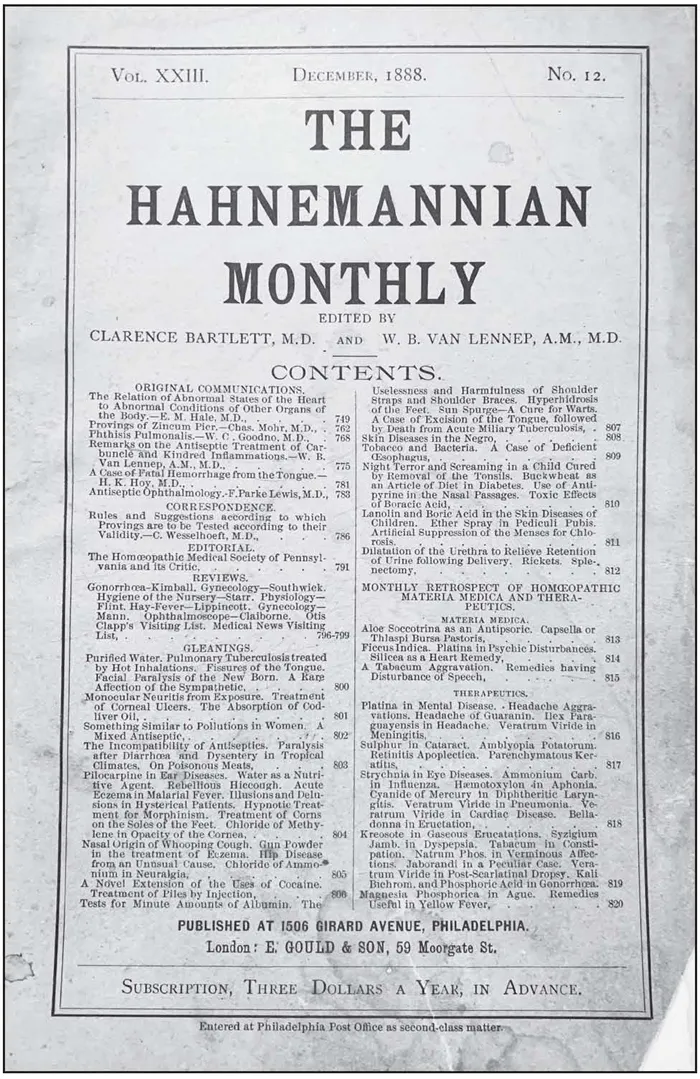
The Germantown Homœopathic Medical Society of Philadelphia was the driving force behind establishing the next state hospital as a homeopathic facility. In the mid-1890s, the society appointed a committee of 12 to introduce a bill to the state legislature to select land and construct a state hospital for the care of the mentally ill under homeopathic principles. Dr. Isaac W. Heysinger was appointed chairman with the purpose of pressuring the state to pass the bill. (Author’s collection.)

At this time, there were five state institutions, including Danville State Hospital, that were suffering from overcrowding and not able to procure enough funds for expansion. In 1898, Dr. Heysinger called upon all the homeopathic societies in Pennsylvania to send delegates to work with the committee and secure passage by the legislature. (Author’s collection.)

After many unsuccessful attempts, a bill was finally passed June 25–26, 1901, and a commission was assembled. Th...
Table of contents
- Cover Page
- Title Page
- Copyright Page
- Dedication
- Table of Contents
- Foreword
- Acknowledgments
- Introduction
- 1. Building Pennsylvania’s First Homeopathic State Hospital
- 2. The Epoch-Making Years
- 3. Farm Life and the Weaversville Colonies
- 4. Building for the Future
- 5. Turnover and Treatment
- 6. A New Era
- 7. PERT and the Road Ahead
- 8. Fighting for Tomorrow
Frequently asked questions
Yes, you can cancel anytime from the Subscription tab in your account settings on the Perlego website. Your subscription will stay active until the end of your current billing period. Learn how to cancel your subscription
No, books cannot be downloaded as external files, such as PDFs, for use outside of Perlego. However, you can download books within the Perlego app for offline reading on mobile or tablet. Learn how to download books offline
Perlego offers two plans: Essential and Complete
- Essential is ideal for learners and professionals who enjoy exploring a wide range of subjects. Access the Essential Library with 800,000+ trusted titles and best-sellers across business, personal growth, and the humanities. Includes unlimited reading time and Standard Read Aloud voice.
- Complete: Perfect for advanced learners and researchers needing full, unrestricted access. Unlock 1.5M+ books across hundreds of subjects, including academic and specialized titles. The Complete Plan also includes advanced features like Premium Read Aloud and Research Assistant.
We are an online textbook subscription service, where you can get access to an entire online library for less than the price of a single book per month. With over 1.5 million books across 990+ topics, we’ve got you covered! Learn about our mission
Look out for the read-aloud symbol on your next book to see if you can listen to it. The read-aloud tool reads text aloud for you, highlighting the text as it is being read. You can pause it, speed it up and slow it down. Learn more about Read Aloud
Yes! You can use the Perlego app on both iOS and Android devices to read anytime, anywhere — even offline. Perfect for commutes or when you’re on the go.
Please note we cannot support devices running on iOS 13 and Android 7 or earlier. Learn more about using the app
Please note we cannot support devices running on iOS 13 and Android 7 or earlier. Learn more about using the app
Yes, you can access Allentown State Hospital by Steven Royer in PDF and/or ePUB format, as well as other popular books in Psychology & Psychiatric & Mental Health Nursing. We have over 1.5 million books available in our catalogue for you to explore.