Pilot's Weather
eBook - ePub

Pilot's Weather

A Commonsense Approach to Meteorology

  1. 192 pages
  2. English
  3. ePUB (mobile friendly)
  4. Available on iOS & Android
eBook - ePub

Pilot's Weather

A Commonsense Approach to Meteorology

About this book

This book breaks new ground in the presentation of what is and should be presented as a fascinating and vitally important part of a pilot's skill. Gone are the dreary old monotone drawings of isobars and fronts, endless graphs and reams of figures and in bounce full colour photos of what you actually see - clouds and cloudscapes that tell you instantly what's happening to the air around you. For those who fly aircraft and micros, gliders or kites, this book makes the weather make sense. "The content of the book deals comprehensively with all the topics likely to come up in the PPL exams, and more importantly tries, and succeeds, to weld them together into a coherent and useful whole. Meteorology can be a dry and technical subject but this book does better than most at holding the reader's interest, helped a great deal by the excellent photos. The photos illustrate all types of cloud, frontal weather, and most other meteorological phenomena. This is a welcome change from the usual line drawings which bear little relation to reality found in the majority of aviation weather books. " - MICROLIGHT FLYING "Everything the pilot needs to know about the atmosphere, the weather and meteorology. The colour photographs are superb: these alone make the book worth having on one's shelf." - AOPA LIGHT AVIATION "... a few hours regularly spent within the pages of Brian Cosgrove's book would seem to be time well spent." - GUILD NEWS (GAPAN).

Frequently asked questions

Yes, you can cancel anytime from the Subscription tab in your account settings on the Perlego website. Your subscription will stay active until the end of your current billing period. Learn how to cancel your subscription.
No, books cannot be downloaded as external files, such as PDFs, for use outside of Perlego. However, you can download books within the Perlego app for offline reading on mobile or tablet. Learn more here.
Perlego offers two plans: Essential and Complete
  • Essential is ideal for learners and professionals who enjoy exploring a wide range of subjects. Access the Essential Library with 800,000+ trusted titles and best-sellers across business, personal growth, and the humanities. Includes unlimited reading time and Standard Read Aloud voice.
  • Complete: Perfect for advanced learners and researchers needing full, unrestricted access. Unlock 1.4M+ books across hundreds of subjects, including academic and specialized titles. The Complete Plan also includes advanced features like Premium Read Aloud and Research Assistant.
Both plans are available with monthly, semester, or annual billing cycles.
We are an online textbook subscription service, where you can get access to an entire online library for less than the price of a single book per month. With over 1 million books across 1000+ topics, we’ve got you covered! Learn more here.
Look out for the read-aloud symbol on your next book to see if you can listen to it. The read-aloud tool reads text aloud for you, highlighting the text as it is being read. You can pause it, speed it up and slow it down. Learn more here.
Yes! You can use the Perlego app on both iOS or Android devices to read anytime, anywhere — even offline. Perfect for commutes or when you’re on the go.
Please note we cannot support devices running on iOS 13 and Android 7 or earlier. Learn more about using the app.
Yes, you can access Pilot's Weather by Brtian Cosgrove in PDF and/or ePUB format, as well as other popular books in Technology & Engineering & Aviation. We have over one million books available in our catalogue for you to explore.

Information

CHAPTER ONE
THE ATMOSPHERE
Quite simply the atmosphere is the air surrounding our planet Earth – mercifully kept in place by the force of gravity.
It is primarily composed of 78% nitrogen, 1% of other gases and, fortunately, 21% oxygen for which we should be truly grateful. Apart from life as we know it being unable to survive without oxygen, combustion would not be possible for engines to function.
As the force of gravity is greater nearest to its source, so the atmosphere is more concentrated near our planet’s surface.
There are four basic factors that affect the weather and flight.
They are:
DENSITY
–   the weight of a given volume of air.
PRESSURE
–   the weight of a given column of air in the atmosphere.
TEMPERATURE
–   the warmth of the atmosphere.
HUMIDITY
–   the moisture content of the atmosphere.
For occasions when uniformity or a working standard is required, the International Civil Aviation Organisation (ICAO) has agreed on an International Standard Atmosphere (ISA). This lays down standards for density, pressure and temperature based on a defined sea level — more on this later.
You must remember that these standards are but a ā€˜yardstick’ and they are purely theoretical. Rarely would the conditions in the atmosphere ever coincide with the standards all at the same time.
How these ISA standards play a part in aviation will be made clear as we progress.
CHAPTER TWO
DENSITY
Air has weight, and density is simply the weight of the number of molecules of air present in a given ā€˜parcel’ or volume of air at a given time. (The word parcel is frequently used in meteorology as no one has yet thought of a better alternative!)
Density is greatest at the surface; it decreases with height as the air thins out until in outer space it is no longer relevant.
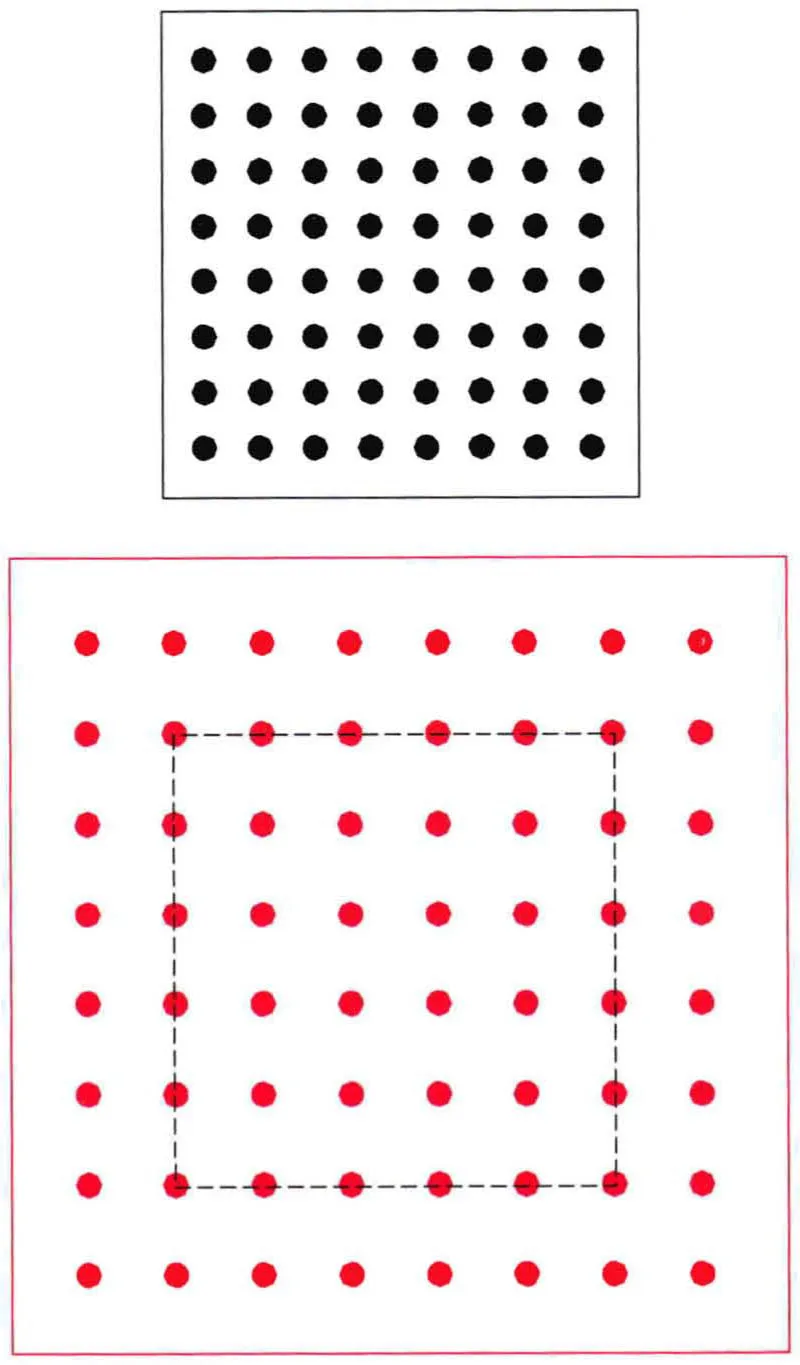
Apart from a decrease with height, density is also affected by warmth. When a parcel of air of a given volume is heated it becomes thinner as the molecules spread out and their number becomes less than in the original parcel.
Conversely, when a volume of air is cooled it becomes denser.
Density also decreases as the moisture content in the air increases, but the effect is relatively minimal.
The ISA standard density at sea level (excepting the Dead Sea!) is 1.225 kilograms per cubic metre (or 1225 grams) or 0.764 lb per cubic foot, where density is defined as 100%. In other words, this would be the defined average weight of all the air molecules in a volume of one cubic metre of air at sea level.
Unlike the other basic factors we shall cover, it cannot be readily measured by instrumentation – its value at a given time requires calculation.
Density plays an important part in an aircraft’s performance; in fact an aircraft’s design limitations are based on the ISA standards. However, as already mentioned, reality rarely matches laid down standards; they are but yardsticks.
The effect of density below the established 100% at 1.225 kg per cubic metre has a definite bearing on an aircraft’s stated ā€˜book’ performance. This area we shall discuss after you have digested the aspects of pressure, temperature and humidity.
image
Warmed air expands – notice how the number of molecules in the original volume has decreased
CHAPTER THREE
PRESSURE
WHAT IT IS
Pressure is the weight of a given column of air in the atmosphere measured at the earth’s surface. It decreases with height until becoming nil when air ceases to exist. You may think that the reference to pressure being weight means it is the same as density — this is not so.
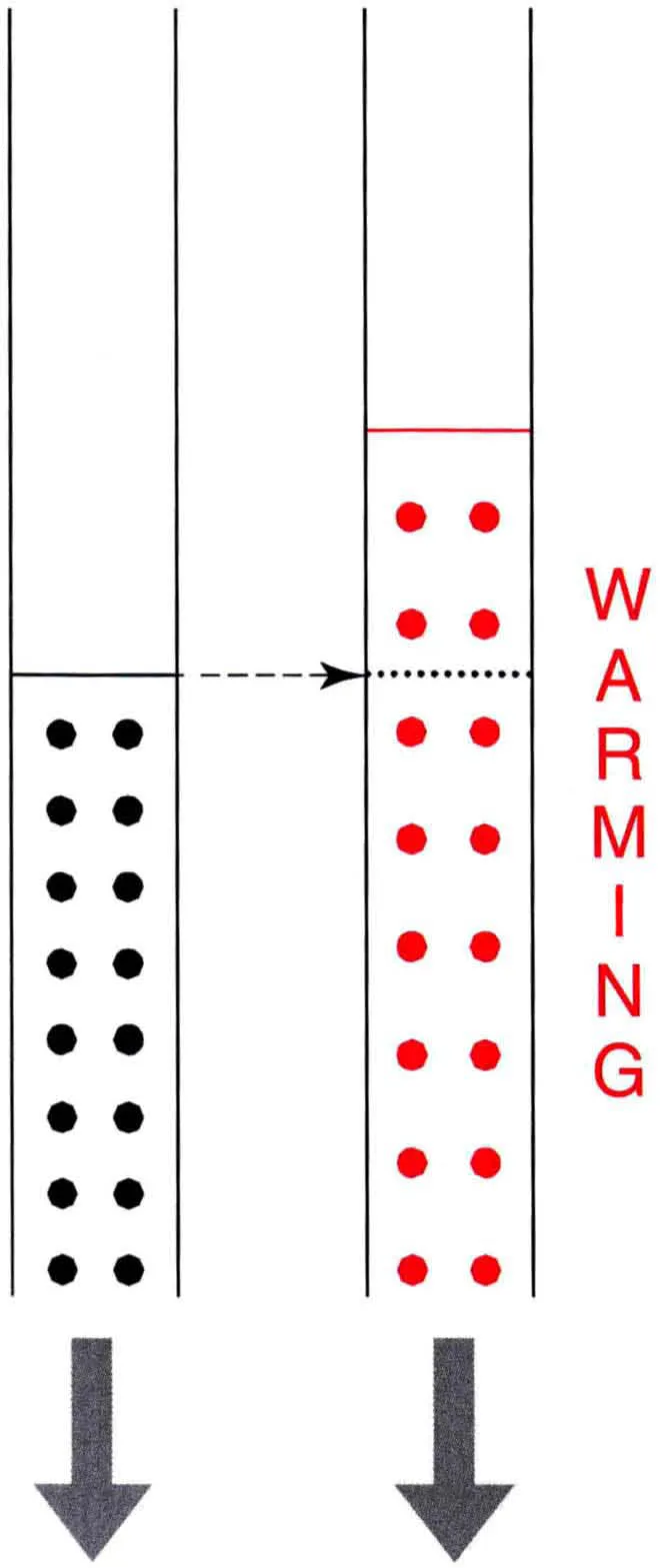
Imagine warming a given parcel of air in a tube. This air would expand and spread itself farther up the tube so that the column in the tube would become greater in length. But take the volume of the original parcel of air in the longer column and you will find it is lighter (less dense) than it was before the warming took place. The same amount of air remains in the column overall so the pressure at the bottom stays the same.
image
The surface pressure need not decrease with a decrease in density
MEASURING PRESSURE
The unit by which atmospheric pressure is measured in the UK has for many years been the millibar (mb). The ICAO has now agreed to a change of unit to that of the hectoPascal (hPa). The change is rather academic in that 1 mb equals 1 hPa so it is a case of ā€œa rose by any other nameā€!
However, the millibar will continue to be used in the UK for operational purposes for the foreseeable future; the hectoPascal will be confined only to those occasions when reference is being made to ICAO International Standard Atmosphere as a definition in itself.
In the light of this present situation we will naturally refer to millibars (mbs) in this book with possibly the occasional insertion of hPa as a reminder for the future.
In the United States of America, measurement of pressure is currently in inches (in.Hg) – based on the length of a column of mercury in circumstances about to be described.
image
The mercury barometer consists of a long thin tube extending upwards from a reservoir of mercury. A tiny hole in the reservoir allows air pressure to enter and exert its influence on the mercury. The above is an example from where the inch is the unit of measurement
image
Readily recognisable with its clock face and scale marked with a range of choices from ā€˜Set Fair’ to ā€˜Stormy’, or simply a plain dial showing measurement only. A perfectly reaso...

Table of contents

  1. Cover Page
  2. Title Page
  3. Copyright Page
  4. Contents
  5. CHAPTER 1 The Atmosphere
  6. CHAPTER 2 Density
  7. CHAPTER 3 Pressure
  8. CHAPTER 4 The Altimeter
  9. CHAPTER 5 Wind
  10. CHAPTER 6 Effects of Wind on Flight
  11. CHAPTER 7 Temperature
  12. CHAPTER 8 Humidity
  13. CHAPTER 9 Effect on Flight of the Basic Factors in the Atmosphere
  14. CHAPTER 10 Lapse Rates
  15. CHAPTER 11 Origin of Clouds
  16. CHAPTER 12 Clouds
  17. CHAPTER 13 Precipitation
  18. CHAPTER 14 Icing
  19. CHAPTER 15 The Cumulonimbus
  20. CHAPTER 16 The Airmass
  21. CHAPTER 17 Depressions
  22. CHAPTER 18 Fronts
  23. CHAPTER 19 Thunderstorms
  24. CHAPTER 20 Haze, Mist and Fog
  25. CHAPTER 21 The Anticyclone
  26. CHAPTER 22 Visibility
  27. CHAPTER 23 Reports/Forecasts
  28. CHAPTER 24 Recap
  29. CHAPTER 25 General Data
  30. CHAPTER 26 Finale
  31. INDEX