![]()
CHAPTER ONE
ADO16: DESIGN, DEVELOPMENT AND OVERVIEW
The BMC 1100 and 1300 model range was one of the most successful in the Corporation’s history, selling more than 2.1 million of all types between its introduction in 1962 and its demise in 1974. Worldwide, it was sold under eight different marque names and in two-door saloon, four-door saloon, two-door estate and five-door hatchback forms – and very nearly as a van as well. In Britain, it was the country’s best-selling car between 1962 and 1971, being beaten just once (in 1967) by the Ford Cortina.
Yet even though the 1100s and 1300s were technological pioneers in their time, they are rare at classic car gatherings today. One reason is certainly that they were built at a time when rust-proofing was almost non-existent on British cars, so that thousands upon thousands of these cars simply rotted away to a point where repairs were no longer viable. Another must be that they were deliberately designed as practical and unglamorous family cars, with no sporting pretensions (although the 1300GT can perhaps be considered an honourable exception), so that there was little to persuade enthusiasts to keep them alive. Finally, perhaps, familiarity bred contempt: there were simply so many of them that they tended to blend into the background.
In fact, the ADO16 range, as it was known to its manufacturers, was a significant engineering achievement of its time, and confirmed BMC as a pioneer of new automotive ideas that had a profound impact on other manufacturers. The saddest part of the ADO16 story is that when British Leyland inherited this excellent product, it was either unable or unwilling to build upon it, and instead created bland, unadventurous and frequently unreliable replacements that eventually made it the butt of every TV comedian’s jokes.
ORIGINS
To understand where the ADO16 models came from, we really have to trace the story back to 1952. That was the year when the two giants of the British motor industry, Austin and Morris, agreed to a merger under the umbrella title of the British Motor Corporation. This merger of rivals brought with it several subsidiary marques that had been acquired by the two organizations over the years – MG, Riley and Wolseley being the main car brands – and it also brought with it a number of problems. All of those marques had established strong dealer bodies, and those dealers had mostly established loyal customer bases. So there was considerable resistance below the surface to this attempt at unification: Riley dealers did not want to sell MGs, and Morris dealers did not want to sell Austins.
One aim of the BMC merger had been to make manufacturing savings by reducing the number of different models being built. There was no point, for example, in building completely different MG and Riley models when the two were actually competing for the same group of customers. So BMC responded to the problem with what is today often derisively described as ‘badge-engineering’. That meant creating one basic design but producing different variants of it with different badges to suit the different dealer chains. The ADO16 models were born into that period, and that was why there were so many different versions of what was really one car. In the UK, they carried no fewer than six different marque badges – Austin, MG, Morris, Riley, Vanden Plas and Wolseley – and outside the UK they carried a couple more as well.
For its first few years, BMC continued to build and sell most of the models it had inherited from the Austin and Morris groups. Some still had plenty of life left in them and in any case developing new models takes time. But by 1955, BMC’s Chairman, Leonard Lord (formerly the Austin Chairman), had embarked on a plan to rationalize the product range. He foresaw three basic models as the heart of the BMC car range, and they could wear whatever badges seemed appropriate at the time. There would be a large car, codenamed XC9001, a medium-sized car, XC9002, and a small car, XC9003.
Lord also wanted a talented engineer to lead the design teams, and his choice fell on Alec Issigonis. Issigonis had been responsible at Morris for the 1948 Morris Minor, a remarkable car that had completely outshone its Austin rivals, but he had sensed trouble when BMC was formed in 1952 and had left to work for Alvis. Here, Issigonis had designed an advanced new saloon car with an all-aluminium V8 engine, but sadly Alvis could not afford to put it into production. Lord recruited Issigonis for BMC and put him to work on the two larger car projects, XC9001 and XC9002.
It is the XC9002 that has most relevance to the ADO16 story, although it started life as a very different car. This was the medium-sized saloon, which at that stage had conventional rear-wheel drive and was intended as the eventual replacement for the Austin A40 and Morris Minor. However, work on the initial design was halted in early 1957 when Leonard Lord told Issigonis to abandon what he was doing and focus on the XC9003 small car.
What had happened was that petrol rationing had hit Britain in 1956, when some overseas governments had withdrawn supplies in protest against Britain’s invasion of the Suez Canal zone. The political events that led to that need no discussion here, but one result was that cars that used as little petrol as possible were in demand. A number of entrepreneurs capitalized on the fact by importing miniature cars from the European continent. Bubble-cars and the like became big business, and the major UK manufacturers had nothing with which they could compete. Lord intended that BMC should compete – and fast.
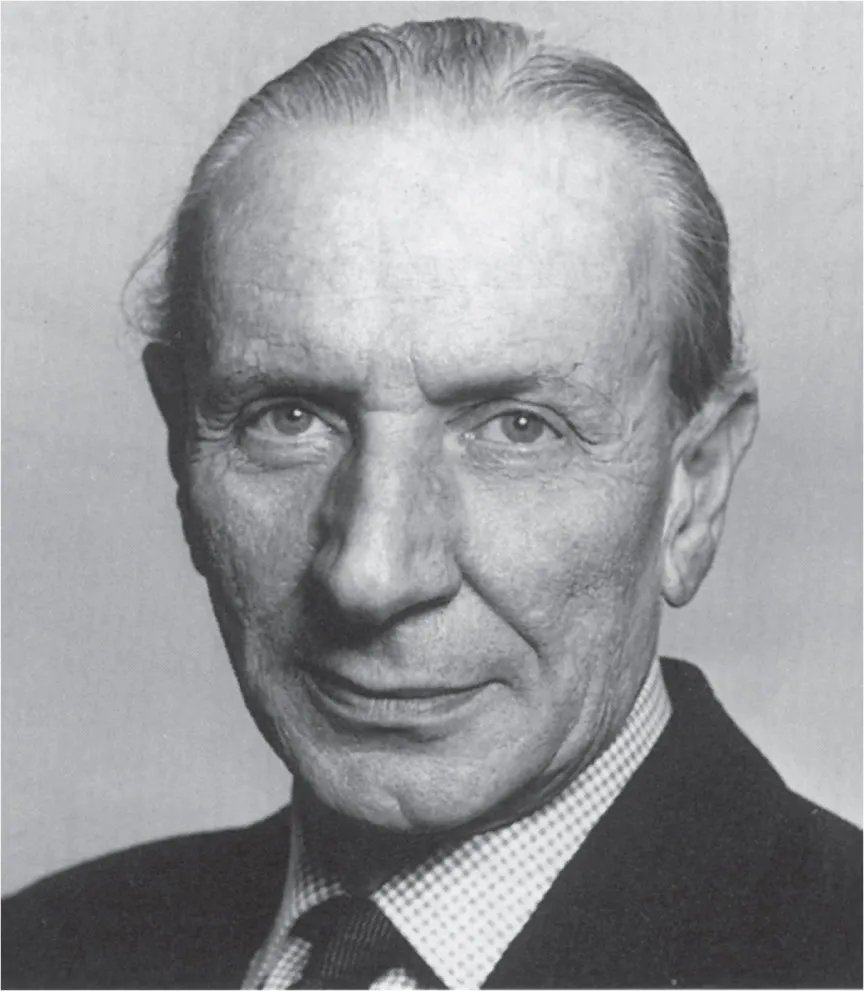
Alec Issigonis was the brilliant and innovative designer behind all BMC’s front-wheel drive cars of the 1960s: the Mini, the 1100 and the 1800. In the late 1940s he had also designed the much-loved Morris Minor.
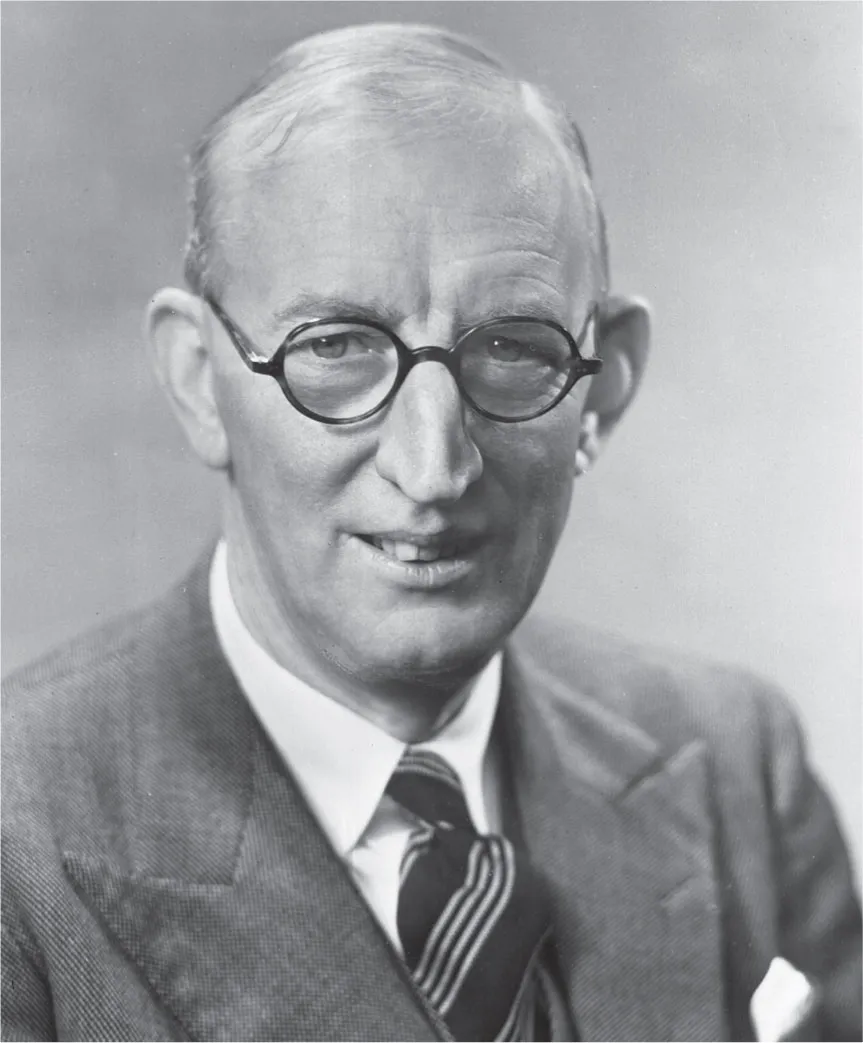
Leonard Lord was not a man to be trifled with; what he wanted, he got, and the 1100 range was part of his mid-1950s plan for a unified range of advanced BMC cars.
The first of Issigonis’s designs for BMC was the Mini, which pioneered his space-saving packaging ideas when it was released in 1959.
Issigonis designed the new small car, which became the Mini on its 1959 announcement, around the need to obtain maximum interior space with minimum exterior dimensions. To that end, he designed a transverse powertrain, with the engine mounted across the front of the car and the gearbox mounted in the sump below it, driving the front wheels. It was a hugely effective solution, and so it was no surprise that he returned to it when he was allowed to start work again on the new medium-sized car, which was still known as XC9002.
His objective this time was to squeeze the interior dimensions of the latest BMC 1.5-litre saloons (the so-called Farina range) into the external dimensions of the Morris Minor, and the transverse powertrain packaging of the Mini enabled him to do this. Even with the wheels moved to the four corners of the car to give the long wheelbase that would give maximum ride comfort, XC9002 still had a wheelbase that was six inches shorter than that of the Farina saloons. With minimal front and rear overhangs, it ended up very much shorter overall than those cars, and at the time represented an absolute revolution in packaging.
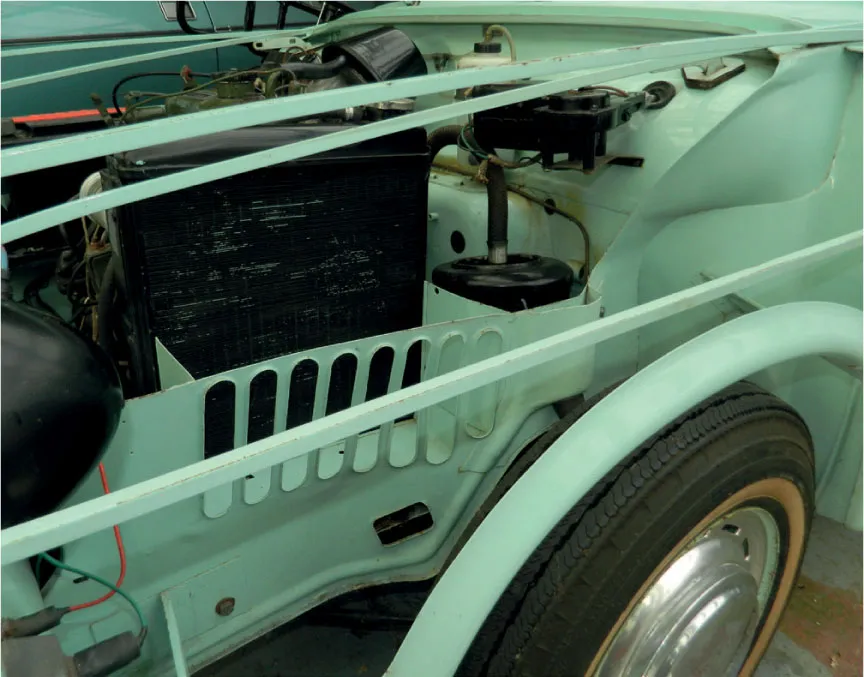
This cutaway display model shows the side radiator arrangement, with air vents in the inner wing. To the right of it is one of the Hydrolastic suspension displacer units.
The overall layout of the ADO16 is shown in this cutaway drawing of a Wolseley 1100, with twin-carburettor engine.
Like the Mini, XC9002 was also going to have wheels that were much smaller than was then normal: in this case with a 12-inch diameter rather than the tiny 10-inch size used on the Mini. Issigonis made sure that there would be no compromises in ride comfort by engaging suspension specialist Alex Moulton as a consultant to BMC to work on the new car. Moulton had worked with Issigonis at Alvis and was a proponent of hydraulic suspension systems. It would be his Hydrolastic system that would be yet another innovation for BMC’s new medium-sized car when it was announced in 1962 – and the same system would go on to be used on the Mini three years later. With all these elements in the design, the first prototypes of XC9002 were constructed and began trials during 1958.
THE PININFARINA INVOLVEMENT
Leonard Lord, meanwhile, was not at all convinced that his existing designers – ‘stylists’, as they were called at the time – could come up with convincingly modern shapes for the cars he wanted. So in 1957 he turned to the Italian styling house of Pininfarina and requested a range of new designs that would cover all the planned new BMC models. The first to reach the showrooms was the Austin A40, with characteristically sharp Italian lines. Next came the medium-sized designs, the so-called Farina cars, which really introduced BMC’s badge engineering concept when they appeared with minor variations wearing the badges of the Austin, MG, Morris, Riley and Wolseley companies. The Mini, under development in this period, nevertheless escaped the attentions of Pininfarina, largely because of the rush to get it into production.
In the meantime, the early prototypes of XC9002 had been constructed with a simple and functional body design. This was distinctly dowdy and Lord decided that the car needed a more modern ...