CHAPTER 1
ANATOMY AND PERSPECTIVE
The human body obeys certain rules of proportion, which we know instinctively but often don’t think about. The manga style can be deceptive in that some rules are clearly broken (for example, eye size relative to head size), but in fact most are maintained even in the more exaggerated styles. Obviously the choice of which rules to stretch (and how far) is up to the individual, but knowing the rules first is essential to keep your characters looking convincing.
Here is a quick introduction to drawing in the manga style and the rules of proportion that will help keep your characters believable whatever you choose to do with them.
Head-to-body Ratios
If you are struggling with perspective, or have noticed that different manga styles seem to use different proportions, you have inadvertently stumbled upon the Head-to-Body ratio. Simply put, this ratio dictates how many ‘heads’ will fit into the height of the character (for example, a 1:8 ratio means that for one body, there will be eight head heights, including the head itself).
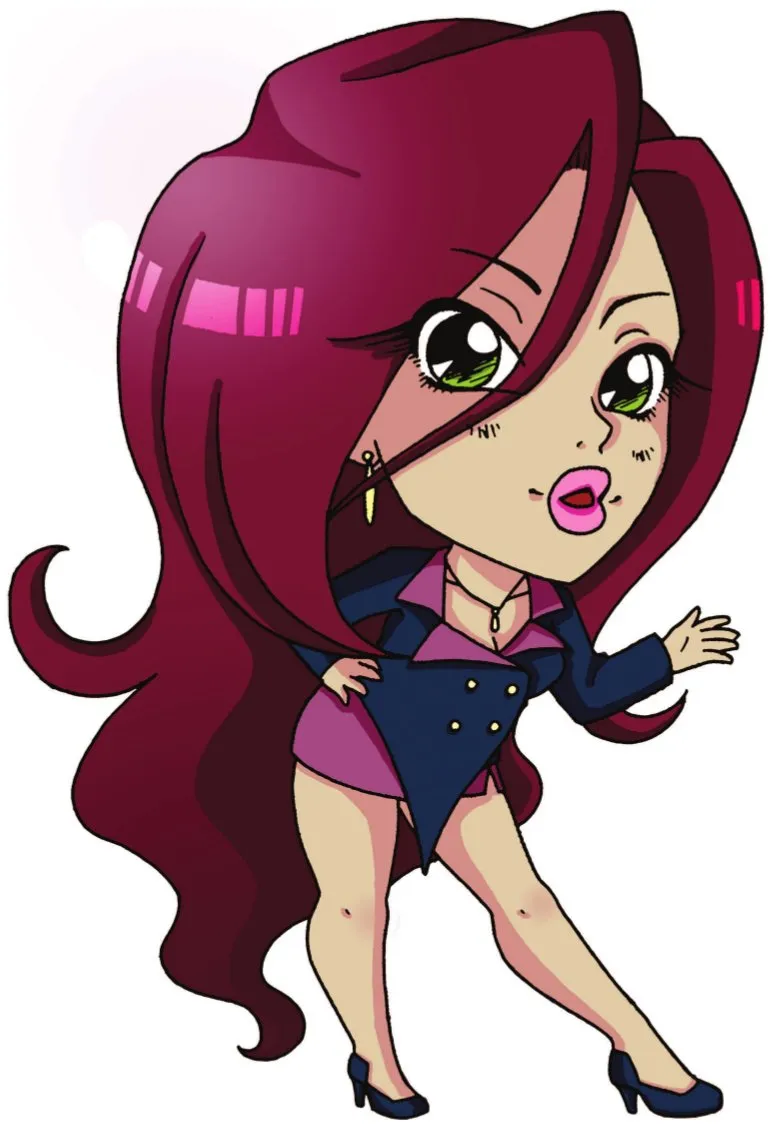
The smaller the ratio, the more deformed and chibi-like the character will be. However, do not assume that a higher ratio will make them look more defined and adult; as you can see with the 1:10 ratio, there is a limit to this approach.
Different manga genres vary the number of heads their characters have for effect. Shojo manga style is usually more realistic, and will use the larger ratios over the smaller. In certain shojo manga, figures are drawn very tall (especially the handsome, male love interests!); up to nine heads high. These tall, thin figures help give shojo manga its graceful and delicate look.
In shonen manga the characters are often drawn younger, so they aren’t as many heads high, giving the characters a sturdier and more solid feel to them. A typical shonen manga style will use from ratio 1:4 up to 1:7. Head ratios of 1:3 and under are usually only used for mascot characters, or to portray a comical scene. The proportions of chibi, or super-deformed style characters are even more extreme. Many chibi figures are only two heads high with their whole body fitting into just one head length!
If in doubt over which ratio to use, a good all-rounder to adhere to is the 1:6 ratio. It can be used in most manga styles, and will not look out of place!
Using the length of the head as a guide you can draw characters of different ages. In proportion to their body, children have much larger heads than adults. A baby can be only three heads tall, whereas an average adult is six or seven heads tall. Younger children are about three to five heads tall, and teenagers perhaps five or six heads tall. As a person gets older, their head takes up less and less of the total height of their body. By keeping this in mind you’ll be able to effectively draw characters of any age.
Drawing the Head
The face is usually the focal point of a picture, the first thing most people will look at. The same is true of a comic page panel; faces draw the reader’s attention and their expressions often speak to what is going on before any dialogue is read. Obviously there has to be a body, and when you think of a character you should have an overall idea of their appearance – and their body has to match their face! But it is worth spending a lot of time on each character’s face, because this is what readers will look to for your character’s expressions and dialogue. An expressionless character is not a convincing one. So – where do you start when drawing a face?
Think in halves when sketching out a face from the front perspective; faces are usually bilaterally symmetric. Start with a simple circle. Divide this circle in half horizontally and vertically, and extend the vertical line down beyond the bottom of the circle. Starting from where the horizontal line intersects the circle and ending at the bottom of the vertical line, draw a rough chin shape. Divide the distance between the horizontal line and the chin in half to mark where the nose is, and then divide space between nose and chin in half again to mark the mouth position. The top of the eyes is about level with the horizontal line; the eyes themselves should be approximately halfway between the top of the head and the chin. How far you extend the vertical chin line is up to you; obviously a longer line makes for a longer face, and short chibi faces require shorter lines.
FACIAL PROPORTIONS
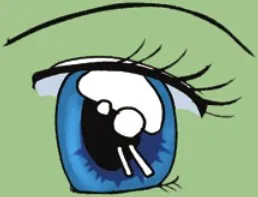
When placing the eyes, there should be a distance of one eye in between them (the ‘third eye’). The ears always lie in the space between the eyes and nose, with the tips of the ears at the same level as the eyebrows, and the lobes roughly level with the bottom of the nose. The ends of the mouth are roughly in line with the inner corners of the eye, although if your character has a large or a small mouth, that will change. The neck is roughly in line with the outer corners of the eyes. These little tricks will keep your characters looking consistent and believable.
The hair volume can (and often will) extend very far from the face – ...