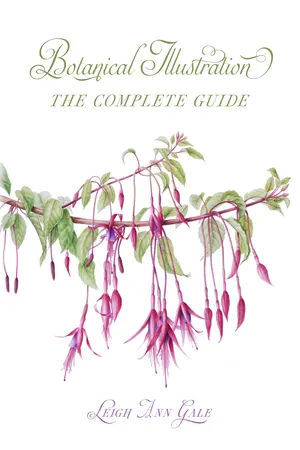
Botanical Illustration - the complete guide explains the processes and methods behind this beautiful art genre. It highlights the importance of the requisite skills of close observation, accurate drawing and attention to detail. Leigh Ann Gale is a leading botanical artist and tutor, and she generously demonstrates her approach in this book. Her worked example of fuchsia magellanica clearly shows the varied stages of an illustration. Along with step-by-step instructions to a range of subjects, this book is beautifully illustrated with over 350 images, diagrams and paintings of her and her students' work. This book is a source of inspiration as well as a definitive guide, and the contents include: introduction to botany and a comprehensive botanical glossary; a case study demonstrating each stage of a worked example, including the selection and preparation of a subject, observational drawings, composition skills and painting processes; step-by-step instruction covering many subjects, from creating shine on leaves and berries, to painting white flowers and depicting hairs on leaves and stems; a guide to colour theory and how to mix colours accurately to match your specimens and make the most of your watercolour palette; and ideas on how to continue, and develop your own style of botanical illustration. This book will be of great interest to all botanical artists, natural history artists, watercolourists, gardeners and natural historians and is lavishly illustrated with 391 colour images.
- 208 pages
- English
- ePUB (mobile friendly)
- Available on iOS & Android
eBook - ePub
About this book
Trusted by 375,005 students
Access to over 1.5 million titles for a fair monthly price.
Study more efficiently using our study tools.
Information
Topic
ArteSubtopic
Técnicas artísticasCHAPTER 1
Materials AND Equipment
The hand is the tool of tools.
– ARISTOTLE
The materials and equipment you invest in at the outset will without doubt become your trusted tools for successful botanical illustration. If you are equipping yourself for the first time then buying and building up a good selection of quality materials is by far the best option, as you will certainly achieve better results in your work right from the start. For example, selecting quality sable brushes instead of synthetic alternatives, and artist’s quality watercolours instead of student colours – whilst a little more expensive – will prove their worth time and time again.


Besides pencils, brushes and paints, there are a number of other useful pieces of equipment you will find helpful. Some of these can be purchased, but cheaper, homemade alternatives can work just as well.
You will also need to consider whereabouts you will be setting up your studio or allocated workspace and how you will store your work. If you are likely to be travelling, you will need to find effective ways of carrying and storing your work to prevent it from becoming damaged.
This chapter explores a range of materials and equipment suitable for botanical illustration, and of course, you will probably come across some of your own to add as you go along.
It is important to remember that botanical illustration is not only about the practicalities of drawing and painting but how best to support your endeavours by selecting appropriate materials and equipment conducive to the task in hand.
DRAWING MATERIALS AND EQUIPMENT
During the initial stage of the botanical illustration process, it will be necessary to make observational drawings of your subject matter. The conventional way to do this is by means of graphite pencil onto good quality cartridge paper.
PENCILS
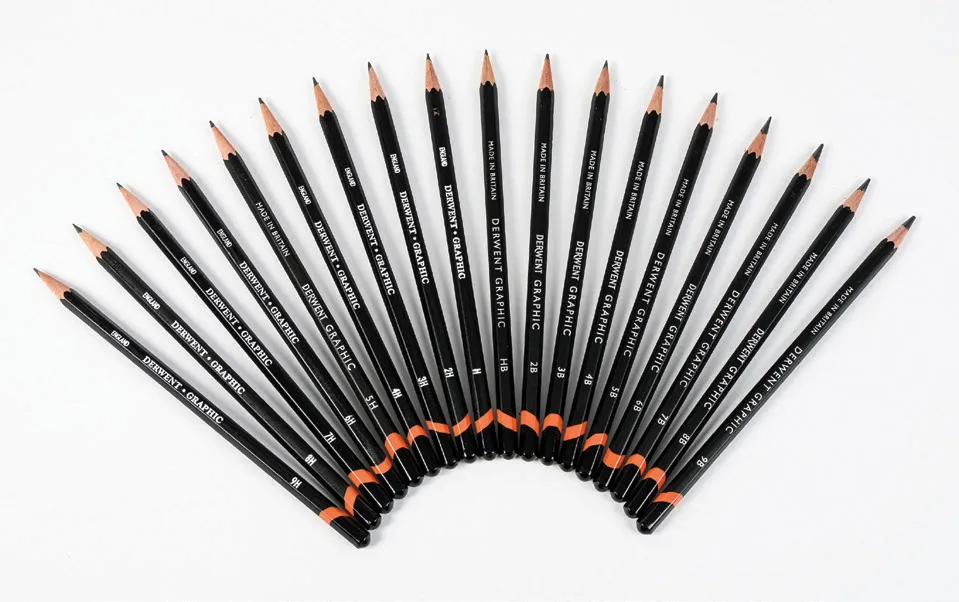
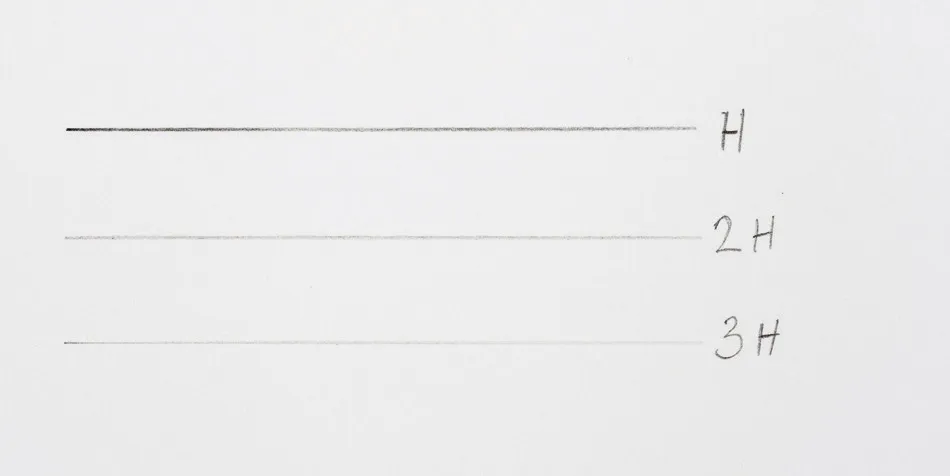
Drawing pencils are available in varying degrees of hardness. The hardness of a pencil is determined by the ratio of graphite to clay powder content resulting in a range of soft (B) grade and hard (H) grade pencils. A pencil which is considered medium grade is known as an HB pencil, and this is the standard for most drawing activities. For botanical illustration purposes it is advisable to use a pencil from the ‘H’ range, since a finer and lighter line can be accomplished which will give greater accuracy and precision in your drawing. ‘H’ range pencils start at H and go up to 9H. It is not necessary to use the hardest ‘9H’ option, which could potentially damage your paper. Instead, a pointed H, 2H or 3H will suffice and will produce quite a satisfactory result. It is important that during the drawing process you keep the point of your pencil sharp, by regularly using a pencil sharpener or craft knife.
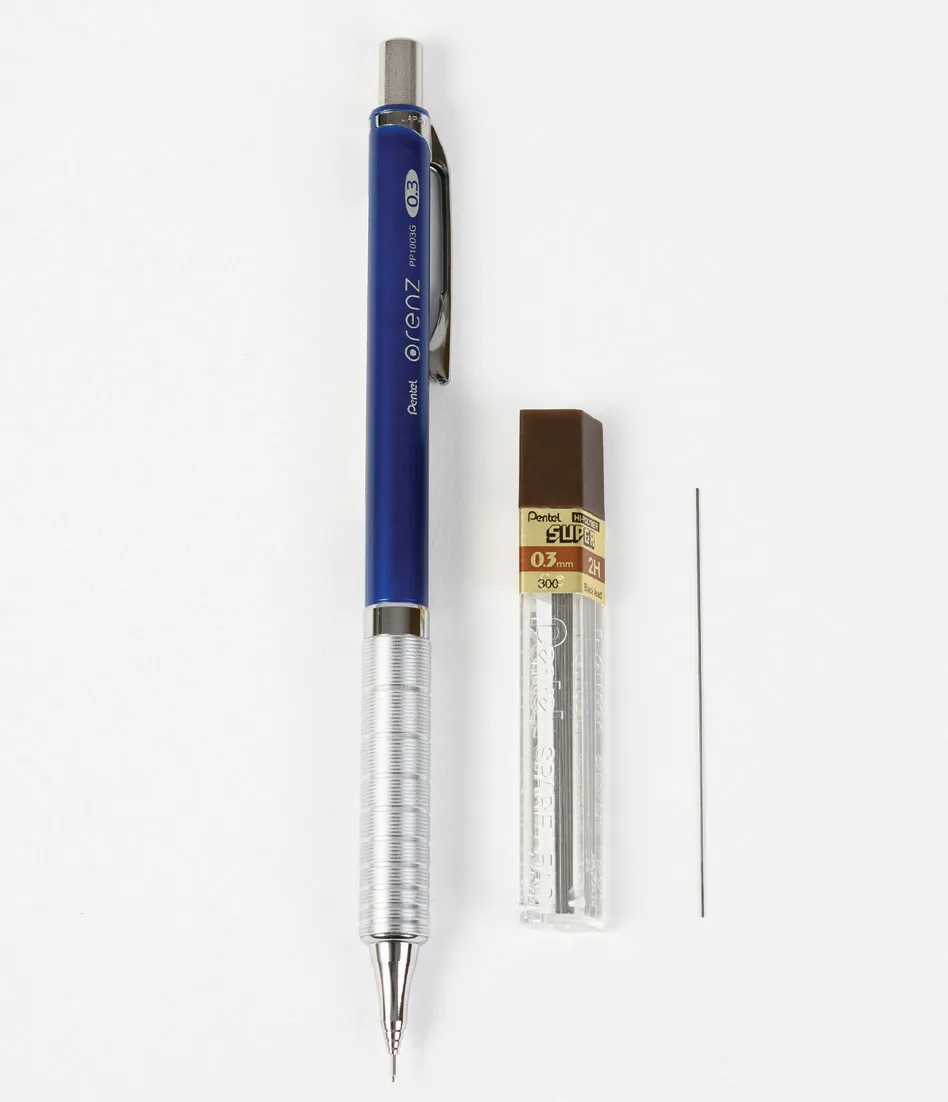
You may want to consider using a ‘mechanical’ pencil (sometimes referred to as a ‘propelling’ pencil), especially if you intend doing a large amount of drawing. The advantage of this type of pencil is that the point remains permanently sharp, therefore doing away with the interruptions of sharpening all the time. The lead itself is simply propelled by an internal mechanism, which is activated by the user depressing a button on the end of the pencil. These pencils are readily available, and the different grades of lead in different widths are bought separately. As with a standard drawing pencil, choosing an H, 2H or 3H grade in a 0.3mm or 0.5mm width will be adequate for your purposes.
DRAWING PAPER
The use of good quality cartridge paper is recommended for botanical drawing, but it is up to you whether you choose to use loose sheets or work in a sketchbook. Cartridge paper should be smooth textured and around 70lbs/150gsm in weight. Cheaper, thinner cartridge papers are available; however, they tend to be slightly rougher in texture and prone to scuffing when rubbing out and pencil indentation when using the necessary H grade pencil.
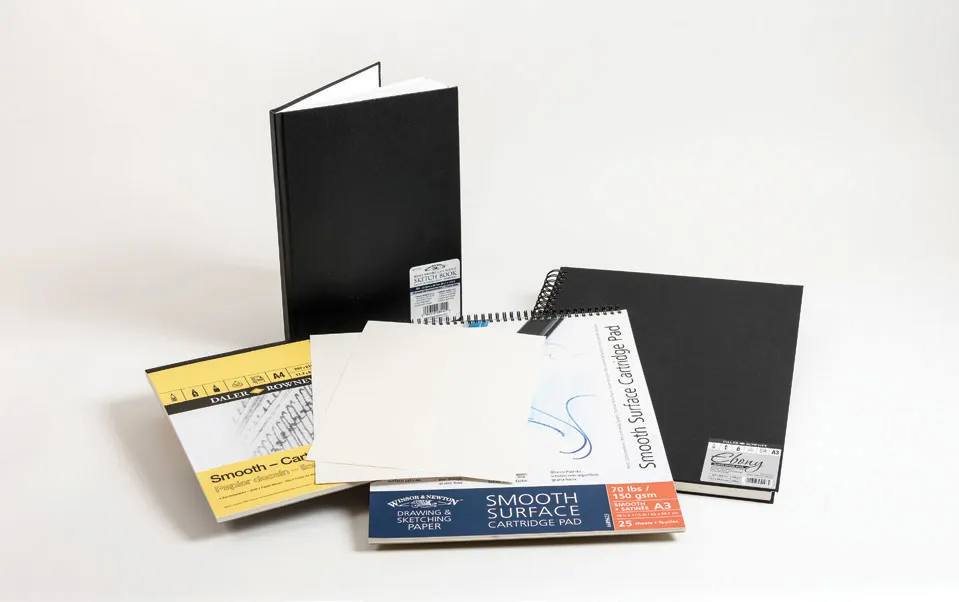
It is worth investing in both A3 and A4 sizes so that you can select the size suitable for the drawings you are making. Pads or books of cartridge paper are available in either case-bound or spiral-bound formats. It is fine to use either format for drawing; spiral-bound pads have the advantage of being able to turn the pages completely back on themselves.
Keeping a botanical sketchbook for all of your drawings, research, and colour notes is a very useful exercise and even the sketchbook itself can become a charming work of art in its own right. Choosing a good quality sketchbook will allow you to draw, paint, and use ink and coloured pencils, and if the paper is defined as acid free, then the longevity of your work will also be preserved. You could also use a sketchbook rather like a scrapbook, a place to keep all related findings such as pressed and dried specimens, photographs and other useful information, to help you in your quest to learn about the species you are illustrating.
ERASERS
Whilst you are drawing it is probable that from time to time you will need to correct any mistakes you make. It is arguable that any errors should be corrected at all, since leaving them in place is a good way of learning from your mistakes and will actually remind you of the mistake you made, thus avoiding the same error again. Although leaving errors in situ does have its merits, continual re-drawing can become confusing, especially when drawing fairly complex structures. If you need to erase mistakes, the best option is to do so by using a putty rubber. This is a pliable material resembling normal window putty, designed to absorb particles of graphite from the paper surface. Additionally, unlike some standard erasers, a putty rubber does not leave behind any evidence of rubbing out, which makes it ideal for keeping your drawings clean. Putty rubbers can be kneaded into any shape, for example a fine point or chisel to eradicate unwanted lines in a small space. Putty rubbers over time can become prone to hardening, or becoming soft and oily to the touch. Such rubbers can no longer be used effectively and you may find it necessary to replace them fairly regularly, however they are relatively inexpensive to buy.
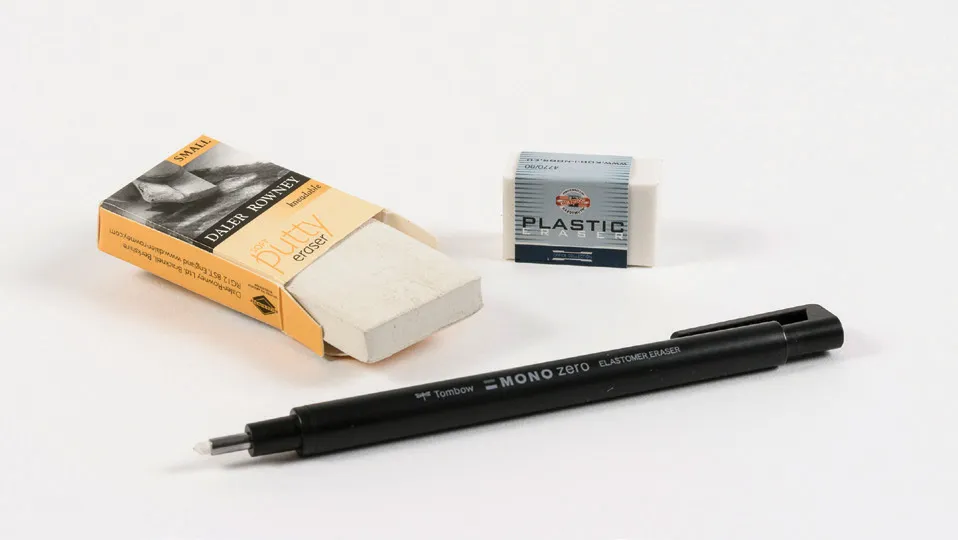
Table of contents
- Cover Page
- Title Page
- Copyright Page
- Contents
- Preface
- Introduction
- CHAPTER 1: Materials and Equipment
- CHAPTER 2: Choosing and Preparing a Subject
- CHAPTER 3: The Drawing Process
- CHAPTER 4: Composition
- CHAPTER 5: All About Colour
- CHAPTER 6: Preparing to Paint
- CHAPTER 7: Developing a Painting
- CHAPTER 8: Completing a Painting
- CHAPTER 9: Specific Painting Techniques
- CHAPTER 10: Alternative Media
- CHAPTER 11: Mounting and Framing Work
- CHAPTER 12: Further Learning, Continued Practice and Individual Style
- Appendix: An Introduction to Botanical Terms
- List of Contributors
- Acknowledgements
- Suppliers
- Index
Frequently asked questions
Yes, you can cancel anytime from the Subscription tab in your account settings on the Perlego website. Your subscription will stay active until the end of your current billing period. Learn how to cancel your subscription
No, books cannot be downloaded as external files, such as PDFs, for use outside of Perlego. However, you can download books within the Perlego app for offline reading on mobile or tablet. Learn how to download books offline
Perlego offers two plans: Essential and Complete
- Essential is ideal for learners and professionals who enjoy exploring a wide range of subjects. Access the Essential Library with 800,000+ trusted titles and best-sellers across business, personal growth, and the humanities. Includes unlimited reading time and Standard Read Aloud voice.
- Complete: Perfect for advanced learners and researchers needing full, unrestricted access. Unlock 1.5M+ books across hundreds of subjects, including academic and specialized titles. The Complete Plan also includes advanced features like Premium Read Aloud and Research Assistant.
We are an online textbook subscription service, where you can get access to an entire online library for less than the price of a single book per month. With over 1.5 million books across 990+ topics, we’ve got you covered! Learn about our mission
Look out for the read-aloud symbol on your next book to see if you can listen to it. The read-aloud tool reads text aloud for you, highlighting the text as it is being read. You can pause it, speed it up and slow it down. Learn more about Read Aloud
Yes! You can use the Perlego app on both iOS and Android devices to read anytime, anywhere — even offline. Perfect for commutes or when you’re on the go.
Please note we cannot support devices running on iOS 13 and Android 7 or earlier. Learn more about using the app
Please note we cannot support devices running on iOS 13 and Android 7 or earlier. Learn more about using the app
Yes, you can access Botanical Illustration by Leigh Ann Gale in PDF and/or ePUB format, as well as other popular books in Arte & Técnicas artísticas. We have over 1.5 million books available in our catalogue for you to explore.