The techniques used in the welding of thin sheet metal as used on vehicle bodies are vastly different to those used in welding heavier structures. This book covers the various methods of welding used to make and repair sheet metal body panels. Whereas some forms of welding are straightforward, others require a significant amount of skill. The important thing for anyone wanting to achieve a good finish to body repair work is to start with the correct techniques: skill then comes with practice. When restoring a classic car of some value, it is worth putting the time and effort into becoming skilled in the use of all the techniques covered in this book in order to achieve a professional finish to your work. With nearly 200 colour photographs and illustrations, this book lists the equipment and materials required to achieve a successful outcome. It describes the different methods of welding and how to choose the correct method for the job and provides step-by-step practical guidance to achieve a professional result. Finally, it focuses on the welding of mild steel and aluminium alloy, with some reference to the welding of brass and stainless steel sheet metal.
- 144 pages
- English
- ePUB (mobile friendly)
- Available on iOS & Android
eBook - ePub
Welding for Vehicle Restorers
About this book
Trusted by 375,005 students
Access to over 1.5 million titles for a fair monthly price.
Study more efficiently using our study tools.
Information
CHAPTER ONE
HEALTH AND SAFETY
Health and safety should always be taken seriously, as severe injury and long-term health conditions can result from a lack of awareness and discipline in using protective measures. To reduce the risk of harm to yourself and others, it is always necessary to understand the risks and to use the appropriate protective equipment. It is important to develop safe working habits, as a momentary lapse in concentration when working on vehicles can cause serious injury. Tiredness plays a part in many accidents, so avoid carrying out any operations using power tools or other dangerous equipment when feeling fatigued. Working alone increases the risk of harm, as you are more likely to lift something that is too heavy for one person. You may also be unaware of other incidents in the workshop, such as a fire starting, if you are concentrating on a particular job. The environment you are working in can create risks, as many household garages have poor floor surfaces, leaky roofs and outdated electrics, all of which increase the chances of an accident occurring.
Always perform a quick visual risk assessment before carrying out any work on a vehicle so as to reduce the risk of injury or harm. The appropriate PPE (Personal Protective Equipment) should be used in order to reduce the risk of harm, as there are serious health issues that can arise from welding on vehicle bodies caused by:
•fumes
•heat
•electric shocks
•intense light created by the welding process
•sharp edges to metal panels
•trip and slip hazards
•movement of heavy objects.
Grinding metal is also a common cause of injuries arising from:
•sparks
•dust
•projectiles
•noise
•vibration.
List of equipment
The following PPE equipment must be worn:
•fume mask – designed to filter out metal fumes
•gloves – heat- and cut-resistant
•welding mask – of a type that is specific to the welding process
•face shield – polycarbonate full-face screen
•ear protection – ear defenders or ear plugs
FUMES
All paint and electroplating should be removed from the surface of the metal panels to avoid toxic fumes being produced when these are burnt. A fume mask should be worn, or fume extraction used, where there is any risk of fumes being produced during the welding process. Avoid welding close to rubber seals or other combustible materials that are likely to give off noxious fumes when heated.
Fumes created during the welding of metals have been found to cause cancer and there are no guidelines at present as to what is a safe level of exposure. An air-fed mask is the best option if carrying out any significant amount of welding.

A range of leather gloves used for welding. Left to right: rigger glove; TIG welding glove; and heavy-duty MIG welding glove.
HEAT
When welding, gloves should always be worn to protect hands and wrists from burns. It is also necessary to protect arms from any burns that may be caused by weld spatter or contact with a hot panel by wearing suitable clothing. Short-sleeved shirts and short trousers should not be worn whilst welding or working on vehicle bodywork.
Gloves used for MIG welding should have a high level of heat resistance with long enough cuffs to protect the user’s wrists from burns caused by weld spatter that is given off from the process. TIG welding gloves require some heat protection, though need to be flexible enough to operate the torch trigger effectively.
ELECTRIC SHOCKS
Welding machines pose a serious risk of electric shock. Never use in wet, damp or high humidity conditions. Ensure that all cables are kept dry and in good condition. Machines should always be connected to the mains current through an appropriately rated electrical circuit breaker.
It is not advisable to carry out any welding outdoors due to the risks of electrocution and the likelihood of dispersion of shielding gas caused by draughts, as these will result in a poor-quality weld.
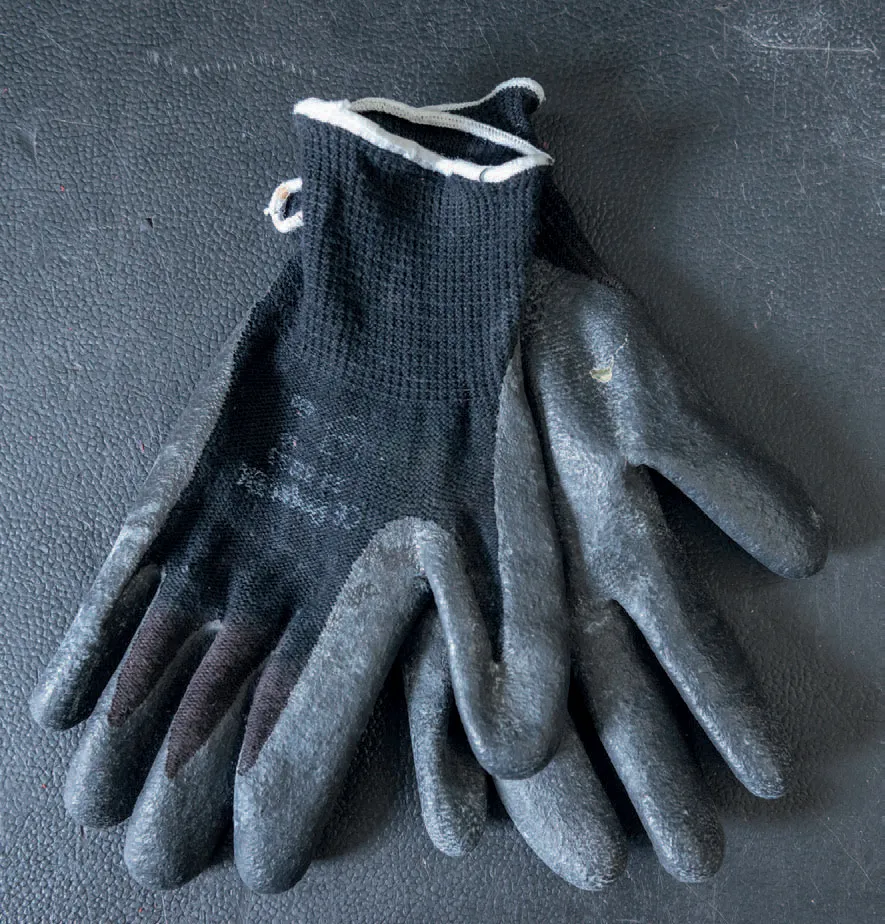
Polyurethane-coated gloves should be worn when using chemicals to protect hands from chemical burns and ingestion of harmful liquids through the skin.
INTENSE LIGHT CREATED BY THE WELDING PROCESS
It is important to protect your eyes. The flash of light from the welding process may cause temporary blindness and long-term sight problems if subjected to regular exposure. A suitable face mask is an essential piece of equipment for use during welding. There is a range of varying shades available depending on what type of welding is employed and the amperage used; a higher amperage will produce a brighter flash during welding, requiring a higher level of protection. Metals such as aluminium are highly reflective and a brighter flash will be experienced during the welding process.
There is a wide variety of welding helmets available. For MIG welding, a helmet with a light reactive lens is best, as this enables a clear enough vision of the joint prior to starting the weld. For TIG welding, a helmet with a passive lens is more useful; this lens is always shaded, but has a non-shaded clear area at the bottom of the screen. This clear section of screen enables the welder to see plainly the tightness of the joint before attempting to weld panels together. More detail will be covered on the different masks used for each process in the relevant chapter.
SHARP EDGES TO METAL PANELS
Suitable gloves that offer protection from cuts should always be worn when handling sheet metal. Gloves are available in a wide range of different designs and materials. Some offer more protection against cuts; others more protection from burns or a better grip. The best material that I have found to offer all-round protection and give a reasonable degree of grip is leather. The standard leather rigger glove, which has a safety cuff to protect the wrist, offers better heat protection than thinner welders’ gloves. Their disadvantage is in having less control over the torch button. The best of all worlds is to use a rigger glove on the hand holding the panel being welded to protect against burns, and a thinner leather glove on the torch hand to allow for more control over the welding control switch.
CHEMICALS
Chemical-resistant gloves must be worn when working with acids, thinners or paint to protect against the ingestion of chemicals through the skin and to avoid contamination of other surfaces.
A full face screen should be worn to protect eyes and face from splashes and a fume mask should be worn to avoid breathing in harmful fumes.
TRIP AND SLIP HAZARDS
Cables from extension leads, earthing leads and welding torches create trip hazards and should be kept as tidy as possible and put away when not in use.
Any dust produced during the grinding of metals creates a slippery surface when it falls on to a smooth concrete floor. Sweep up dust and filings at regular intervals to reduce the risk of injury from slipping on any debris.
MOVEMENT OF HEAVY OBJECTS
Gas bottles should ideally be stored ...
Table of contents
- Cover
- Title
- Copyright
- Contents
- DEDICATION AND ACKNOWLEDGEMENTS
- INTRODUCTION
- CHAPTER ONE: HEALTH AND SAFETY
- CHAPTER TWO: EQUIPMENT
- CHAPTER THREE: GENERAL PRINCIPLES OF WELDING
- CHAPTER FOUR: METALS
- CHAPTER FIVE: SPOT WELDING
- CHAPTER SIX: METAL INERT GAS – MIG
- CHAPTER SEVEN: TUNGSTEN INERT GAS – TIG
- CHAPTER EIGHT: FITTING PANELS
- CHAPTER NINE: FINISHING WELDED JOINTS
- GLOSSARY
- FURTHER READING
- INDEX
Frequently asked questions
Yes, you can cancel anytime from the Subscription tab in your account settings on the Perlego website. Your subscription will stay active until the end of your current billing period. Learn how to cancel your subscription
No, books cannot be downloaded as external files, such as PDFs, for use outside of Perlego. However, you can download books within the Perlego app for offline reading on mobile or tablet. Learn how to download books offline
Perlego offers two plans: Essential and Complete
- Essential is ideal for learners and professionals who enjoy exploring a wide range of subjects. Access the Essential Library with 800,000+ trusted titles and best-sellers across business, personal growth, and the humanities. Includes unlimited reading time and Standard Read Aloud voice.
- Complete: Perfect for advanced learners and researchers needing full, unrestricted access. Unlock 1.5M+ books across hundreds of subjects, including academic and specialized titles. The Complete Plan also includes advanced features like Premium Read Aloud and Research Assistant.
We are an online textbook subscription service, where you can get access to an entire online library for less than the price of a single book per month. With over 1.5 million books across 990+ topics, we’ve got you covered! Learn about our mission
Look out for the read-aloud symbol on your next book to see if you can listen to it. The read-aloud tool reads text aloud for you, highlighting the text as it is being read. You can pause it, speed it up and slow it down. Learn more about Read Aloud
Yes! You can use the Perlego app on both iOS and Android devices to read anytime, anywhere — even offline. Perfect for commutes or when you’re on the go.
Please note we cannot support devices running on iOS 13 and Android 7 or earlier. Learn more about using the app
Please note we cannot support devices running on iOS 13 and Android 7 or earlier. Learn more about using the app
Yes, you can access Welding for Vehicle Restorers by Bruce Macleod in PDF and/or ePUB format, as well as other popular books in Technology & Engineering & Mechanical Engineering. We have over 1.5 million books available in our catalogue for you to explore.