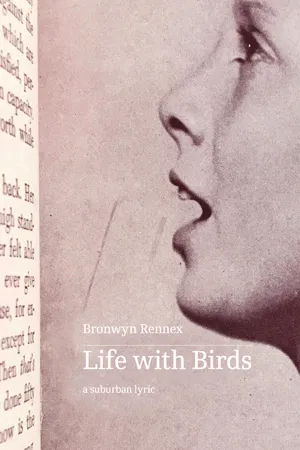
A luminous account of largely unrecognised experiences in the aftermath of war. This is not a war story about heroism or healing trauma, but an attempt to fill the gaps in a family story in the wake of the Vietnam War and re-animate a father never really known. Life with Birds invests in the small scale, the domestic and the ordinary as an overlooked part of Australian military history.Bronwyn Rennex has used whatever materials she could find in order to attempt to retrieve her father - family stories, love letters, legal documents, birds - and the gaps between these documents form perhaps the most important part of this story: a failure that describes a loss. Rather than describing her mother's grief at her father's death, Rennex uses love letters and her mother's written claim for a war widow's pension to map the shape of her mother's love and loss.Told in fragments and mixing speculation, imagination and guesswork, the narrative is personal, angry, political and also funny, balancing a desire for some form of testimony with a commitment to questioning how we talk about war.This is a poignant and compelling account of largely unrecognised experiences in the aftermath of war.
- 200 pages
- English
- ePUB (mobile friendly)
- Available on iOS & Android
eBook - ePub
Life With Birds
About this book
Trusted by 375,005 students
Access to over 1.5 million titles for a fair monthly price.
Study more efficiently using our study tools.
Information
Earlier that night on TV: Prisoner – Episode #1.81
After Roz collapses, Kath puts her to bed but can’t wake her next morning. Vera suspects she’s been drugged; Greg takes blood samples and keeps her until they find out what the cause was. Kath has tossed the pen, and no one finds it; she pleads ignorance to Mrs Davidson. Bea tries to pump Kath for info, even trying to get Lizzie into the room with Kath and Roz … While Leila fixes dinner, Geoff and Fletcher go to the pub…1

Birth marks
I was at an acupuncturist recently, getting treatment for the insomnia that had plagued me for months. Margaret, the acupuncturist, was a little bird of a woman, with long, grey hair that seemed to spring wild from her scalp. She was tiny and wise. She spoke slowly and softly. I lay on her treatment bed and she spent a long time feeling the pulse in one wrist and then the other.
‘Your poor heart,’ she said after a while, ‘it’s trying so hard, but it’s not being supported.’
She started the treatment. Before inserting a needle, she’d lean towards the point of insertion and whisper, ‘Breathe in.’ I’d breathe in and she’d insert her needle, leave a moment for exhalation, then, ‘Breathe in.’ Another one. ‘Breathe in.’ Another. By the time she got down to my feet, I could hardly hear her.
She got to my left leg. I’d mentioned, when I arrived, that blood had started pooling in my feet and I’d been feeling a kind of woodiness starting at my ankles and moving upwards. It felt like my legs were trying to become tree trunks. She stopped and looked closely at my birthmarks.
‘They must have had a hard time getting you out.’
‘You mean they could have happened when I was born?’ She nodded. You can hardly see them now, but when I was young my birthmarks were the colour of dark red wine, spilt claret. They ran from my knee to my ankle. I was always thinking about ways I could hide them. I wore long socks with tight elastic at the top. I avoided the pool. I dreaded summer and sandals. When people would say ‘What happened to your leg?’ or ‘You’ve got something on your leg,’ I’d say ‘Oh them? They’re just birthmarks.’
I guess I could have made up a more exotic backstory, but I just didn’t want them to be a topic of conversation.
As I grew up, my legs grew too, of course, and the birthmarks faded. They came to look more like bruises than anything else – like temporary scuffs arisen from the rough and tumble of life. I’d always thought my birthmarks had been the result of a miscommunication of my DNA; that somehow, when it was time to make my legs, my genetic material got the colours wrong and put blush where there should have been beige.
On the drive home from seeing Margaret I realised there are actually five marks. One near my knee, in the middle of my shin and another four running in a diagonal line up from my ankle. Five fingerprints? My left leg is crooked too. Twisted outwards. What went on in that birthing room? Maybe I was dragged into the world, left leg first, kicking and crying. It wouldn’t surprise me. Mum was forty when she had me – ancient in those days to be having a baby. She told me once, drunkenly, at a dinner for her birthday, that she didn’t talk to Dad for two weeks after she found out she was pregnant with me. One of my aunties had told her to ‘get rid of it’ by drinking half a bottle of castor oil. Mum said she went home and had two tablespoons full and got the runs.
‘Serves you right,’ I said.
‘Of course, I didn’t really mean to. As soon as I saw you, I fell in love with you.’
‘Which aunty was it?’
‘I don’t want to tell you.’
‘Tell me. Who? Was it any of your sisters?’
She shook her head.
‘Aunty Joyce?’
‘No.’
‘Aunty Elma?’
‘No.’
‘Aunty Mary?’
She looked at me and giggled. ‘She didn’t mean it. She didn’t know you.’
‘Bitch.’
The day I was born, 7 August 1964, the US Congress approved the Tonkin Gulf Resolution, which was the closest the US came to a declaration of war in Vietnam. The US claimed that their ships had been fired on by the North Vietnamese, in the Tonkin Gulf. Despite little evidence of an attack, the US Congress almost unanimously passed a resolution that gave President Lyndon Johnson power to escalate the conflict. The resolution was passed in the House 410–0. In the Senate the vote was 88–2. Democratic Senators Wayne Morse of Oregon and Ernest Gruening of Alaska cast the only nay votes. At the time, Senator Morse warned:
‘I believe this resolution to be a historic mistake.’2
Before I turned one, my dad was sent to Vietnam.
He flew out of Australia on 1 June 1965, headed for Saigon.
Life Lessons #1 – counting to six in Japanese
One of the most beautiful things our family owned when I was a child was a green silk coat embroidered with bright red flowers. It was wrapped in plastic and wedged in the linen closet between flannelette sheets and beach towels. With its fabulous colours and extravagant sleeves, it was a peacock among pigeons. The only times it was liberated from the shelves was on cold winter nights when Mum used it as an extra blanket on my bed – and only when I asked for it. Coming from the suburb of North Ryde – a land of wood panelling, beige carpets and wall units filled with clown statues and crystal trinkets – the coat didn’t just seem from another place, it was from another planet.
I thought the coat was a kimono and was related to my dad’s time in Vietnam – even though I knew kimonos came from Japan.
My dad could count to six in Japanese and taught us how to as well. I could chant it to myself. Itchy knee sand she go rocko.
He had been in the army. He had been a projectionist. He had gone to Vietnam. He had a kimono. They were the facts as I knew them, facts I left untouched in my mind way longer than others might have. After all, they had a huge impact on my life. I didn’t even know Dad until he returned from Vietnam – a different man, according to my mum. By the time he came back I was old enough to get on my hands and knees and bark at him like a dog, growling and tearing at the bottom of his trousers with my teeth, while he tried to hug Mum. I had no idea who he was. I don’t remember much about being a baby, but I do recall tearing at those trouser legs. This odd-smelling stranger, entering my life, moving into my house, mauling my mum, hogging her attention, trying to cosy up to me.
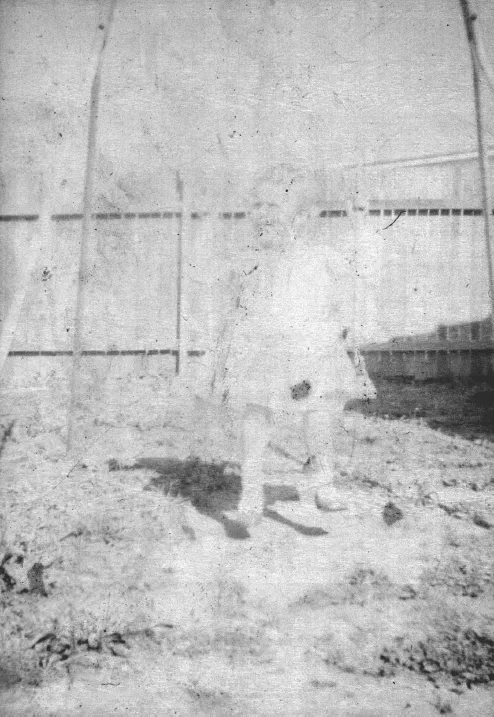
A silent smoky battle
War service wasn’t a topic of conversation in our house, particularly Dad’s service. Whatever understanding I had of his wartime experience, I had pieced together – a photo here, an offhand comment there. I filled in a lot of gaps, and why would I fill them with anything but nice stories? I imagined Dad in a dark tent, just visible behind sparkling dust motes, projecting his light and sharing his stories with the tired troops. They probably all had nice warm kimonos on too, and some may have played guitar. My dad, the capable and kind guy he was, making sure everyone had a good time. Not much of a hero, nothing too traumatic either. Maybe he was a bit like Elvis Presley in G.I. Blues – he looked good in uniform and was fun to have around.
Though there wasn’t wartime conversation around our house, there was army paraphernalia, including an old US army-issue khaki sleeping bag. It was mummy-shaped, tapered at each end, and when fully zipped left just a small round face hole, which made it perfect for dressing up as a worm. It was filled with feathers and smelt like men. There was a box of Kodak slides Dad took in Vietnam too (lost now – though a few were scanned before they disappeared). In that distinctive yellow box there were lots of pictures of bicycles, there were Vietnamese mothers with children, there was a haunted-looking monkey chained to a crate and a photo of the makeshift firing squad area outside of Dad’s office – three poles sitting within a U-shaped configuration of sandbags, stacked to head height. That monkey was Dad’s apparently. It always seemed quite human to me – the way it held the chains in its hands, the way it stared off into the middle distance, mute and trapped.
I poked around a lot as a kid. In Mum’s wardrobe I found Dad’s army tags stored in a black box along with the clip-on earrings she never wore. In the garage I found an old army medical kit with an empty morphine bottle in it. Dad spent a lot of time by himself in the garage, smoking, tinkering and listening to the Goon Show on the radio. He had any number of unfinished projects on the go, including a go-kart with an old Morris Minor car seat for the driver and a lawnmower engine and wheels. He stored his tools in drawers he’d made himself and labelled with nail polish (three daughters!).
My sister Maree told me recently that what I thought was a ‘kimono’ was actually a coat from Vietnam. It became another casualty of Mum’s relentless need to edit. After Dad died, she got rid of it, burned it probably. She liked to burn things. She especially liked to burn things when the wind was blowing towards our neighbours at the back. The more smoke and the more washing on their Hills Hoist, the better. She thought the woman at the back did the same to her. In her mind, she was in the midst of a silent, smoky battle.
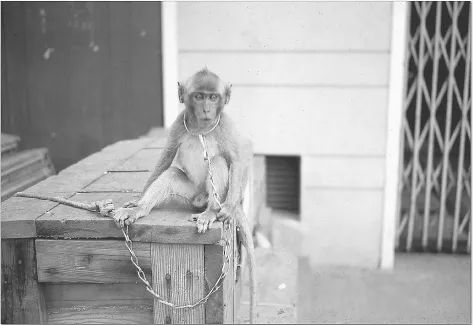
Dad’s monkey (apparently)
Life Lessons #2 – Dad gives my 11-year-old sister Maree an impromptu lesson in self-defence while she sits on our back steps
1. How to ram the heel of your palm up under the nose of an attacker – forcing their nose into their brain and killing them, if you do it correctly.
2. How to grab your attacker by the windpipe and squash it so they can’t breathe.
3. How to brace your arms to provide maximum force when you gouge your attacker in their solar plexus with your elbow.
4. How to put your attacker in an arm lock to immobilise them.
5. How to dislocate your ...
Table of contents
- Cover Page
- Title Page
- Copyright
- Dedication
- Earlier that night on TV: Prisoner – Episode #1.81
- Birth marks
- Life Lessons #1 – counting to six in Japanese
- A silent smoky battle
- Life Lessons #2 – Dad gives my 11-year-old sister Maree an impromptu lesson in self-defence while she sits on our back steps
- Jungle warfare
- Life with Battles #1
- Life with Battles #2
- The year of no talking
- Life with Birds #1
- Life with Birds #2 – things I learned
- Life with Birds #3
- Under fire
- Regretful sales
- Mum’s calls
- Stressed-out songbirds
- Rissoles and Budgies
- First visit to the Australian War Memorial
- The list
- Pink and peaceful
- A woman of letters
- What if it was a love letter?
- Shades of grey
- Hooray
- A photo of Uncle Ted
- N.T.R. #1
- N.T.R. #2
- A uterus picture and a passport
- The first time I speak to Denise about the night Dad died, thirty-eight years later
- Before and after
- Life with Birds #3
- More regretful sales
- My big christening
- Family secrets (that I know about) #1 – Dad’s secret book
- Family secrets (that I know about) #2 – Mum’s secret book
- The angry pages
- Report of death
- Honk if you are the son or daughter of a Vietnam Veteran
- Putting bones back in a ghost
- Perceived burdensomeness and thwarted belongingness
- A correction from Colin
- Not birds, but crocodiles
- A What the Fuck look
- Podría morir pronto
- Visiting Uncle Len
- Children of a Lesser God
- Lollies and landscapes
- Mum’s version (from her travel diary)
- Family secrets (I know about) #3 – How Mary Killed Ivy
- In silence #1
- In silence #2
- Family secrets (that I know about) #4
- Heart story #3 (shortest version)
- Boredom can lead to excess
- A visit
- Life as a bird
- A white Christmas
- Death as a bird
- Frankly thanks
- Different angles
- Another visit to the War Memorial
- Third visit to the War Memorial
- If one of the bodies was his
- Birdness
- Notes
- List of illustrations
- Acknowledgements
- Back Cover
Frequently asked questions
Yes, you can cancel anytime from the Subscription tab in your account settings on the Perlego website. Your subscription will stay active until the end of your current billing period. Learn how to cancel your subscription
No, books cannot be downloaded as external files, such as PDFs, for use outside of Perlego. However, you can download books within the Perlego app for offline reading on mobile or tablet. Learn how to download books offline
Perlego offers two plans: Essential and Complete
- Essential is ideal for learners and professionals who enjoy exploring a wide range of subjects. Access the Essential Library with 800,000+ trusted titles and best-sellers across business, personal growth, and the humanities. Includes unlimited reading time and Standard Read Aloud voice.
- Complete: Perfect for advanced learners and researchers needing full, unrestricted access. Unlock 1.5M+ books across hundreds of subjects, including academic and specialized titles. The Complete Plan also includes advanced features like Premium Read Aloud and Research Assistant.
We are an online textbook subscription service, where you can get access to an entire online library for less than the price of a single book per month. With over 1.5 million books across 990+ topics, we’ve got you covered! Learn about our mission
Look out for the read-aloud symbol on your next book to see if you can listen to it. The read-aloud tool reads text aloud for you, highlighting the text as it is being read. You can pause it, speed it up and slow it down. Learn more about Read Aloud
Yes! You can use the Perlego app on both iOS and Android devices to read anytime, anywhere — even offline. Perfect for commutes or when you’re on the go.
Please note we cannot support devices running on iOS 13 and Android 7 or earlier. Learn more about using the app
Please note we cannot support devices running on iOS 13 and Android 7 or earlier. Learn more about using the app
Yes, you can access Life With Birds by Bronwyn Rennex in PDF and/or ePUB format, as well as other popular books in History & World History. We have over 1.5 million books available in our catalogue for you to explore.