- 256 pages
- English
- ePUB (mobile friendly)
- Available on iOS & Android
eBook - ePub
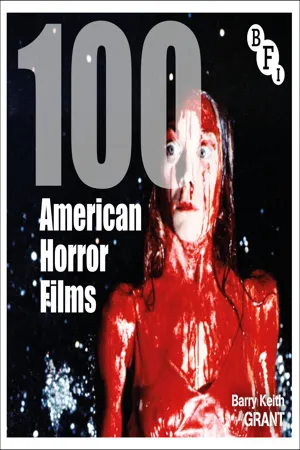
100 American Horror Films
About this book
"[A] well-plotted survey." Total Film
In 100 American Horror Films, Barry Keith Grant presents entries on 100 films from one of American cinema's longest-standing, most diverse and most popular genres, representing its rich history from the silent era - D.W. Griffith's The Avenging Conscience of 1915 - to contemporary productions - Jordan Peele's 2017 Get Out.
In his introduction, Grant provides an overview of the genre's history, a context for the films addressed in the individual entries, and discusses the specific relations between American culture and horror. All of the entries are informed by the question of what makes the specific film being discussed a horror film, the importance of its place within the history of the genre, and, where relevant, the film is also contextualized within specifically American culture and history. Each entry also considers the film's most salient textual features, provides important insight into its production, and offers both established and original critical insight and interpretation.
The 100 films selected for inclusion represent the broadest historical range, and are drawn from every decade of American film-making, movies from major and minor studios, examples of the different types or subgenres of horror, such as psychological thriller, monster terror, gothic horror, home invasion, torture porn, and parody, as well as the different types of horror monsters, including werewolves, vampires, zombies, mummies, mutants, ghosts, and serial killers.
In 100 American Horror Films, Barry Keith Grant presents entries on 100 films from one of American cinema's longest-standing, most diverse and most popular genres, representing its rich history from the silent era - D.W. Griffith's The Avenging Conscience of 1915 - to contemporary productions - Jordan Peele's 2017 Get Out.
In his introduction, Grant provides an overview of the genre's history, a context for the films addressed in the individual entries, and discusses the specific relations between American culture and horror. All of the entries are informed by the question of what makes the specific film being discussed a horror film, the importance of its place within the history of the genre, and, where relevant, the film is also contextualized within specifically American culture and history. Each entry also considers the film's most salient textual features, provides important insight into its production, and offers both established and original critical insight and interpretation.
The 100 films selected for inclusion represent the broadest historical range, and are drawn from every decade of American film-making, movies from major and minor studios, examples of the different types or subgenres of horror, such as psychological thriller, monster terror, gothic horror, home invasion, torture porn, and parody, as well as the different types of horror monsters, including werewolves, vampires, zombies, mummies, mutants, ghosts, and serial killers.
Trusted by 375,005 students
Access to over 1 million titles for a fair monthly price.
Study more efficiently using our study tools.
Information
The Addiction
1995 – 82 mins
Abel Ferrara
The Addiction interprets vampirism as a metaphor for addiction (Ferrara himself has struggled with drug addiction) and its philosophical implications. A bold updating of the vampire film, The Addiction was written by Nicholas St. John, who has worked on the scripts of several other films directed by Abel Ferrara, including the rape-revenge film Ms. 45 (1981), the gangster film King of New York (1990), and the director’s two other horror films, The Driller Killer (1979) and Body Snatchers (1993), the third adaptation of Jack Finney’s 1955 novel of the same name. Although The Addiction was shot in gritty black-and white, the film blurs and problematises any clear distinction between good and evil.
Kathleen Conklin (Taylor) is a graduate student studying philosophy, specifically the question of evil and human nature, at New York University. After being attacked by a woman on the street (Sciorra) and bitten on the neck, she begins to turn into a vampire, her demeanor becoming more aggressive as her worldview regarding evil also begins to evolve. One night prowling the streets for a victim, she meets Peina (Ferrara favourite Walken), who tells her that he has learned to manage his vampirism so that he is almost human in behaviour. Peina refers to the urge to drink blood as a ‘fix’ and urges her to read Naked Lunch (1959), the controversial novel about drug addiction by William Burroughs (adapted to film in 1991 by David Cronenberg), an author who also was an addict, to help her learn to exert her will against her need.
Kathleen dismisses the study of philosophy as irrelevant and incapable of confronting the fundamental truth of human evil, realizing that now she cannot escape what Burroughs calls ‘the algebra of need’ – the unquenchable drive for a fix over any rational objection. Kathleen comes to view her bloodsucking as a co-dependency, a collaboration between vampire and victim, even inviting those she attacks first to insist that she leave (a twist on the traditional convention of the vampire having to be invited in). But they do not – an act she understands as her victims’ need to connect with the human capacity for evil in a world in which it has been largely repressed and people are merely amusing themselves to death. Kathleen’s irreducible vampirism even presents her with a way of understanding the previously incomprehensible evil of the Holocaust.
The dialogue is laden with philosophical snippets – Santayana on history, Kierkegaard’s Sickness unto Death, Nietzsche’s ‘will to power’, Sartre’s Being and Nothingness, this last after Kathleen discovers she has no reflection in the mirror – shards of thought that float through the film like bits of cut-up text in the manner of Burroughs’s writing. The black and white cinematography evokes the corrupt milieu of film noir, with garbage and graffiti marking the city streets and indicating the fallen world Kathleen contemplates. In the climax, after she finishes and defends her dissertation, Kathleen unleashes an orgy of vampiric bloodletting at the reception in her honor with the help of all her previous victims (‘I’d like to share a little bit of what I learned through my long hard years of study’, she announces) in a vivid demonstration of her disillusionment with the abstractions of philosophy in the face of real evil ( in her words, ‘essence is revealed through praxis’). Perhaps this scene was as cathartic for St John who, like Kathleen, attended NYU, but Kathleen seemingly overdoses during the bloodbath and attempts to commit suicide. She doesn’t, and in the final scene she visits her own grave in broad daylight, apparently now able to control her urges like Peina, and giving the final word to Nietzsche, who in Beyond Good and Evil cautioned that those who fights monsters should beware of becoming monsters themselves.
DIRECTOR Abel Ferrara
PRODUCER Preston L. Holmes, Russell Simmons, Denis Hann, Fernando Sulichin
SCREENPLAY Nicholas St. John
CINEMATOGRAPHY Ken Kelsch
EDITOR Mayin Lo
MUSIC Joe Delia
PRODUCTION COMPANY October Films
MAIN CAST Lili Taylor, Christopher Walken, Annabella Sciorra, Edie Falco, Kathryn Erbe

Further Reading:
Brenez, Nicole. Abel Ferrara, trans. Adrian Martin. Urbana and Chicago: University of Illinois Press, 2007.
Burroughs, William S. Naked Lunch. New York: Grove Press, 1966.
Hawkins, Joan. ‘‘‘No Worse Than You Were Before”: Theory Economy and Power in Abel Ferrara’s The Addiction’. In Underground USA.: Filmmaking beyond the Hollywood Canon, ed. Xavier Mendik and Steven Jay Schneider, pp. 1–12. London and New York: Wallflower Press, 2002.
Stevens, Brad. Abel Ferrara: The Moral Vision. Surrey, UK: FAB Press, 2004.
American Psycho
Canada/US, 2000 – 101 mins
Mary Harron
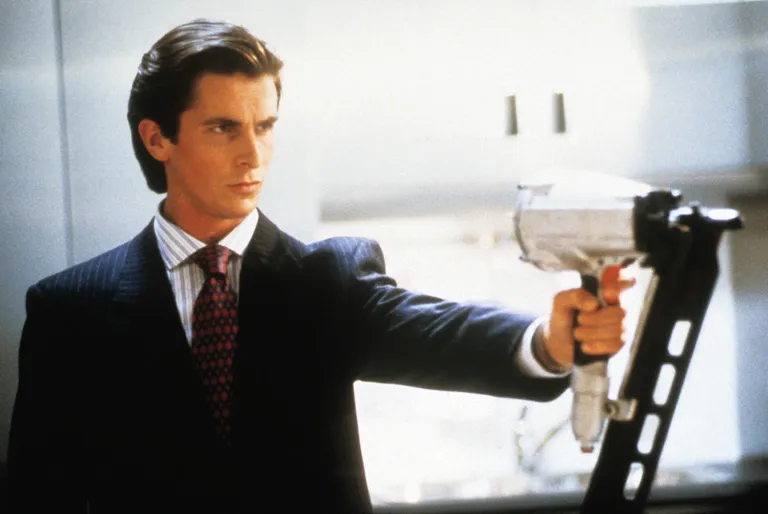
The films of Canadian director Mary Harron get inside the heads of murderous Americans, both female (I Shot Andy Warhol [1996], Charlie Says [2018]) and male (American Psycho). Brett Easton Ellis’s satirical and controversial 1991 novel of the same name upon which American Psycho is based was attacked for its explicit misogynistic violence, a charge also levelled against the film adaptation. An entry in the serial killer cycle, the film, like the novel, is also a killer comedy of manners that targets the narcissism of the ‘Me Generation’ and the ‘80s culture of materialism. While Gordon Gekko may claim in Wall Street (1987) that ‘Greed is good’, in American Psycho it is, to the contrary, quite evil.
The plot follows Bateman, a wealthy New York investment banker who spends his time hanging out at fashionable bars and restaurants with his colleagues, all of whom seem interchangeable with similar hairstyles and tailored suits, and the same inane banter that consistently confuses each other’s identities. One of the film’s jokes is that we never see him actually do any work, and there is never anything related to work on his office desk. As in the novel, Bateman provides lengthy monologues (voiceovers in the film) regarding the products he uses during his morning ablutions and reviews of pop rock of the period (Robert Palmer, Genesis), the latter often accompanying scenes of physical violence.
DIRECTOR Mary Harron
PRODUCER Edward R. Pressman, Chris Hanley, Christian Halsey Solomon
SCREENPLAY Mary Harron, Guinevere Turner
CINEMATOGRAPHY Andrzej Sekula
EDITOR Andrew Marcus
MUSIC John Cale
PRODUCTION COMPANY Edward R. Pressman Productions, Muse Productions, Lions Gate Films
MAIN CAST Christian Bale, Willem Dafoe, Jared Leto, Josh Lucas, Samantha Mathis, Matt Ross, Bill Sage, Chloë Sevigny
Bateman’s killings and assaults of women are grotesquely graphic exaggerations, overtly monstrous depictions, of the treatment of women and fear of them within Bateman’s overwhelmingly masculine culture. Like the money he supposedly manages at work, women are regarded merely as objects of exchange. The title of American Psycho obviously refers to Alfred Hitchcock’s Psycho* (1960) – it was Hitchcock, after all, who famously said that a sure way to create suspense was to ‘torture the women!’ – and the film contains the same kind of dark humour. Bateman quotes Ed Gein, the serial killer who partially inspired Robert Bloch’s 1959 novel Psycho, on which Hitchcock’s film was based, to the effect of imagining what a woman’s head would be like on a stick, and later we glimpse several decapitated female heads in his refrigerator. It is hardly surprising that Bateman watches The Texas Chainsaw Massacre* (1974) while working out.
It is only near the end of the film, when an ATM gives Bateman the message ‘feed me a stray cat’, that we realise that some or all of the violence we have witnessed may have been played out in Bateman’s imagination rather than actuality. The wild shootout with police that follows, in which he manages to spectacularly explode two patrol cars with a pistol, even to his own surprise, and his secretary’s discovery of a notebook in his office desk filled with drawings of sexual violence being done to women’s bodies (no comparable scene exists in the novel) encourages such a reading. Willem Dafoe provides a perfect balance of mundanity and menace to his performance of detective Donald Kimball, who is investigating the death of the perceived rival Bateman murdered, that resonates with a similar ambiguity: like Bateman, we never know whether he knows more than he is saying, whether he is just odd or playing cat-and-mouse with Bateman, baiting him.
Bateman is the perfect example of the waning of affect and ‘depthlessness’ that is often said to characterise postmodern consciousness. Indeed, he describes himself as empty, a pure product of popular culture. But the film also makes its political implications clear when, in the final scene, Bateman and colleagues discuss whether President Reagan is a harmless old man or a secret psychopath. With the values of Reaganomics, and the wealth and privileges it can bring, the film’s answer is clear. In a penthouse apartment, no one can hear you scream.
Further Reading:
Grant, Barry Keith. ‘American Psychosis: The Pure Products of America Go Crazy’. In Mythologies of Violence in Postmodern Media, ed. Christopher Sharrett, pp. 23–40. Detroit: Wayne State University Press, 1999.
Knight, Deborah, and George McKnight. ‘American Psycho: Horror, Satire, Aesthetics, and Identification’. In Dark Thoughts: Philosophic Reflections on Cinematic Horror, eds. Steven Jay Schneider and Daniel Shaw, pp. 212–29. Lanham, MD: Scarecrow Press, 2003.
Lebeau, Vicky. Lost Angels: Psychoanalysis and Cinema. London and New York: Routledge, 1995.
Towlson, John. Subversive Horror Cinema: Countercultural Messages of Films from Frankenstein to the Present. Jefferson, NC: McFarland, 2014.
An American Werewolf in London
1981 – 97 mins
John Landis
John Landis has made box-office hits in both comedy (National Lampoon’s Animal House [1978], The Blues Brothers [1980], Three Amigos [1986]) and horror (Twilight Zone: The Movie [1983], Innocent Blood [1992], and, of course, the extraordinarily influential music video Mich...
Table of contents
- Cover
- Title Page
- Dedication
- Contents
- Acknowledgements
- Introduction
- 1. The Addiction (Abel Ferrara, 1995)
- 2. American Psycho (Mary Harron, 2000)
- 3. An American Werewolf in London (John Landis, 1981)
- 4. The Avenging Conscience (D.W. Griffith, 1914)
- 5. The Birds (Alfred Hitchcock, 1963)
- 6. Blade (Stephen Norrington, 1998)
- 7. The Blair Witch Project (Daniel Myrick and Eduard Sánchez, 1999)
- 8. Brian Damage (Frank Henenlotter, 1988)
- 9. Bram Stoker’s Dracula (Francis Ford Coppola, 1992)
- 10. The Bride of Frankenstein (James Whale, 1935)
- 11. Bubba Ho-Tep (Don Coscorelli, 2002)
- 12. Bud Abbott and Lou Costello Meet Frankenstein (Charles Barton, 1948)
- 13. The Burrowers (J. T. Petty, 2008)
- 14. Candyman (Bernard Rose, 1992)
- 15. Carnival of Souls (Herk Harvey, 1962)
- 16. Carrie (Brian De Palma, 1976)
- 17. The Cat and the Canary (Paul Leni, 1927)
- 18. Cat People (Jacques Tourneur, 1942)
- 19. Child’s Play (Tom Holland, 1998)
- 20. Colour out of Space (Richard Stanley, 2019)
- 21. Contagion (Steven Soderbergh, 2011)
- 22. The Crazies (George A. Romero, 1973)
- 23. Creature from the Black Lagoon (Jack Arnold, 1954)
- 24. The Dead Zone (David Cronenberg, 1983)
- 25. The Devil’s Rejects (Rob Zombie, 2005)
- 26. Dr. Jekyll and Mr. Hyde (Rouben Mamoulian, 1931)
- 27. Dracula (Tod Browning, 1931)
- 28. Eraserhead (David Lynch, 1977)
- 29. The Evil Dead (Sam Raimi, 1981)
- 30. The Exorcist (William Friedkin, 1973)
- 31. Fall of the House of Usher (James Sibley Watson and Melville Webber, 1928)
- 32. Fallen (Gregory Hoblit, 1998)
- 33. Fatal Attraction (Adrian Lyne, 1987)
- 34. The Fly (Kurt Neumann, 1958)
- 35. Frankenstein (J. Searle Dawley, 1910)
- 36. Freaks (Tod Browning, 1932)
- 37. The Frighteners (Peter Jackson, 1996)
- 38. Funny Games US (Michael Haneke, 2007)
- 39. Ganja and Hess (Bill Gunn, 1973)
- 40. Get Out (Jordan Peele, 2017)
- 41. Gremlins (Joe Dante, 1984)
- 42. Halloween (John Carpenter, 1978)
- 43. The Hellstrom Chronicle (Walon Green, 1971)
- 44. Henry: Portrait of a Serial Killer (John McNaughton, 1986)
- 45. The Hills Have Eyes (Wes Craven, 1977)
- 46. Hostel (Eli Roth, 2005)
- 47. House of Wax (André de Toth, 1953)
- 48. The Hunger (Tony Scott, 1983)
- 49. I Walked with a Zombie (Jacques Tourneur, 1943)
- 50. I Was a Teenage Werewolf (Gene Fowler, Jr., 1957)
- 51. In the Mouth of Madness (John Carpenter, 1994)
- 52. Interview with the Vampire: The Vampire Chronicles (Neil Jordan, 1994)
- 53. Invasion of the Body Snatchers (Philip Kaufman, 1978)
- 54. It’s Alive (Larry Cohen, 1974)
- 55. Jaws (Steven Spielberg, 1975)
- 56. King Kong (Meriam C. Cooper and Ernest B. Schoedsack, 1933)
- 57. The Last House on the Left (Wes Craven, 1972)
- 58. Let Me In (Matt Reeves, 2010)
- 59. The Little Shop of Horrors (Roger Corman, 1960)
- 60. The Lodger (John Brahm, 1944)
- 61. Mad Love (Karl Freund, 1935)
- 62. The Magician (Rex Ingram, 1926)
- 63. Martin (George A. Romero, 1976)
- 64. The Masque of the Red Death (Roger Corman, 1964)
- 65. Midsommar (Ari Aster, 2019)
- 66. Misery (Rob Reiner, 1990)
- 67. The Mist (Frank Darabont, 2007)
- 68. The Mummy (Karl Freund, 1932)
- 69. Murders in the Rue Morgue (Robert Florey, 1932)
- 70. Near Dark (Kathryn Bigelow, 1987)
- 71. Night of the Living Dead (George A. Romero, 1968)
- 72. Office Killer (Cindy Sherman, 1997)
- 73. The Omen (Richard Donner, 1976)
- 74. Paranormal Activity (Orin Peli, 2007)
- 75. The Phantom of the Opera (Rupert Julien, 1925)
- 76. Phantom of the Paradise (Brian de Palma, 1974)
- 77. Poltergeist (Tobe Hooper, 1982)
- 78. Psycho (Alfred Hitchcock, 1960)
- 79. The Purge (James DeMonaco, 2013)
- 80. Race with the Devil (Jack Starrett, 1975)
- 81. Ravenous (Antonia Bird, 1999)
- 82. Rosemary’s Baby (Roman Polanski, 1968)
- 83. Saw (James Wan, 2004)
- 84. Scream (Wes Craven, 1996)
- 85. The Shining (Stanley Kubrick, 1980)
- 86. The Silence of the Lambs (Jonathan Demme, 1991)
- 87. Sisters (Brian De Palma, 1972)
- 88. Targets (Peter Bogdanovich, 1968)
- 89. The Texas Chainsaw Massacre (Tobe Hooper, 1974)
- 90. The Tingler (William Castle, 1959)
- 91. Twentynine Palms (Bruno Dumont, 2003)
- 92. Two Thousand Maniacs! (Herschell Gordon Lewis, 1964)
- 93. The Unknown (Tod Browning, 1927)
- 94. Weird Woman (Reginald Le Borg, 1944)
- 95. What Ever Happened to Baby Jane? (Robert Aldrich, 1962)
- 96. White Zombie (Victor Halperin, 1932)
- 97. The Wind (Emma Tammi, 2019)
- 98. The Witch (Robert Eggers, 2015)
- 99. The Wolf Man (George Waggner, 1941)
- 100. Young Frankenstein (Mel Brooks, 1974)
- Index
- List of Illustrations
- eCopyright
Frequently asked questions
Yes, you can cancel anytime from the Subscription tab in your account settings on the Perlego website. Your subscription will stay active until the end of your current billing period. Learn how to cancel your subscription
No, books cannot be downloaded as external files, such as PDFs, for use outside of Perlego. However, you can download books within the Perlego app for offline reading on mobile or tablet. Learn how to download books offline
Perlego offers two plans: Essential and Complete
- Essential is ideal for learners and professionals who enjoy exploring a wide range of subjects. Access the Essential Library with 800,000+ trusted titles and best-sellers across business, personal growth, and the humanities. Includes unlimited reading time and Standard Read Aloud voice.
- Complete: Perfect for advanced learners and researchers needing full, unrestricted access. Unlock 1.4M+ books across hundreds of subjects, including academic and specialized titles. The Complete Plan also includes advanced features like Premium Read Aloud and Research Assistant.
We are an online textbook subscription service, where you can get access to an entire online library for less than the price of a single book per month. With over 1 million books across 990+ topics, we’ve got you covered! Learn about our mission
Look out for the read-aloud symbol on your next book to see if you can listen to it. The read-aloud tool reads text aloud for you, highlighting the text as it is being read. You can pause it, speed it up and slow it down. Learn more about Read Aloud
Yes! You can use the Perlego app on both iOS and Android devices to read anytime, anywhere — even offline. Perfect for commutes or when you’re on the go.
Please note we cannot support devices running on iOS 13 and Android 7 or earlier. Learn more about using the app
Please note we cannot support devices running on iOS 13 and Android 7 or earlier. Learn more about using the app
Yes, you can access 100 American Horror Films by Barry Keith Grant in PDF and/or ePUB format, as well as other popular books in Media & Performing Arts & Film & Video. We have over one million books available in our catalogue for you to explore.