- 176 pages
- English
- ePUB (mobile friendly)
- Available on iOS & Android
eBook - ePub
Attracting Garden Pollinators
About this book
Attracting Garden Pollinators is a friendly, accessible, information packed guide to gardening for and with pollinators. Pollinators are in trouble, but our gardens can help. Gardens represent a vast, varied 'nature reserve' packed with plants rich in nectar and pollen to sustain these delicate creatures. This book explores the role that pollinators play and how gardeners and people with gardens can do something to help attract and support them. From butterflies (and their caterpillars - with host plant information) to surprising pollinators (moths, wasps, beetles flies and hornets) and of course including honeybees, hoverflies and bumblebees, this book will offer an insight into their fragile existence, lifecycles and their vital role in the food chain and the natural cycle. Jean Vernon is the Best-Selling author of The Secret Lives of Garden Bees.
Trusted by 375,005 students
Access to over 1 million titles for a fair monthly price.
Study more efficiently using our study tools.
Information
Subtopic
HorticultureIndex
Biological SciencesCHAPTER ONE
What is a Pollinator?
We take pollinators for granted. And yet these are the creatures that live alongside us, within nature and the landscapes and gardens that we have created or even sometimes destroyed. We don’t always see them, we exploit them, and sometimes we kill them, but without their help we would surely starve. For not only do they pick up and deliver pollen to the plants we need for food, but they also ensure that the cattle and livestock are fed, that we have seed to sow and that our cupboards, fridges and fruit bowls are full of nuts, seeds, fruits and vegetables.
Pollinators live their lives adjusting to the pressures that we have created in their world, navigating the landscape changes we have carved on their habitats and feeding on the plants that we allow to grow.
Scientists frequently research and study these fascinating creatures. Quite incredibly some engineers believe that they can create miniature robot pollinators or pollinating techniques that will replace this essential role. They have an apparent misunderstanding of the incredible complexities that exist in the intimate relationships between plants and pollinators and the fragile knife-edge that these precious creatures balance upon.
In the UK at least, pollinators are generally insects. But across the world all manner of birds, bats, mice and even possums also play similar roles. While pollinators probably don’t realise they are performing this very vital role, the act of pollination is not a hit-and-miss event. Each plant species has a very unique pollen that is needed to fertilise its seed. Pollen from other species will not work. So they have evolved ways to make pollination more likely, more effective and more abundant. The actual delivery of pollen is a bit like sending a letter in the post: it needs the correct address and postcode to get to the right person. It’s the same with plants and pollen, but the vector, the pollinator (like the postman) has to collect the right pollen and deliver it to the right place. Most plants need cross-pollination, so it is also very important is that pollen from one plant is taken to another of the same species to ensure that cross-pollination occurs. This combines the genes of two different plants, increases the gene pool and creates stronger offspring that are not inbred. Though plants can’t actively move around to find a mate they can and do play a part in the rituals between themselves and their pollinators. They do this by timing when their flowers open, increasing or decreasing their nectar offering, and some even have flowers that change colour when pollinated. (Ref 3).
Many pollinators visit flowers for their pollen. It’s a protein rich food that some insects use to feed their young. Most will also feed on nectar or collect nectar to store for energy, share with nest mates or provision a brood cell as a food source. Just because an insect visits a flower doesn’t make it a pollinator. But many will pick up pollen on their bodies as they wait for a mate, feed on nectar or actively collect pollen. The effectiveness of a pollinator is dependent on several factors such as its abundance, how hairy it is, its behaviour, the size of its body and how often it visits flowers. (Ref 3). While the size of the pollinator usually corresponds to the amount of pollen it can pick up, what is just as important is that the body of the pollinator can span the distance between the male (anthers) and female (stigma) parts of the flower to effect pollination (Ref 3).
What’s so Great About Pollen?
Pollen is gold dust for so many reasons. If you suffer from hay fever you might not agree, but honestly, without pollen we would all be in trouble.
Pollen is rich in protein. For plants it is the male ‘sperm’ that carries the genetic information of a plant. In order for it to actually make a seed, it needs to merge with a female ovule inside the plant ovary. Once a correct pollen grain is presented to the plant stigma it grows a tube down into the ovule and delivers its genetic information. The sum of the pollen from one plant with the ovule of another creates a seed that shares characteristics from both parent plants. It is this cross-pollination that introduces genes from other plant populations and leads to stronger plants and a bigger genetic pool. These are the basics of how plants change, survive, improve and evolve.
Pollen grains are completely unique to the species of plants that create them and only very rarely can a hybrid be created between two different plant species.
For pollinators the pollen protein is a valuable food.
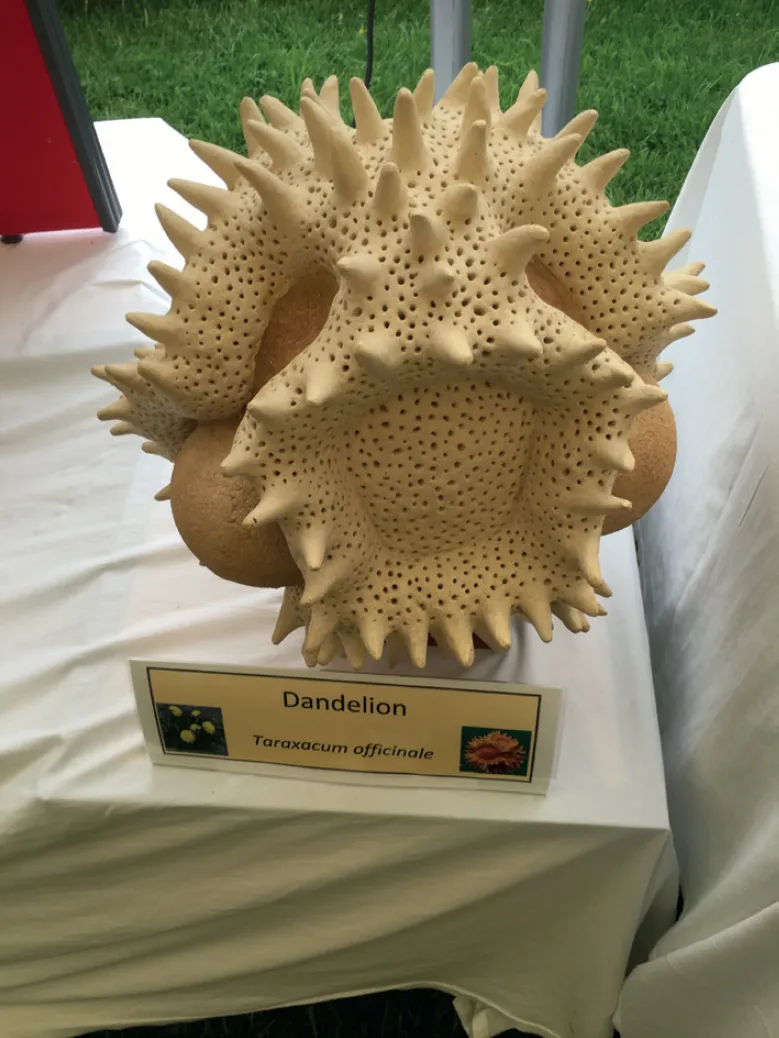
Every grain of pollen has a different shape depending on the plant species. © JeanVernon/BBKA exhibit.
What do Pollinators Need?
The first thing that pollinators need is nectar. At times nectar is more important than pollen because it is an energy source, a bit like a sugar rush, and fuels their daily activity. The nectar attracts the pollinators to the flower for their sugar hit. Some pollinators use the flowers as a meeting place, a bit like a pub where the males can feed, meet and check out the ‘girls’. It’s a clever move because the females of their species will visit the same sort of flowers to feed, so it’s a good place for speed dating.
Pollinators need a food supply from the time that they emerge from ‘hibernation’ as adults, until they have successfully mated and laid their eggs. Most pollinators have a short life cycle and spend a lot of their lives as egg, larva, pre-pupa or pupa. It is the adult, winged stage of life when they can fly between plants and flowers and not only feed themselves on nectar, but also collect food for the next generation. And that’s where the pollen comes in. While many pollinators pick up pollen on their bodies as they feed on nectar, others, like the bees, actively collect it as a protein-rich material with which to feed their young. Some pollinators, like the wasps, collect live protein-rich prey to feed their offspring, while others, like the butterflies and moths, feed up as caterpillars and simply supplement their diet with nectar to fuel their movement as adults.
Pollinators also need somewhere to nest or lay their eggs and different insects have different needs. Butterflies and moths need the correct plants for their caterpillars to feed on. Solitary bees might favour the hollow stems of garden perennials to make a nest. Our gardens provide very important and very varied habitats for our pollinators to shelter, breed, nest and overwinter.
Nectar
Nectar is basically insect ‘click bait’; it is the sugar rich super food that they need to support their activity. Most adult pollinators need a copious amount of nectar to fuel their lifestyle and it needs to be accessible and present at the right time in their lifecycle. That means flowers. But this is where it gets clever. Plants don’t produce nectar for their own needs; they make it to attract pollinating insects.
Nectar is usually positioned at the base of the flower, luring the pollinator insect inside for its rich reward, but in the process the pollinator picks up pollen on its body and takes it to the next flower when it moves on. This facilitates pollination, giving the nectar a starring role in procedures.
The flowers need the pollinators at the right time in their lifecycle to move the pollen from plant to plant, so the plant has to produce the nectar rich flowers when their perfect pollinator is looking for food. The flowers are flags waving in the breeze to passing pollinators, shouting their wares and advertising their open nectar bars and diners to the energy hungry insects. Nectar is food for the adults. Though sometimes pollen is wetted with nectar to provide some additional energy for the developing larvae.
Quality of nectar varies considerably, and it may contain flower essences that could offer healing properties to the feeding insects, or pesticide residues if the plants have been treated with toxic chemicals. Some plants replenish their nectaries faster than others. Borage and echium, for example, replace the nectar regularly, making them popular nectar bars. Environmental factors also come into play. The weather affects when a plant comes in to flowers. A dry spell may require a plant to sacrifice the nectar supply to survive a drought. Climate change can affect the flowering times of many spring flowers, creating a lack of food for pollinators when they need it the most. Gardeners can manipulate flower forage by forcing things to flower earlier, holding plants back to extend the season, sowing earlier and later crops and doing the ‘Chelsea Chop’.
Gardens for Pollinators
Our gardens have a vital role in ensuring the survival of many pollinator species. As garden guardians we have the power to really make a difference. You don’t have to have a garden designed for pollinators to attract them, but you can hugely increase the biodiversity on your plot by changing a few of your gardening techniques. We don’t have to do much to attract these creatures onto our plot; the simple act of growing flowering plants is a magnet for many species. But there is so much more we can do to ensure their safe existence.

Beautiful borders are not out of bounds when you plant for pollinators. This textured mix of Ammi majus, veronicastrum, alliums, cornflowers, verbena, scabious creates a soft and beautiful dreamscape for pollinators and people. © JeanVernon/HamptonCourtFlowerShow2018/ Apeiron: The Dibond Garden/Alex Rainford-Roberts.
Flower Shapes
Common advice for gardeners is to grow plants that flower right through the year. The critical times are late winter into early spring and late summer into autumn. While we might have a few snowdrops that blur the margin between winter and spring that is not enough to support the diversity of pollinators emerging from their winter rest. They need much more. But it’s not just essential to ensure there are things in flower. Every pollinator species has different needs and in particular different tongue lengths, which dictates how they feed.
When you consider that plants and their pollinators evolved together and that many of the beautiful plants we grow in our gardens are not only highly bred to look flamboyant, but may also hail from far distant shores thousands of miles from their pollinator partners, you start to understand the difficulties that our pollinators face. Nectar quality varies but if an insect can reach it and it’s the best around at that time, then it becomes a good source of food. The origin of the plant is not important. It’s the ease of access to the rewards on offer, namely the pollen and nectar that matters. (Ref 4). Throughout this book you will find mentions of plants for different pollinators, some with photos of pollinators feeding, and there’s...
Table of contents
- Cover
- Dedication
- Title
- Copyright
- Contents
- Introduction
- Chapter One What is a Pollinator?
- Chapter Two Meet the Pollinators
- Chapter Three Important Pollinator Habitats
- Chapter Four Plants for Pollinators
- Chapter Five Plants Behaving Badly
- Learning More
- Acknowledgements
- References
Frequently asked questions
Yes, you can cancel anytime from the Subscription tab in your account settings on the Perlego website. Your subscription will stay active until the end of your current billing period. Learn how to cancel your subscription
No, books cannot be downloaded as external files, such as PDFs, for use outside of Perlego. However, you can download books within the Perlego app for offline reading on mobile or tablet. Learn how to download books offline
Perlego offers two plans: Essential and Complete
- Essential is ideal for learners and professionals who enjoy exploring a wide range of subjects. Access the Essential Library with 800,000+ trusted titles and best-sellers across business, personal growth, and the humanities. Includes unlimited reading time and Standard Read Aloud voice.
- Complete: Perfect for advanced learners and researchers needing full, unrestricted access. Unlock 1.4M+ books across hundreds of subjects, including academic and specialized titles. The Complete Plan also includes advanced features like Premium Read Aloud and Research Assistant.
We are an online textbook subscription service, where you can get access to an entire online library for less than the price of a single book per month. With over 1 million books across 990+ topics, we’ve got you covered! Learn about our mission
Look out for the read-aloud symbol on your next book to see if you can listen to it. The read-aloud tool reads text aloud for you, highlighting the text as it is being read. You can pause it, speed it up and slow it down. Learn more about Read Aloud
Yes! You can use the Perlego app on both iOS and Android devices to read anytime, anywhere — even offline. Perfect for commutes or when you’re on the go.
Please note we cannot support devices running on iOS 13 and Android 7 or earlier. Learn more about using the app
Please note we cannot support devices running on iOS 13 and Android 7 or earlier. Learn more about using the app
Yes, you can access Attracting Garden Pollinators by Jean Vernon in PDF and/or ePUB format, as well as other popular books in Biological Sciences & Horticulture. We have over one million books available in our catalogue for you to explore.