- 162 pages
- English
- ePUB (mobile friendly)
- Available on iOS & Android
eBook - ePub
Available until 23 Dec |Learn more
Classics of Socialism and Communism
About this book
This book is pragmatic, joyous, and informative. When an author writes a book, he or she must predict that the book will still be read after many generations have passed. Because of its unmatched eternal truth, classics of socialism and communism will be read by many generations to eternity.
I have written an orderly account of economic theories in simple and straightforward language.
The author avoids bombastic vocabularies and unwanted symbols, yet the flow of information is exceedingly accurate.
Frequently asked questions
Yes, you can cancel anytime from the Subscription tab in your account settings on the Perlego website. Your subscription will stay active until the end of your current billing period. Learn how to cancel your subscription.
At the moment all of our mobile-responsive ePub books are available to download via the app. Most of our PDFs are also available to download and we're working on making the final remaining ones downloadable now. Learn more here.
Perlego offers two plans: Essential and Complete
- Essential is ideal for learners and professionals who enjoy exploring a wide range of subjects. Access the Essential Library with 800,000+ trusted titles and best-sellers across business, personal growth, and the humanities. Includes unlimited reading time and Standard Read Aloud voice.
- Complete: Perfect for advanced learners and researchers needing full, unrestricted access. Unlock 1.4M+ books across hundreds of subjects, including academic and specialized titles. The Complete Plan also includes advanced features like Premium Read Aloud and Research Assistant.
We are an online textbook subscription service, where you can get access to an entire online library for less than the price of a single book per month. With over 1 million books across 1000+ topics, we’ve got you covered! Learn more here.
Look out for the read-aloud symbol on your next book to see if you can listen to it. The read-aloud tool reads text aloud for you, highlighting the text as it is being read. You can pause it, speed it up and slow it down. Learn more here.
Yes! You can use the Perlego app on both iOS or Android devices to read anytime, anywhere — even offline. Perfect for commutes or when you’re on the go.
Please note we cannot support devices running on iOS 13 and Android 7 or earlier. Learn more about using the app.
Please note we cannot support devices running on iOS 13 and Android 7 or earlier. Learn more about using the app.
Yes, you can access Classics of Socialism and Communism by Phineas Nyabera in PDF and/or ePUB format, as well as other popular books in Politics & International Relations & Politics. We have over one million books available in our catalogue for you to explore.
Information
Chapter 1
Introduction
Karl Marx, the father and founder of socialism and communism, still stands as the most controversial philosopher even in the modern economics today.
Two-thirds of the world see Karl Marx and his socialist view as an instigator or troublemaker, whose economic preachings have caused workers’ rebellions and revolutions against capitalism and free enterprise. One-third of the world and in Marx and Marxist countries like Russia, China, and Cuba, Karl Marx is their hero. Marxist countries believe that socialism and communism leads to an equal humane society with equal distribution of national resources, wealth, and the equal sharing of the delicious national pie.
This book gives the reader a straightforward and accurate account; blow by blow and page by page illustrates Karl Marx’s passionate feelings toward workers of the world being exploited, suppressed, and repressed by the capitalists.
Therefore, I have carefully investigated Karl Marx’s socialism and communism economic theories right from the beginning. I have used secondary data handed to us by eyewitnesses through several books together with primary data collected by the author himself to reach a sound and educated judgment of socialism and communism systems.
Based on that judgment, it seemed to be a proper time for me to write an orderly account of Karl Marx and the Marxist economic systems so that the future generations can also read and understand the philosophy of Karl Marx and the Marxist economies.
The author wove nine chapters together to reflect the behavior of socialism and communism from different societies on planet Earth.
Chapter 1 The introduction is a clear direct road or GPS map that the reader of this book must follow, read, understand and master the economics of socialism and communism.
Chapter 2 carries and emphatically illustrates the origins of modern economic theories developed by economic philosophers such as Adam Smith, Karl Marx, Alfred Marshall and John Maynard Keynes.
Chapter 3 is a complete detailed classics of socialism and communism as practiced in Marxist societies.
Chapter 4 surveys Karl Marx alienation.
Chapter 5 examines how Karl Marx the socialist and socialists have been criticized and how the critics have been criticized.
Chapter 6 takes a look at socialism and communism, the Marx and Marxist countries including Russia, China, and Cuba.
Chapter 7 deals with the conflicts between capitalists and the socialists and communists.
Chapter 8 The breaking branch examines how individuals and societies demand changes, the same way Karl Marx advocated and demanded changes.
Chapter 9 The conclusion.
Chapter 2
Economic Theorists
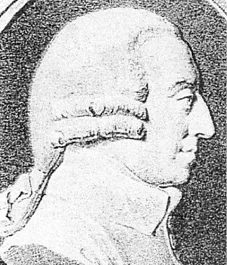
Adam Smith
1723–1790
Adam Smith
The field of economics has been completely revolutionized by modern economic theorists, think tank theorists, and philosophers.
The publication of Adam Smith’s masterful book, The Inquiry into The Nature and Causes of Wealth of Nations, in 1776 is the backbone of modern economics. What is more interesting with the publication of his book in 1776 is that while Adam Smith’s inquiry in the nature and cause of wealth of nations profoundly stressed the doctrine of Free Economics and free enterprise among nations of the world, in the same year, July 4, 1776, the United States of America signed the Declaration of Independence from Great Britain, which freed all American colonies from the British harsh rules and inhuman laws.
Adam Smith urged for economic freedom—that is, free enterprise and free trade. He further argued that the government should interfere less and less in a free market economy. In his book, Wealth of Nations, Smith argued and stressed that the government should leave its citizens a lone to pursue their interests and their livelihood.
In his famous “the invisible hand” theory, Smith put forward the idea that there are causes and effects that makes entrepreneurs and businesses promote their interests in every society. And for sure and in general, by promoting and pursuing their interests, individuals promote the interests of the whole society. Smith believed in “laissez-faire” (French word for leave it alone). But Smith also recognized and believed that the government should intervene in some economic sections like defense and post office, etc.
Adam Smith lived every interesting life. He was never interested in the opposite sex. He never got married—that is, he chose to remain a bachelor in all his entire life on earth. But Smith had his answers for his lack of desire for opposite sex. He stressed that he was married to his books. Smith argued that “I am a beau in nothing but my books.”
A biographer who watched Smith’s behavior thought that Adam Smith suffered from serious and very severe absentmindedness. The biographer noticed and described Smith as the most informed and the most illustrious citizen in the City of Edinburgh. The biographer wrote that Adam Smith would get up in the morning and stroll in the city street. With his eyes fixed on the unknown objects and his lips moved quite uncontrolled and in silent discourse, he walked a step or two and stopped and hesitated as though he intended to change his direction or even turn back and go back where he came from.
Adam Smith was indeed a genius. He appeared to be a strange person, but when he decided to write anything, he became a real giant eagle. It is believed that Smith was actually the most famous philosopher of his time.
However, Smith was offered and accepted a job by Charles Townshend to tutor his ward. Charles Townshend was an economist with very little common sense. He was the British chancellor of the exchequer who was in charge of the tea tax that actually caused the American revolution and eventually led to the Declaration of Independence from Great Britain in 1776.
Adam Smith lived four years in France and Switzerland. He met Voltaire and other economists and famous philosophers. But soon after, one of his ward members was found murdered on the street in France. Smith moved back to Great Britain, While in Great Britain, Smith was able to complete his last book, The Wealth of Nations.
Adam Smith went into his retirement but occasionally revised his books. In his last days on earth, he wrote: “While I fight the hardship and agony of old age, it seems clearly that old age is coming fast and violently upon and against me.” Well, Adam Smith lost that battle and died in 1790 at the age of sixty-seven years old.
Adam Smith, the economist and philosopher, was born in 1723 in Kirkcaldy, Scotland. His father died while Smith was still too young.
In Kirkcaldy, people used nails as their currency (money). Adam Smith ...
Table of contents
- Chapter 1
- Chapter 2
- Chapter 3
- Chapter 4
- Chapter 5
- Chapter 6
- Chapter 7
- Chapter 8
- Chapter 9