This book argues that to understand wetlands is to understand human development. Using case studies drawn from three English wetlands, the book moves between empirical research and scholarship to interrogate how these particular ecosystems have played an essential part in the development of our contemporary society; yet inhabit a strange place in our national psyche. Chapters address a range of cultural and environmental wetland concerns. Consideration is given to: the ways in which we have revered, engineered and renaturalised these landscapes throughout history; English wetlands as spaces of beauty, creativity, reflection, rejuvenation and multi-species interactions; accelerating climate change in an age of neoliberalism. The final chapter then is a reflection on our collective lives together alongside other species, exploring what sustainability transitions might mean for human-wetland relationships.
Frequently asked questions
Yes, you can cancel anytime from the Subscription tab in your account settings on the Perlego website. Your subscription will stay active until the end of your current billing period. Learn how to cancel your subscription.
No, books cannot be downloaded as external files, such as PDFs, for use outside of Perlego. However, you can download books within the Perlego app for offline reading on mobile or tablet. Learn more here.
Perlego offers two plans: Essential and Complete
Essential is ideal for learners and professionals who enjoy exploring a wide range of subjects. Access the Essential Library with 800,000+ trusted titles and best-sellers across business, personal growth, and the humanities. Includes unlimited reading time and Standard Read Aloud voice.
Complete: Perfect for advanced learners and researchers needing full, unrestricted access. Unlock 1.4M+ books across hundreds of subjects, including academic and specialized titles. The Complete Plan also includes advanced features like Premium Read Aloud and Research Assistant.
Both plans are available with monthly, semester, or annual billing cycles.
We are an online textbook subscription service, where you can get access to an entire online library for less than the price of a single book per month. With over 1 million books across 1000+ topics, we’ve got you covered! Learn more here.
Look out for the read-aloud symbol on your next book to see if you can listen to it. The read-aloud tool reads text aloud for you, highlighting the text as it is being read. You can pause it, speed it up and slow it down. Learn more here.
Yes! You can use the Perlego app on both iOS or Android devices to read anytime, anywhere — even offline. Perfect for commutes or when you’re on the go. Please note we cannot support devices running on iOS 13 and Android 7 or earlier. Learn more about using the app.
Yes, you can access English Wetlands by Mary Gearey,Andrew Church,Neil Ravenscroft in PDF and/or ePUB format, as well as other popular books in Biological Sciences & Environmental Science. We have over one million books available in our catalogue for you to explore.
This chapter outlines the importance of wetlands as complex ecosystems which are fundamental to the health of the planet. We explore how human development is inextricably linked with these diverse landscapes. Much consideration is given to the way in which scientific and policy discourses around wetlands make use of generic evaluation frameworks such as the Ramsar Convention on Wetlands and, increasingly, ecosystems services perspectives. We critique how these shape and inform policy making in support of wetland protection, conservation and restoration. The chapter goes on to reflect on the use of wetlands by humans and more-than- human species across time, to broaden out our understanding of human relationships within these particular ecosystems. This opening chapter therefore sets the scene somewhat for more in-depth discussions developed throughout the course of the book.
Keywords
WetlandsHuman developmentScientific and policy discoursesEvaluation frameworksRamsarEcosystem services
End Abstract
Introduction
This book invites the reader to consider the importance of wetlands to humans over deep time and the contemporary connectivity of human development alongside wetlands. Consideration is given to understanding that wetlands as places have specific socio-environmental impacts that vary spatially whilst recognising that temporality is also crucial when we reflect upon wetlands as spaces of nature, of culture and as landscapes shaped by the human imagination over time. We place special emphasis on interrogating the contributions wetlands make to wider physical, geographical and biotic processes, such as the global hydrologic cycle, and their importance as land and waterscapes which support biodiversity across varied terrains. Wetlands influence more than just their local environments. Their different functionalities extend beyond sovereign borders, as, amongst other attributes, they purify air, water and soil, regulate temperature and support migratory wildlife. As we will see as we progress through the book, wetlands, large and small, ‘natural’ and constructed, shape our everyday lives and have inter and intragenerational impacts on human health and wellbeing.
As a means to frame wetlands, throughout the whole book we explore tensions which exist between how different domains of knowledge, such as landscape planning, water resources management, ecology, legal frameworks and anthropology, amongst many others, challenge our understandings of what wetlands ‘are’ and how these perspectives directly influence how we use and value these land and waterscapes over different historical epochs, often to their detriment. Current paradigmatic definitions of wetlands, developed over recent decades, have collectively framed them as ecosystems which are singularly important for sustainability transitions. This encompasses the broad deployment of the term ‘ecosystem services’, shaping our appreciation of the importance of wetlands for human wellbeing and for the mitigation of climate change impacts. As we move through the book, we will be cognizant that human engagements with these spaces are always in flux, with dominant, hegemonic perspectives of what wetlands ‘are’, and consequently how they should be utilised, contested by a range of counterviews, actions and behaviours which, over time, shift our cultural practices. Wetlands may appear as tranquil, quiet spaces; as we will see, however, they are often the sites of radical, delinquent and subversive intent and so enable the incremental transformation of societies in many different ways.
Our focus in this book is on English wetlands, and in particular on three specific sites; in the West of England (Somerset), the East (North Lincolnshire) and the East Midlands (Bedfordshire). Our primary research, which we discuss more fully in Chap. 2, was undertaken in these locations, and an analysis of our data allows us to highlight the importance, and the relevance, of these landscapes for an understanding of the ways in which wetlands are hybrid spaces where nature, culture and the human imagination intersect. Informed by our case studies, the book aims to consider the importance of wetlands as fundamental to the health of the planet; this chapter sets out the key bodies of scholarship which contextualise our work so that we can achieve this ambitious aim. Existing discussions of wetland definitions and governance are an important context for our thinking. This chapter summarises how wetlands are defined and considers the governance regimes that shape wetlands, such as the Ramsar Convention, and its prescriptive taxonomies, so that we can explore what it means pragmatically in terms of protecting and rehabilitating wetlands. But the intellectual context to this book is much broader than governance, and this chapter also introduces the key scholarship that has influenced our thinking on wetlands, much of which critiques the ways in which nature is co-opted for human benefits alone and how the relations between humans and nature need to be radically rethought. Key political ecology arguments are explored through the work of Erik Swyngedouw and Donna Haraway, amongst others, to enable us to refine our deliberations concerning human-wetland relationships. Inherent to these analyses is the opportunity to really question our relationships with other living things on the planet—the other animals, the plants and all manner of biotic entities which together can be termed the ‘more-than-human’ (Haraway 2016). From this viewpoint, humans are just one element in a complex series of ever-changing interactions that we can call life on Earth. By using this method of moving between theoretical considerations and real-world case study examples, we wish to help you examine the wider dynamics at play in the shaping, use and value of our contemporary English wetlands, and thus to consider the wider global significance of wetlands. The book as a whole deals with a wide range of issues—land use management and modernity, local economies and livelihoods within nation-building endeavours, climate change mitigation and adaptation strategies within rural and urban contexts, individual wellbeing and community identities linked to place-specific sites, social and environmental justice issues, the role of culture in our connectivity with wetland landscapes. By considering scholarship, epistemologies and ontologies, this opening chapter therefore outlines key debates over the meanings, definitions, significance, value and governance of wetlands. This sets the scene for the later chapters which contain more in-depth discussions, often based on our three case studies, about time, space and wetlands (Image 1.1).
Image 1.1
Shapwick Heath, Somerset Levels, May 2018. (Credit: Adriana Ford)
Immersion into Wetlands
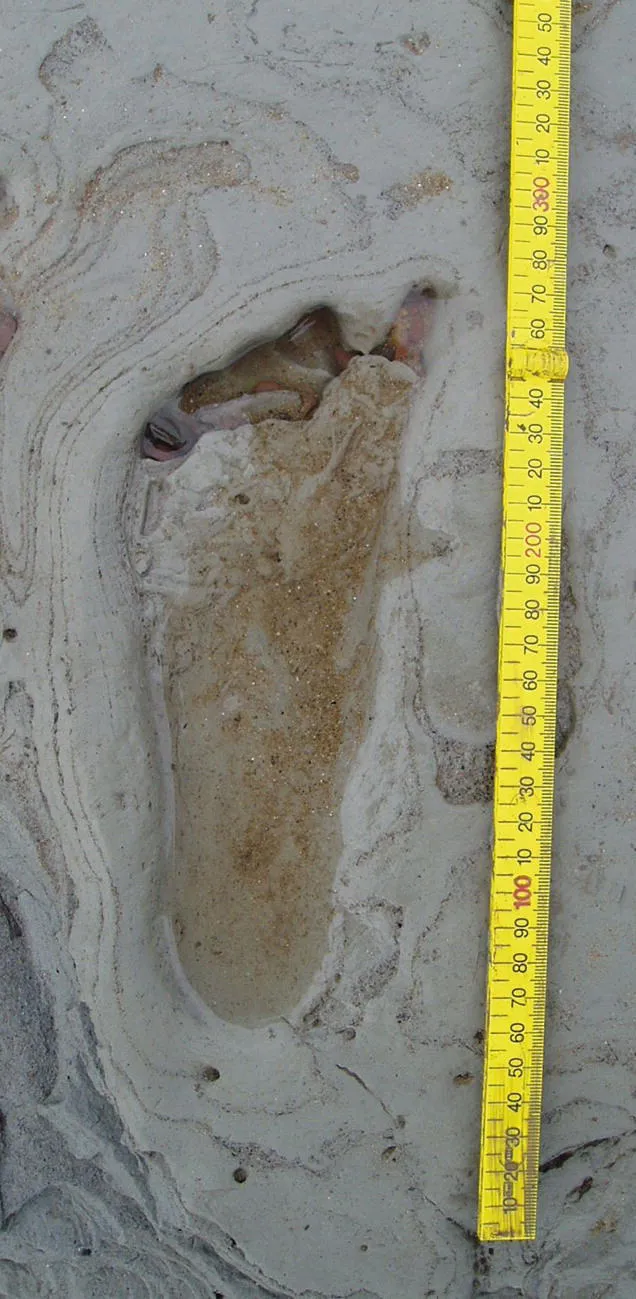
Humans and wetlands have been interconnected across time—deep time. Though deep time is a contentious term (Irvine 2014), with different uses across different disciplines, we can say that humanity’s dependence on wetlands over millennia for all aspects of survival is incontestable (Schmidt 2017). As the land bridge between (what is now) the British Isles and continental Europe began to fill with river channels and marshland, our human ancestors left in memoriam their footprints and artefacts which enabled their survival—bone and antler spears (Leary 2015), flint axe blades (Van de Noort 2011) and evidence of Mesolithic structures (Momber 2011; Momber and Peeters 2017). Just as humans have always moved across the planet’s surface, so have water bodies, land forms and other geomorphological processes. These are a reminder that rising and falling sea levels, glaciation and climate change are part of Earth’s long history. It is essential though that climate cycles are understood as distinct from human-made, or anthropogenic, climate change. Climate change science clearly evidences that human-induced global warming is at a pace and scale far beyond natural climate variations (IPCC 2018). Wetland degradation across the globe over the last two hundred years is closely linked with the rapid rise of industrialisation and the marketisation of nature for profit. We need to step back and reflect on human reliance upon wetlands over millennia and consider that the places in which humans have chosen to live across the Earth are intimately connected to the migration of wetlands around the planet in response to geological time-scale adaptations:
Out from Cromer in an easy sea, Pilgrim Lockwood
cast his nets and fetched up a harpoon.
Twelve thousand years had blunted not one barb.
An antler sharpened to a spike, a bony bread knife
from a time of glassy uplands and no bread:
Greetings from Doggerland, it said.
Excerpt from Doggerland, Jo Bell.
Across the world, in different ways, humans over time have depended on wetlands for their lives and livelihoods—fish, fowl, plants and fungi for eating; reeds, wood and clay for shelter and tools; peat for fuel; pelts and skins for clothing; water for thirst and farming; medicines, art materials, rites and rituals all depend on the existence of these waterscapes. Wetlands are spaces for seclusion, safety, ceremony, storage and delinquency; all of which will be explored in more detail in following chapters. Using case study data and critical scholarship, we hope to stimulate curiosity concerning these unique habitats and their ‘agency’ in shaping an Earth including humans.
Often described as the ‘kidneys of the landscape’ (Mitsch and Gosselink 2015: 3) for their filtration and cleansing attributes, wetland metaphors connect with the human body in other ways too. Utilising the Netherlands’ descriptor, to reflect the country’s sea-level terrain, we might also think of wetlands as nether regions—low lying almost underworld spaces, crouched between sky and liquid earth, where the soft terrain and incumbent water meet human weight. In these regions, person and landscape become connected at ankle, knee, groin; sinking down. It’s hard to remain upright on many parts of a wetland; when walking in wetland terrain, a human develops a rolling gait, like a sailor with sea legs—stumbling over tussocky turf and staggering across plains of water resting on the soil, the huge skies dancing off the reflection, creating reflected cloudscapes meeting the ground and sky. Traversing wetlands takes agility, a lightness of form, a close reading of the landscape (Image 1.2).
Image 1.2
Mesolithic footprint from the Severn Estuary. (Credit: Professor Martin Bell)
Humans depend on wetlands for far more than just local provisioning needs in terms of water, food, shelter and aspects of cultural practice and performance. The ecosystem services perspective, that has been promoted by the United Nations and many national governments over the last three decades, is a way of assessing and analysing the relationship between environments and human needs (Potschin et al. 2016). Ecosystem services approaches encourage us to understand the macro effects of wetlands on the planet, working across governance regimes and national boundaries and working with broader swathes of time. Different types of wetlands provide different ecosystem ...
Table of contents
Cover
Front Matter
1. Wetlands and Humans Across Time: An Overview
2. Wetlands in Depth: The Waterscapes of Bedfordshire, North Lincolnshire and Somerset
3. Wetlands as Ludic Spaces: Play, Recreation, Rejuvenation, In/Exclusion
4. Wetlands as Literary Spaces: Off Kilter, Off Grid, Off the Wall
5. Wetlands as Remembrance Spaces: Contemplation, Ceremony and Commemoration
6. Human-Nature Connectivity: Wetlands Within Sustainable Futures