The intriguing tales of the plants that have been used to heal and cure our bodies, brought to life with beautifully surreal illustrations from Alice Smith.
Since the dawn of time, people have used plants as remedies, to both positive and deadly effect. These herbal treatments have become enshrined in folklore, in old wives' tales and in the curious names we have given local species. Many have also found their way into modern medicine cabinets – but not always in the form you would expect.
This book imagines a physick garden of healing plants that have been used across the globe by different generations. But were Italian Renaissance women dicing with death when they dropped belladonna in their eyes? Can comfrey really be used to heal broken bones? And can St John’s Wort scare away more than bad spirits?
Taking you around the body, from the brain to the bowels, The Physick Garden introduces 80 plants with curious medicinal pasts. With striking illustrations and lively tales, this book will show thatsometimes there is method in the madness.

- 176 pages
- English
- ePUB (mobile friendly)
- Available on iOS & Android
eBook - ePub
About this book
Trusted by 375,005 students
Access to over 1.5 million titles for a fair monthly price.
Study more efficiently using our study tools.
Information
SKELETON
bones, muscles, skin
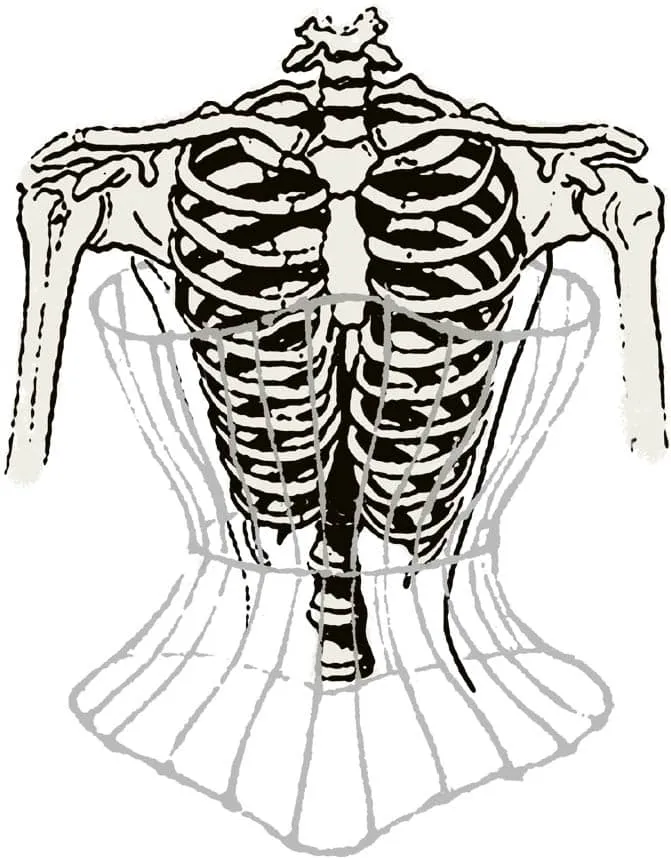
YARROW
Achillea millefolium
OTHER COMMON NAMES
nosebleed, woundwort, thousand leaf, carpenter’s weed, noble yarrow, common yarrow, devil’s nettle, hundred-leaved grass, lace plant, milfoil, nose pepper, old man’s pepper, sanguinary, savory tea, soldier’s woundwort
BEING A PLANT worthy of warriors, yarrow was commonly carried into battle by Ancient Greek and Roman soldiers, while Achilles used it to staunch the bleeding of his men’s wounds (earning it the name of Achillea).
Laboratory studies indicate that yarrow may help dilate blood vessels and arrest bleeding in much the same way that conventional angiotensin-converting enzyme (ACE) inhibitors do when prescribed for high blood pressure. The plant is also used by herbalists to regulate menstrual cycles and associated bleeding, as well as a wide array of other treatments including colds, flu, digestion, colic, hay fever, varicose veins and fevers.
As well as being a friend to the war-like, yarrow is also referred to as carpenter’s weed for similar reasons – tradesmen, like woodworkers, used it to stem bleeds from their work-related cuts.
In folklore, this native from the northern hemisphere was said to prevent (but not cure) baldness. Druids used it to divine the weather while young girls used it to foresee the perfect love match – believing that if they tickled their nose with a spray of the small white flowers and got a nosebleed their chosen one would prove true. They might also place a leaf under their pillow if they needed help in their search for love.
Yarrow is known as a ‘plant doctor’ for good reason: if planted near unhealthier counterparts, secretions from its roots help trigger an immune response among its ailing neighbours. For similar reasons it makes a great accelerant in composts, fertilizers and fungicides. It is not always so popular with gardeners as it often takes root in a lawn or in the cracks of paths.

YARROW · SKELETON
CHICKWEED
Stellaria media
OTHER COMMON NAMES
starweed, star chickweed, adder’s mouth chickweed, Indian chickweed, satin flower, scarped, starwort, stitchwort, tongue grass, white bird’s-eye, little star lady, bird herb, chick whittle, chicken’s meat, chickenwort, cluckweed, craches, maruns, winterweed
THIS COMMON SOURCE of cheap feed for fowl is also capable of relieving many a human scratch, rash, insect bite or general skin irritation. From burns to boils and abscesses to eczema, slender-stemmed chickweed boasts an impressive medical portfolio.
Characterized by its small, star-like, white flowers, chickweed is an annual that can be found in most parts of the world. Being something of a sun worshipper, it likes to ‘sleep’ during the night and on cloudy days and will tend to fully unfold its leaves only when the sun comes out.
Herbalists often present chickweed in the form of a soothing poultice or ointment, and the famous twelfth-century German abbess, herbalist, mystic and musician Saint Hildegard of Bingen (who drew heavily on Eastern practices) recommended that it be applied directly as a treatment for wounds and sores. One of its more common names, stitchwort, also implies that it was incorporated into the process of stitching wounds.
Chickweed’s healing powers are probably due to its high saponin content, which is thought to give it a high level of interaction with the components of cell membranes. As well as being administered externally, it is sometimes presented as a juice – chickweed water having long been imbibed (most likely due to its laxative qualities) as a remedy for obesity.
Fresh chickweed can be eaten in salads to help address an iron deficiency, but it is far more likely to appear as part of the diet of your pet as it helps sooth digestive tracts and encourages the expulsion of hairballs.
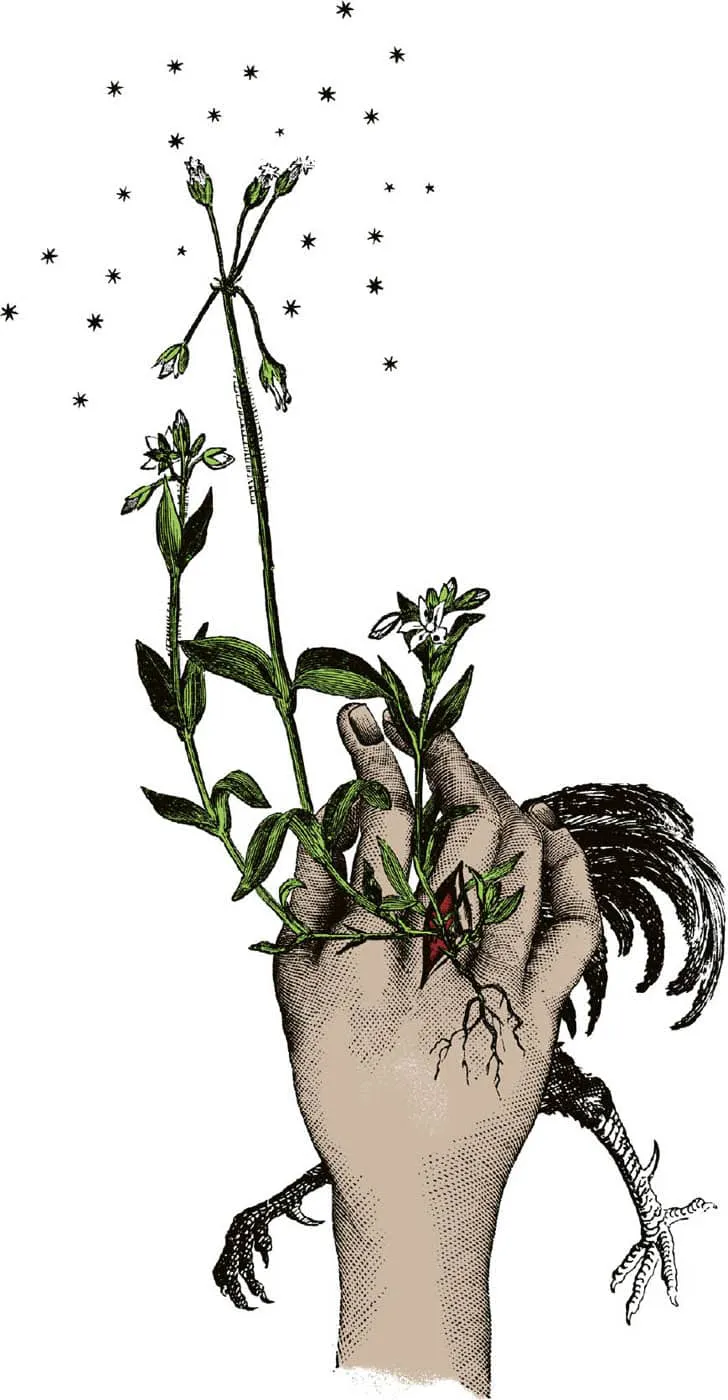
CHICKWEED · SKELETON
COMFREY
Symphytum officinale
OTHER COMMON NAMES
knitbone, boneset, slippery root, blackwort, bruisewort, consound, healing herb, gum plant, knit back, ass ear, miracle herb, wallwort, knotherb, churchbells, Abraham-Isaac-and-Jacob, Saracen’s root
THE HEALING POWERS of this perennial are linked to the high levels of allantoin that it contains – a compound usually extracted from the plant’s roots or leaves that has been shown to help stimulate and repair damaged cell tissue.
Believed to have been brought to mainland Europe by Crusaders, who had discovered that its secretions worked as a form of plaster for setting bones, comfrey’s name may well be derived from the Latin confero (‘knitting together’) – all of which tallies rather nicely with other common names for the plant such as knitbone, boneset and knit back.
The Ancient Greek physician Dioscorides prescribed comfrey as a healer of wounds and broken bones while Elizabethan physicians were never without a herb once seen as the panacea for all ills. Modern herbalists draw on the plant to relieve pain and inflammation caused by injury and degenerative symptoms related to rheumatoid arthritis and osteoarthritis. In Germany it is still in common use for sprains, bruises and sports injuries, and recent studies indicate that its value in tissue repair, as well as an anti-inflammatory for sprains, osteoarthritis and lower back pain, are not without foundation.
This plant will live happily in most conditions and can be used to treat insect bites, burns, scars, skin inflammation, acne and mastitis. It has thick, foxglove-like leaves and its unfurling pink or purple bell flowers are a favourite of bees and much-loved by gardeners and allotment owners, who often create compost accelerants and plant feed by steeping the leaves over long periods.
Usually proffered as an external cream or oil, comfrey should never be consumed because elements of the plant, especially its roots, can be highly toxic for the liver and, acc...
Table of contents
- Cover
- Title Page
- Contents
- Introduction
- Head
- Chest
- Abdomen
- Pelvis
- Skeleton
- Index
- Acknowledgements
- About The Authors
- Copyright
Frequently asked questions
Yes, you can cancel anytime from the Subscription tab in your account settings on the Perlego website. Your subscription will stay active until the end of your current billing period. Learn how to cancel your subscription
No, books cannot be downloaded as external files, such as PDFs, for use outside of Perlego. However, you can download books within the Perlego app for offline reading on mobile or tablet. Learn how to download books offline
Perlego offers two plans: Essential and Complete
- Essential is ideal for learners and professionals who enjoy exploring a wide range of subjects. Access the Essential Library with 800,000+ trusted titles and best-sellers across business, personal growth, and the humanities. Includes unlimited reading time and Standard Read Aloud voice.
- Complete: Perfect for advanced learners and researchers needing full, unrestricted access. Unlock 1.5M+ books across hundreds of subjects, including academic and specialized titles. The Complete Plan also includes advanced features like Premium Read Aloud and Research Assistant.
We are an online textbook subscription service, where you can get access to an entire online library for less than the price of a single book per month. With over 1.5 million books across 990+ topics, we’ve got you covered! Learn about our mission
Look out for the read-aloud symbol on your next book to see if you can listen to it. The read-aloud tool reads text aloud for you, highlighting the text as it is being read. You can pause it, speed it up and slow it down. Learn more about Read Aloud
Yes! You can use the Perlego app on both iOS and Android devices to read anytime, anywhere — even offline. Perfect for commutes or when you’re on the go.
Please note we cannot support devices running on iOS 13 and Android 7 or earlier. Learn more about using the app
Please note we cannot support devices running on iOS 13 and Android 7 or earlier. Learn more about using the app
Yes, you can access The Physick Garden by in PDF and/or ePUB format, as well as other popular books in Biological Sciences & Alternative & Complementary Medicine. We have over 1.5 million books available in our catalogue for you to explore.