- 163 pages
- English
- ePUB (mobile friendly)
- Available on iOS & Android
eBook - ePub
Los Angeles Television
About this book
Los Angeles television history began in the small room of an auto dealership in 1931. Since then, much of the nation's television history has been made here: the first television helicopter, the first big story that television broke before newspapers, the first live coverage of an atomic bomb, and the careers of numerous icons like Betty White, Steve Allen, Liberace, Lawrence Welk, and Tennessee Ernie Ford. Many Los Angeles television personalities went on to network fame, including Tom Snyder, Tom Brokaw, Bryant Gumbel, Connie Chung, Maury Povich, Bob Barker, Bill Leyden, Ann Curry, Pat Sajak, and Regis Philbin. Readers will discover, in many untold stories, the origins of that curious building on top the Hollywood sign, Albert Einstein's must-see local program, Marilyn Monroe's video debut, a popular television star's last tragic performance, and the actual identities of legends Korla Pandit and Iron Eyes Cody. Also in these pages is the reveal of the Mystery Tower Sitter, the all-night amateur show, the big Las Vegas premiere telecast that was blown off the air, and the treasured performer who worked at one station for 65 years.
Trusted by 375,005 students
Access to over 1.5 million titles for a fair monthly price.
Study more efficiently using our study tools.
Information
ONE
THE EXPERIMENTAL DAYS
Cadillac dealer Don Lee, who owned radio station KHJ, became interested in seeing what television was all about. He heard about a 25-year-old Farnsworth engineer named Harry Lubcke and hired him. A transmitter was built atop the dealership, and experimental station W6XAO went on the air on December 31, 1931. It broadcast one hour a day to the five television sets in the area. The first programming included old newsreels and outtakes from feature films. In 1933, the station broadcast footage of the Long Beach earthquake, the first breaking news on television. The station built a small studio on the second floor so it could use performers. There were poetry readings to music. Also, in 1933, the first feature film ever shown on television, The Crooked Circle with Zasu Pitts, was presented. On April 15, 1938, the first soap opera was broadcast. Vine Street was the story of a young woman trying to build a career in Hollywood. It ran for 15 minutes twice a week. Realizing the company would eventually need more studio space and a better transmitter site, in 1939, Don Lee Broadcasting bought a 20-acre site atop Mount Cahuenga in the Hollywood Hills. On December 23, 1940, the studio and transmitter were completed, and Mount Cahuenga was renamed Mount Lee, in honor of Don Lee, who had died in 1934.

OPPOSITE: The history of Los Angeles television started on May 10, 1931, on the eighth floor of a Cadillac dealership in downtown Los Angeles. That day, engineers, utilizing Farnsworth’s research systems, sent a television picture from one side of the room to the other.
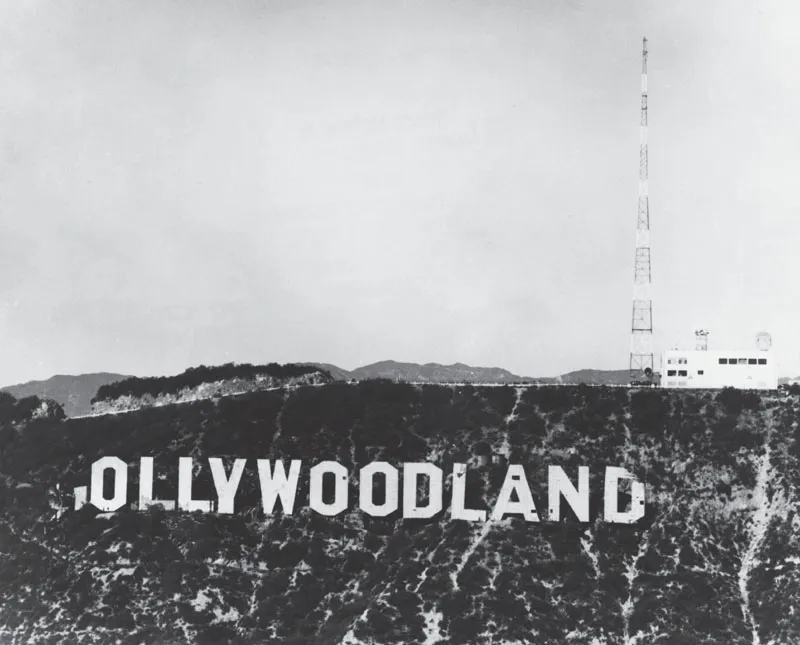
Below the new building was the huge Hollywoodland sign, which was an advertisement for a real estate development. The last four letters were removed in 1949. At 1,700 feet in elevation, the top of the mountain afforded views of both the city and the San Fernando Valley. (Courtesy of the Bruce Torrence Hollywood Historical Collection.)
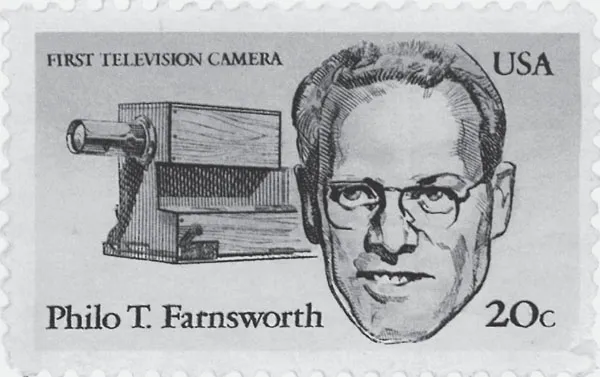
This stamp honors television inventor Philo T. Farnsworth. (Courtesy of USPS.)
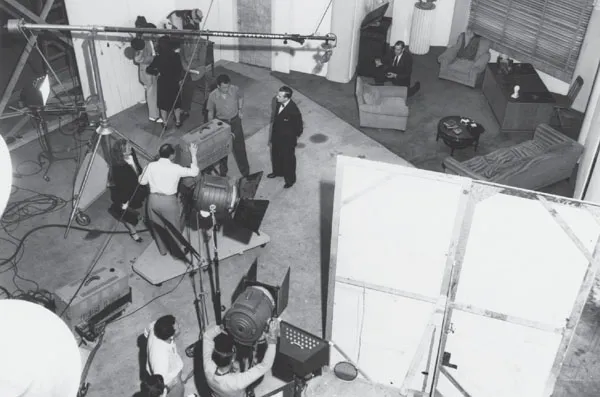
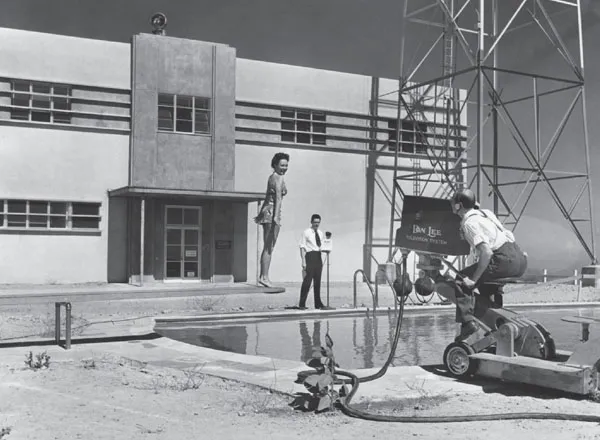
The single stage was 100 feet by 60 feet, and a swimming pool was constructed for water shows. Television programming from the new building was put on hold at the beginning of World War II, and the facilities were used to broadcast civil defense programs and war bulletins. By 1946, it was estimated there were 400 television sets in the Los Angeles area. On September 30, 1946, a tennis court was set up in the studio and the first televised tennis match took place. (Both from the “Dick” Whittington Studio, courtesy of the Huntington Library, San Marino.)
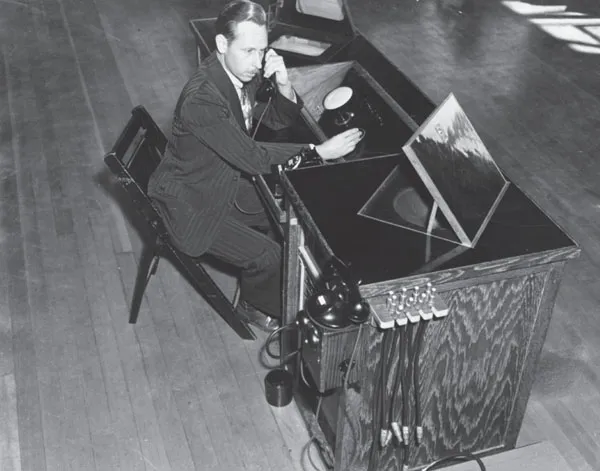
Chief engineer Harry Lubcke is pictured here at a video console.
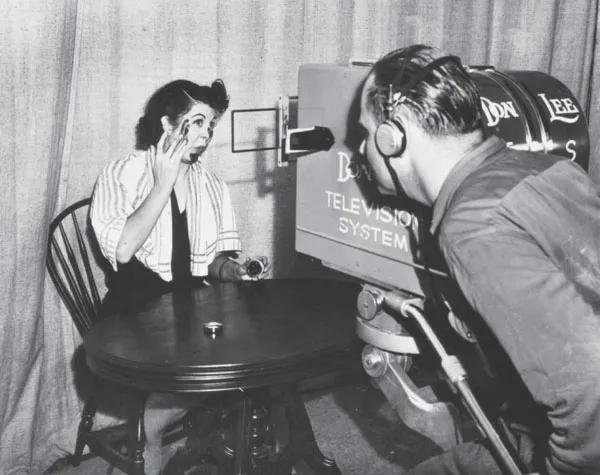
An actress applies dark makeup to her face, made necessary because of the intense studio lighting and sensitive camera tubes. (From the “Dick” Whittington Studio, courtesy of the Huntington Library, San Marino.)

Posing here is an all-female production crew at the Mount Lee Studio. Note the simple tin viewfinder attached to the side of the camera. (Courtesy of Bruce Henstell.)
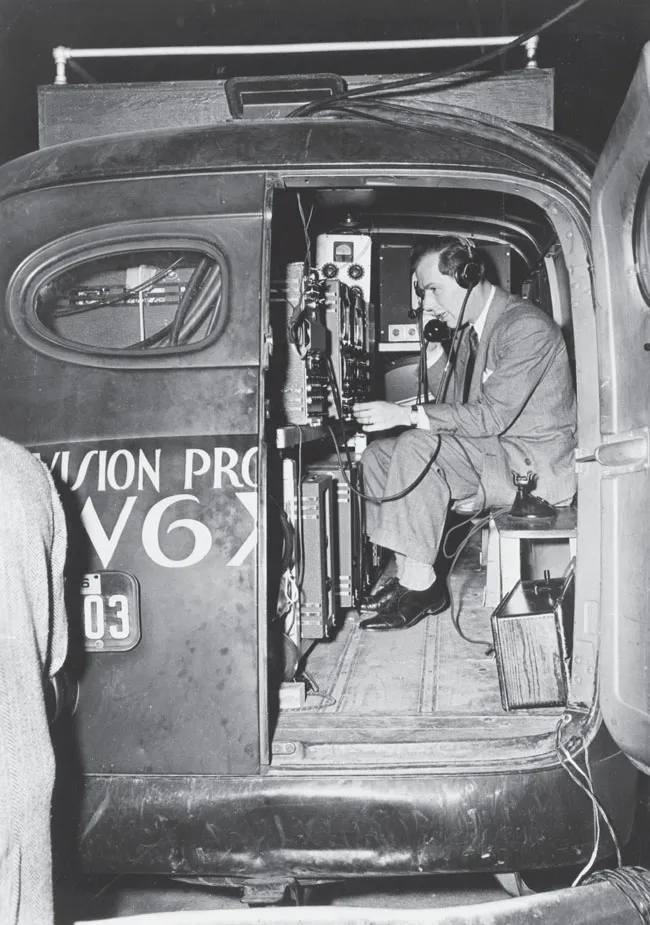
In 1936, the world’s first regular television service began in London from Alexandra Palace. That same year, the Olympics in Berlin were televised by the Germans. There was a strong Los Angeles connection, as one of the German engineers working on that coverage was a 20-year-old student named Klaus Landsberg, a proven electronic boy genius. At 16, he had built the world’s most effective shortwave radio. After the Olympics, Landsberg and his family, seeing what Nazi activity was taking place, moved to America. He soon got a job with RCA when RCA’s NBC introduced television service to America at the 1939 New York World’s Fair. In 1941, Paramount Pictures, wanting to get into television, heard about Landsberg. The company hired and sent him to Los Angeles to put something together. (Courtesy of KTLA.)
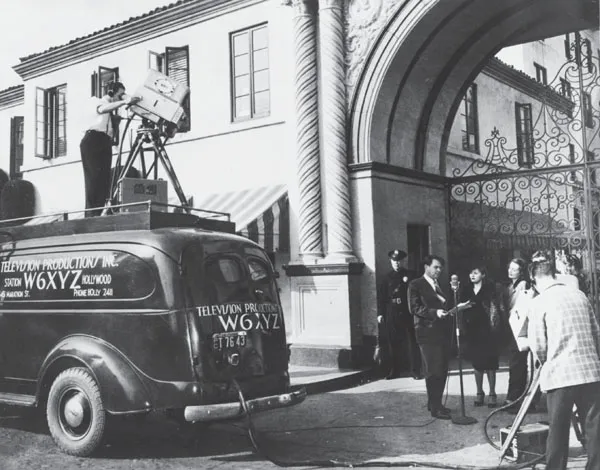
With two suitcases filled with electronic bits and pieces, Klaus Landsberg arrived at the Paramount Studios in Hollywood. At age 25, he started experimental station W6XYZ. He chose the optimum spot on Mount Wilson above Pasadena for his transmitter. In September 1942, W6XYZ went on the air. The only place Paramount had for its fledgling television operation was a garage just outside the DeMille gate at Bronson Avenue and Marathon Street. The station broadcast two nights a week. There were two small studios crammed into the garage, but Landsberg wanted to take his camera outside the studio, so he built a remote truck. The first remote was not very far away.
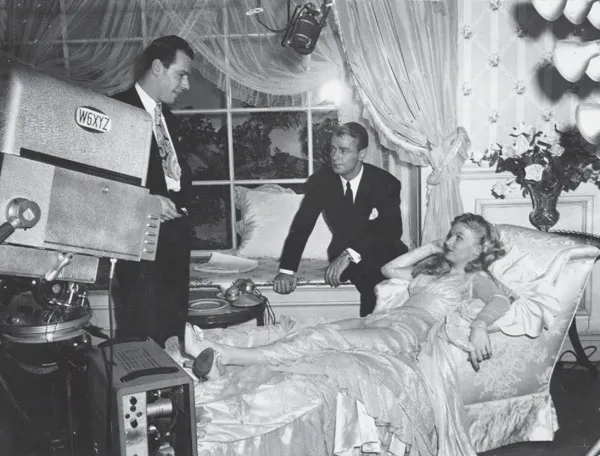
Klaus Landsberg took cameras to a Paramount stage to watch them filming a scene from This Gun for Hire. He is seen here with Alan Ladd (seated) and Veronica Lake. (Courtesy of KTLA.)
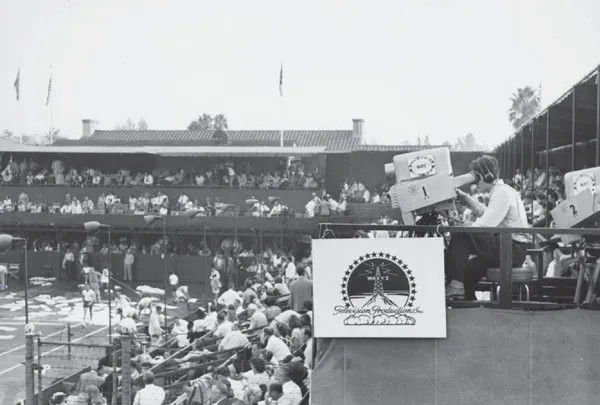
Local sporting events were televised, like the tennis matches at the Los Angeles Tennis Club, pictured at left, and starting in 1945, wrestling from the Olympic Auditorium was broadcast. Landsberg hired movie actor Dick Lane to call the matches. Lane was the first of a stock company put together whose versatility and personality allowed the station to present sports, news, entertainment, and commercials.
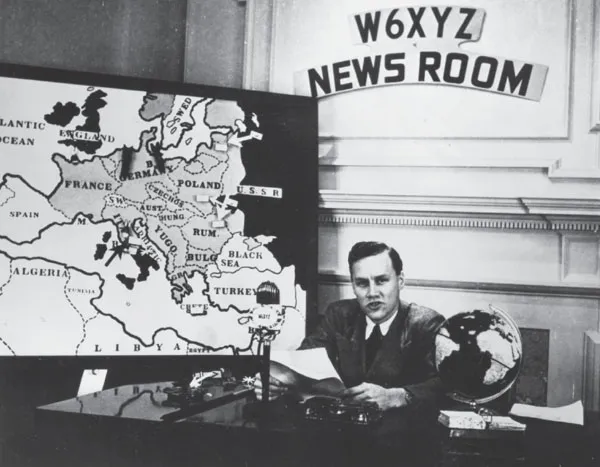
There was also a nightly newscast as well as a program called Shopping at Home, where various items were shown to viewers who could then call in and order them. (Courtesy of KTLA.)
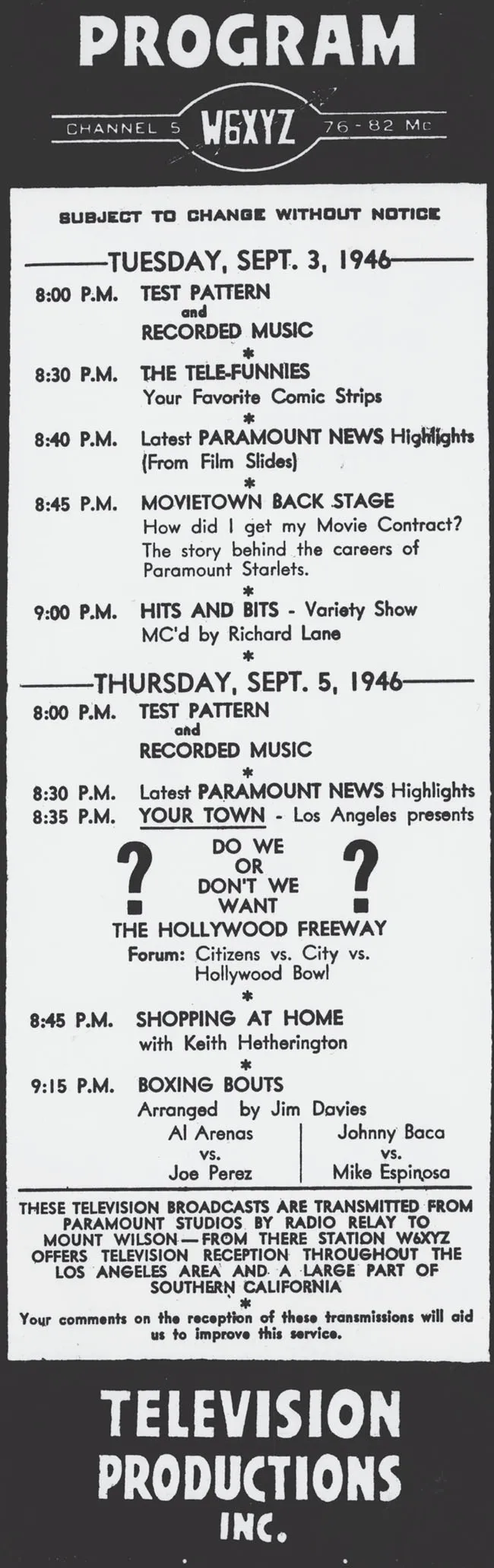
The station also got involved in local issues. On September 5, 1946, W6XYZ produced a special called Do We or D...
Table of contents
- Cover Page
- Title Page
- Copyright Page
- Dedication
- Table of Contents
- Foreword
- Acknowledgments
- Introduction
- 1. The Experimental Days
- 2. That’s Entertainment
- 3. Not for Kids Only
- 4. The News Wars
Frequently asked questions
Yes, you can cancel anytime from the Subscription tab in your account settings on the Perlego website. Your subscription will stay active until the end of your current billing period. Learn how to cancel your subscription
No, books cannot be downloaded as external files, such as PDFs, for use outside of Perlego. However, you can download books within the Perlego app for offline reading on mobile or tablet. Learn how to download books offline
Perlego offers two plans: Essential and Complete
- Essential is ideal for learners and professionals who enjoy exploring a wide range of subjects. Access the Essential Library with 800,000+ trusted titles and best-sellers across business, personal growth, and the humanities. Includes unlimited reading time and Standard Read Aloud voice.
- Complete: Perfect for advanced learners and researchers needing full, unrestricted access. Unlock 1.5M+ books across hundreds of subjects, including academic and specialized titles. The Complete Plan also includes advanced features like Premium Read Aloud and Research Assistant.
We are an online textbook subscription service, where you can get access to an entire online library for less than the price of a single book per month. With over 1.5 million books across 990+ topics, we’ve got you covered! Learn about our mission
Look out for the read-aloud symbol on your next book to see if you can listen to it. The read-aloud tool reads text aloud for you, highlighting the text as it is being read. You can pause it, speed it up and slow it down. Learn more about Read Aloud
Yes! You can use the Perlego app on both iOS and Android devices to read anytime, anywhere — even offline. Perfect for commutes or when you’re on the go.
Please note we cannot support devices running on iOS 13 and Android 7 or earlier. Learn more about using the app
Please note we cannot support devices running on iOS 13 and Android 7 or earlier. Learn more about using the app
Yes, you can access Los Angeles Television by Joel Tator,The Museum of Broadcast Communications in PDF and/or ePUB format, as well as other popular books in History & Film & Video. We have over 1.5 million books available in our catalogue for you to explore.