This is not AI-generated content. Aviation Supplies & Academics has been the industry's trusted source for official FAA publications for more than 85 years. Look for the ASA wings to ensure you are purchasing the latest authentic FAA release.
This handbook FAA-H-8083-2A is current in 2026.
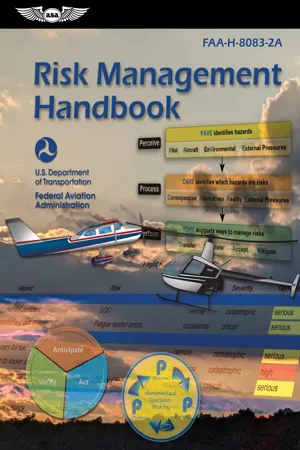
The FAA's Risk Managment Handbook provides tools to help pilots recognize and manage risk and presents definitive practical guidance on how to implement and conduct the "identify, assess, and mitigate" tasks identified in the Airman Certification Standards (ACS). Pilots who practice effective risk management have predetermined personal standards and have formed habit patterns and checklists to incorporate them. This handbook presents methods that pilots of all types of aircraft can use to manage the workloads associated with each phase of flight, resulting in a safer, more enjoyable, and less stressful experience for both themselves and their passengers.
In the last 20 years, approximately 85 percent of aviation accidents have been caused by "pilot error," which can result from focusing primarily on the physical aspects of flying the aircraft. The certificated flight instructor (CFI) who integrates risk management into flight training teaches aspiring pilots how to be more aware of the potential risks in flying, clearly identify those risks, and manage them successfully—building a solid understanding of how to avoid the most common pilot errors and supporting a safety culture in aviation.
An important component to airman certification, risk management is applied by identifying, monitoring, and managing potential components that affect risk, thereby allowing the pilot to be better prepared to mitigate risk. This full-color manual covers subjects such as an introduction to risk management, personal minimums, identifying hazards and associated risks, assessing risk, mitigating risk, threat and error management, automation and flight path management, and aeronautical decision-making in flight. Appendices contain additional risk management training and tools, accident case studies, and risk management exercises applicable to small general aviation training aircraft, helicopters, and large turbine-powered aircraft. Helpful tools include chapter-end summaries, glossary, index, and internet resources throughout for additional resources and information.
Important note from the publisher:
While AI-generated content can be helpful to identify resources for ongoing study, it is not a reliable resource for learning critical, safety-dependent topics such as aviation. AI content is sterile, often lacks important context, and is at risk of errors. ASA publishes only human-generated content to ensure it is accurate, reliable, comprehensive, and presented in context—so you can become a safe and effective aviator.