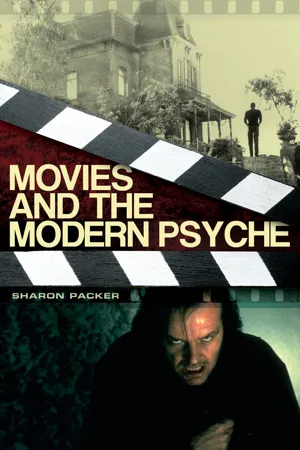
By looking at the interactions between cinema and psychology, Packer offers readers clear and basic insights into some of the most fundamental reasons why film is such an important influence upon our lives today. Movies and the Modern Psyche first describes the basic concepts of psychoanalysis, experimental psychology, behavioral conditioning, and hypnosis, which have all played major roles in the histories of both film and psychiatry. It then goes on to discuss the recent rise in film therapy, drug treatments, treatment for drug abuse, and the closing of asylums, to show how shifts in treatment techniques, theories, and settings are foreshadowed and fossilized by film.
Psychology and cinema are kindred cousins, born at the same time and developing together, so that each influences the other. From the mind-controlling villains that occupy early horror films and Cold War thrillers (like Caligari, Mabuse, and The Ipcress File), to the asylums that house numberless political allegories and personal dramas (in Shock Corridor, Spellbound, One Flew over the Cuckoo's Nest, and Girl Interrupted), to the drugs, phobias, and disorders that pervade so many of our favorite films (including, as a small sample, Vertigo, Night of the Hunter, Psycho, Rainman, Fight Club, Requiem for a Dream, and Batman Begins), there is no escaping either psychology in the movies, or the movies in psychology. By looking at the interactions between cinema and psychology, this book offers readers clear and basic insights into some of the most fundamental reasons why film is such an important influence upon our lives today.
Movies and the Modern Psyche first describes the basic concepts of psychoanalysis, experimental psychology, behavioral conditioning, and hypnosis, which have all played major roles in the histories of both film and psychiatry. It then goes on to discuss the recent rise in film therapy, drug treatments, treatment for drug abuse, and the closing of asylums, to show how shifts in treatment techniques, theories, and settings are foreshadowed and fossilized by film.
- 217 pages
- English
- PDF
- Available on iOS & Android
eBook - PDF
Movies and the Modern Psyche
About this book
Information
Table of contents
- CONTENTS
- PREFACE
- ACKNOWLEDGMENTS
- CHAPTER ONE: INTRODUCTION
- CHAPTER TWO: A CENTURY OF PSYCHOLOGY AND CINEMA
- CHAPTER THREE: FREUD AND FILM
- CHAPTER FOUR: THE DREAM
- CHAPTER FIVE: HYPNOSIS
- CHAPTER SIX: MADHOUSES, HAUNTED HOUSES, AND POLITICAL POLEMICS
- CHAPTER SEVEN: PSYCHOLOGICAL THRILLERS AND SERIAL KILLERS AND THE MOTIF OF MADNESS
- CHAPTER EIGHT: FREUDIAN WESTERNS AND FILMS NOIR
- CHAPTER NINE: COLD WAR PARANOIA AND POSTWAR PTSD
- CHAPTER TEN: DRUGS AND OTHER DEMONS
- CHAPTER ELEVEN: DOUBLES AND DOPPELGÄNGERS
- CHAPTER TWELVE: WOODY ALLEN’S WORRIES
- CHAPTER THIRTEEN: THE PSYCHE ASSUMES PHYSICAL FORM
- CHAPTER FOURTEEN: CONCLUSION
- FILMOGRAPHY
- NOTES
- BIBLIOGRAPHY
- INDEX
Trusted by 375,005 students
Access to over 1.5 million titles for a fair monthly price.
Study more efficiently using our study tools.
Frequently asked questions
Yes, you can cancel anytime from the Subscription tab in your account settings on the Perlego website. Your subscription will stay active until the end of your current billing period. Learn how to cancel your subscription
No, books cannot be downloaded as external files, such as PDFs, for use outside of Perlego. However, you can download books within the Perlego app for offline reading on mobile or tablet. Learn how to download books offline
Perlego offers two plans: Essential and Complete
- Essential is ideal for learners and professionals who enjoy exploring a wide range of subjects. Access the Essential Library with 800,000+ trusted titles and best-sellers across business, personal growth, and the humanities. Includes unlimited reading time and Standard Read Aloud voice.
- Complete: Perfect for advanced learners and researchers needing full, unrestricted access. Unlock 1.5M+ books across hundreds of subjects, including academic and specialized titles. The Complete Plan also includes advanced features like Premium Read Aloud and Research Assistant.
We are an online textbook subscription service, where you can get access to an entire online library for less than the price of a single book per month. With over 1.5 million books across 990+ topics, we’ve got you covered! Learn about our mission
Look out for the read-aloud symbol on your next book to see if you can listen to it. The read-aloud tool reads text aloud for you, highlighting the text as it is being read. You can pause it, speed it up and slow it down. Learn more about Read Aloud
Yes! You can use the Perlego app on both iOS and Android devices to read anytime, anywhere — even offline. Perfect for commutes or when you’re on the go.
Please note we cannot support devices running on iOS 13 and Android 7 or earlier. Learn more about using the app
Please note we cannot support devices running on iOS 13 and Android 7 or earlier. Learn more about using the app
Yes, you can access Movies and the Modern Psyche by Sharon Packer MD in PDF and/or ePUB format, as well as other popular books in Media & Performing Arts & Film & Video. We have over 1.5 million books available in our catalogue for you to explore.