- 523 pages
- English
- ePUB (mobile friendly)
- Available on iOS & Android
eBook - ePub
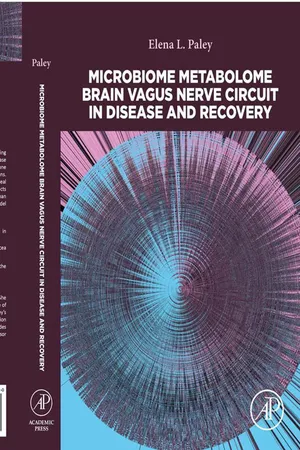
Microbiome Metabolome Brain Vagus Nerve Circuit in Disease and Recovery
About this book
Microbiome Metabolome Brain Vagus Nerve Circuit in Disease and Recovery focuses on the emerging hypothesis of a dysfunctional microbiome metabolome vagus nerve brain circuit in Alzheimer's disease and associated diseases and medical conditions, including dementia, aging, COVID-19, autoimmune conditions, and inflammatory skin condition rosacea, which may increase the risk of other conditions. This book also discusses the vagus nerve-related conditions, including Arnold's reflex, laryngopharyngeal reflux, duodenogastric reflux, gastroesophageal reflux, and related pulmonary diseases. The subjects covered in the book also address an important question of which one is more important for human health and intellectual abilities: the human genome or the human microbiome? The conceptual model of food and gut microbial tryptamine vagus nerve circuit is also presented in this book.
- Addresses the emerging hypothesis of a dysfunctional microbiome vagus nerve brain circuit in Alzheimer's disease and associated diseases and medical conditions
- Covers dementia, aging, COVID-19, autoimmune conditions, and inflammatory skin condition rosacea
- Presents the conceptual model of food and gut microbial tryptamine vagus nerve circuit
- Covers human health and intellectual abilities in the context of both the human genome and the human microbiome
Information
Table of contents
- Title of Book
- Cover image
- Title page
- Table of Contents
- Copyright
- Chapter 1 Introduction: Microbial metabolite interference of protein biosynthesis in neurodegenerative, neurodevelopmental, and other disorders; microbial metabolites hijacking vagus nerve
- Chapter 2 COVID-19: Scientific progress
- Chapter 3 Viral-bacterial interactions in diseases
- Chapter 4 Vagus nerve: Acid reflux, parietal cells, carpal tunnel syndrome, Alzheimer’s disease, COVID-19, stroke, cancer, and other diseases
- Chapter 5 Vagus nerve circuit: Microbiome—tryptophan metabolites—receptors and synapses
- Chapter 6 Glutamate and glutamate receptors in vagus nerve pathways and in Alzheimer’s disease
- Chapter 7 Aminoacyl tRNA synthetase multiple forms in autoimmune and infectious diseases
- Chapter 8 Crystalized aromatic L-amino acid decarboxylase from bacteria Micrococcus percitreus catalyzing decarboxylation of tryptophan and L-DOPA (Levodopa or 3,4-dihydroxy-L-phenylalanine)
- Chapter 9 Health effects of elevated CO2 levels, sparkling mineral water, seltzer carbonated water
- Chapter 10 Microbial antigens, allergies, and antibodies to microbial allergens: Significance of preexisting antibodies and stress for vaccination
- Chapter 11 Smell and taste identification deficits in disease
- Chapter 12 Microorganisms producing biogenic amines: From food to human body
- Chapter 13 Human genome or human microbiome genes: Which one is more important for human health and intellectual abilities?
- Chapter 14 Microorganisms used in agriculture, consumed from environment and associated with the edible raw fruits, vegetables, herbs, sprouts, and mushrooms
- Chapter 15 Molecular and cell aggregation: Biogenic amines, proteins, platelets, and microbial pathogens
- Chapter 16 Colonic diverticular disease as a risk factor for neurodegenerative and associated diseases
- Chapter 17 Alzheimer’s disease, dementia, aging, and COVID-19
- Chapter 18 Existing vaccines and new and old tools
- Chapter 19 Serotonin syndrome in neurodegenerative diseases and COVID-19: Mechanisms and consequences of intestinal infection
- Chapter 20 Circulating cell-free mitochondria and membrane vesicles
- Chapter 21 Protein synthesis inhibition in neuronal activities
- Chapter 22 Rosacea and associated medical disorders
- Chapter 23 Bacterial internalization in cancer and other medical conditions: Intracellular pathogens
- Chapter 24 Ocular changes resulting from reading and writing on smartphone and computer: Computer vision syndrome, dry eye disease, meibomian gland dysfunction, chalazion, occupational overuse syndrome
- Chapter 25 Viral infections in vagus nerve
- Chapter 26 Microbial tryptamine in Type 1, Type 2, and Type 3 diabetes
- Index
Trusted by 375,005 students
Access to over 1.5 million titles for a fair monthly price.
Study more efficiently using our study tools.
Frequently asked questions
Yes, you can cancel anytime from the Subscription tab in your account settings on the Perlego website. Your subscription will stay active until the end of your current billing period. Learn how to cancel your subscription
No, books cannot be downloaded as external files, such as PDFs, for use outside of Perlego. However, you can download books within the Perlego app for offline reading on mobile or tablet. Learn how to download books offline
Perlego offers two plans: Essential and Complete
- Essential is ideal for learners and professionals who enjoy exploring a wide range of subjects. Access the Essential Library with 800,000+ trusted titles and best-sellers across business, personal growth, and the humanities. Includes unlimited reading time and Standard Read Aloud voice.
- Complete: Perfect for advanced learners and researchers needing full, unrestricted access. Unlock 1.5M+ books across hundreds of subjects, including academic and specialized titles. The Complete Plan also includes advanced features like Premium Read Aloud and Research Assistant.
We are an online textbook subscription service, where you can get access to an entire online library for less than the price of a single book per month. With over 1.5 million books across 990+ topics, we’ve got you covered! Learn about our mission
Look out for the read-aloud symbol on your next book to see if you can listen to it. The read-aloud tool reads text aloud for you, highlighting the text as it is being read. You can pause it, speed it up and slow it down. Learn more about Read Aloud
Yes! You can use the Perlego app on both iOS and Android devices to read anytime, anywhere — even offline. Perfect for commutes or when you’re on the go.
Please note we cannot support devices running on iOS 13 and Android 7 or earlier. Learn more about using the app
Please note we cannot support devices running on iOS 13 and Android 7 or earlier. Learn more about using the app
Yes, you can access Microbiome Metabolome Brain Vagus Nerve Circuit in Disease and Recovery by Elena L. Paley in PDF and/or ePUB format, as well as other popular books in Medicine & Neurology. We have over 1.5 million books available in our catalogue for you to explore.