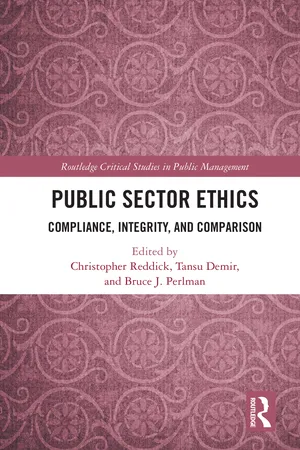
Public Sector Ethics: Compliance, Integrity, and Comparison presents a comprehensive treatment of the subject of ethics in the public sector. What structural elements are necessary and how to create organizations that make ethics their priority are the questions that this edited book addresses. It focuses on ethics management in public organizations and includes national case studies from select low- to middle-income countries.
Taken together, the chapters in this book cover the mechanisms, activities, and approaches that public organizations employ in ethics management. These are of utmost importance because the actions of public organizations affect citizens' lives, liberties, and property, and their ethical character affects citizens' faith in government. Numerous factors are at play in each instance of ethics management in public organizations, and controlling ethical behavior is difficult. This book suggests that effective ethics management requires a comprehensive approach. Traditional approaches such as ethics codes, policies and legislation, training, incentives, sanctions, monitoring, and compliance reviews are tools to achieve ethical conformity. Yet, they are effective only if leadership, values, and cultural transformation support them. This edited volume is a cohesive treatment of the subject, covering traditional approaches to ethics management, such as monitoring and compliance, and more contemporary approaches, like integrity building through ethical leadership and organizational values, as well as how to skillfully and effectively combine them to change organizational ethical contexts.
This book exposes readers to new approaches and emerging issues in public sector ethics, aids in understanding the challenges of creating ethical organizations, and helps to develop a deeper understanding of ethics management in government organizations. It will be of interest to researchers, academics, and advanced students in the fields of business ethics, public administration and management, leadership, and organizational studies.