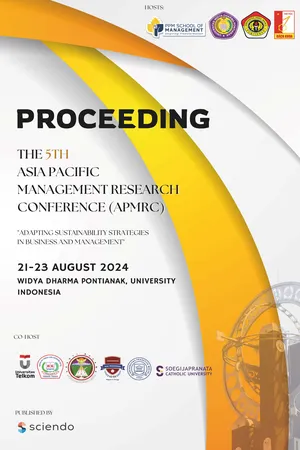
The 5th Asia-Pacific Management Research Conference (APMRC)
eBook - PDF

The 5th Asia-Pacific Management Research Conference (APMRC)

“Adapting Sustainability Strategies in Business and Management”

  1. 544 pages
  2. English
  3. PDF
  4. Available on iOS & Android
eBook - PDF

The 5th Asia-Pacific Management Research Conference (APMRC)

“Adapting Sustainability Strategies in Business and Management”

About this book

The Asia Pacific Management Research Conference (APMRC) is an academic event organized by the PPM School of Management. The implementation of APMRC has experienced developments since the first year, both in terms of the concept of a series of activities, paper assessment categories, and the facilities provided to participants. The year of 2024 marks the 5th APMRC, hosted by PPM School of Management (Indonesia), Widya Dharma Pontianak University (Indonesia), Panca Bhakti University (Indonesia), and Hanoi University of Science and Technology - School of Economics and Management (Vietnam). The aim of the 5th APMRC is to provide a forum for academics and professionals to share research findings, experiences, and knowledge for growth and sustainability in the Asia-Pacific.

The research topics presented at the 5th APMRC related to management and economics can include the following derivative topics, but are not limited to Strategic Management, Human Resources/Capital, Operations and Supply Chain, Organizational Behaviour, Innovation and Entrepreneurship, Corporate Governance, Finance and Accounting Management, Risk Management, Marketing Management, Cost Management, Sustainable Business Development, Hospitality and Tourism, Family Business, SME's, and Machine Learning in Business

Conference date and place

Date : August 21st – 23rd , 2024 – Pontianak, Indonesia

Venue : Auditorium 10th Floor, Widya Dharma University, Hos Cokroaminoto St., No.445, Darat Sekip, Kec. Pontianak Kota, Kota Pontianak, Wets Kalimantan, Indonesia, 78243

Article Processing Charge (APC)

Lecturer and General: $ 95

Graduate and Undergraduate Student: $ 75

Proceeding Publication Fee: $ 145

Conference Organizer

PPM School of Management (Indonesia), in cooperation with Widya Dharma Pontianak University (Indonesia), Panca Bhakti University (Indonesia), and Hanoi University of Science and Technology – School of Economics and Management (Vietnam).

Description of The Peer Review Process

All manuscripts have gone through "double-blind review" according to COPE (Committee on Publication Ethics) by reviewers and editing by the implementing editor, where both the authors of a manuscript and the reviewers remain anonymous to each other throughout the evaluation, ensuring that neither party can influence the review based on the other's identity, thus minimizing bias.

This conference follows the Committee on Publication Ethics (COPE)https://publicationethics.org/ guidelines in dealing with all aspects of publication ethics, especially how to handle cases of research and publication errors. This scientific publication ethics statement is a statement of the code of ethics for all parties involved in the publication process of this scientific journal, namely the manager, editor, reviewers, and authors. The Code of Ethics for Scientific Publications essentially upholds three ethical values in publications, namely (i) Neutrality, namely being free from conflicts of interest in managing publications; (ii) Justice, namely giving authorship rights to those entitled to be authors; and (iii) Honesty, namely free from duplication, fabrication, falsification and plagiarism in publications.

Review process

1. The author(s) submit the paper through the link provided in the website of The 5th

APMRC 2024

2. The paper is checked for the suitable in scope, writing template, and language by the committee. Those are not suitable are returned to the authors for either resubmission or decline.

3. Two reviewers whose expertise relevant to the topic are assigned to a paper (double blind review).

4. The reviewers give decision, comments and suggestions to the paper's substances that

possibly need to be revised.

5. The authors must access the reviewers' comments through the link provided, do all the revision, and resubmit the revised version on the predetermined dat.

6. The authors present the paper on the conference.

7. The editor review the paper for its suitable with the journal and the proceeding guidelines. The editor of the journal has the authority to accept or reject the paper according to their policy. The scientific committee of the conference is responsible for reviewing the papers published on the proceeding. They act as editor of a journal and ensure that the papers are qualified for publication.

8. Following to the presentation on the conference, the committee sent a letter to the participants who choose to publish its article on the indexed proceeding.

9. The editor checks the compliance of the article to the template and the appropriateness

of English in the writing. If it does not comply with either the template or the language, it will be sent back to the authors for revision until it really complies with the expectation.

10. The final manuscript then processed for lay outing according to the proceeding requirements including the information must be in an article.

Duties of Authors

1. Ensure that those included in the list of authors/authors meet the criteria as authors/writers.

2. Collectively responsible for the work and content of the article including methods, analysis, calculations and details.

3. State the origin of resources (including funding), either directly or indirectly.

4. Explain the limitations in the research

5. Respond to comments made by the reviewers in a professional and timely manner.

6. Inform the editor if you will withdraw your written work.

7. Make a statement that the written work submitted for publication is original, has never been published anywhere in any language, and is not in the process of being submitted to another publisher.

Duties of Editors

1. Ensure processes to maintain the quality of manuscript

2. Maintain the integrity of the author's academic track record.

3. Deliver corrections, clarifications, withdrawals, and apologies if necessary.

4. Has responsibility for organizing and formatting the paper, while the content and any statements in the paper are the responsibility of the author.

5. Assess published proceeding and attitudes of authors and peer reviewers to increase accountability and minimize errors.

6. Have an open-minded personality in accepting other people's new opinions or views

that are different from their personal opinions.

7. Prohibits maintaining our own opinions, the author's or third parties' which may result in wrong decisions.

8. Encourage writers to make improvements to their written work until it is suitable for publication.

Duties of Reviewers

1. Receive an assignment from the editor to review written work and submit the results of the review to the editor, as material for determining the suitability of a written work for publication.

2. Reviewers may not carry out reviews of written works that involve themselves either

directly or indirectly

3. Maintain the author's privacy by not disseminating the results of corrections, suggestions and recommendations by providing criticism, suggestions, input and recommendations

4. Encourage authors/writers to make improvements to written work

5. Review written work that has been corrected according to predetermined standards.

6. Written works are reviewed in a timely manner according to the style of the publication environment based on scientific principles (data collection methods, legality of authors, conclusions, etc.).

Editor in Chief

Dr. Lufina Mahadewi, M.M., M.Sc – PPM School of Management, Indonesia

([email protected])

Managing Editor

Rosita Fitriyani, S.E., PPM School of Management, Indonesia

Editorial Advisory Board

• AC. Mahendra K. Datu, B.A., M.A., Ph.D. – PPM School of Management, Indonesia

• Dr. M. Hadi Santoso, S.E., M.M.– Widya Dharma Pontianak University, Indonesia

• Dr. Drs. Sartono. M.M., – Panca Bhakti University, Indonesia

• Assoc. Prof. Nguyen Danh Nguyen – School of Economics and Management, Hanoi University of Science and Technology, Vietnam

• Prof. Dr. Cham Tat Huei – Graduate Business School, UCSI University Malaysia

• Assc. Prof. Yeneneh Tamirat Negash, Ph.D. – Department of Business Administration, Asia

University, Taiwan

Editors

• Dr. M. Andre Prasetya Willim, S.E., M.M. – Widya Dharma Pontianak University, Indonesia

• Dr. Firdaus Basbeth, M.M. - PPM School of Management, Indonesia

Language Editor

Aris setiawan SE. M.Ak – Panca Bhakti University, Indonesia, Indonesia

Technical Editors

Linda Setyowati, M. Psi - PPM School of Management, Indonesia Dhinar Silalahi, M.M. - PPM School of Management, Indonesia William Ben Gunawan – PPM School of Management, Indonesia Muhamad Pajarrudin – PPM School of Management, Indonesia

Organizing Committee

Scientific Committee

Conference programme

Guideline for reviewer

Instruction for Author

Editorial policies APMRC

ABSTRACTING & INDEXING

Baidu Scholar
Bayerische Staatsbibliothek
BDS
BoD
Bowker Book Data
Ciando
CNKI Scholar (China National Knowledge Infrastructure)
Dimensions
EBSCO
ExLibris
Google?Books
Google Scholar
Naviga
ReadCube
Semantic?Scholar?
TDOne?(TDNet)
WorldCat?(OCLC)
X-MOL

Trusted by 375,005 students

Access to over 1.5 million titles for a fair monthly price.

Study more efficiently using our study tools.

Information

Publisher
Sciendo
Year
2024
eBook ISBN
9788367405850

Table of contents

  1. I. Introduction
  2. II. Research Methods
  3. III. Result and Discussion
  4. IV. Conclusion
  5. V. References
  6. I. Appendix
  7. I. Introduction
  8. II. Research Methods
  9. III. Result and Discussion
  10. IV. Conclusion
  11. V. Acknowledgments
  12. VI. References
  13. I. Introduction
  14. II. Research Methods
  15. III. Result and Discussion
  16. IV. Conclusion
  17. V. Acknowledgments
  18. VI. References
  19. I. Introduction
  20. II. Research Methods
  21. III. Result and Discussion
  22. IV. Conclusion
  23. V. Acknowledgments
  24. VI. References
  25. I. Introduction
  26. II. Research Methods
  27. III. Result and Discussion
  28. IV. Conclusion
  29. V. Acknowledgments
  30. VI. References
  31. I. Introduction
  32. II. Research Methods
  33. III. Result and Discussion
  34. IV. Conclusion
  35. V. Acknowledgments
  36. VI. References
  37. I. Introduction
  38. II. Research Methods
  39. III. Result and Discussion
  40. IV. Conclusion
  41. V. References
  42. I. Introduction
  43. II. Research Methods
  44. III. Result and Discussion
  45. IV. Conclusion
  46. V. Acknowledgments
  47. VI. References
  48. I. Introduction
  49. II. Research Methods
  50. III. Result and Discussion
  51. IV. Conclusion
  52. V. References
  53. VI. Appendix
  54. I. INTRODUCTION
  55. II. RESEARCH METHODS
  56. III. RESULT AND DISCUSSION
  57. IV. CONCLUSION
  58. V. REFERENCES
  59. I. Introduction
  60. II. RESEARCH METHODS
  61. III. RESULT AND DISCUSSION
  62. IV. CONCLUSION
  63. V. REFERENCES
  64. I. INTRODUCTION
  65. II. RESEARCH HYPOTHESIS
  66. CUSTOMER EXPERIENCE
  67. III. RESEARCH METHODS
  68. IV. RESULT AND DISCUSSION
  69. V.
  70. VI.
  71. VII.
  72. I1.1
  73. I2.1
  74. I3.1
  75. V. CONCLUSION AND RECOMMENDATION
  76. VI. THEORYTICAL AND MANAGER IMPLICATION
  77. VII. ACKNOWLEDGMENTS
  78. VIII. REFERENCES
  79. I. Introduction
  80. II. RESEARCH METHODS
  81. III. RESULT and DISCUSSION
  82. IV. CONCLUSION
  83. V. REFERENCES
  84. I. Introduction
  85. II. RESEARCH METHODS
  86. III. RESULT and DISCUSSION
  87. IV. CONCLUSION
  88. In conclusion, this study examines how gender influences the entrepreneurial intentions of university students in Indonesia, focusing on three factors: locus of control, entrepreneurial alertness, and need for achievement. The findings highlight that ...
  89. V. REFERENCES
  90. III. RESEARCH METHODS
  91. IV. RESULT and DISCUSSION
  92. IV. CONCLUSION
  93. V. REFERENCES
  94. I. Introduction
  95. II. RESEARCH METHODS
  96. III. RESULT AND DISCUSSION
  97. IV. CONCLUSION
  98. V. MANAGERIAL IMPLICATION
  99. VI. ACKNOWLEDGMENTS
  100. VII. REFERENCES
  101. I. Introduction
  102. II. RESEARCH METHODS
  103. III. RESULT and DISCUSSION
  104. IV. CONCLUSION
  105. V. Reference
  106. I. INTRODUCTION
  107. II. RESEARCH METHODS
  108. III. RESULT AND DISCUSSION
  109. IV. Discussion
  110. V. CONCLUSION
  111. VI. REFERENCES
  112. I. Introduction
  113. II. RESEARCH METHODS
  114. III. RESULT and DISCUSSION
  115. IV. CONCLUSION
  116. V. ACKNOWLEDGMENTS
  117. VI. REFERENCES
  118. I. Introduction
  119. II. RESEARCH METHODS
  120. III. RESULT and DISCUSSION
  121. IV. DISCUSSION
  122. V. CONCLUSION
  123. VI. ACKNOWLEDGMENTS
  124. VII. REFERENCES
  125. I. INTRODUCTION
  126. I. Introduction
  127. II. LITERATURE REVIEW
  128. III. RESEARCH METHODS
  129. IV. RESEARCH DESIGN
  130. V. RESULT and DISCUSSION
  131. VI. CONCLUSION
  132. This study seeks to close these inequalities by examining Indonesian higher education students' attitudes toward entrepreneurship education and focusing on the impact of demographic factors. It is anticipated that the study's conclusions will have a ...
  133. VII. ACKNOWLEDGMENTS
  134. VIII. REFERENCES
  135. (1) Cruz, et al. (2009). The Effect of Entrepreneurship Education Programmes on Satisfaction with Innovation Behaviour and Performance. Journal of Europian Industrial Training, 33(3): 198-214.
  136. I. Introduction
  137. II. RESEARCH METHODS
  138. III. RESULT and DISCUSSION
  139. V. CONCLUSION
  140. VI. REFERENCES
  141. V. CONCLUSION
  142. VI. REFERENCES
  143. I. INTRODUCTION
  144. VI. REFRENCE
  145. I. INTRODUCTION
  146. II. METHODS
  147. III. RESULTS AND DISCUSSION
  148. IV. CONCLUSION
  149. V. REFERENCES
  150. I. INTRODUCTION
  151. II. LITERATURE REVIEW AND HYPOTHESIS DEVELOPMENT
  152. III. RESEARCH METHODS
  153. IV. RESULT AND DISCUSSION
  154. V. CONCLUSION
  155. VI. LIMITATIONS
  156. VII. ACKNOWLEDGMENTS
  157. VIII. REFERENCES
  158. I. Introduction
  159. II. Research Methods
  160. III. Result and Discussion
  161. IV. Conclusion
  162. V. References
  163. I. Introduction
  164. II. Research Methods
  165. III. Result and Discussion
  166. IV. Conclusion
  167. V. Acknowledgments
  168. VI. References
  169. VII. Appendix
  170. I. Introduction
  171. II. Research Methods
  172. III. Result and Discussion
  173. IV. Conclusion
  174. V. References
  175. I. Introduction
  176. II. Research Methods
  177. III. Result and Discussion
  178. IV. Conclusion
  179. V. Acknowledgments
  180. VI. References
  181. I. Introduction
  182. II. Research Methods
  183. III. Result and Discussion
  184. IV. Conclusion
  185. V. Acknowledgments
  186. VI. References
  187. I. Introduction
  188. II. Research Methods
  189. III. Result and Discussion
  190. IV. Conclusion
  191. V. Acknowledgments
  192. VI. References
  193. I. Introduction
  194. II. Research Methods
  195. III. Result and Discussion
  196. IV. Conclusion
  197. V. References
  198. I. Introduction
  199. II. Research Methods
  200. III. Result and Discussion
  201. IV. Conclusion
  202. V. Acknowledgments
  203. VI. References
  204. I. Introduction
  205. II. Research Methods
  206. III. Result and Discussion
  207. IV. Conclusion
  208. V. References
  209. I. Introduction
  210. II. Research Methods
  211. III. Result and Discussion
  212. IV. Conclusion
  213. V. Acknowledgments
  214. VI. References
  215. I. Introduction
  216. II. Research Methods
  217. III. Result and Discussion
  218. IV. Conclusion
  219. V. Acknowledgments
  220. VI. References
  221. I. Introduction
  222. II. Research Methods
  223. III. Result and Discussion
  224. IV. Conclusion
  225. V. References
  226. I. Introduction
  227. II. Research Methods
  228. III. Result and Discussion
  229. IV. Conclusion
  230. V. References
  231. I. Introduction
  232. II. Research Methods
  233. III. Result and Discussion
  234. IV. Conclusion
  235. V. References
  236. I. Introduction
  237. II. RESEARCH METHODS
  238. III. RESULT and DISCUSSION
  239. IV. CONCLUSION
  240. V. REFERENCES

Frequently asked questions

Yes, you can cancel anytime from the Subscription tab in your account settings on the Perlego website. Your subscription will stay active until the end of your current billing period. Learn how to cancel your subscription
No, books cannot be downloaded as external files, such as PDFs, for use outside of Perlego. However, you can download books within the Perlego app for offline reading on mobile or tablet. Learn how to download books offline
Perlego offers two plans: Essential and Complete
  • Essential is ideal for learners and professionals who enjoy exploring a wide range of subjects. Access the Essential Library with 800,000+ trusted titles and best-sellers across business, personal growth, and the humanities. Includes unlimited reading time and Standard Read Aloud voice.
  • Complete: Perfect for advanced learners and researchers needing full, unrestricted access. Unlock 1.5M+ books across hundreds of subjects, including academic and specialized titles. The Complete Plan also includes advanced features like Premium Read Aloud and Research Assistant.
Both plans are available with monthly, semester, or annual billing cycles.
We are an online textbook subscription service, where you can get access to an entire online library for less than the price of a single book per month. With over 1.5 million books across 990+ topics, we’ve got you covered! Learn about our mission
Look out for the read-aloud symbol on your next book to see if you can listen to it. The read-aloud tool reads text aloud for you, highlighting the text as it is being read. You can pause it, speed it up and slow it down. Learn more about Read Aloud
Yes! You can use the Perlego app on both iOS and Android devices to read anytime, anywhere — even offline. Perfect for commutes or when you’re on the go.
Please note we cannot support devices running on iOS 13 and Android 7 or earlier. Learn more about using the app
Yes, you can access The 5th Asia-Pacific Management Research Conference (APMRC) by in PDF and/or ePUB format, as well as other popular books in Business & Entrepreneurship. We have over 1.5 million books available in our catalogue for you to explore.