THIS BOOK WILL HELP YOU
• to appreciate the variety, subtlety and wisdom of a unique philosophical tradition
• to understand the major schools of thought that have shaped Chinese civilization
• to draw on a rich cultural resource for different perspectives on questions of our time
• to recognize traditional concepts that continue to inform Chinese thinking today China, an emerging superpower, is heir to an ancient civilization that owes little to outside influences.
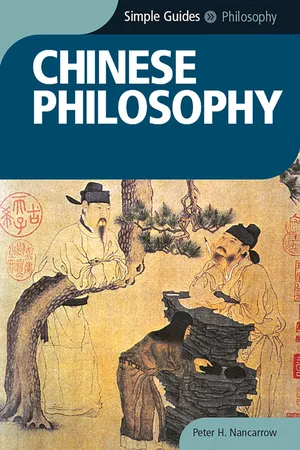
This compelling introduction to Chinese philosophy describes the major traditional schools of thought that continue to underpin much of Chinese thinking today. It includes an outline of the country's early history, and traces the development of Chinese thought, which evolved in a continuum and generally in isolation from the rest of the world, from the earliest concerns with ritual and divination until the arrival of Buddhism in the first century. The best known strand of Chinese philosophy is Confucianism, which is basically a philosophy of relationships between different levels in a hierarchy, from the ruler down to the individual. In complete contrast, the almost contemporary school of Laozi espoused the wisdom and freedom of the Dao, based on the concept of alignment with nature and reverence for the environment. There followed schools of analytical logic, Legalism, and the arrival of Buddhism, which became associated in China with the mystical writings of Laozi, adding the dimension of compassion. These schools gradually fused in a neo-Confucian synthesis that went unchallenged in China until the encounter with the West. The book touches on the relationship between philosophical thought and politics, and brings the reader up to date by looking at the considered way in which China has adapted foreign ideas in modern times. Written by a distinguished author in clear, everyday language, it is a fascinating and accessible introduction to an important subject. ACCESS THE WORLD'S PHILOSOPHIES Simple Guides: Philosophy is a series of concise introductions to the major philosophies of the world. Written by experts in the field, these accessible guides offer a fascinating account of the rich variety of arguments, ideas and systems of thought articulated by different cultures in the attempt to explore and define the nature of reality and the meaning, purpose and proper conduct of life. The Simple Guides will appeal to analytical thinkers and spiritual seekers alike. Taken together, they provide a basic introduction to the evolution of human thought, and a point of reference for further exploration and discovery. By offering essential insights into the world views of different societies, they also enable travellers to behave in way that fosters mutual respect and understanding.
- English
- ePUB (mobile friendly)
- Available on iOS & Android
eBook - ePub
Chinese Philosophy - Simple Guides
About this book
Trusted by 375,005 students
Access to over 1 million titles for a fair monthly price.
Study more efficiently using our study tools.
Information
Topic
PhilosophySubtopic
Eastern PhilosophyTable of contents
- Cover
- Title Page
- Copyright
- Contents
- List of Illustrations
- Map: Territories of the Warring States
- Introduction
- Chapter 1: The Earliest Traces
- Chapter 2: The Yijing
- Chapter 3: Daoism
- Chapter 4: The Teaching of Zhuangzi
- Chapter 5: Confucius
- Chapter 6: Mozi, the First Opponent of Confucius
- Chapter 7: Mencius, Exponent of Confucius’ Ideas
- Chapter 8: Xünzi, Critic of Mencius
- Chapter 9: The School of Names
- Chapter 10: Legalism
- Chapter 11: The Rise and Fall of the Empire of Qin
- Chapter 12: Buddhism in China
- Chapter 13: The Neo-Confucian Synthesis
- Chapter 14: The Historical Perspective
- Chapter 15: The End of the Confucian Empire
- Chapter 16: Philosophy after the Empire
- Chapter 17: Philosophy after Mio
- Notes
- Appendix
- Further Reading
Frequently asked questions
Yes, you can cancel anytime from the Subscription tab in your account settings on the Perlego website. Your subscription will stay active until the end of your current billing period. Learn how to cancel your subscription
No, books cannot be downloaded as external files, such as PDFs, for use outside of Perlego. However, you can download books within the Perlego app for offline reading on mobile or tablet. Learn how to download books offline
Perlego offers two plans: Essential and Complete
- Essential is ideal for learners and professionals who enjoy exploring a wide range of subjects. Access the Essential Library with 800,000+ trusted titles and best-sellers across business, personal growth, and the humanities. Includes unlimited reading time and Standard Read Aloud voice.
- Complete: Perfect for advanced learners and researchers needing full, unrestricted access. Unlock 1.4M+ books across hundreds of subjects, including academic and specialized titles. The Complete Plan also includes advanced features like Premium Read Aloud and Research Assistant.
We are an online textbook subscription service, where you can get access to an entire online library for less than the price of a single book per month. With over 1 million books across 990+ topics, we’ve got you covered! Learn about our mission
Look out for the read-aloud symbol on your next book to see if you can listen to it. The read-aloud tool reads text aloud for you, highlighting the text as it is being read. You can pause it, speed it up and slow it down. Learn more about Read Aloud
Yes! You can use the Perlego app on both iOS and Android devices to read anytime, anywhere — even offline. Perfect for commutes or when you’re on the go.
Please note we cannot support devices running on iOS 13 and Android 7 or earlier. Learn more about using the app
Please note we cannot support devices running on iOS 13 and Android 7 or earlier. Learn more about using the app
Yes, you can access Chinese Philosophy - Simple Guides by Peter Nancarrow in PDF and/or ePUB format, as well as other popular books in Philosophy & Eastern Philosophy. We have over one million books available in our catalogue for you to explore.