- 168 pages
- English
- ePUB (mobile friendly)
- Available on iOS & Android
eBook - ePub
About this book
"Seele's tireless efforts to remove disparities in health care—and wherever we need more understanding and acceptance—is nothing short of inspirational." —John Hope Bryant, Chairman, Operation HOPE
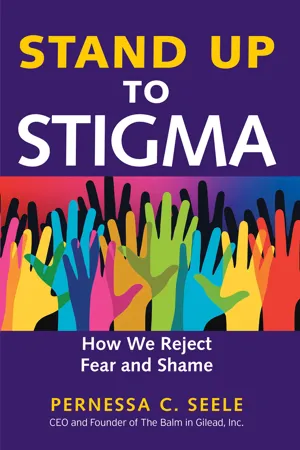
"Stigma" is a simple two-syllable word, yet it carries the weight of negative and often unfair beliefs that we hold about those who are different from us. Stigmas lock people into stereotyped boxes and deny us all the right to be our authentic and whole selves. Public health activist Dr. Pernessa Seele, one of Time Magazine's 100 Most Influential Persons in the World in 2006, has crafted a proven method to address stigma. This powerful book confronts stereotype development, shows how to undo the processes and effects of stigma, and explains how we can radically change cultural thinking on the individual, interpersonal, and societal levels to put an end to stigmatization once and for all.
"Pernessa's book can make a difference in your life. In a powerful way, it gets to the heart of a complex issue. Many people stigmatize others without realizing it, and Seele helps readers understand what they can do to change their attitudes and actions." —Jeff Pegues, Justice and Homeland Security Correspondent, CBS News
"In sharing cogent reflections based upon her pioneering experiences as a courageous health advocate, Pernessa Seele squarely identifies the societal toll taken by stigma and stereotyping—and delineates the steps we can take to reaffirm the dignity we each innately possess by virtue of our humanity." —Natalia Kanem, MD, Acting Executive Director, United Nations Population Fund
"Stigma" is a simple two-syllable word, yet it carries the weight of negative and often unfair beliefs that we hold about those who are different from us. Stigmas lock people into stereotyped boxes and deny us all the right to be our authentic and whole selves. Public health activist Dr. Pernessa Seele, one of Time Magazine's 100 Most Influential Persons in the World in 2006, has crafted a proven method to address stigma. This powerful book confronts stereotype development, shows how to undo the processes and effects of stigma, and explains how we can radically change cultural thinking on the individual, interpersonal, and societal levels to put an end to stigmatization once and for all.
"Pernessa's book can make a difference in your life. In a powerful way, it gets to the heart of a complex issue. Many people stigmatize others without realizing it, and Seele helps readers understand what they can do to change their attitudes and actions." —Jeff Pegues, Justice and Homeland Security Correspondent, CBS News
"In sharing cogent reflections based upon her pioneering experiences as a courageous health advocate, Pernessa Seele squarely identifies the societal toll taken by stigma and stereotyping—and delineates the steps we can take to reaffirm the dignity we each innately possess by virtue of our humanity." —Natalia Kanem, MD, Acting Executive Director, United Nations Population Fund
Tools to learn more effectively

Saving Books

Keyword Search

Annotating Text

Listen to it instead
Information
CHAPTER 1
The Venom of Stigma
Stigma is a simple, two-syllable word. Yet because of an array of sociological factors, for many people it creates powerful impressions and emotions that always conjure up a variety of uncomfortable and even hurtful feelings. Many people may not be familiar with the term stigma, while others may refer to it only on a casual basis. Still others believe that the very injustices that the word represents have long been removed, or at least drastically reduced, in our “civilized” culture. However, is that really the case? No! It is not! For too many people in our society, we wear the impact of stigma like flaky, dry skin. The continuous application of lotion to cover up the unappealing, flaky, dry cells is a perpetual, daily exercise that almost never eliminates the problem. The human skin is our largest organ. It consists of three layers and is made up of mesodermal tissues that adapt to the internal and external environmental conditions of our bodies to protect our inner muscles, skeleton, and other organs. Our top layer of skin, often dry, flaky, and wrinkled, depending on our age, is called the stratum corneum. Its primary function is to protect us from the environmental conditions of the earth — or society, community, or family in the case of stigma.
Everyone experiences stigma at some point in their lives. Being the recipient of stigma is painful, regardless of the situation. However, becoming stigmatized because one brings a peanut butter and jelly sandwich to elementary school every day cannot begin to compare with the daily encounters of stigma experienced by millions of people as the result of culture and inherent systems of mass hatred of fellow human beings — systems that have been bred into existence through intergenerational words, thoughts, actions, and policies.
During these early years of the twenty-first century, we are witnessing the severe impact of ingrained hatred of populations in a civilized society. Among many persons presently living on planet Earth, there is a longing for the continuation of stigma and fear through legislative polices that will reconstruct or keep systems in place that render people fearful, hateful, and helpless for many generations to come. At the same time, there is hope and protest among others who want to dismantle stigma and hate of every kind and on every level, resulting in the birth of the next generation of human beings living in peace among themselves and within themselves.
Stigma is a devastating social disease in our world. The coherent progression of hate, fear, and shame for centuries has widely spread this infectious, debilitating social disease. Stigma kills millions of human beings of all ages, races, and creeds every day.
As with all diseases, it is important to first find the root cause. Is the disease caused by a bacteria, virus, or parasite? How is it transmitted — perhaps like malaria, a virus carried to human beings by female mosquitoes of the genus Anopheles? Or is stigma transmitted between two human beings when they encounter each other’s body fluids — such as blood — when one person’s blood is infected with the virus? This would suggest the continuous transmission of the virus and the disease, as is the case of the human immunodeficiency virus (HIV) that causes AIDS.
The first step in understanding the terms that define and affect society and all human beings that make up our world is to go to the roots of those terms. If you trace the root meaning of the volatile word stigma, you will find that it originates from the Greek language and culture. In the world of the ancient Greeks, those who were considered “lesser than” — such as criminals, traitors, the mentally ill, and slaves — received a mark (stigma) that was burned, cut, or branded into their skin. This visible mark announced that these human beings were blemished, defective, or otherwise outcast and should therefore be shunned and avoided by the general public.
Initially I called this chapter “The Sting of Stigma.” However, a sting is usually considered a quick, sharp pain that oftentimes contains poison. There are so many over-the-counter antibiotics for a mere sting that I felt the word misrepresented the extreme violence and lasting effects of stigma on individuals, populations, and the communities to which they belong. On the other hand, venom conjures up in my mind the most terrifying predators in the world — snakes and scorpions. I personally have an extreme aversion to snakes (all kinds) and scorpions, viewing them with a hatred so strong and an almost toxic anger that I just have a desire to kill them. I know these animals don’t deserve to be judged so harshly, but their cultural baggage is hard to avoid. The effects of stigma in our world, both historic and present, are the result of conscious poisoning with an undeniable desire to kill the mind, body, and spirit of another human being.
It is well documented that in the United States, there is a longstanding history of stigmatizing people who are deemed different. The Pilgrims who arrived in 1620 were escaping governmental and religious persecution. Ironically, the Puritans who followed in 1630 identified religious lawbreakers with bright letters that were worn on their clothing or by letters burned into their chests, including A for adultery, D for drunkenness, and B for blasphemy.1 These Reformed Protestants sought to “purify” anything and anyone that did not meet their definition of the world as they saw it through their scriptural interpretation of the Bible. Criminals, “savage” Native Americans, African slaves, migrants, women, and others who were deemed offenders of ordinances and laws or who were simply different were often branded, disfigured, or otherwise marked in some fashion for identification, punishment, and lifelong shaming.2
We in the United States no longer impose the barbaric practice of physical disfiguration or marking as a means to identify certain categories of people, but we must grapple with the reality that almost four hundred years after the arrival of the Pilgrims, the interwoven fabric of stigma and its impact are on full display. The long-lasting protocol of applying stigmas to people or groups that we think deviate from what is normal remains an effective, behavioral intervention. The marks may no longer be physical brands, but the damage is most definitely etched into the psyche, which can often manifest in physical illness or death. History is filled with examples of past atrocities of stigmatism that not only stained our country but set the foundation for the sustained culture of stigma, hate, and fear in which we are all continuing to live.
Stigma against Native Americans
The effects of the US genocide on Native Americans are not readily talked about within the borders of the United States or on the world stage. The scope of the history, values, and contributions of Native people that is taught in American classrooms is extremely limited, at best. To give even the smallest sense of the stigma placed on “first peoples,” consider how easy it is to complete this sentence: “The only good Indian is a . . .” Atrocities committed against Native Americans by European settlers and the established United States government have been extreme. A few of us might argue that the extremes continue. It is estimated that more than ten million Native Americans occupied the territory now known as the United States when European explorers first arrived. However, by 1930, the US census counted 332,000 Native Americans and 334,000 in 1940.3 The sheer numbers involved in this decimation can be considered as nothing less than a real attempt at genocide, yet the US government remains silent, by and large, while chastising other nations for similar acts.
As the people of the young United States spread west across the continent, Native Americans were increasingly found to be occupying land that was considered valuable for farming, mining, logging, traveling, and the like. Native American tribes were systematically eliminated by force through starvation (destruction of crops and depletion of wildlife), exposure (causing members to flee during harsh weather), poisoning of food and water sources, disease (trading disease-infested items), and the outright slaughter of entire encampments (men, women, children, and elderly). More than five hundred treaties were made between the US government and Native Americans, but the majority of those (if not all) were changed, broken, or nullified when the interests of the government and/or corporations required it.4 Many of these “Indian treaties” are still in existence and enforced today, although they are greatly reduced in their effectiveness.
Today, according to the 2010 US census, there are only 2.5 million Native Americans (inclusive of American Indians and Alaskan Natives), with about one million living on reservations.5 Most Native Americans living on reservations do so in extreme poverty and squalor. The mental and physical health of reservation Natives are far worse than that of the general American public. Tuberculosis is 600 percent higher, diabetes is 189 percent higher, alcoholism is 510 percent higher, and suicide is 62 percent higher, and of Native Americans over twelve years of age, one out of ten becomes a victim of a violent crime every year.6 Although conditions have been slowly improving over recent years, many Native Americans, especially the younger generations, are choosing to leave their tribal communities to pursue higher education and a better life in mainstream society. However, they have to continuously overcome hurdles of discrimination from peers, schools, housing authorities, health-care providers, businesses, and other segments of our society that still consider them to be lesser beings.
The reality is that mainstream society continues to be disrespectful and intolerant of Native people. The present fight of the Standing Rock Sioux Tribe, which began in 2016 against the Dakota Access Pipeline, is evidence of the continual disrespect of culture, land ownership, and tribal traditions that Native people still endure.7 The Standing Rock Sioux Tribe, once a part of the Great Sioux Nation, is fighting to stop the construction of a pipeline that would, when linked with other pipelines, carry 470,000 barrels of oil per day from western North Dakota to Illinois.8 After the pipeline was deemed too risky to be constructed near Bismarck, the capital of North Dakota, because of the possibilities of contaminating the water supply, it was rerouted to run parallel to the Standing Rock Sioux reservation, under Lake Oahe and the Missouri River, which borders the reservation.9 The Standing Rock Sioux Tribe, like the people of Bismarck, is concerned about the possibilities of major environmental disasters, such as oil spills and water contamination, as well as the cultural threats that are being cast upon them. According to Standing Rock chairman Dave Archambault II, in his address to the Human Rights Council of the United Nations in Geneva, this action is yet another US violation of an existing Indian treaty.10 It’s noteworthy that the Obama administration halted both the Dakota Access Pipeline and the Keystone XL Pipeline, citing safety and America’s commitment to fighting climate change.11 The Keystone XL Pipeline is a $7 billion project of TransCanada, which is constructing this oil vessel from Alberta, Canada, to Nebraska. It will at some time in the future connect with an already existing oil pipeline that runs from Oklahoma to the Gulf Coast.12 Within five days of taking office, newly elected President Donald Trump — who boldly called Massachusetts Senator Elizabeth Warren “Pocahontas,” without hesitating to disrespect her Native American ancestry, the direct family descendants of Amonute (known to us as Pocahontas), and all Native people — signed an executive order reauthorizing the completion of both the Dakota Access Pipeline and the Keystone XL pipeline along with the removal of thousands of protestors who were camped near Lake Oahe.13
Images of Native people as savage and unworthy of land as well as of life are being witnessed every day in our twenty-first century mainstream society. When we think of Native people, we most likely bring forth images of red-skinned men in enormous headdress costumes or savages riding on horses killing white men, women, and children. New York Times reporter Jack Healy, in an article published September 13, 2016, provides a glimpse of the present-day cultural divide and racial attitudes toward Native people regarding the pipeline. In the midst of only peaceful protests and demonstrations, Bruce Strinden, the commissioner of Morton County, North Dakota, and also a part-time rancher, shared in an interview the unwarranted historical fears and attitudes of surrounding white residents. He stated, “These ranchers, it’s their livelihood. If somebody would come and set fire to their hay reserves and come and cut their fences and cause their livestock to get loose, that causes real problems.”14 On the other side, Jana Gipp, a member of the Standing Rock Sioux Tribe, who was also interviewed, stated that most people “don’t know that we’re hard workers. We don’t all drink. We have jobs. We have to support our families.”15
Stigma against African Americans
There are many historians, scholars, and individuals who try to deny the truth, but the lasting and present-day stigma of racism in America is the direct effect of the US holocaust of Native Americans and the American slave trade, which was used in the colonies between 1607 and 1776 and then flourished for almost another one hundred years. African men, women, and children were sold, bought, and bred for the purpose of the machine of slavery, which was essential to the economic empire of the South. From the early 1700s to the Civil War, enslaved people outnumbered free whites in places like South Carolina. Slave ownership meant an individual was legal property and could be separated from family members at the will of his or her master. During slavery, black people were “marked” for ownership, and offenses such as disobedience, insubordination, running away, poor work, and others were normally met with fierce reprisals, including, but not limited to, whipping, cutting off body parts, branding, and deprivation of food and shelter. Rape and physical abuse by white men were common practices against black slave women and men.
Although the ratification of the thirteenth amendment on December 6, 1865, ended slavery, Americans, both black and white, suffer from a condition that has been termed post-traumatic slave syndrome. Dr. Joy DeGruy, sociologist, researcher, educator, and author, outlines this theory in her book, Post Traumatic Slave Syndrome, which explains that necessary, adaptive survival behaviors that black people gained through multiple generations of living in a traumatic society where social norms and culture framed black people as “inherently and genetically inferior to whites” are now embedded in the psychic consciousness of black Americans. Dr. DeGruy suggests that these multigenerational, maladaptive behaviors of African Americans are the results of systematic and structural racism and oppression, which includes lynching, Jim Crow laws, and mass incarceration.16
I contend that white Americans are also suffering from post-traumatic slavery syndrome. What else would cause Dylann Roof, a twenty-one-year-old white man from East-over, South Carolina, to travel to Charleston (102 miles from his home) to attend a Bible study class led by the pastor of Emanuel African Methodist Episcopal Church and then open fire, killing nine of the attending parishioners, including the pastor? In 2015, website evidence and Roof’s own reasoning for the mass killing were that he wanted to start a race war in America.17 Emmanuel AME Church was established as an extension of the Free African Society led by Bishop Richard Allen, founder of the African Methodist Episcopal Church (AME) in 1787.18 The church has a long history of leading social injustice movements in the South. Truly, racism in America is America’s longest war.
The teachings of white supremacy, the perpetual l...
Table of contents
- Cover
- Title Page
- Copyright Page
- Dedication
- Contents
- Preface
- Introduction
- 1. The Venom of Stigma
- 2. The Audacity of Stigma
- 3. The Process of Stigmatization
- 4. The Outcome of Stigma: Stereotypes and Prejudices
- 5. Stigma and Health
- 6. Levels of Intervention
- 7. Changing How We Think about Stigmatized Diseases
- 8. Practical Stigma Management
- Notes
- Index
- About the Author
Frequently asked questions
Yes, you can cancel anytime from the Subscription tab in your account settings on the Perlego website. Your subscription will stay active until the end of your current billing period. Learn how to cancel your subscription
No, books cannot be downloaded as external files, such as PDFs, for use outside of Perlego. However, you can download books within the Perlego app for offline reading on mobile or tablet. Learn how to download books offline
Perlego offers two plans: Essential and Complete
- Essential is ideal for learners and professionals who enjoy exploring a wide range of subjects. Access the Essential Library with 800,000+ trusted titles and best-sellers across business, personal growth, and the humanities. Includes unlimited reading time and Standard Read Aloud voice.
- Complete: Perfect for advanced learners and researchers needing full, unrestricted access. Unlock 1.4M+ books across hundreds of subjects, including academic and specialized titles. The Complete Plan also includes advanced features like Premium Read Aloud and Research Assistant.
We are an online textbook subscription service, where you can get access to an entire online library for less than the price of a single book per month. With over 1 million books across 990+ topics, we’ve got you covered! Learn about our mission
Look out for the read-aloud symbol on your next book to see if you can listen to it. The read-aloud tool reads text aloud for you, highlighting the text as it is being read. You can pause it, speed it up and slow it down. Learn more about Read Aloud
Yes! You can use the Perlego app on both iOS and Android devices to read anytime, anywhere — even offline. Perfect for commutes or when you’re on the go.
Please note we cannot support devices running on iOS 13 and Android 7 or earlier. Learn more about using the app
Please note we cannot support devices running on iOS 13 and Android 7 or earlier. Learn more about using the app
Yes, you can access Stand Up to Stigma by Pernessa C. Seele in PDF and/or ePUB format, as well as other popular books in Economics & Business General. We have over one million books available in our catalogue for you to explore.