A look at 101 of the key issues that underpin our understanding of modern psychology - from addiction and body language, through to self esteem and work ethics.
Psychologists have always shone a torch, and often a spotlight, into many dark corners of the human mind. They study everything, from art preferences to altruism, coaching to criminality, jokes and humour to justice and honesty, as well as sex differences, schizophrenia and sociopathy.
Psychology can offer clear descriptions and explanations for all sort of phenomena. More importantly, psychological research can improve lives in a multitude of ways; many applied psychologists - e.g. clinical, educational, counselling and work psychologists – have the primary aim of making people more happy and better able to identify and realise their full potential.
Psychology 101 offers bite-size articles of psychological science from Adrian Furnham, a seasoned psychologist with a broad range of expertise. This book is the essential guide for anyone with an interest - either academic, professional or general - in demystifying and understanding the fascinating world of psychological history, theories, issues and beliefs.
eBook - ePub
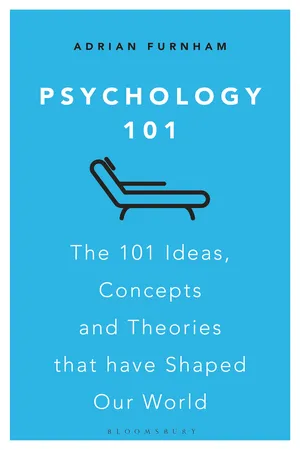
Psychology 101
The 101 Ideas, Concepts and Theories that Have Shaped Our World
- 456 pages
- English
- ePUB (mobile friendly)
- Available on iOS & Android
eBook - ePub
About this book
Information
Table of contents
- Cover
- Half-Title
- Dedication
- Title
- Contents
- Introduction
- 1 Accident Proneness
- 2 Alcohol Use and Addiction
- 3 Alternative Medicine
- 4 Altruism and Caring
- 5 Anality and OCD
- 6 Anxiety
- 7 Art Preferences
- 8 Assessment and Selection
- 9 Astrology and Graphology
- 10 Attraction and Beauty
- 11 Autism, Asperger’s and Schizoid People
- 12 Behavioural Economics
- 13 Behaviourism and Behaviour Therapies
- 14 Birth Order
- 15 Body Language
- 16 Brainstorming
- 17 Brainwashing and Cults
- 18 Changing Behaviour
- 19 Character Strengths and Virtues
- 20 Coaching
- 21 Cognitive Dissonance
- 22 Cold Reading
- 23 Common Sense
- 24 Communicating Through Different Media
- 25 Conscientiousness and Grit
- 26 Conspiracy and Cover-Up Theories
- 27 Country and Culture Differences
- 28 Creativity
- 29 Culture Shock
- 30 Dark Triad
- 31 Defence Mechanisms and Coping
- 32 Delusions and Hallucinations
- 33 Depression
- 34 Dreams and Dreaming
- 35 Eating Disorders
- 36 Emotional Intelligence
- 37 Engagement and Drive at Work
- 38 Extraversion and Introversion
- 39 Eye Contact
- 40 Freud and his Ideas
- 41 Friendship
- 42 Group-Think
- 43 Happiness, Flow and Joy
- 44 Hawthorne and Placebo Effect
- 45 Honesty and Integrity
- 46 Humour, Jokes and Laughter
- 47 Impression Management and Self-presentation
- 48 Impulsivity and Postponement of Gratification
- 49 Inkblots and Projective Techniques
- 50 Intelligence and IQ
- 51 Justice
- 52 Leadership
- 53 Lying and Deceit
- 54 Mental Health Literacy
- 55 Mental Health Classification
- 56 Mindset
- 57 Money
- 58 Morality and Ethics
- 59 Music
- 60 Myths about Psychology
- 61 Narcissism and Self-love
- 62 Networks and Networking
- 63 Normality and Sanity
- 64 Obedience and Conformity
- 65 Office Politics
- 66 Parenting Style and Attachment
- 67 Passive-Aggressiveness
- 68 Personality Disorders
- 69 Personality Theories and Tests
- 70 Persuasion
- 71 Phobias
- 72 Psychopaths
- 73 Psychotherapy
- 74 PTSD
- 75 Queuing
- 76 Racism and Prejudice
- 77 Remote Personality Profiling
- 78 Resilience
- 79 Retirement
- 80 Schizophrenia
- 81 Self-Actualization
- 82 Self-Awareness
- 83 Self-Esteem
- 84 Sex Differences
- 85 Sex Really Does Sell
- 86 Shopping
- 87 Smiling
- 88 Stress
- 89 Subliminal Perception and Hidden Messages
- 90 Talent
- 91 Thinking and Learning Styles
- 92 Time
- 93 Tipping
- 94 Tolerance of Ambiguity
- 95 Unemployment and Worklessness
- 96 Visual Illusion
- 97 Vocational Choice and Guidance
- 98 Work Ethic
- 99 Work Motivation
- 100 Workaholism
- 101 Workplace Deviance
- Index
- Copyright
Trusted by 375,005 students
Access to over 1.5 million titles for a fair monthly price.
Study more efficiently using our study tools.
Frequently asked questions
Yes, you can cancel anytime from the Subscription tab in your account settings on the Perlego website. Your subscription will stay active until the end of your current billing period. Learn how to cancel your subscription
No, books cannot be downloaded as external files, such as PDFs, for use outside of Perlego. However, you can download books within the Perlego app for offline reading on mobile or tablet. Learn how to download books offline
Perlego offers two plans: Essential and Complete
- Essential is ideal for learners and professionals who enjoy exploring a wide range of subjects. Access the Essential Library with 800,000+ trusted titles and best-sellers across business, personal growth, and the humanities. Includes unlimited reading time and Standard Read Aloud voice.
- Complete: Perfect for advanced learners and researchers needing full, unrestricted access. Unlock 1.5M+ books across hundreds of subjects, including academic and specialized titles. The Complete Plan also includes advanced features like Premium Read Aloud and Research Assistant.
We are an online textbook subscription service, where you can get access to an entire online library for less than the price of a single book per month. With over 1.5 million books across 990+ topics, we’ve got you covered! Learn about our mission
Look out for the read-aloud symbol on your next book to see if you can listen to it. The read-aloud tool reads text aloud for you, highlighting the text as it is being read. You can pause it, speed it up and slow it down. Learn more about Read Aloud
Yes! You can use the Perlego app on both iOS and Android devices to read anytime, anywhere — even offline. Perfect for commutes or when you’re on the go.
Please note we cannot support devices running on iOS 13 and Android 7 or earlier. Learn more about using the app
Please note we cannot support devices running on iOS 13 and Android 7 or earlier. Learn more about using the app
Yes, you can access Psychology 101 by Adrian Furnham in PDF and/or ePUB format, as well as other popular books in Psychology & Education in Psychology. We have over 1.5 million books available in our catalogue for you to explore.