THE STORY OF HOW A WILD MOUNTAIN ADVENTURE EVOLVED INTO AN ELITE OLYMPIC SPORT
'Why is the best blood of England to waste itself in scaling hitherto inaccessible peaks, in staining the eternal snow, and reaching the unfathomable abyss never to return?' - The Times, 1865
In the 1950s, rock climbing was a wild mountain adventure that was defined by a rebellious, bohemian culture and practised by small groups of amateur enthusiasts. Today, rock-climbing has become a professionalised, high-performance, mass-participation Olympic sport. There are now more than 400 climbing walls and over 500,000 people climb regularly in the UK.
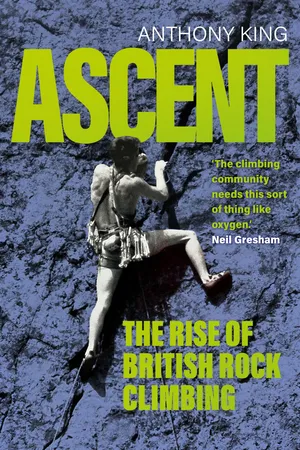
Ascent tells the story of this remarkable transformation.
Anthony King – a dedicated climber himself – traces the sport's evolution through decades of rebellion, innovation and achievement to its place today as a vibrant, diverse culture. His own experiences colour the narrative; we discover not just how climbing developed, but what it feels like to climb and be a climber. More than just a history of the sport, through this story we also see how British society itself has changed.
Expansive, immediate and deeply engaging, Ascent is both cultural sport history and lived experience.