- 176 pages
- English
- ePUB (mobile friendly)
- Available on iOS & Android
eBook - ePub
About this book
What is psychotherapy? How can we choose wisely from so much on offer?This book provides a valuable summary of the main therapies: the "talking cures" of psychoanalysis, behavioral and cognitive techniques, somatic solutions, humanist gestalt and existential approaches, and individual and group therapies.
Tools to learn more effectively

Saving Books

Keyword Search

Annotating Text

Listen to it instead
Information
Topic
PsicologiaA Problem Old as Humanity...

He’s not well. But we can’t find anything wrong with him!
He appears fit and healthy. But he’s behaving oddly.
What shall we do? He needs psychotherapy!
Someone will have to invent it ...
Who says?
He appears fit and healthy. But he’s behaving oddly.
What shall we do? He needs psychotherapy!
Someone will have to invent it ...
Who says?
What is Psychotherapy?
Literally, psychotherapy means “mind-healing”. In practice it is the treatment of disorders by using psychological methods - in addition to, or instead of, purely medical procedures. But there is often little agreement about exactly what those methods include. Indeed, many disagree about how the term itself should be used.
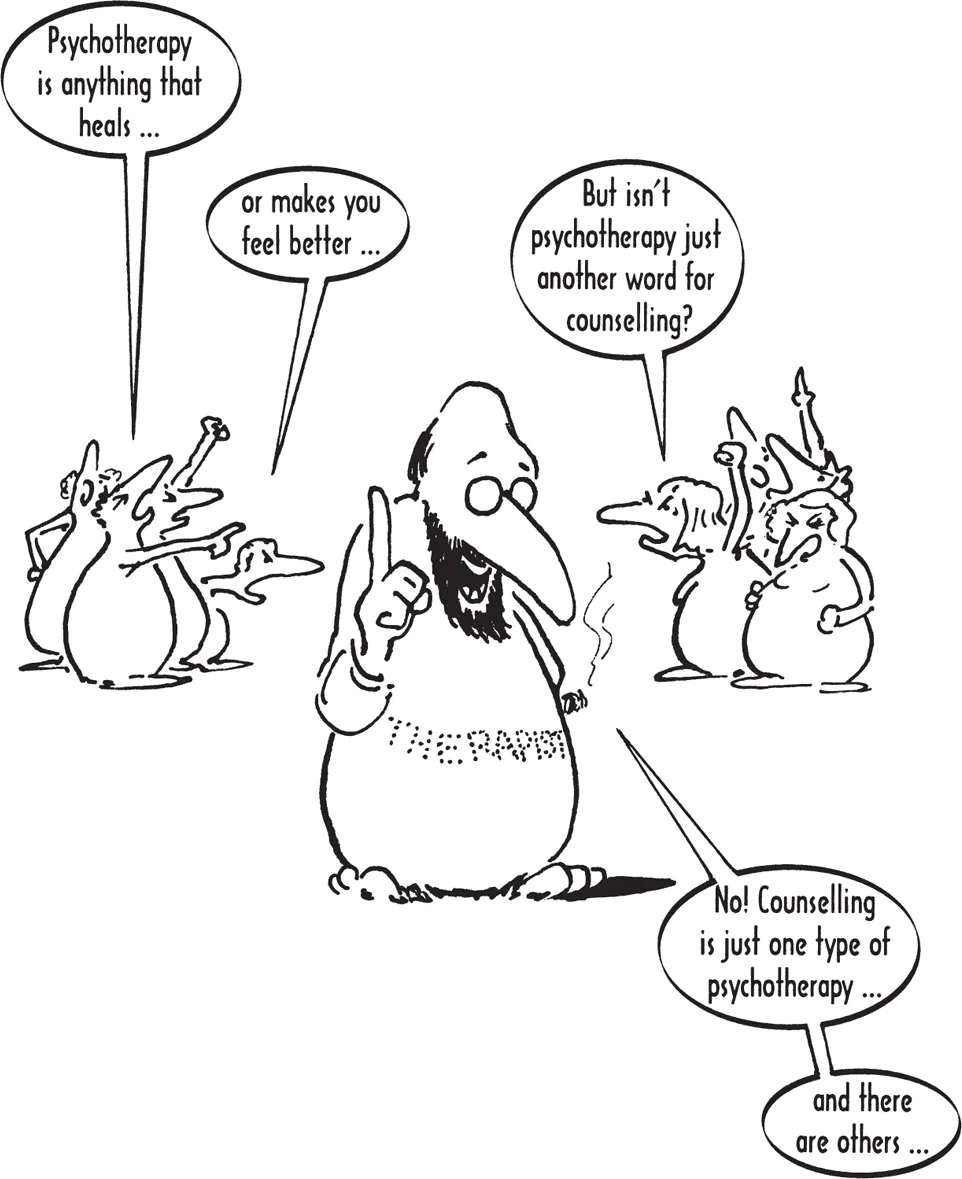
Psychotherapy is anything that heals ...
Or makes you feel better ...
But isn’t psychotherapy just another word for counselling?
No! Counselling is just one type of psychotherapy ...
and there are others ...
Or makes you feel better ...
But isn’t psychotherapy just another word for counselling?
No! Counselling is just one type of psychotherapy ...
and there are others ...
Psychotherapy and Counselling
Psychotherapy really began with Sigmund Freud’s psychoanalysis in 1894. But since the mid-20th century there have been other approaches. Today the term “psychotherapy” includes many different forms of help given by trained professionals to individuals or groups of people.
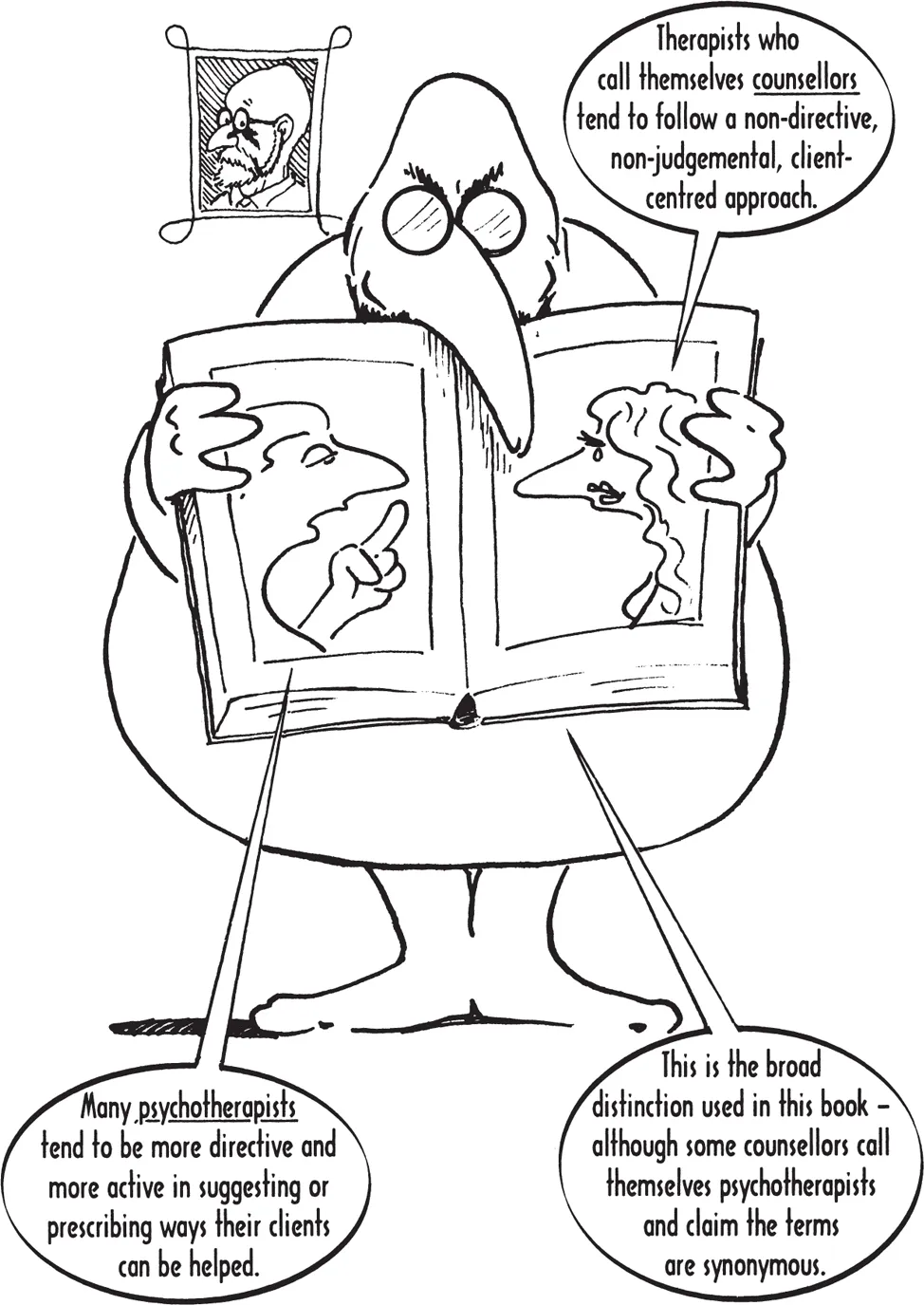
Therapists who call themselves counsellors tend to follow a non-directive, non-judgemental, client-centred approach. Many psychotherapists tend to be more directive and more active in suggesting or prescribing ways their clients can be helped. This is the broad distinction used in this book – although some counsellors call themselves psychotherapists and claim the terms are synonymous.
Main types of Psychotherapy
When a person needs help, the first step is usually to consult a medical doctor who will attempt diagnosis and medical therapy. If that is not effective, then various psychotherapeutic approaches can be considered. There are today several hundred psychotherapies available! But, for convenience, the therapies in this book will be divided into seven main groups. The first is medical or somatic therapy – literally “body therapy”, mainly using drugs.
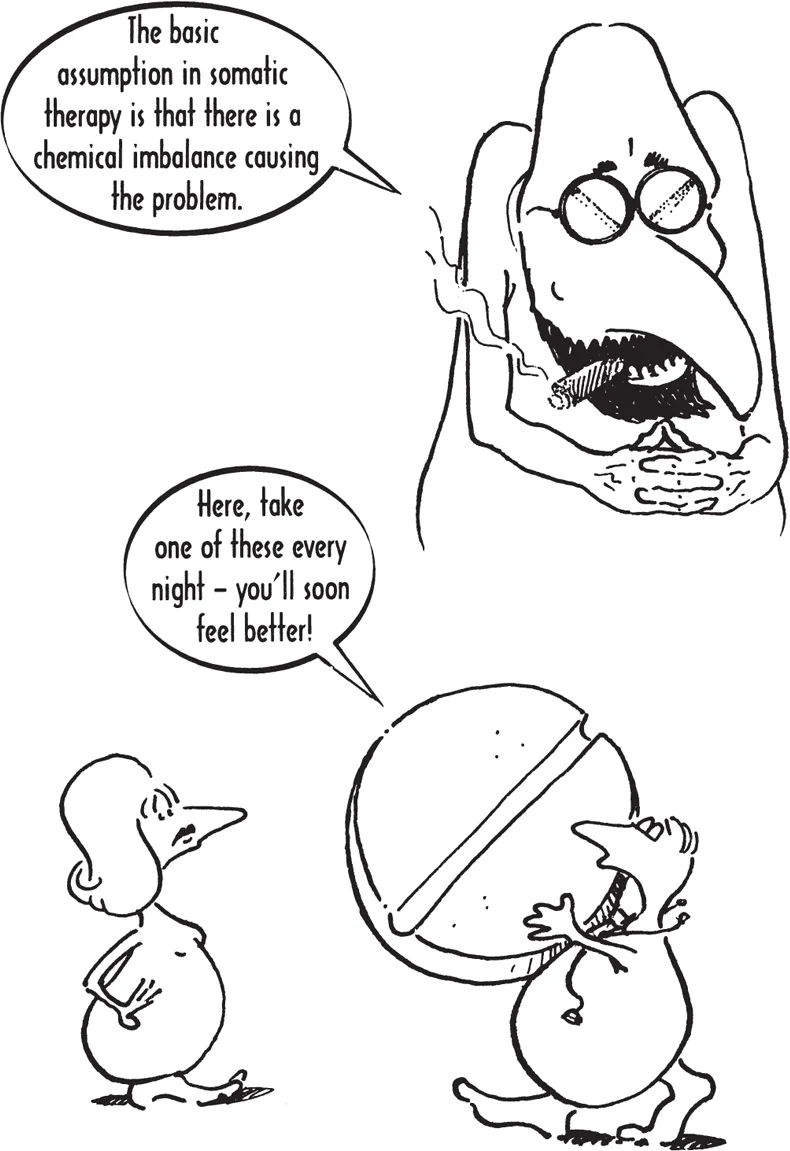
The basic assumption in somatic therapy is that there is a chemical imbalance causing the problem. Here, take one of these every night – you’ll soon feel better!
The other six are non-medical therapies.
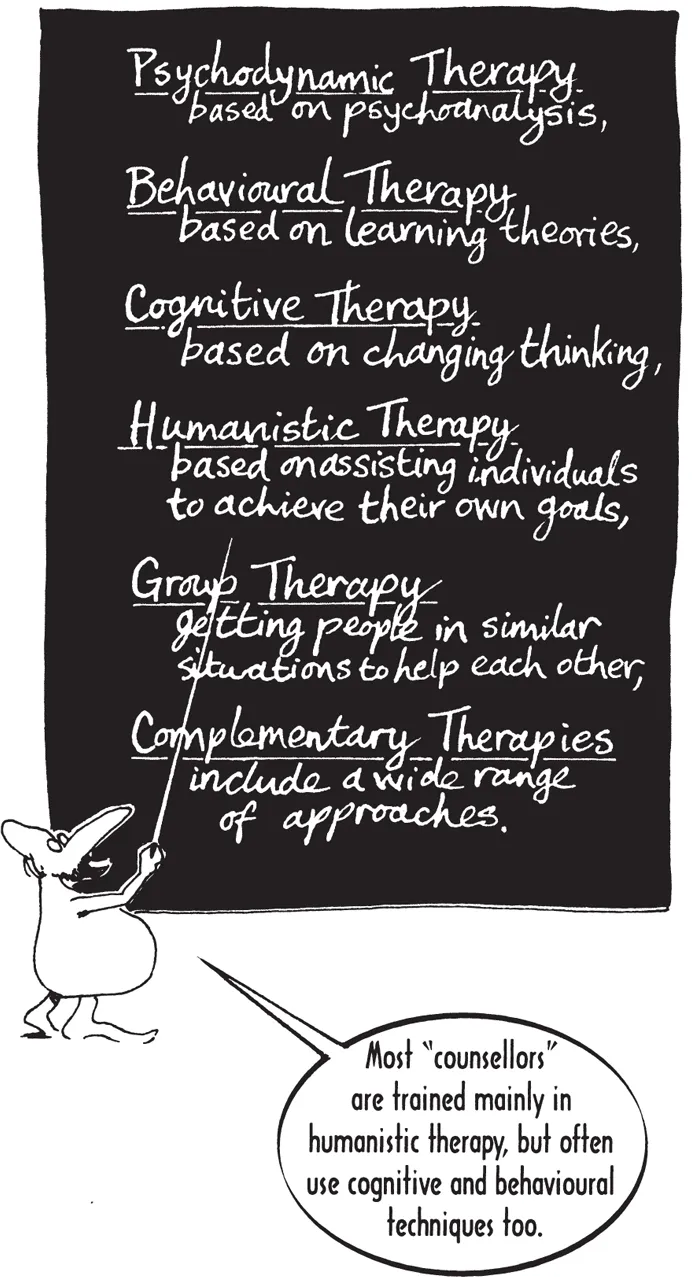
Most “counsellors” are trained mainly in humanistic therapy, but often use cognitive and behavioural techniques too.
Who is a Psychotherapist?
A major problem is that simply anyone can call him or herself a therapist or psychotherapist! Even those claiming to possess “qualifications” need very careful scrutiny. Professional bodies exist to recognize training and regulate members’ conduct.

Psychologists who are qualified psychotherapists should have a university degree in psychology and specialist training. Similarly, trained counsellors should normally be members of a professional counselling body. The qualifications, training and ethics of various psychotherapies are discussed later in this book ...
Who is a Psychiatrist?
Psychiatrists are qualified medical doctors (MDs) who have further specialized training in psychiatric approaches, such as those based on psychoanalysis. In Britain, psychiatrists must be medically qualified and are thereby subject to the rules of the British Medical Association (BMA).
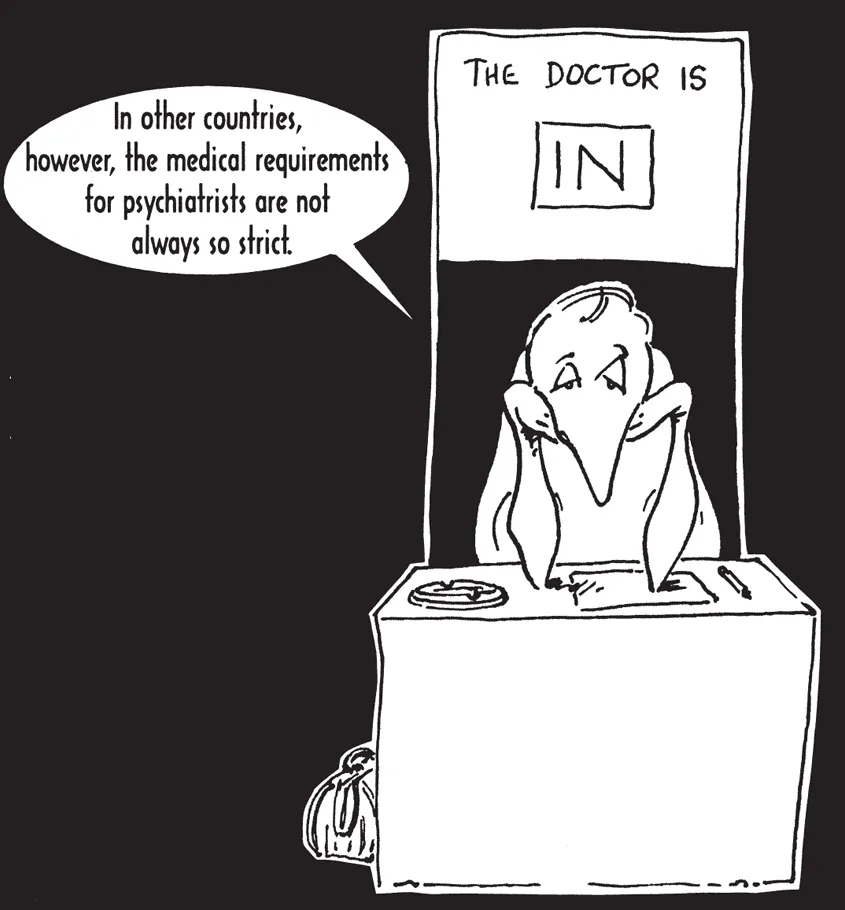
In other countries, however, the medical requirements for psychiatrists are not always so strict.
The USA has the American Psychiatric Association, the American Psychological Association and the American Psychological Society.
We will look at psychiatric treatment in more detail later on ...
Other Therapists
In addition to psychiatrists, psychologists and counsellors, there are many others who call themselves “therapists”. For example, people with certificates in aromatherapy - the application of pleasant-smelling substances, often by massage (in fact, one of their journals is simply called Therapist). But this is controversial, especially in view of the non-scientific nature of the theories and claims of aromatherapy.

But it is not disputed that aromatherapy can be a relaxing and enjoyable experience that can make you feel better. But then, so can many other activities ...
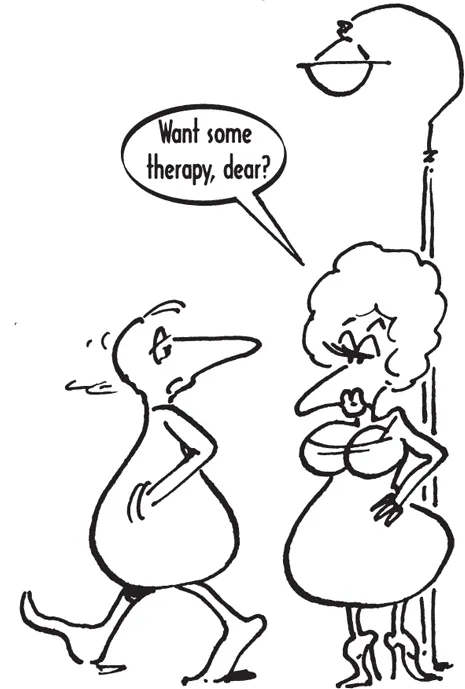
Want some therapy, dear?
How to choose a Therapist
Your medical general practitioner may be able to recommend certain therapists - for example, those offering psychoanalysis, cognitive-behaviour therapy, osteopathy, chiropractic or acupuncture treatments. Recommendations from clients of therapists are also valuable. But there are other things to check.
• Is the therapist professionally qualified? if so, what exactly are the qualifications?
• How experienced is the therapist?
• Is the therapist willing to co-operate with your doctor?
• Does the therapist belong to a recognized professional association, with publicly available register, that you can contact through an address or phone number?
• Does the relevant professional association have published codes of practice (ethics), complaints and disciplinary system?
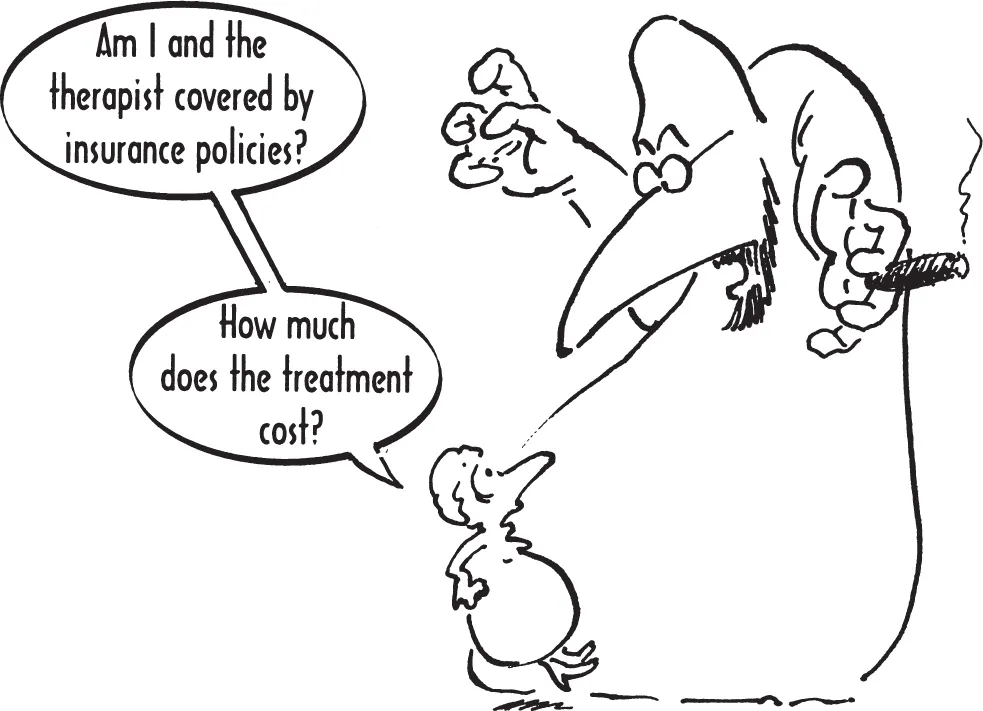
Am I and the therapists covered by insurance policies? How much does the treatment cost?
Why do People Need Psychotherapy?
The general reason why people need therapy is that they are finding everyday life too difficult.
...
Table of contents
- Cover
- Title Page
- Copyright
- Contents
- A Problem Old as Humanity...
- References, Bibliography and Recommended Reading
- Biographies and Acknowledgements
- Further Information
- Index
Frequently asked questions
Yes, you can cancel anytime from the Subscription tab in your account settings on the Perlego website. Your subscription will stay active until the end of your current billing period. Learn how to cancel your subscription
No, books cannot be downloaded as external files, such as PDFs, for use outside of Perlego. However, you can download books within the Perlego app for offline reading on mobile or tablet. Learn how to download books offline
Perlego offers two plans: Essential and Complete
- Essential is ideal for learners and professionals who enjoy exploring a wide range of subjects. Access the Essential Library with 800,000+ trusted titles and best-sellers across business, personal growth, and the humanities. Includes unlimited reading time and Standard Read Aloud voice.
- Complete: Perfect for advanced learners and researchers needing full, unrestricted access. Unlock 1.4M+ books across hundreds of subjects, including academic and specialized titles. The Complete Plan also includes advanced features like Premium Read Aloud and Research Assistant.
We are an online textbook subscription service, where you can get access to an entire online library for less than the price of a single book per month. With over 1 million books across 990+ topics, we’ve got you covered! Learn about our mission
Look out for the read-aloud symbol on your next book to see if you can listen to it. The read-aloud tool reads text aloud for you, highlighting the text as it is being read. You can pause it, speed it up and slow it down. Learn more about Read Aloud
Yes! You can use the Perlego app on both iOS and Android devices to read anytime, anywhere — even offline. Perfect for commutes or when you’re on the go.
Please note we cannot support devices running on iOS 13 and Android 7 or earlier. Learn more about using the app
Please note we cannot support devices running on iOS 13 and Android 7 or earlier. Learn more about using the app
Yes, you can access Introducing Psychotherapy by Nigel Benson,Borin Van Loon in PDF and/or ePUB format, as well as other popular books in Psicologia & Teoria, pratica e riferimenti medici. We have over one million books available in our catalogue for you to explore.