![]()
The Central Idea in Biology
“Nothing in biology makes sense except in the light of evolution”, said the great Russian geneticist, Theodosius Dobzhansky (1900–75). The theory of evolution is indeed the central idea in modern biology.
And yet, in August 1999, one hundred and forty years after Darwin published The Origin of Species, the Kansas State Education Board removed the topic of evolution from the official curriculum.
Biology students in Kansas would now be able to graduate without learning the most fundamental idea in their discipline! Why? What could motivate a State Education Board to deprive students of such an important piece of knowledge?
Fear and Loathing in Kansas
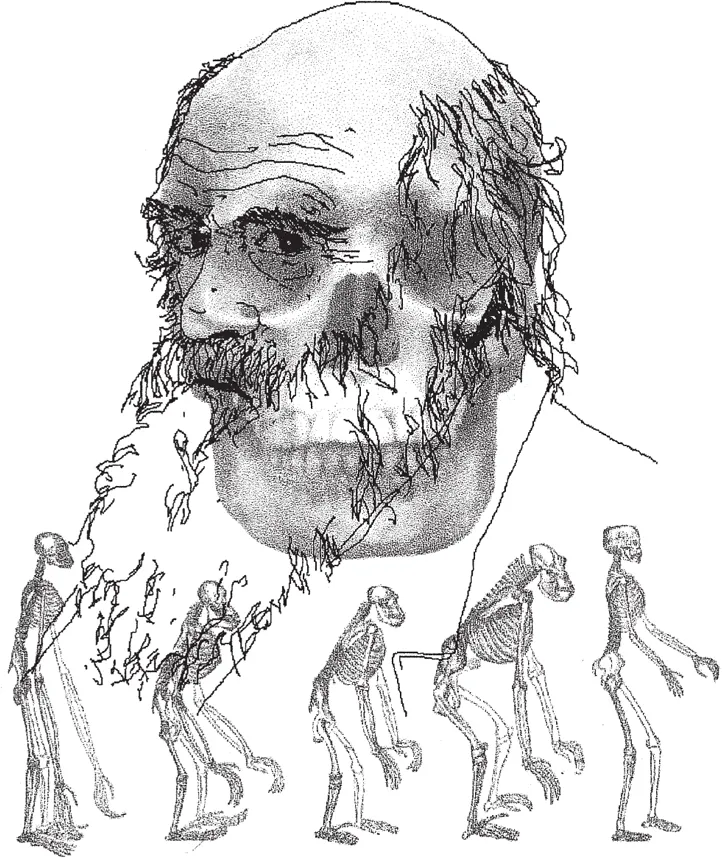
The members of Kansas State Education Board clearly disliked the theory of evolution. They are not alone. Ever since Charles Darwin (1809–1882) and Alfred Russel Wallace (1823–1913) proposed the theory at a meeting of the Linnaean Society in 1858, it has inspired much fear and loathing, and many attempts have been made to suppress it.
When the Bishop of Birmingham’s wife heard about Darwin’s theory in 1880, she said to her husband...
So what is it about Darwin’s theory that upsets people so much?
Old Questions
Darwin’s theory of evolution upsets people because it threatens all the old ideas about who we are and why we are here.
For thousands of years, human beings have wondered about the meaning of life.
The traditional answers, provided by many religions, have usually involved the idea of a God – or gods.
God made us, the story goes, and put us here for a special reason. All of these traditional answers see humans as exceptional creatures. Humans are not just animals. Unlike animals, humans have spirits or souls. Only humans have free will. Only humans can survive death.
Universal Acid
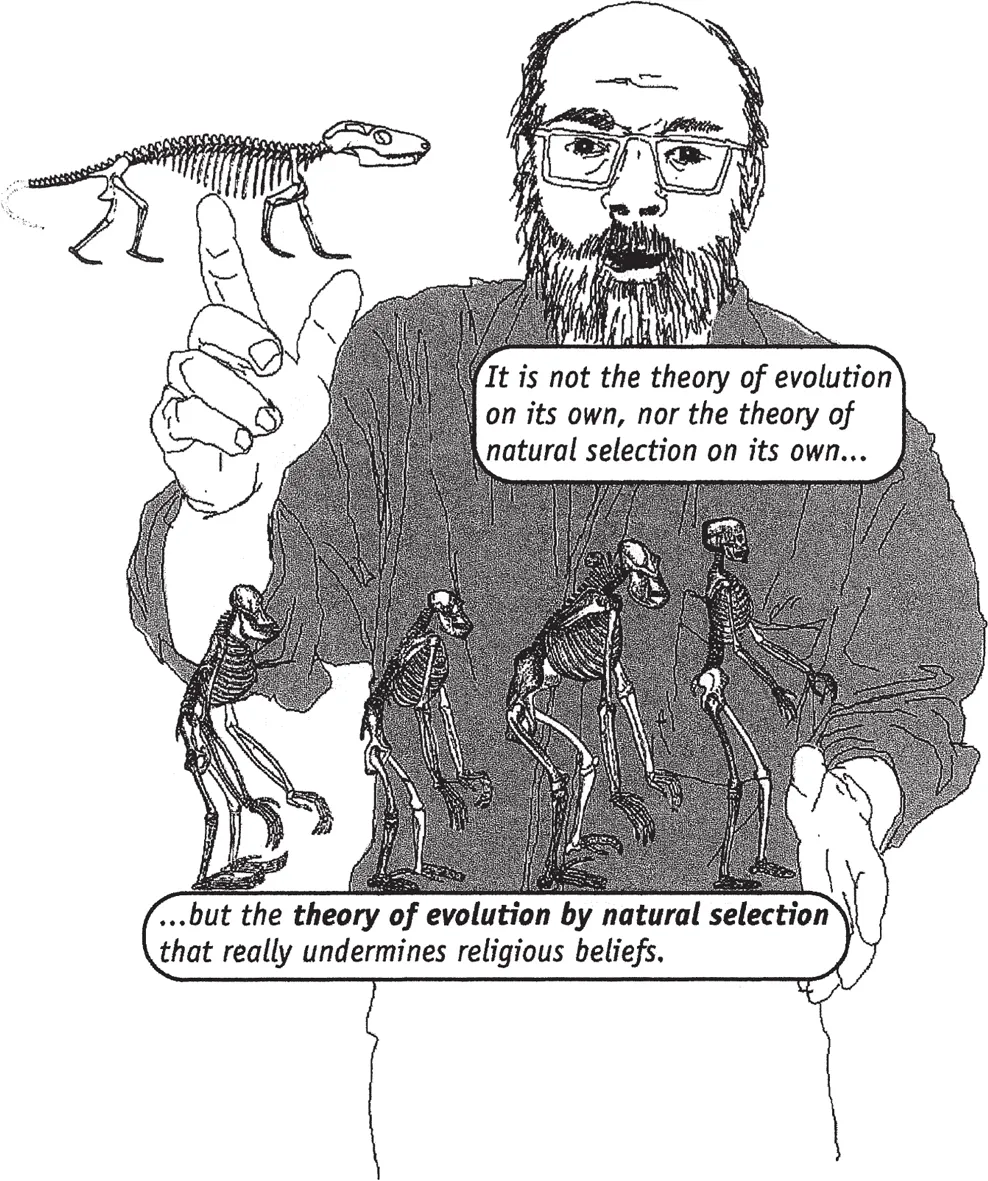
The theory of evolution threatens all these old ideas. It undermines the central claims of many religions. It seems to leave no room for God, or the soul, or life after death. Humans, it tells us, are just another kind of animal.
The American philosopher, Daniel Dennett (b. 1942), has described the theory of evolution as a kind of “universal acid”.
Like universal acid, the theory of evolution eats through just about every traditional religious idea. This is why Dennett calls it “Darwin’s dangerous idea”.
An Idea in Two Parts
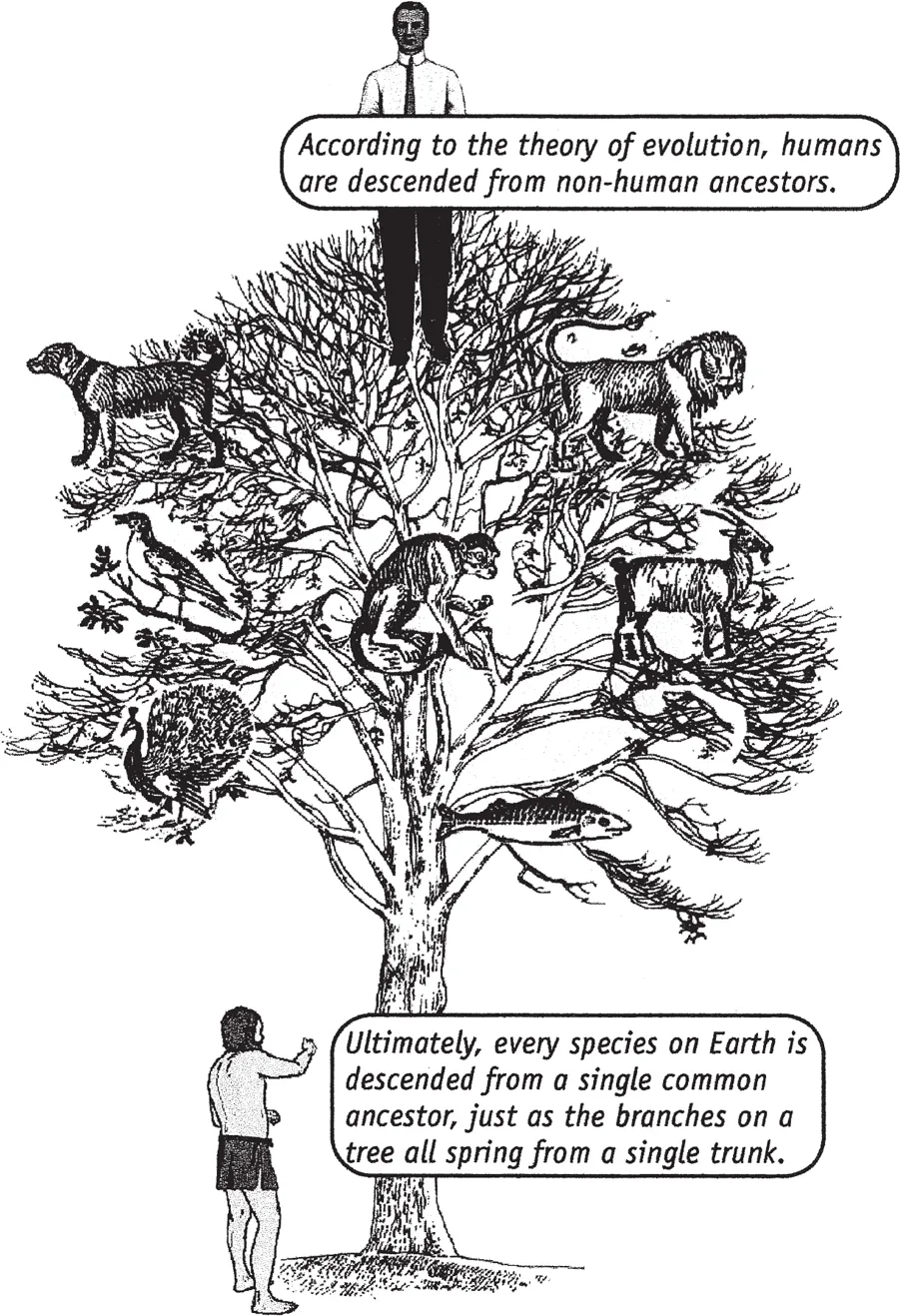
Darwin’s dangerous idea comes in two parts: the theory of evolution, and the theory of natural selection. We will look at each of these two theories in turn, and then put them together. It is only when the two theories are put together that they become really dangerous.
We will begin with the theory of evolution.
What is Evolution?
The theory of evolution states that species can change. One species can give rise to another.
This might not seem like a big idea, but for thousands of years people in the West believed that species were fixed, unchanging entities. So it was a great shock to learn that this was not true.
The Fixity of Species
The idea that species are fixed and unchanging dates back to Aristotle (384–322 BC), the great Greek philosopher and scientist. He based his belief on the evidence of his own eyes.
So, not unreasonably, Aristotle concluded that one species could never give rise to another. Monkeys would always be monkeys. And humans must always have been human.
Independent Creation
For hundreds of years, Christian scholars accepted Aristotle’s theory of the fixity of species. They believed that God had created each species independently at the beginning of time, and that each species then remained exactly the same up to the present.
“And now, from the clay of the ground, all the beasts that roam the earth and all that flies through the air were ready fashioned, and the Lord God brought them to Adam, to see what he would name them; the name Adam gave to each living creature is its name still.” (Genesis 2:19).
Enough Time
Eventually, in the 18th century, ...