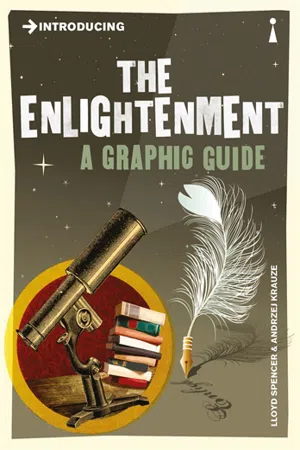
- 176 pages
- English
- ePUB (mobile friendly)
- Available on iOS & Android
eBook - ePub
About this book
"Introducing The Enlightenment" is the essential guide to the giants of the Enlightenment - Voltaire, Diderot, Adam Smith, Samuel Johnson, Immanuel Kant, Benjamin Franklin, and Thomas Jefferson. The Enlightenment of the 18th century was a crucial time in human history - a vast moral, scientific and political movement, the work of intellectuals across Europe and the New World, who began to free themselves from despotism, bigotry and superstition and tried to change the world. "Introducing The Enlightenment" is a clear and accessible introduction to the leading thinkers of the age, the men and women who believed that rational endeavour could reveal the secrets of the universe.
Tools to learn more effectively

Saving Books

Keyword Search

Annotating Text

Listen to it instead
Information
Topic
PhilosophySubtopic
Early Modern HistoryLet There Be Light...
The Enlightenment was an intellectual current that galvanized Europe during the course of the 18th century. Centred in Paris, it spread itself across the whole of Europe to the American colonies. Networks of writers and thinkers gave the 18th century a remarkable intellectual coherence.
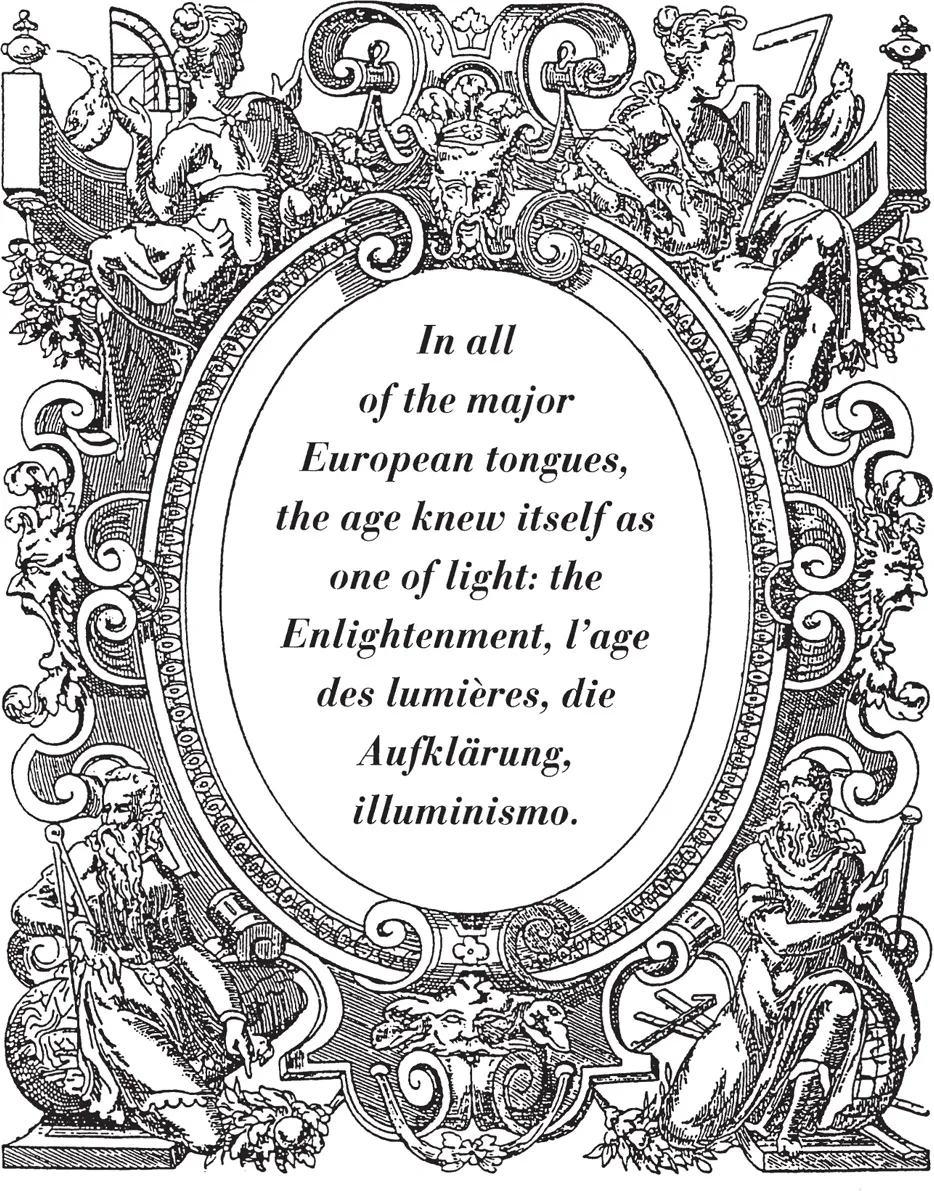
The intellectuals of the Enlightenment felt themselves to be part of a great movement representing the highest aspirations and possibilities of mankind. They were reformers who believed their cause was best served by the new passion for argument, criticism and debate.
The Radiance of the Absolute Monarchs
In France, the reigns of the Absolutist monarchs, Louis XIII (1601–43), Louis XIV – the “Sun King” – (1638–1715), Louis XV (1710–74) and Louis XVI (1754–93) made Paris the cultural capital of the world and, at the same time, created both an audience and a target for the reforming zeal of the French Enlightenment.

WE RULE BY DIVINE RIGHT!
The Enlightenment spoke French, literally its lingua franca. Anything published in French was immediately accessible to educated society all over Europe. Important works not originally written in French were soon translated into the universal language. Across the world “men of letters” declared themselves to be the disciples of French writers.
Paris, the Capital of the Enlightenment

This was as true for David Hume and Adam Smith from Scotland as it was for Benjamin Franklin and Thomas Jefferson from the American colonies, or Cesare Beccaria from Milan. They knew they had “arrived” when they were accepted in the salons of Paris.
In all of continental Europe, court society and the wealthy bourgeoisie looked to France as the model of taste.

FRANCE SETS THE TONE IN LITERATURE, ART AND ARCHITECTURE.
AND ALSO IN MANNERS, COOKING AND DRESS. FRENCH FASHION IS THE EPITOME OF CIVILIZATION!
AND ALSO IN MANNERS, COOKING AND DRESS. FRENCH FASHION IS THE EPITOME OF CIVILIZATION!
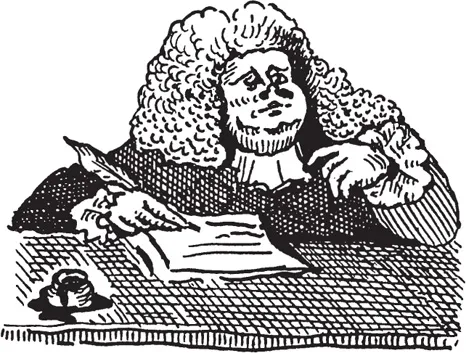
A Sussex landowner wrote to his son. “A man who understands French may travel all the World over without hesitation of making himself understood, and may make himself perfectly agreeable to all Good Company, which is not the case of any other Language whatever.”
Beginnings of the Light
“There is a mighty light which spreads itself over the world, especially in those two free nations of England and Holland, on whom the affairs of all Europe now turn.” Lord Shaftesbury’s letter to Le Clerc, 6 March 1706
For much of the 17th century, Holland was the most liberal country in Europe. Amsterdam provided a refuge for freethinkers and religious dissidents of all kinds. In 1667, the English philosopher John Locke (1632–1704) composed an Essay on Toleration. He had been closely associated with Protestant plotters against the rule of the Catholic King James II (1633–1701).

IN 1683, I WAS FORCED TO FLEE TO ROTTERDAM.
There Locke concentrated on his major works, his Essay Concerning Human Understanding and Two Treatises of Government. Both books were to remain central to the debates that raged throughout the Age of Enlightenment.
England’s “Glorious Revolution”
Continued resistance to James II’s pro-Catholic activities caused the English parliament to invite the Dutch Protestant, William III of Orange (1650–1702) and his English wife Mary II (1662–94), to take over the English throne. They sailed from Holland and did so in the bloodless – hence “Glorious” – Revolution of 1688.
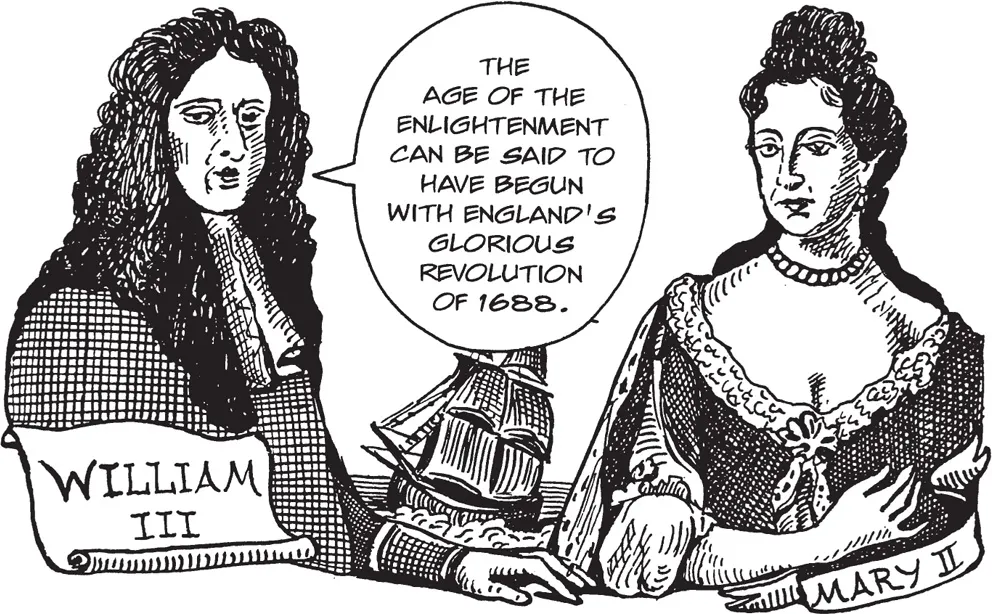
THE AGE OF THE ENLIGHTENMENT CAN BE SAID TO HAVE BEGUN WITH ENGLAND’S GLORIOUS REVOLUTION OF 1688.
This definitively established the sovereignty of the English parliament and gave England a “Bill of Rights”. Other reforms soon made England the most free and liberal country in Europe. The Toleration Act (1689) allowed most Protestant Dissenters, including such sects as the Quakers, to worship freely, but not to hold public office. The Church of England lost its monopoly of religious worship and education, and the last vestiges of its control over the press in 1695.
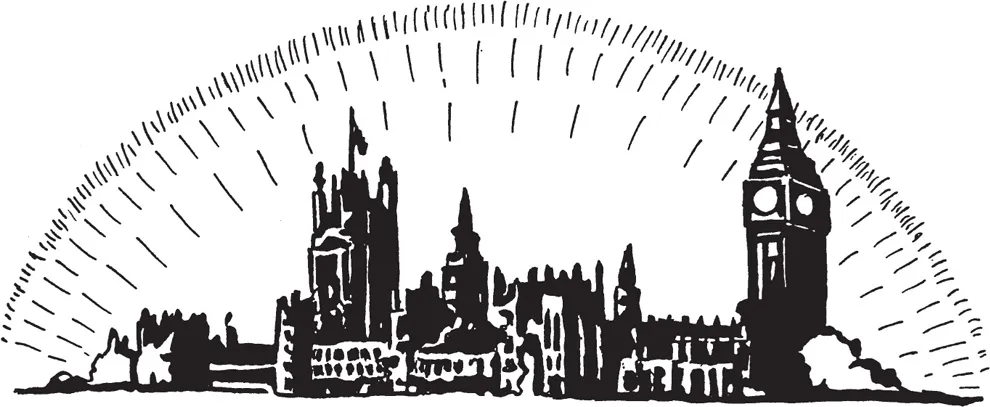
An Age of Revolutions
The two great cosmopolitan capitals, Paris and London, both grew dramatically during the 18th century. But England’s commercial muscle meant that London progressed much more. During the first half of the century, England experienced an agricultural revolution. In the latter part of the century, the industrial revolution gained pace.
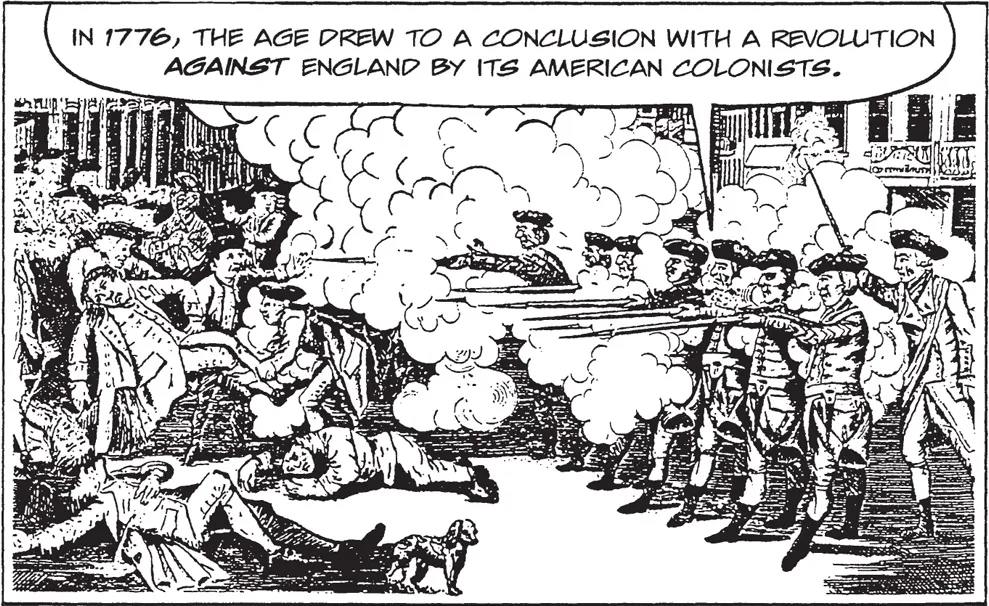
IN 1776, THE AGE DREW TO A CONCLUSION WITH A REVOLUTION AGAINST ENGLAND BY ITS AMERICAN COLONISTS.
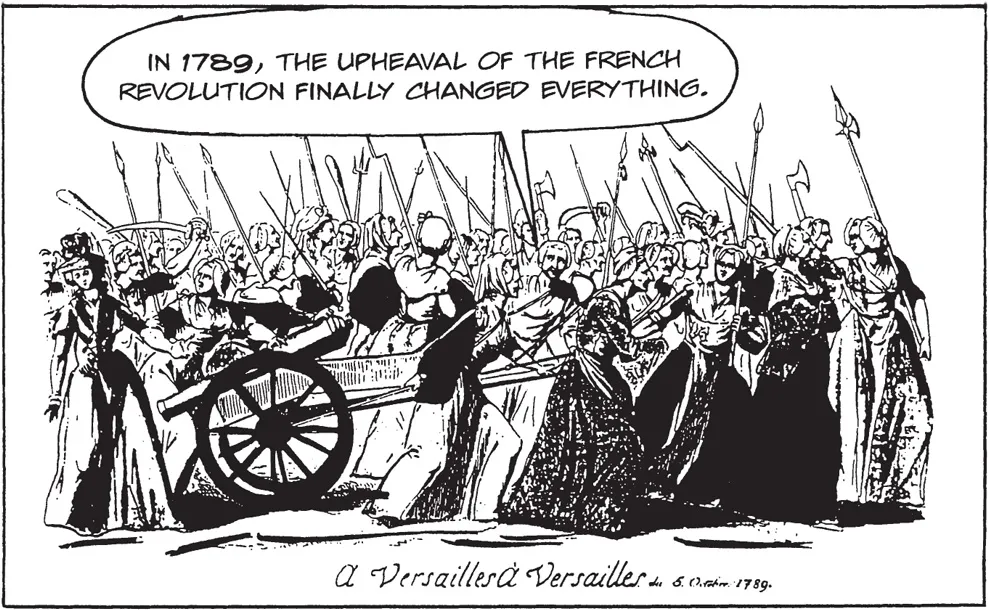
IN 1789, THE UPHEAVAL OF THE FRENCH REVOLUTION FINALLY CHANGED EVERYTHING.
These revolutions attempted to put the principles of the Enlightenment into practice.
Coffee-houses, Social Clubs and Journalism
This was also an age of public sociability and a journalism of ideas. Coffee-houses were the focal point of intellectual life in London. By 1740, there were more than 400 in the area of Westminster alone. The new Bank of England and the East India trading company used coffee-houses. Lloyd’s coffee-house in 1691 became Lloyd’s of London, the centre of marine insurance.

COFFEE-HOUSES WERE VENUES TO TRADE IDEAS AND COMMODITIES.
NEWSPAPERS AND JOURNALS WERE AVAILABLE, BOOKS AND CONCERTS WERE ADVERTISED.
AND THERE WAS A RAGE TO JOIN CLUBS AND SOCIETIES FOR EVERY SORT OF INTEREST - SCIENTIFIC, ARTISTIC AND POLITICAL.
I THINK IT NECESSARY TO MAKE WHAT I HAVE TO SAY AS EASY TO UNDERSTAND AS I CAN, AND INTELLIGIBLE TO ALL SORTS OF READERS.
NEWSPAPERS AND JOURNALS WERE AVAILABLE, BOOKS AND CONCERTS WERE ADVERTISED.
AND THERE WAS A RAGE TO JOIN CLUBS AND SOCIETIES FOR EVERY SORT OF INTEREST - SCIENTIFIC, ARTISTIC AND POLITICAL.
I THINK IT NECESSARY TO MAKE WHAT I HAVE TO SAY AS EASY TO UNDERSTAND AS I CAN, AND INTELLIGIBLE TO ALL SORTS OF READERS.
Locke’s “Tabula Rasa”
Throughout the 18th century, the essential book for philosopher and non-philosopher alike was John Locke’s Essay Concerning Human Understanding (1690). For almost all of the thinkers of the Enlightenment, one philosophical tenet held peculiar authority. This was Locke’s tabula rasa dogma that there are no “innate” ideas and that all knowledge is derived from experience.
Let us then suppose the mind to be, as we say, white paper, void of all characters, without any ideas; how comes it to be furnished? Whence comes it by that vast store which the busy and boundless fancy of man has painted on it with an almost endless variety? Whence has it all the materials of reason and knowledge? To this I answer, in one word, from experience.
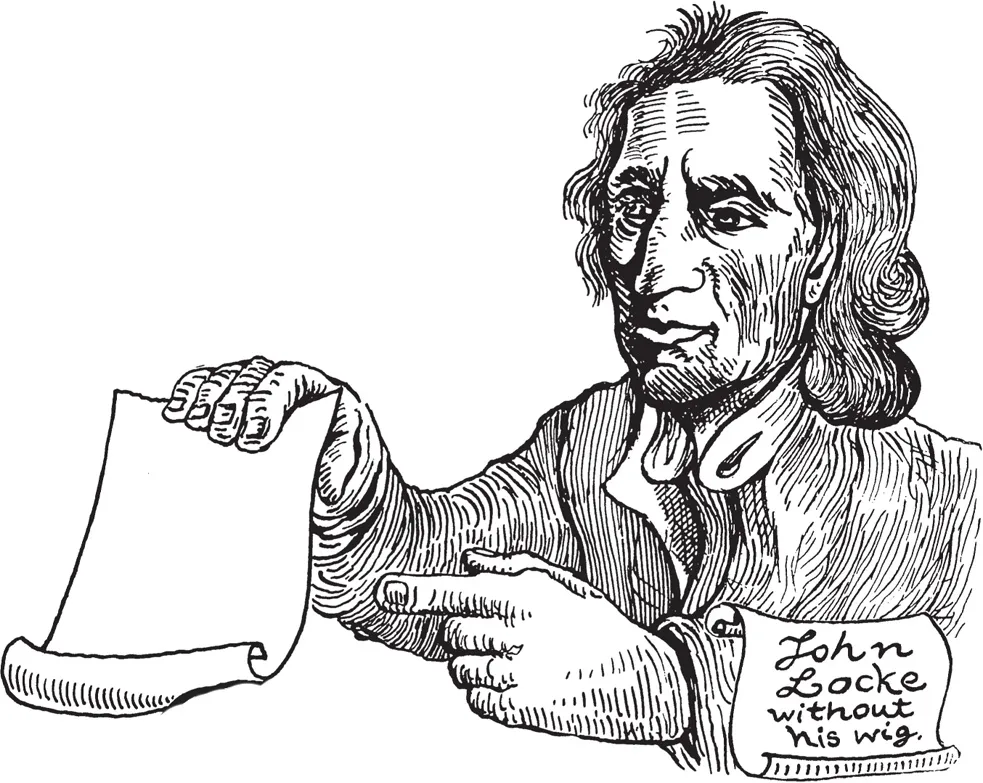
Locke’s empirical view was aimed specifically against the Rationalism of René Descartes (1596–1650).
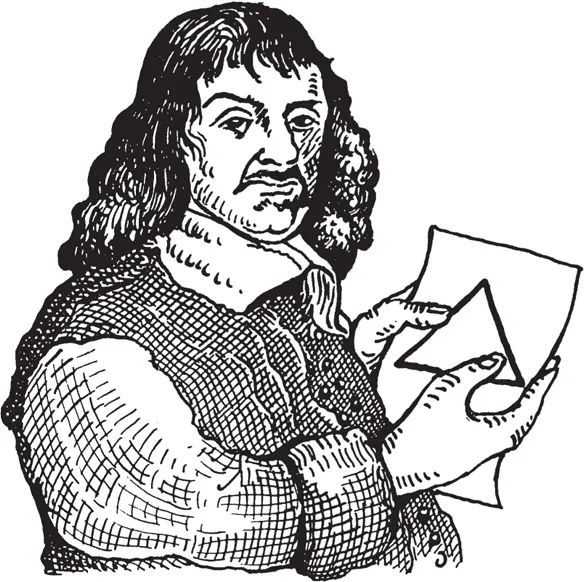
There are ideas (for instance those of God, Mind, Body, or the Triangle) whose truth may be recognized by the light of reason alone and could thus be called “innate”....
Table of contents
- Cover
- Title Page
- Copyright
- Contents
- Let There Be Light...
- Further Reading
- Index
Frequently asked questions
Yes, you can cancel anytime from the Subscription tab in your account settings on the Perlego website. Your subscription will stay active until the end of your current billing period. Learn how to cancel your subscription
No, books cannot be downloaded as external files, such as PDFs, for use outside of Perlego. However, you can download books within the Perlego app for offline reading on mobile or tablet. Learn how to download books offline
Perlego offers two plans: Essential and Complete
- Essential is ideal for learners and professionals who enjoy exploring a wide range of subjects. Access the Essential Library with 800,000+ trusted titles and best-sellers across business, personal growth, and the humanities. Includes unlimited reading time and Standard Read Aloud voice.
- Complete: Perfect for advanced learners and researchers needing full, unrestricted access. Unlock 1.4M+ books across hundreds of subjects, including academic and specialized titles. The Complete Plan also includes advanced features like Premium Read Aloud and Research Assistant.
We are an online textbook subscription service, where you can get access to an entire online library for less than the price of a single book per month. With over 1 million books across 990+ topics, we’ve got you covered! Learn about our mission
Look out for the read-aloud symbol on your next book to see if you can listen to it. The read-aloud tool reads text aloud for you, highlighting the text as it is being read. You can pause it, speed it up and slow it down. Learn more about Read Aloud
Yes! You can use the Perlego app on both iOS and Android devices to read anytime, anywhere — even offline. Perfect for commutes or when you’re on the go.
Please note we cannot support devices running on iOS 13 and Android 7 or earlier. Learn more about using the app
Please note we cannot support devices running on iOS 13 and Android 7 or earlier. Learn more about using the app
Yes, you can access Introducing the Enlightenment by Lloyd Spencer,Andrzej Krauze in PDF and/or ePUB format, as well as other popular books in Philosophy & Early Modern History. We have over one million books available in our catalogue for you to explore.