
- 176 pages
- English
- ePUB (mobile friendly)
- Available on iOS & Android
eBook - ePub
About this book
Walter Benjamin is often considered the key modern philosopher and critic of modern art.Tracing his influence on modern aesthetics and cultural history, Introducing Walter Benjamin highlights his commitment to political transformation of the arts as a means to bring about social change.Benjamin witnessed first-hand many of the cataclysmic events of modern European history. He took a critical stance on the dominant ideologies of Marxism, Zionism and Technocracy, and his attempt to flee Nazi Europe ultimately led to his suicide in 1940.With its brilliant combination of words and images, this is an ideal introduction to one of the most elusive philosophers.
Tools to learn more effectively

Saving Books

Keyword Search

Annotating Text

Listen to it instead
Information
Topic
PhilosophySubtopic
Epistemology in PhilosophyTHE ORIGIN OF GERMAN TRAGIC DRAMA
This is a study of Reformation culture in the stage of capitalist transition. Literally the “stage”, since Benjamin’s model is the Baroque form of the Trauerspiel or mourning-play. The book’s dedication “Conceived 1916 – Written 1925” stresses the continuity between it and the 1916 fragments on the differences between classical tragedy and the mourning-play (see pages 33-37). The key to the mourning-play is to ask – what is being mourned? And why with such ostentation? Or as the playwright Daniel Caspers von Lohenstein (1635–83) puts it …

A play wherein one man now enters and another exits; with tears it begins and with weeping ends. Yea, after death itself, time with us still toys, when foul maggot and worm drill out putrid corpses …
These are plays for the satisfaction of the mournful which require Baroque excess.
WHAT IS “BAROQUE”?
The origin of the term baroque is uncertain. Some argue that it comes from “rough-shaped pearl”; others that it refers to “absurd”, “bizarre” or “extravagant”. Baroque differs slightly in its application to art and architecture, literature and music. This allegorical painting by Jacopo Tintoretto (1518–94), “The Origin of the Milky Way”, displays baroque features of “bizarre extravagance”.
The Baroque speaks in allegory.
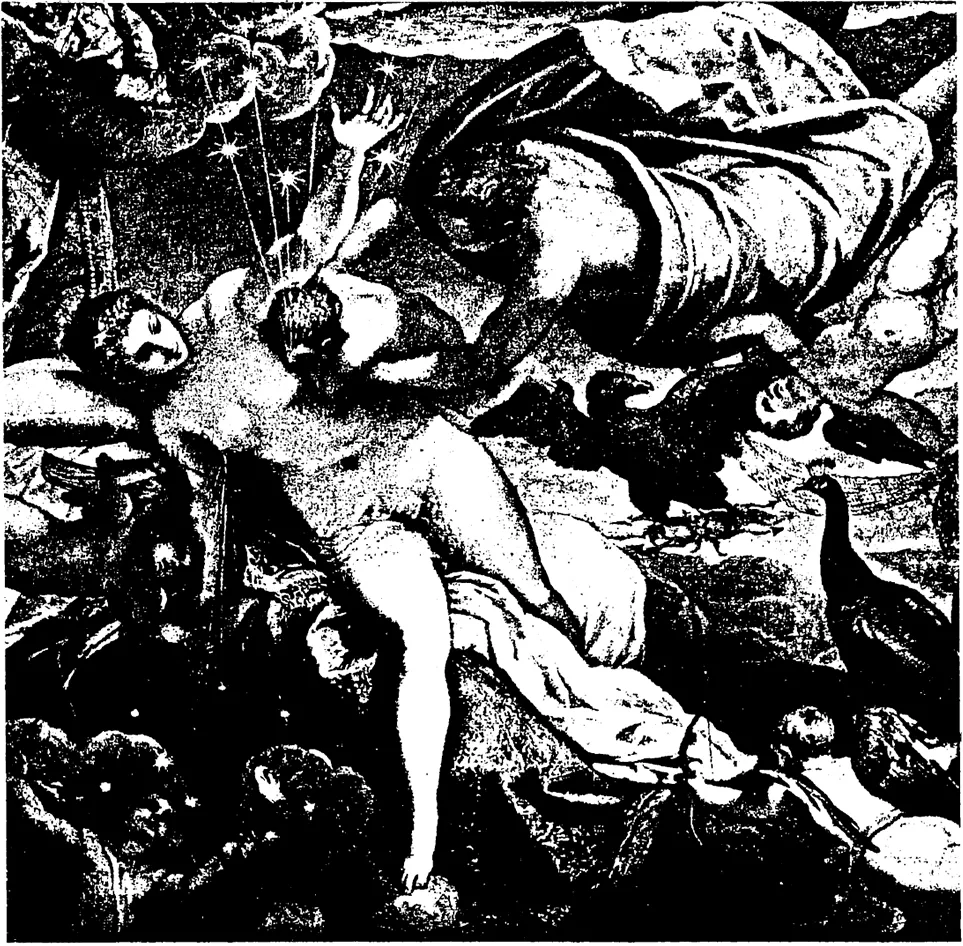
This allegorical image of “milkiness” pairs nicely with another by the Baroque poet, Richard Crashaw (1612?—49), an English convert to Catholicism at the height of the Counter-Reformation. One stanza from his poem on St Mary Magdalene suffices to illustrate the bizarre spinning out of a “mournful” metaphor.
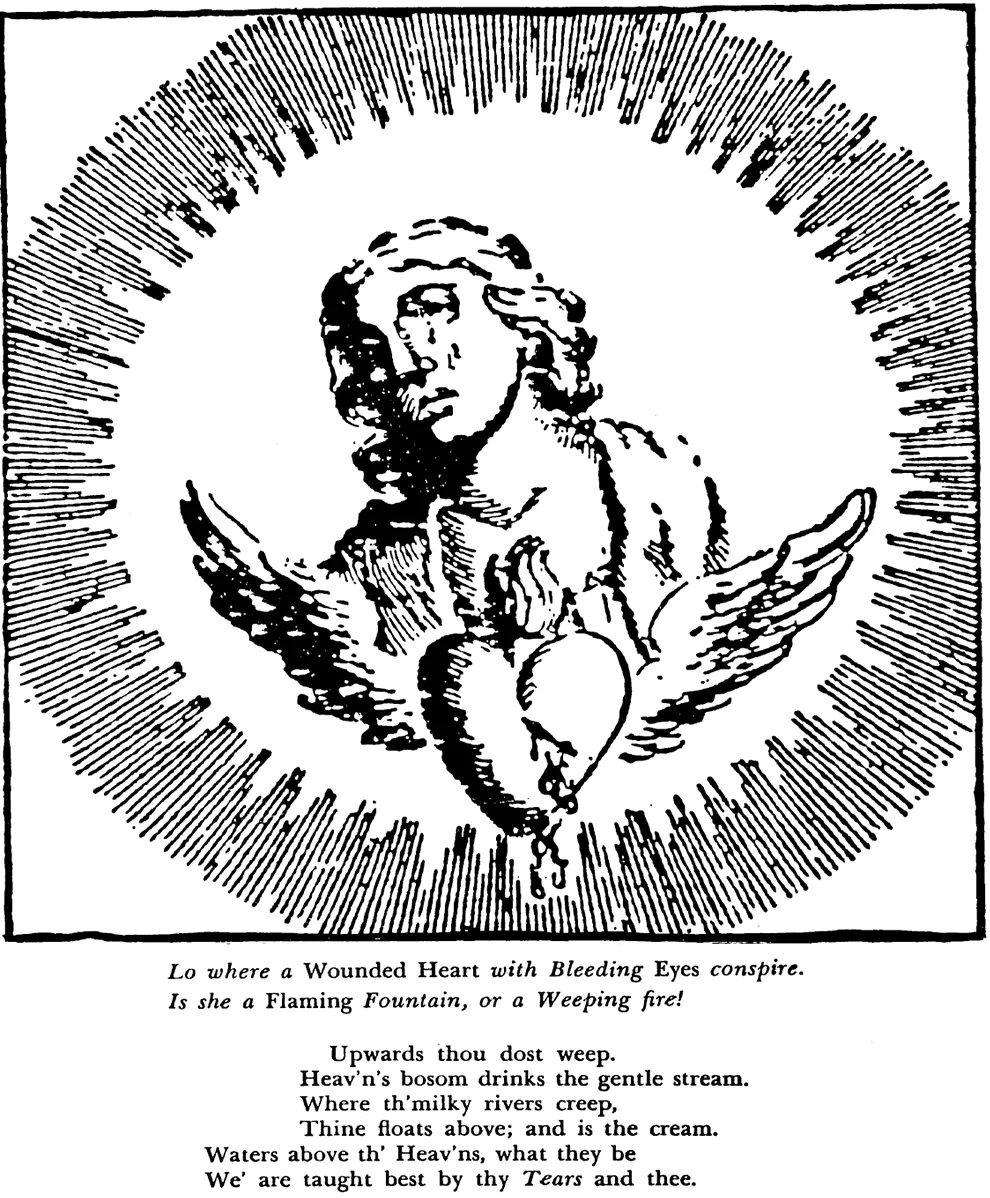
But what was in the Baroque climate that encouraged such extravagant allegory?
POLITICAL THEOLOGIES
The essential doctrine of the Protestant Reformation laid down by Martin Luther (1483–1546) was that salvation depended on grace through faith alone, which denied any spiritual effect to human action. Life was devalued by faith and melancholy was the inevitable outcome. The mourning-play gives us the world revealed in the gaze of isolated melancholy man.

He is the onlooker – like hamlet – deprived of the community of significant human action. To be or not to be that is the question
Instead, the Catholic reaction to Protestantism in the Counter-Reformation reasserted the redemptive authority of the Church, gave power to the Jesuits and extended the Inquisition, but also revived Catholic spirituality in the secular realm.
Lohenstein, Andreas Gryphius (1616–64) and other German writers of the Baroque Trauerspiel were all Lutherans. Benjamin makes the point that Shakespeare and the Catholic Spaniard Calderon de la Barca (1600–81) created far more important mourning-plays than these largely forgotten German ones. There are nevertheless certain formal elements of the genre which they all share – beginning with the “world as the stage”, “a setting for mournful events”.

Draped in cloth, overfurnished with emblems, the earth-as-stage becomes a coffin.
A NIHILISTIC TOY-BOX
If the stage is a coffin, it is also the world’s toy-box from which pantomime players emerge, typified by their roles: the evil intriguing courtier (lago); the absent or dreamer hero (Hamlet); the king, hybrid of tyrant and martyr, either usurping or usurped (Hamlet’s father); the parody commentators, clowns, fools and jesters.

Actions in the mourning-play do not add up. Speech and gesture mislead, decisions are postponed, and the end is nihilistic catastrophe: such as Hamlet’s “accidental” death by a poisoned rapier.

There is a special providence in the fall of a sparrow …
These playing-card figures appear to enact the Baroque circumstances of closed theologies, of emerging Divine Right monarchs and absolutist states, but in fact they mourn the off-stage transition to capitalist modernity. The world is drained of meaning and the only bleak Lutheran hope is that absurd meaninglessness can become the source of salvation.
SYMBOL, ALLEGORY AND RUINATION
Benjamin opens his study with a daunting “Epistemo-Critical Prologue” in which he tackles the problem of origin. Origin is described as “an eddy in the stream of becoming”, in other words, something that is both in and out of time. This peculiarity of origin – outside time but open to its effects – permits him to identify allegory as the key feature of Baroque culture.

Classical tragedy hinges on the symbol which presents a timeless truth in the beautiful appearance, even if imperfectly. Allegory instead presents the temporariness of truth in the ruination of appearance.
This is summed up in Benjamin’s famous aphorism.
“Allegories are in the realm of thoughts what ruins are in the realm of things.”
The mourning-play was conceived from the outset as a ruin. Now it becomes clear that Benjamin’s analysis of allegory in Baroque drama revealed to him the origin of modernity. The fragmented nature of modern experience – the way it is experienced discontinuously as shock – was “originally” manifested through Baroque allegories of ruination and transience.

The ruin is what we are left with, once the life that allegory has temporarily breathed into a form has fled
“All that is solid melts into air, all that is holy is profaned, and man is at last compelled to face with sober senses, his real conditions of life …” Karl Marx, Manifesto of the Communist Party, 1848
A UNIVERSITY SCANDAL
In 1925, Benjamin made one last desperate effort to gain the Habilitation (qualification for a university teaching post) and secure his financial independence. He submitted his Trauerspiel study as a qualifying thesis to Franz Schulz, professor of ...
Table of contents
- Cover
- Title Page
- Copyright
- Contents
- The Passionate Critic
- The Origin of German Tragic Drama
- Further Reading
- Biographies of Walter Benjamin
- Acknowledgements
Frequently asked questions
Yes, you can cancel anytime from the Subscription tab in your account settings on the Perlego website. Your subscription will stay active until the end of your current billing period. Learn how to cancel your subscription
No, books cannot be downloaded as external files, such as PDFs, for use outside of Perlego. However, you can download books within the Perlego app for offline reading on mobile or tablet. Learn how to download books offline
Perlego offers two plans: Essential and Complete
- Essential is ideal for learners and professionals who enjoy exploring a wide range of subjects. Access the Essential Library with 800,000+ trusted titles and best-sellers across business, personal growth, and the humanities. Includes unlimited reading time and Standard Read Aloud voice.
- Complete: Perfect for advanced learners and researchers needing full, unrestricted access. Unlock 1.4M+ books across hundreds of subjects, including academic and specialized titles. The Complete Plan also includes advanced features like Premium Read Aloud and Research Assistant.
We are an online textbook subscription service, where you can get access to an entire online library for less than the price of a single book per month. With over 1 million books across 990+ topics, we’ve got you covered! Learn about our mission
Look out for the read-aloud symbol on your next book to see if you can listen to it. The read-aloud tool reads text aloud for you, highlighting the text as it is being read. You can pause it, speed it up and slow it down. Learn more about Read Aloud
Yes! You can use the Perlego app on both iOS and Android devices to read anytime, anywhere — even offline. Perfect for commutes or when you’re on the go.
Please note we cannot support devices running on iOS 13 and Android 7 or earlier. Learn more about using the app
Please note we cannot support devices running on iOS 13 and Android 7 or earlier. Learn more about using the app
Yes, you can access Introducing Walter Benjamin by Alex Coles,Andrzej Klimowski,Howard Caygill in PDF and/or ePUB format, as well as other popular books in Philosophy & Epistemology in Philosophy. We have over one million books available in our catalogue for you to explore.