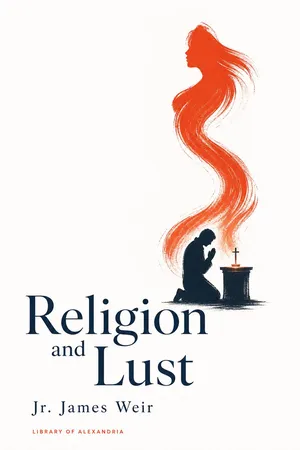
Why has sexual desire been treated as both sacred power and moral danger? This historical study explores the tensions between spiritual belief, bodily instinct, and social authority.
In Religion and Lust, James Weir Jr. considers the relationship between religious practices and sexuality across cultures. His subjects include fertility rites, ascetic discipline, ideals of purity, and the prohibitions through which communities have sought to regulate desire. The result is an inquiry into the ways belief can both sanctify sexual feeling and demand its restraint.
Weir brings psychological and social questions to a subject often framed only in terms of sin or obedience. How do religious ideals influence private feelings? What happens when bodily impulses conflict with spiritual expectations? How can the same human instinct inspire ritual reverence in one setting and shame in another? Read as a historical perspective rather than a statement of present-day consensus, the work offers an occasion to examine both its arguments and the assumptions behind them.
What readers find inside:
- Sacred sexuality - Fertility rites and religious customs reveal the place of desire within spiritual life.
- Ascetic ideals - Celibacy and bodily restraint show how sexual discipline becomes a religious aspiration.
- Purity and shame - Ideas of sin and temptation connect moral teaching with intimate experience.
- Authority and conduct - Sexual rules illuminate the relationship between religious institutions and social behavior.
- Cultural contrasts - Differing traditions expose the tension between reverence for desire and efforts to suppress it.
This book will interest readers of religious history, students of the history of psychology, and anyone curious about the cultural origins of sexual taboos. Its historical viewpoint also rewards readers who enjoy questioning how earlier writers understood human nature.
Begin this inquiry into the beliefs that have shaped the boundary between sacred life and bodily desire.