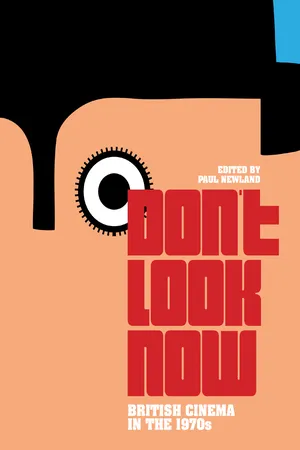
- 280 pages
- English
- ePUB (mobile friendly)
- Available on iOS & Android
eBook - ePub
Available until 23 Dec |Learn more
Frequently asked questions
Yes, you can cancel anytime from the Subscription tab in your account settings on the Perlego website. Your subscription will stay active until the end of your current billing period. Learn how to cancel your subscription.
At the moment all of our mobile-responsive ePub books are available to download via the app. Most of our PDFs are also available to download and we're working on making the final remaining ones downloadable now. Learn more here.
Perlego offers two plans: Essential and Complete
- Essential is ideal for learners and professionals who enjoy exploring a wide range of subjects. Access the Essential Library with 800,000+ trusted titles and best-sellers across business, personal growth, and the humanities. Includes unlimited reading time and Standard Read Aloud voice.
- Complete: Perfect for advanced learners and researchers needing full, unrestricted access. Unlock 1.4M+ books across hundreds of subjects, including academic and specialized titles. The Complete Plan also includes advanced features like Premium Read Aloud and Research Assistant.
We are an online textbook subscription service, where you can get access to an entire online library for less than the price of a single book per month. With over 1 million books across 1000+ topics, we’ve got you covered! Learn more here.
Look out for the read-aloud symbol on your next book to see if you can listen to it. The read-aloud tool reads text aloud for you, highlighting the text as it is being read. You can pause it, speed it up and slow it down. Learn more here.
Yes! You can use the Perlego app on both iOS or Android devices to read anytime, anywhere — even offline. Perfect for commutes or when you’re on the go.
Please note we cannot support devices running on iOS 13 and Android 7 or earlier. Learn more about using the app.
Please note we cannot support devices running on iOS 13 and Android 7 or earlier. Learn more about using the app.
Yes, you can access Don't Look Now by Paul Newland in PDF and/or ePUB format, as well as other popular books in Media & Performing Arts & Film & Video. We have over one million books available in our catalogue for you to explore.
Information
Chapter 1
Keynote Lecture, Don’t Look Now: British Cinema in the 1970s Conference, University of Exeter, July 2007
This is a cinema which it is easy to parody. It could be characterized as a set of tasteless films made by and for men in safari suits – or as the terminal illness of a hitherto quality cinema – or as a collection of tacky films leavened by the occasional masterpiece – or as the apotheosis of an avant-garde fuelled by elitist bile. Of course, all these definitions are silly in their different ways, but these are the kind of comments you have to parry whenever you announce that you are working on the 1970s. To be sure, the 1970s is no longer the undiscovered country, but it is I think the case that the drawing of a map of the British film culture of the period, and the sketching out of the methodological problems involved in studying it, has not yet been attempted. I can’t hope to do all that in a short keynote lecture, but I can, I hope, indicate some useful paths we might follow, some cul-de-sacs which are not worth going down, and some metaphors which might help us to conceptualize a period in culture which is extraordinarily rich and suggestive.
The key words, of course, are CAPITAL and CULTURE (when are they not?) In every period, the economic base partially (but only partially) determines the cultural/cinematic superstructure. That sounds unduly deterministic, perhaps; but what I mean is that cinema, like all the popular arts, is in thrall to the marketplace. In the 1970s film industry, as in certain other periods such as the 1950s, the forces of capital affected artistic creativity in a very uneven manner. Everything depended on the type and intensity of capital investment, and the degree to which those with financial power were prepared to accord visual artists a degree of autonomy. Or not. As I shall suggest in a moment, the politics and funding of the film industry were connected to the cycles of economic crisis in the 1970s, though not in an obvious way. One could, I suppose, conceptualize the 1970s industry in terms of conflicting fields of energy – with a moribund and underfunded mainstream industry in dialectical conflict with a range of avant-garde practices, some of which vital and were financially secure. That would be tempting, but it is an oversimplification, since the ‘fields of energy’ metaphor does not allow us to differentiate between the historical roots of cultural texts. And that is what we need to do.
Let us turn for a moment to the issue of periodization. We know that history does not naturally organize itself in neat decades. To a certain extent, ‘the 1970s’ is a sort of fiction. But let us define an historical period by the sense that there is a new (and shared) way of seeing, a different set of political arrangements and economic conditions slightly different from what obtained before or after. If we take that definition, we can chart ‘the 1970s’ from 1968 – that annus mirabilis when there seemed to be a break in structures of feeling – to 1979, the year of Thatcher’s election.
An attractive way of thinking about the 1970s is that it was a period when the innovations of the 1960s – experienced by a few – were assimilated by the many. The popular press doubtless had a lot to do with this mediation. The major transformation of personal life which was set in motion by the 1960s was materially aided by the development of efficient contraception which made it possible to separate sexual pleasure from procreation. This, together with second-wave feminism (which could be seen as an offshoot from it) transformed attitudes to female autonomy and family structures. And the legalisation of homosexual acts was of course a key aspect of the whole rethinking of sexual probity and desire in the period.
On the economic side, it’s important to recognize that the 1970s was a period of extreme economic uncertainty in Britain – as opposed to the United States, where the economy was slightly more able to weather the OPEC crisis. Corporatism came unstuck in Britain more acutely than elsewhere, yet Keynesian welfarism was under extreme pressure. The coal dispute of 1972, high inflation rates, wild-cat strikes, swift changes of government, the Irish crisis, the splintering of the left into a range of sub-groups – all these were accompanied by an increased commodification, the flourishing of consumerism and domesticated leisure, and the development of what might be called a gift-economy.
What is certain is that the older, stable definitions of class ascription were transformed in the 1970s. The culture of deference was in terminal decline. Moreover, as I have suggested, the older sexual order was transformed too. Modernism – that cultural form which called into question ‘the old stable ego of the personality’ was thoroughly assimilated. These, combined with acute economic instability, produced a society where little could be taken for granted.
So far so good. How did the cinema relate to these social transformations? The problem is, of course, that the cycles of cultural production cannot be straightforwardly placed onto economic or political cycles, like a tracing on top of a map. It comes as no surprise that the economic situation in the British film industry was dire throughout the decade, but this was not as a direct consequence of the broader fiscal crisis. It was because of the withdrawal of American capital after 1968, when 85 per cent of British film production had been fuelled by American capital. This withdrawal was affected with indecent haste, and left a production vacuum for the British industry. What inhibited any economic recovery for the industry was the fact that the National Film Finance Corporation (NFFC – the government sponsoring body) was institutionally weak and at the mercy of changing government policy. I have no time here to describe the complexity of the economic structures of the industry (others are going to do that), but it seems clear that extreme risk-taking behaviour was the only way to produce innovatory work. There was an influx of capital from sources outside the film industry and from television – Lew Grade, John Woolf, Euston Films – which may have had a destabilizing effect. The 1970s industry was one which specialized in customized, ad hoc arrangements to back individual films – sometimes to the extent of individual directors mortgaging themselves (Ken Russell did this to finance Savage Messiah), or setting up a private conglomerate (such as Jarman did with the Marquis of Dufferin and Ava and David Hockney for Sebastiane). Those outfits with less imaginative financial arrangements often contented themselves with TV spin-offs which could ensure a modest but certain return. It might be possible to present the remakes of On the Buses and Love Thy Neighbour as a sort of equivalent to the industrial product in high capitalism – with interchangeable components, predictable outcomes and long historical roots. Such products are of course profoundly residual in their origins and operation, and represent an introverted and insular sensibility.
What responses can we detect in 1970s British cinema to the social and sexual transformations I have outlined earlier? On the whole, it looks as though the crisis in modernity (or indeed, its apotheosis and decline) stimulated many British filmmakers to take a conservative position. Very many films express extreme anxiety about female autonomy, particularly in the sexual area. To be sure, the commodification of sexuality so prevalent in films like Come Play with Me (and to a certain extent facilitated by the liberals now in place at the British Board of Film Censorship) was well in evidence. But film after film, in a range of genres, rehearsed the dangers inherent in female power. On the class front, many formulaic films buffed up the old social order and presented it as fit for service, albeit with a cheeky gloss; that is how we should understand the Confessions films. They are a sort of extension of the Carry On cycle, only with balls. In addition, very many films of the period display a sort of wry cynicism about institutions and social structures, while being dolefully in love with the surface world of goods. Often, it seems as though the objects of the new consumerism function in film texts like a sort of cargo cult.
In general, 1970s British cinema seems to be one which displays a mix of irony and deliberate awkwardness at the level of script, mise-en-scène and acting style. I am thinking about Tommy, Monty Python and the Holy Grail, Zardoz, Royal Flash and many others. An awareness of contingency and fragility suffuses these films. It seems to me that there is a retreat from confidence in public realities in many films of the period, and a retreat into fantasy, the private and the subjective. It also seems that their makers seem to want the films to function as a form of social play. Or to put it another way, it is a ludic cinema which foregrounds irony – that state of mind which evinces both belief and denial, and which simultaneously yearns and mocks. Irony is a fort/da game which encourages players to imagine two contradictory things at once, and it is tempting to see the ironic as a precursor to the postmodernist impulse. Many 1970s films exhibit chronic disavowal in their manner, and I would say this is one of the characteristic structures of feeling of the visual culture of the period.
This is all OK, as far as it goes, but it remains on a descriptive rather than analytical level. We need to up the ante on the methodological front if we want to raise our game, to distinguish between authors and between film types, or – most important of all – to establish those fault-lines in the established cinematic order which would make innovation possible. Or, to put it another way, those moments of crisis which forced artists and entrepreneurs to recognize that the old conceptual models needed refurbishment, and that the sexual and social utopias under debate might be worth engaging with after all.
What methods of analysis will help us move from the descriptive to the analytical level, and map the field of 1970s film culture in a discriminating way? The older kinds of film history methodology are not really appropriate for this case. In studying the structure of 1930s British cinema, for example, it was entirely feasible to see it as a producers’ cinema, and to study the output and cultural capital of Korda and Balcon. The structure of the 1940s industry could easily be studied through an analysis of studios – Ealing, Gainsborough. For the 1950s, Vincent Porter and I suggested in The Decline of Deference that, due to legislative changes, all the organizational power shifted to the distribution companies, who all had production outfits. This means that it was feasible to categorize film output by looking at bodies like the Rank Organisation, British Lion or ABPC. The clarity of such methods of analysis is not possible for the 1970s, alas, for the simple reason that the link between distribution, production and exhibition was fractured. In addition, exhibition was in crisis, and the independent exhibitor was in decline once and for all. So the older models of agency will have to be radically revised.
Another stalwart of the analysis of earlier periods has been that of genre – the costume film, the melodrama, the social problem film. Such generic ascription does not obtain in 1970s British cinema. Instead of having clear-cut boundaries, films seem to have permeable membranes, and to segue between horror/sex films/history or comedy/realism/sex, for example. This tentativeness about genre, and the range of cross-generic type, suggests that filmmakers were uncertain about public taste. So another tried-and-tested method of analysis – genre – goes west. Of course, a lack of confidence in old models will give rise to a concentration on purely personal and idiosyncratic visions.
Tentatively, I want to suggest a number of methods film historian might use to distinguish between films of the 1970s, and to establish their social and artistic meaning. I’ll offer these as a series of questions. The list is not definitive, of course.
1. What types of authorship obtained in a film or group of films? An analysis of the period would have to include producers like Don Boyd, Lord Brabourne, David Puttnam, John Woolf, Nat Cohen and Deeley and Spikings. Such enterprising figures were in a position, in a period where no-one was king, to bring together a range of funding for individual projects. But also, the 1970s seems to be a period of the heroic auteur-director so beloved of orthodox critics (Ken Russell, John Boorman, Derek Jarman, Nic Roeg, Ridley Scott). Other older directors (David Lean, Joseph Losey) developed in a qualitatively new way. Others, such as John Schlesinger and Tony Richardson, went to Hollywood. We need of course to extend ‘authorship’ to scriptwriters and designers, and to ask what it was about a film’s progenitor(s) which enabled him or them to manoeuvre their way round funding constraints. Was it guile, nous or just plain luck which enabled them to strike a deal?
2. What is the range of visual styles current in 1970s cinema? On the face of it, it is enormous – from the abstract swirlings of Le Grice to the pedestrian utilitarianism of the Confessions films. But the question we need to ask is whether there is any common practice in the management of social space in film, whether the design practices are ad hoc or structured and what effect technological advances had on the ‘look’ of films of the period. Is there mileage in the notion of the flatness of the picture plane in the period? There certainly is a marked decline in the use of depth-of-field cinematography. Should this be attributed to technological fashion, or should we see it as a shared preoccupation with the world of surfaces?
3. Is it possible to trace a consistent narrative of the body in 1970s films? If there is one, is it gender-specific? Or does it differ according to the production context of films? The place to start might be in the horror film, where there is what might be called ‘textual overload’, in that the films of Hammer, Tigon, Amicus and Pete Walker move way beyond the comfort zone. The symbol of the ‘bloody parcel’ in these films can be read as an indirect means of addressing taboo topics like abortion and menstruation. But such thematically based analyses would need to be firmly rooted in a sense of what was historically possible in censorship terms, and the dates of important ‘breaks’ in practice – the first full-frontal scenes, for example.
4. If there are artists who are able to effect a cross-over between the mutually exclusive worlds of mainstream and avant-garde (first, Jarman and later, Greenaway), why was this? What sorts of filters, gatekeepers or negotiators made this possible? Is the ‘bleeding’ of influence from the avant-garde into the mainstream (it is never the other way round) because there is not a stable economic and aesthetic base?
5. Do groups of texts (divided by period, or by author, or by type) share a definition of the difference between the sacred and the profane? Does mess, dirt and the visceral play a different role in 1970s cinema, as opposed to (say) in the 1950s?
6. Is Raymond Williams’ division of cultural texts into three types (dominant, emergent, residual) still a useful tool for thinking through this period? How would it be best used?
7. Which types of film texts have the longest cultural roots in the 1970s? Do popular films have long or short roots in the period? How does innovatory film – which breaks with established practice in some way – deal with the cultural capital of the audience?
8. Should film not be studied in tandem with the television of the period? In what way do they differ in terms of scale, intimacy, fantasy and social geography? Are there any stylistic cross-overs between film and television? The television of the period threw up important innovations – The Family, for example. Does it manifest the same irony and disavowal as the cinema? If not, then why not?
9. What are the problems involved in the analysis of audience taste in this period? If the rich material of earlier periods is not extant, does that inhibit the development of an argument about the consumption aspect of the cinematic process?
10. Is the most suggestive issue really not the way in which 1970s films respond to the present and its discontents, but the way they deploy the past? The flavour of 1970s nostalgia is like no other, but it differs markedly from one film to another. I suggested in my essay in The New Film History (edited by James Chapman, Mark Glancy and myself) that it was possible to divide historical representation in 1970s film into a range of types, each with its own funding patterns, narrative structures and deployment of the past – American histories, auteur histories, low-status schlockers and marginal histories. That might be a productive way to go, always with the proviso that the past is the most fluid, the most nebulous and most fleeting category of all.
Of course, after the methodological ground has been cleared, historians of film have to imagine themselves going out to meet the denizens of the past – the people who made or saw the films they study. For some of us, this meeting is tricky, because the history we study is also our own. Besides those others, it is our young selves that we go out to meet, albeit in a shadowy form. And actually, those very areas which we think are safest from the depredations of historical discourse are those most drenched in it. But that’s a story for another day.
Section I
Individuals and the Industry
Chapter 2
Stanley Baker and British Lion: A Cautionary Tale
During 2007, in her keynote lecture to the conference on 1970s British cinema held at the University of Exeter (the same conference from which this collection of essays grew), Sue Harper mapped out some of the difficulties facing the film historian in addressing this period and suggested a number of methodological strategies for unpicking its complexities. Under the heading of questions of authorship, she argued that due consideration would need to be given to the new breed of creative producers who had emerged during the decade. What is also apparent from this initial examination of the period is a sense of its fragmentary, dislocated nature. This is not a period with anything like a dominant historical narrative, but one instead marked by a wide diversity of competing ‘stories’, each one tending to illustrate the fractured nature of its cinematic landscape. In commencing the pr...
Table of contents
- Cover
- Title Page
- Copyright
- Content
- Acknowledgements
- Introduction: Don’t Look Now
- Chapter 1: Keynote Lecture, Don’t Look Now: British Cinema in the 1970s Conference, University of Exeter, July 2007
- Section I: Individuals and the Industry
- Section II: On the Margins of British Cinema
- Section III: Anxiety and Alienation, Deviance and Desire
- Section IV: British Cinema and Television
- Section V: British Films and British Filmmakers
- Notes on Contributors
- Index