Explains what happened to music—for both artists and fans—when music went online.
Playing to the Crowd explores and explains how the rise of digital communication platforms has transformed artist-fan relationships into something closer to friendship or family. Through in-depth interviews with musicians such as Billy Bragg and Richie Hawtin, as well as members of the Cure, UB40, and Throwing Muses, Baym reveals how new media has facilitated these connections through the active, and often required, participation of the artists and their devoted, digital fan base.
Before the rise of social sharing and user-generated content, fans were mostly seen as an undifferentiated and unidentifiable mass, often mediated through record labels and the press. However, in today's networked era, musicians and fans have built more active relationships through social media, fan sites, and artist sites, giving fans a new sense of intimacy and offering artists unparalleled information about their audiences. However, this comes at a price. For audiences, meeting their heroes can kill the mystique. And for artists, maintaining active relationships with so many people can be both personally and financially draining, as well as extremely labor intensive.
Drawing on her own rich history as an active and deeply connected music fan, Baym offers an entirely new approach to media culture, arguing that the work musicians put in to create and maintain these intimate relationships reflect the demands of the gig economy, one which requires resources and strategies that we must all come to recognize and appreciate.
eBook - ePub
Playing to the Crowd
Musicians, Audiences, and the Intimate Work of Connection
- 280 pages
- English
- ePUB (mobile friendly)
- Available on iOS & Android
eBook - ePub
About this book
Trusted by 375,005 students
Access to over 1 million titles for a fair monthly price.
Study more efficiently using our study tools.
Information
Part I
Music
1
Music as Communication
If you’ve ever seen Kristin Hersh perform, you know that music is her calling. She seems to enter an almost altered state. Her head moves like an owl’s. She shrieks and screams. Her guitar emits an enormous amount of sound. It’s beautiful, but it can be a little scary. As soon as Throwing Muses started, she realized “that music happened between people.” “We weren’t entertainers,” she told me, “because we weren’t entertaining. But there was something that was happening when we made noise and a room full of people got it. It was resonating with them, which resonated with us. We felt like at our deepest, we were the same, as lame as that sounds. Musically it seems to be almost physically true. It was quite clear to us that we needed these people in order to make music happen. And music was our religion for lack of a better word.”
Music is a way of communicating that somehow, by evoking without referring, has extraordinary power to help people find their deepest selves, bring them together, and feel connected to what feels most important. Hersh describes a cycle in which people make music that resonates as sound waves, listeners feel those energetic waves and send them back, inflected with their own energies. When it works, music has unique powers to help people connect to themselves, to their deities, and to one another.
Music has always been about building, sustaining, and reworking social relationships and institutions. No matter how commercialized it becomes, it can “never be just a product.”1 In a history that manages to undersell its breadth even with the title A Million Years of Music: The Emergence of Human Modernity, Gary Tomlinson synthesizes evidence from fields as diverse as musicology, paleontology, cognition, philosophy of mind, and semiotics to show how music, technology, and human sociality emerged together in our species, stimulated by cognitive and sociotechnical skills developed over time spans far longer than human existence. Music emerged among our prehistoric ancestors as they worked together, co-present in ancient “taskscapes.” Over hundreds of thousands of years in one another’s presence, they developed some of the basic prerequisites for music: synchronized rhythms (or “entrainment”) and cognitive capacities such as abstraction, the ability to think of things in the future or things that are not present, and the ability to combine physical and conceptual parts into hierarchical, forward-thinking combinations.2

Figure 1.1. Kristin Hersh. © Derek Haun, and made available under a CC BY 2.0 license. https://www.flickr.com/photos/dhaun/30427327574.
Sometime in this ancient story, our predecessors developed vocal “gesture calls.” These cries, grunts, growls, whimpers, howls, and who knows what other sounds had social functions, conveying information that helped co-present beings navigate encounters in which they needed to know whether to approach or avoid, submit or dominate, and otherwise establish social order quickly and effectively. As they shared and coordinated their activities, our ancestors developed shared cognitive patterns of expectation, violation, and fulfillment tied to sociality and sound, patterns that music continues to exploit for emotional effect. Slowly, gesture calls were refined, conveying ever subtler shades of meaning. Early humans gained control of their vocal chords.
Eventually, human gesture cries split. One branch became language, used to create shared meaning through the manipulation of symbols. The other, often now called “paralinguistics,” continues to directly express the primal affective and social information central to coordinating our encounters. Our speech retains this musicality. Even as our words convey information about content, the way we speak—our pitch, volume, rhythm, and pace—nonverbally encodes messages about how to interpret both content and relationship. Are the words meant to be exciting, sad, boring, sarcastic, or angry? Are they said as a friend, enemy, bureaucrat? Music exploits the affective and relational realms of gesture calls, arranging sounds aesthetically to provoke resonant cycles of meaning that other modes of communication cannot.
The musicians I spoke with saw themselves as artists, creating work of aesthetic value, and, to varying degrees, as communicators, engaged in a form of social work. From its inception, music has been integral to the folk life of communities. For most of our existence, as Spanish singer-songwriter Nacho Vegas puts it while describing his own aspirations, people made music “while they were working or they were at funerals, or at parties. They made this music just for celebration of life, a way to communicate, one people to each other.” They didn’t want to “have a career or be a rock star or something like that.” Like most of us, musicians hope for a life not just of creature comforts but of significance. Stephen Mason, of Grammy-award-winning band Jars of Clay, mused that if the time came that they didn’t feel a “vibrant conversation between the audience and the music,” it might be time to break up. “If it was just down to the music itself,” he said, “I don’t know if we’d still be doing it, because we want what we do to have more significance than just a financial engagement: we make a product and people buy the product, and then we make money.”
At the heart of this book is the question of how artists and audiences can relate to one another in ways that help them flourish within the decidedly modern context that calls on them to exploit their feelings and selves for commercial gain. Though some surely dream of stardom, people rarely become musicians because they think it’s a smart career move. To understand what helps them flourish, I start with the question of when the cycle of their communication with audiences feels most validating. Research suggests that people feel that their workplace is at its best when their individualism and uniqueness are recognized; they are challenged and achieve mastery; they feel belonging and connection, safety and security; and when they feel empowered, which includes having a voice, autonomy and flexibility, as well as being heard, needed, and able to help others.3 I asked everyone I spoke with to give me an example of an interaction with their audience that they found “particularly rewarding.” Most of the stories in this chapter were told in response. These musicians echo the workers Lutgen-Sandvik and colleagues surveyed, especially regarding their ability to help others. These musicians appreciate how their music helps themselves and their audiences articulate and process feelings. They are humbled and rewarded by the relationships their music fosters, from seeing how it strengthens others’ bonds to forming new friendships of their own.
Seeking Meaning
Musicians need audiences. “I know I can play without anybody listening,” Hersh tells me, but “it’s unfinished then. It’s almost like a kid. You don’t want to keep it in the closet. You grow it up maybe, but then when it’s grown up it goes out and makes friends and is effective in the world. And you’re not done raising the kid until the world has accepted it.” Only listeners can do the essential work of “accepting their kid” by imbuing musicians’ work with meaning. Mikhail Bakhtin, pushing back against the idea that meaning resides in the mind, argued that whatever meaning an utterance may seem to have to its speaker, it only “reveals its depths” through engaging in “a kind of dialogue” with the meanings it encounters when real people hear and respond to it.4 When an artwork is finished, as Martin Buber writes, it is “changed into It and frozen into a thing among things,” yet it is “still endowed with the meaning and the destiny to change back ever again” through the dialogic encounters with its audiences.5 Art “enters into the world of things in order to remain incessantly effective, incessantly It—but also infinitely able to become again a You. Enchanting and inspiring.”6
Musicians are communicating in ways meant to produce feeling, but, like most culture workers, it is impossible to know in advance (and can be difficult to learn even afterward) whether and how their It became a You for audiences and with what consequences. The mass mediated music industries of the twentieth century separated and distanced musicians from their audiences in both time and space. Even though they could communicate to more people than ever before, they became less likely to interact with any of them. Recording artists have long had some clues as to how their music lands with their audiences. In a live performance, there is instantaneous feedback. Performers can tell whether resonance happens. They can see, hear, and feel their music encounter its audience. Recordings, however, “take on very different meanings” in people’s home.7 Once recorded, music becomes “open to reinterpretation over and over again as listeners create new contexts for their reception and their ritual use of it.”8 Audiences interpret music in many ways. They can be scholarly, synthesizing a diverse range of musical output, tracking themes through a body of work, or they can be personal, making aesthetic, political, and biographical associations.9 In their interviews with creative workers in many fields, including music, David Hesmondhalgh and Sarah Baker found that “the often deeply affective and emotional nature of the response sought by creative workers in these distant, mediated audiences produces anxiety, ambivalence and even distrust.”10 To resolve the uncertainty, musicians need to hear from audiences after their music has gone out into the world. Only through communication can they learn the significance of their work. Opening themselves to hear their audience’s experience can validate them as artists and as humans. But to become listeners they must be able to take criticism and withstand self-doubt.11 What their audiences have to say may not always be what they want to hear.
One of the first things people did once they networked computers and created communication media like email and bulletin board posts was discuss music (see chapter 3). This has made audience meanings more visible to musicians than ever before. David Bowie, interviewed in 2000, predicted that the twenty-first century would be about “the gray space in the middle”: “the idea that the piece of work is not finished until the audience comes to it and adds their new interpretation and what the piece of art is about is the gray space in the middle.”12 The internet has made that gray space more visible. Brave musicians can read what people write about their work in online discussion forums and on social media. They can run search alerts, bringing anything that mentions them to their attention.
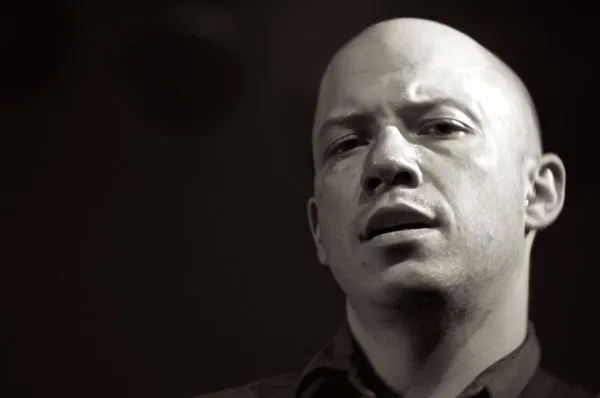
Figure 1.2. Stuart Braithwaite, 2011. © Alessio Moffeis, and made available under a CC BY 2.0 license. https://www.flickr.com/photos/imaffo/6111455567.
But musicians don’t have to look around to get feedback. Audiences now reach out to tell them on an unprecedented scale. “Our email address is on our website,” says Stuart Braithwaite of the Scottish post-rock band Mogwai, “so people can email us without any trouble. And we get a lot of really nice emails, a lot of contact that’s kind of just made me really happy about what we do and what our music means to people. People saying that our music means a lot to them and helps them. You know, just these kind of things.”
“It’s just more immediate,” says Cowboy Junkies’ Michael Timmins; “the internet makes everything right there at people’s fingertips, and people feel they can reach out and it’ll reach you somehow.” The messages audiences send may speak to an artist’s work as a whole, to particular songs or moments in their lives, or what they loved about last night’s gig. “It’s a nice touch,” says Timmins. “It’s almost like a thank-you note. ‘I had a great time at the show last night.’ And, again, it does help. Especially when you’re on the road and you’re grinding it out and you get a few of those, and it’s like ‘Oh, wow, okay. So we did. We touched some people last night.’ That sort of stuff does help.”
When I asked a younger artist, Sydney Wayser, if she ever thought about what it might have been like to be a musician before the internet, she responded initially with bemusement. “You mean I’d just make music?” Perhaps it would be nice to have more time to focus on music, she speculated. But then she remembered an email she received from a fan describing how one of her songs had opened long-blocked emotions and brought her release. If she were “so separated from the fans and from the listeners I would have never been able to know that I actually really affected someone like that,” she concluded.
Timmins lurks on the Cowboy Junkies’ message board to see what people say about the music. “Yeah, I listen. I do pay attention.” He’s been at it long enough that he has “a pretty thick skin,” but he’s still curious “as to how people are interpreting things or how they’re hearing things. It’s always interesting.” Hardcore fans can be eerily accurate in reading what the song meant to him:
They’ll parse a lyric and figure it out, like where it’s coming from. And I find that kind of amazing that people have the time to do that and the passion to do that. I think that’s pretty fantastic. It always amazes me, and I’m always really gratified when I read somebody reviewing something on the message board, and it’s like “Wow, you really got it. As far as from my angle, you really got it.” But I don’t think there’s only one way to interpret things. I mean, I know how I want to interpret them, but that doesn’t mean it’s necessarily the right way.
Often, the meanings audiences make from music are personal. When Timmins meets his fans, they “want to express how a particular song or a group of songs or whatever have affected them. They want to talk about the music and tell their story. People usually want to just tell their story.”
Stories are a particularly powerful speech genre for completing the communication loop between artist and audience. Timmins tells me that most musicians got into it
because as fans they’d been deeply touched by music in some way or another, and usually by a handful of bands or musicians, and they have their own stories as fans. So when that gets reversed and somebody’s coming up to you and telling you their story and how your music and what you’ve written or sung or played has deeply affected—it’s often extremely private and personal sections of their lives. It’s really amazing. It does validate the whole thing for you. You know, you go through periods where you think...
Table of contents
- Cover
- Title Page
- Copyright Page
- Contents
- List of Figures
- Introduction: The Intimate Work of Connection
- Part I. Music
- Part II. Participation
- Part III. Relationships
- Acknowledgments
- Appendix 1: Musicians Interviewed
- Appendix 2: Social Media Presence as of January 2017
- Notes
- References
- Index
- About the Author
Frequently asked questions
Yes, you can cancel anytime from the Subscription tab in your account settings on the Perlego website. Your subscription will stay active until the end of your current billing period. Learn how to cancel your subscription
No, books cannot be downloaded as external files, such as PDFs, for use outside of Perlego. However, you can download books within the Perlego app for offline reading on mobile or tablet. Learn how to download books offline
Perlego offers two plans: Essential and Complete
- Essential is ideal for learners and professionals who enjoy exploring a wide range of subjects. Access the Essential Library with 800,000+ trusted titles and best-sellers across business, personal growth, and the humanities. Includes unlimited reading time and Standard Read Aloud voice.
- Complete: Perfect for advanced learners and researchers needing full, unrestricted access. Unlock 1.4M+ books across hundreds of subjects, including academic and specialized titles. The Complete Plan also includes advanced features like Premium Read Aloud and Research Assistant.
We are an online textbook subscription service, where you can get access to an entire online library for less than the price of a single book per month. With over 1 million books across 990+ topics, we’ve got you covered! Learn about our mission
Look out for the read-aloud symbol on your next book to see if you can listen to it. The read-aloud tool reads text aloud for you, highlighting the text as it is being read. You can pause it, speed it up and slow it down. Learn more about Read Aloud
Yes! You can use the Perlego app on both iOS and Android devices to read anytime, anywhere — even offline. Perfect for commutes or when you’re on the go.
Please note we cannot support devices running on iOS 13 and Android 7 or earlier. Learn more about using the app
Please note we cannot support devices running on iOS 13 and Android 7 or earlier. Learn more about using the app
Yes, you can access Playing to the Crowd by Nancy K. Baym in PDF and/or ePUB format, as well as other popular books in Business & Media & Communications Industry. We have over one million books available in our catalogue for you to explore.