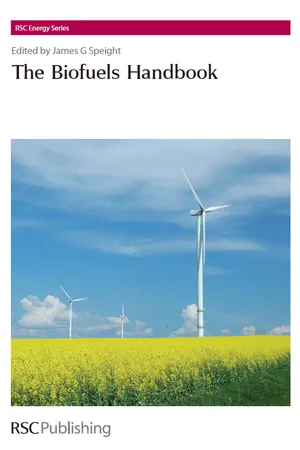
Petroleum-based fuels are well-established products that have served industry and consumers for more than one hundred years. However petroleum, once considered inexhaustible, is now being depleted at a rapid rate. As the amount of available petroleum decreases, the need for alternative technologies to produce liquid fuels that could potentially help prolong the liquid fuels culture and mitigate the forthcoming effects of the shortage of transportation fuels is being sought. The dynamics are now coming into place for the establishment of a synthetic fuels industry; the processes for recovery of raw materials and processing options have to change to increase the efficiency of oil production and it is up to various levels of government not only to promote the establishment of such an industry but to recognise the need for available and variable technology. This timely handbook is written to assist the reader in understanding the options that available for the production of synthetic fuel from biological sources. Each chapter contains tables of the chemical and physical properties of the fuels and fuel sources. It is essential that the properties of such materials be presented in order to assist the researcher to understand the nature of the feedstocks as well as the nature of the products. If a product cannot be employed for its hope-for-use, it is not a desirable product and must be changed accordingly. Such plans can only be made when the properties of the original product are understood. The fuels considered include conventional and unconventional fuel sources; the production and properties of fuels from biomass, crops, wood, domestic and industrial waste and landfill gas.
- 555 pages
- English
- ePUB (mobile friendly)
- Available on iOS & Android
eBook - ePub
Biofuels Handbook
About this book
Information
Table of contents
- Cover
- Title
- Copyright
- Preface
- Contents
- Part 1 Fuels from Conventional and Unconventional Sources
- Part 2 Fuels from Cellulosic and Lignocellulosic Materials
- Part 3 Fuels from Waste Materials
- Glossary
- Subject Index
Trusted by 375,005 students
Access to over 1.5 million titles for a fair monthly price.
Study more efficiently using our study tools.
Frequently asked questions
Yes, you can cancel anytime from the Subscription tab in your account settings on the Perlego website. Your subscription will stay active until the end of your current billing period. Learn how to cancel your subscription
No, books cannot be downloaded as external files, such as PDFs, for use outside of Perlego. However, you can download books within the Perlego app for offline reading on mobile or tablet. Learn how to download books offline
Perlego offers two plans: Essential and Complete
- Essential is ideal for learners and professionals who enjoy exploring a wide range of subjects. Access the Essential Library with 800,000+ trusted titles and best-sellers across business, personal growth, and the humanities. Includes unlimited reading time and Standard Read Aloud voice.
- Complete: Perfect for advanced learners and researchers needing full, unrestricted access. Unlock 1.5M+ books across hundreds of subjects, including academic and specialized titles. The Complete Plan also includes advanced features like Premium Read Aloud and Research Assistant.
We are an online textbook subscription service, where you can get access to an entire online library for less than the price of a single book per month. With over 1.5 million books across 990+ topics, we’ve got you covered! Learn about our mission
Look out for the read-aloud symbol on your next book to see if you can listen to it. The read-aloud tool reads text aloud for you, highlighting the text as it is being read. You can pause it, speed it up and slow it down. Learn more about Read Aloud
Yes! You can use the Perlego app on both iOS and Android devices to read anytime, anywhere — even offline. Perfect for commutes or when you’re on the go.
Please note we cannot support devices running on iOS 13 and Android 7 or earlier. Learn more about using the app
Please note we cannot support devices running on iOS 13 and Android 7 or earlier. Learn more about using the app
Yes, you can access Biofuels Handbook by James G Speight in PDF and/or ePUB format, as well as other popular books in Physical Sciences & Environmental Science. We have over 1.5 million books available in our catalogue for you to explore.