![]()
Chapter 1
The Outside World and Japanese Creativity
Japan’s “Three-Cycle Response” for Innovative Change
The geographic location of Japanese civilization has a significant impact on both its character and its relations with the outside world. According to UCLA Professor Jared Diamond, the southeastern islands of the Pacific and Indian Oceans, including the Japanese Archipelago, were populated by Homo sapiens somewhat later than was the interior of the Eurasian continent. The routes of global migration created a situation in which Japanese culture developed in the shadow of that found in India and China. Over the centuries, India and China have influenced their neighbors, including Japan, with their rich cultures. Neighboring nations have reacted in different ways to this influence. Some have willingly absorbed new knowledge while others have resisted foreign innovations and stuck to their own traditions, preserving them for posterity. Japan, as we shall see, has done both.
If Diamond’s theory is correct, the first inhabitants of the Japanese Archipelago came from what later became known as China and Korea. Migrants from the southern islands of the Pacific Ocean might have joined them later. Island culture and continental culture developed in their own separate ways, but cross-cultural contacts between Japan and the continent were frequent. Nourished by numerous contacts with neighboring countries, continental culture grew more rapidly than island culture.
Successive waves of immigrants to the Japanese Islands brought with them new knowledge, practical skills and religious beliefs. Ancient Japanese chronicles reported numerous groups of newcomers from the continent during the third century AD. By the middle of the fifth century there were about 20,000 hereditary silk spinners, all of whose ancestors had come from abroad. As for the trips of the proto-Japanese people to China, chroniclers dated them as far back as the second century AD (Hasegawa, 1965). Earlier contact could not be determined because of the absence of written language. Therefore, the conclusions of the authors of The Ancient History of Japan that “the population of ancient Japan consisted mostly of immigrants from the continent and Japanese culture itself was formed from their active participation in the process” (Meshcheryakov and Grachov, 2002) seems entirely convincing.
Profiting from an abundance of seafood and the practical knowledge obtained from skilled craftsmen in neighboring countries, the ancient Japanese had little need for their own innovations. From the dawn of their culture, they learned a formula that has proven itself over the ages: go to China for something new. For example, there was no writing system in Japan before the introduction of Chinese characters. After adaptation of the Chinese script, a tradition of awe for all things Chinese was inscribed on the written page. This habit of looking toward China eventually developed into a tradition that was passed from one generation to the next. There are few things more enduring in Japan than a sacred compliance to traditions.
The reaction of the Japanese to foreign ideas and technology can be seen as a “three-cycle response” of imitation, adaptation and improvement, each of which is described below. As we shall see, this pattern has played itself out over and over again throughout Japan’s history.
The process of imitation, however, was not chaotic. The Japanese accepted only those things that they considered useful and suitable. For example, rice-sowing techniques were adopted rapidly, but cattle breeding did not prove to be practical on islands with little pastureland. After the first flush of Confucian learning, Confucian thought was established as the organizational foundation of state structure and ideology. However, the Japanese divested Confucianism of its key teachings about the status of the ruler. Chinese emperors originated from common backgrounds, but they received their authority from the Mandate of Heaven. Chinese emperors could be deposed if they ceased to follow virtuous and humane rule. In contrast, the Japanese believed that their emperors, or tenno (literally, heavenly sovereign), had reigned “since time immemorial” and were considered to be the direct descendants of the gods. Therefore, the imperial dynasty had to reign forever.
Although Japan utilized the significant achievements of Asia’s continental civilizations, the Yamato dynasty (ancient name for the country of Japan) nevertheless considered itself equally great and uniquely independent. Although the ancient Japanese did not lend any valuable ideas to their neighbors (but instead learned from their neighbors) they still held themselves in equal esteem to the Chinese. Everything that the Japanese borrowed from the outside world was carefully filtered, selected and contextualized to the needs of the local culture. This is the second important aspect of Japan’s interaction with the outside world — adaptation.
After centuries of intensive cultural contact with China, the process of interaction slowed and then stopped completely by the end of the ninth century. Connections with the Korean kingdoms had been cut off even earlier. At the beginning of the 10th century, Koguryo, a reconstructed Korean kingdom, asked Japan to become its suzerain, but the request was rejected. Japan entered a period of isolation in which it processed and adapted the cultural information it had received from abroad.
During the following centuries, the Japanese applied continental knowledge to statecraft, science and culture. “This kind of Japanization can be seen in many cultural areas that are accessible to our observation (paintings, sculptures, architecture, costumes, etc.)” (Meshcheryakov and Grachov, 2002). As Vladimir Alpatov wrote, in modern times “the process of adaptation of European linguistics in Japan was singularly purposeful: only those things that helped to deepen and to develop national traditions were taken into consideration” (Alpatov, 2003).
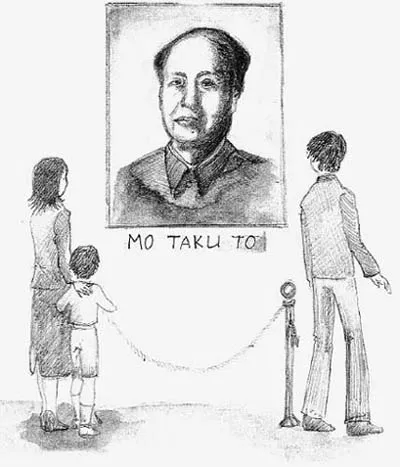
The development of national traditions while using Chinese characters has led to a curious situation. Original Korean and Chinese personal and geographic names are unknown to most Japanese people unless they read international periodicals where these names are written in Roman script. In Japan, Chinese and Korean names are read according to their Japanese pronunciation. For this reason, Mao Zedong is known in Japan as Mo Taku To, the name of Chinese premier Wen Jiabao is read as On Ka Ho and the former President of South Korea Chun Doo Hwan is routinely called Zen To Kan.
Figure 1.1: Japanese reading of names.
Given the fact that even famous people’s names are dealt with in this way, it goes without saying that in present-day Japan, the average Chinese or Korean cannot expect to hear the proper pronunciation of their names. The Reverend Choi Chang Hwa, a South Korean Protestant minister, spent 13 years in Japanese courts insisting that television announcers of the NHK, Japan’s public broadcast network, pronounce his name as he wished. In Japan, Mr. Choi was widely known as Sai Sho Ka. In 1988, the presiding Supreme Court justice Atsushi Nagashima admitted that a person’s name “symbolizes his individuality and constitutes a part of his human rights,” but nevertheless ruled against Mr. Choi, saying that the announcers did not violate his rights because the Japanese reading of the ideographs was an accepted social custom (Haberman, 1988). It is worth mentioning that this is not necessarily a uniquely Japanese phenomenon. In China, Japanese names are read according to Chinese conventions.
The lawsuit of the South Korean minister did, however, help achieve something of a compromise towards changing this longstanding tradition. After this court case, NHK announcers began to read according to Korean convention for people living in North and South Korea. However, it is often the case that many Koreans living in Japan readily assume the Japanese version of their names in order to further assimilate within Japanese society. As for private Japanese radio and TV stations, the old practice of reading Korean names according to Japanese conventions is maintained. This means that geographic and famous personal names in China and Korea, as they are known both in their countries and to the outside world, will remain unknown to the majority of the Japanese for a while.
Modification and perfection of knowledge and technology received from the outside world is the third and final stage of Japan’s borrowing mechanism. It differs from the two previous stages by its emphasis on the creative component. Improvement of borrowed ideas is at the very core of the Japanese creative process. Not found in the imitation stage and showing only a limited presence in the adaptation stage, this component is the climax of improvement.
Currently, foreign-born ideas that have been improved upon beyond recognition by Japanese developers are often labeled as “Made in Japan” and then re-exported. Examples abound: watches and green tea, bonsai and ikebana, cars and electric appliances, and more. Many technological solutions resulting from the improvement of patents and licenses purchased from Western inventors are marketed as uniquely Japanese.
Ig Nobel Prize Winners
The telephone was invented in the United States in 1876. Within one year, the Japanese became the first to import the new device. Despite Japan’s readiness to obtain the technology, it took them 13 years to decide who would be responsible for implementing the new invention: the government or private companies. Eventually, the government’s Mail and Telegraph Department established the first telephone line between Tokyo and Yokohama in 1890.
The Japanese tend to have a thirst for everything new. To study hard and to investigate the unknown have long been viewed as the honorable duty of every loyal citizen. Every novelty triggers a certain craze in Japanese society resembling commuter behavior before the departure of the last train. Companies rush to develop a new product and to implement it into everyday life, a phenomenon so common that it has been given its own names: kato kyoso and yokonarabi.
Following World War II, the Japanese have not only been imitating and borrowing new skills and experiences, but have been constantly and thoroughly improving upon them. The pursuit of intensive improvement is deeply rooted in the Japanese mind. Everything of which the Japanese are proud has been borrowed from China and then improved upon and enhanced. In the second half of the 20th century, this was especially noteworthy in the areas of science and technology.
For example, Japanese car makers are the world leaders in upgrading and implementing new models. Here, it is also worth mentioning the “quality clubs” organized by Japanese manufacturers to encourage their workers to come up with new suggestions for improvement. Consumers usually expect a commodity to have only one specific function, but the Japanese are famous for developing functionality as well as devising new and unusual functions for the most ordinary of things. Although the Japanese did not invent the radio, the clock or the flashlight, they were the first to combine them into one commodity. Office desks manufactured in Japan are equipped with additional extendable shelves, built-in lamps, thermometers, electric pencil sharpeners and other devices, the utility of which consumers only learn of after seeing the finished product. A camera auto-adjustment device that ensures the optimal quality of a picture was also invented by Japanese innovators. Robots are developed in Japan more rapidly than in any other country; these are truly Japanese inventions. Recently, Japanese supermarkets have begun printing the following day’s weather forecast on customers’ receipts.
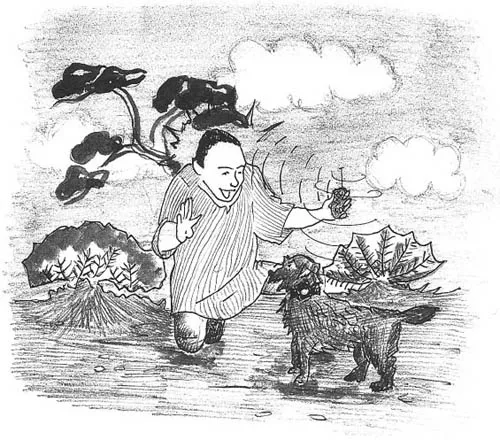
The Japanese pursuit of improving everything sometimes results in innovations that can hardly be invented by anybody else. In 2002, the major Japanese toymaker Takara offered for sale a portable dog-to-human language translation device that converts a dog’s bark into text. A sensor and a transmitter are built into the dog’s collar which sends a signal to a receiver used by the dog’s owner. The device sells for about US$110. According to the company, more than 250,000 units were sold in Japan during the product’s first year, although some are skeptical about this number. Former Prime Minister Jun’ichiro Koizumi has reportedly given it as a gift to the former Russian-President Vladimir Putin, a well-known dog lover.
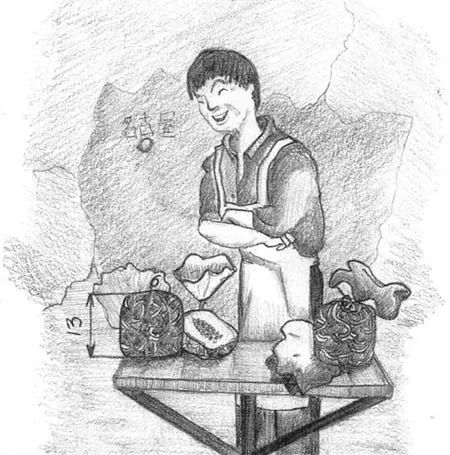
On 4 June 2006, the central Japanese newspapers wrote that Atsumi Agricultural High School in the small town of Tahara (Nagoya prefecture) had invented and cultivated cubic melons in a project that took four years. The cube-shaped melons taste the same as regular melons but are easier to transport. One melon costs 10,000 yen (about US$82) and the planned harvest is 50 pieces per season. (Yomiuri: 4 June 2006). The leader of the “cubic project” expressed hope that the new melon would stimulate the local economy. One could laugh at the news; is this worth four years of effort? But the leader was completely serious. He truly hoped that the logistical convenience and unusual shape of the melons could revive the economy of the small town. This is a very Japanese project in terms of scale.
Figure 1.2: Dog-to-human communication.
It is widely known that Japanese companies try to create a family atmosphere in the office by providing various bonuses to their employees in celebration of significant events in their lives. The company provides both moral and financial support to its employees when they get married, experience a happy event, suffer the death of a relative and on other significant occasions. Much as this is appreciated, companies would like to make it even better through the very Japanese way — via overall improvement and intensification.
Figure 1.3: Cube-shaped melon.
Pet food manufacturer Hills Colgate Japan started paying its employees one-time allowances and giving gifts on the occasion of a pet’s birth or death. The head of the company, Yoshio Koshimura, suggested that the pets of the employees should be considered as full members of their families. The employee gets 10,000 yen (about US$82) when he or she buys a pet or when the pet produces offspring. The same amount of money is paid to the employee on the death of the pet, together with a condolence letter and a day off for the funeral. To obtain the allowance, an employee has to present a picture of the pet and have its name registered. Within a few months of the rule taking effect in November 2005, 32 employees registered 30 dogs and 24 cats, with two of them having received the allowance.
In 1991, the Harvard Committee established the Ig Nobel Prizes to be awarded for improbable researches. The Ig Nobel Prizes are a parody of the Nobel prizes, but the laureates are real people who have invested much time, resources and effort on their discoveries and achievements. As of 2008, Japan has had 12 Ig Nobel laureates. In 1992, the prize was awarded for the discovery of the chemical components that make sweaty feet smell unpleasant; in 1997, for identifying how different chewing gums affect brain electromagnetic radiation; and in 1999, for inventing the substance that, when applied to men’s underwear, helps to reveal marital infidelity. Although amusing, the Japanese inventions are nevertheless very practical. One has to have a very special worldview to conduct research of this kind.
Winners of the genuine Nobel Prize are not as numerous as Ig Nobel Prize winners in Japan. In 2008, Japan was ranked 9th in the world for its number of Nobel laureates (nine winners in the category of natural sciences). The United States and Great Britain hold the top positions on the list (222 and 74 awards, respectively). Among the G8 countries, Japan was ahead of only Italy and Canada; its current status based on Nobel Prizes does not match Japan’s economic status in the world. “The government’s 2009 science and technology white paper shows that the foundation for basic science research is crumbling… From 1996 to fiscal 2010, the government earmarked more than ¥60 trillion for its three 5-year science and technology basic plans. But it is questionable whether the money spent so far has been used effectively to develop talented scientists. Of the scientific papers written in Japan, the average frequency of one of them being quoted was 0.94 times in 2007. The corresponding figure was 1.51 for the United States, 1.37 for Britain, 1.24 for Germany, 1.23 for Canada and 1.12 for France. The white paper says that frontline researchers lament the paucity of specialists in basic science” (The Japan Times: 30 June 2009).
The Most Creative of Imitators
Japan has experienced four waves of foreign influence throughout its history, each wave contributing to the development of her civilization. Between the seventh and ninth centuries, China served as the major information provider. From the mid-17th to the 19th century, scientific and technical knowledge was imported by Europeans, mainly the Dutch. In the second half of the 19th century, the United States and the developed European countries (England, France, the Netherlands and Germany) became the dominant influences. These co...