![]()
CHAPTER EIGHT
What’s the Plan?
LOGISTICS
MOST QUESTIONS that begin with “how, what, and where” fall under the umbrella of logistics. How much room will we need? What permits are required? Where is the water? Where are the electrical outlets? How will waste be handled? What regulations need our attention? What resources do we need to find? When do we set up; what is our sequencing? What supplies and equipment need to be ordered? Where will we park our cars and our trucks? Where do we place our staging areas? Do we need security or insurance riders? What happens if it rains? Answering these questions is the job for the detail-oriented, systematic thinkers in your group.
You’ll know you’ve got the right person for the job when he or she pulls out the Excel charts. A good logistics plan has a list of everything that needs to happen leading up to, during, and after the event. There are dates, times, and responsibilities attached to each task. Details are included with contact information, phone numbers, company names, and addresses. This comes in handy if, for example, the sound company is running late, or you’re ready to pay a vendor and need an address. This is not a task for the intuitive members of your team. It’s where the strategic thinkers shine.
Start with a map or blueprint and an Excel spreadsheet. First, decide where your event will take place and whose permission you need to use that space. Next, map out the dimensions or route of the event. If it’s a race, include detailed information about trails, roads, paths, bathrooms, and parking. If it’s a gala, draw out the ballroom and place the dance floor, tables and chairs, bars, coat rack, and parking, indicating clearly where you want them on that map. If the true measurements of your space aren’t readily available from the venue, find a measuring wheel to walk the space yourself and record the measurements on your sketch. This is not an area where you want to trust your intuition. Real numbers will guarantee success—or at least enough space for all your tables and chairs! If your event has a designated rain location, you will need two drawings: one for each space. The details should include the seating arrangement, showing the placement and size of the tables and the number of chairs at each; the locations for serving food and drinks, as well as the bussing stations for clearing tables, and the trash containers. Also include the placement of amenities, such as a check-in area, restrooms, and the entertainment stages. (Some people love graph paper for this job.) You’ll probably need this map if you are applying for a liquor license or working with a rental hall. Outdoor events will need a similar map.
Ask a person in the know about what permits you will need. City or county permit offices will be able to give you the correct information. Some permits take a while to obtain because the applications may need to go through committees or hearings before final approvals are granted. So start early, six to nine months ahead of the event. Permits that you might need include: permission to close or temporarily block streets and occupancy, alcohol or gaming, and parking permits.
The placements and sizes of tables and bars for an event held in a mall are precisely shown on graph paper.
Make friends with your fire chief! Any large gathering of people usually involves the fire department, which has regulations you will need to follow. Invite a representative or the fire marshal to walk through your plan and venue with you to make sure all regulations are followed and that you understand what is necessary to make the event safe. For instance, candles are usually a concern and, therefore, are highly regulated. Occupancy numbers fall under the fire regulations. If your event is outside, then allowing for a “fire lane,” or easy access to the site, will be required to protect the safety of your guests.
I have worked with extremely logistical thinkers. The first year of an event, the committee had designed a rustic theme with burlap and hay bales. The morning of the fundraiser we all met early to start to set up. A pickup truck arrived with the hay bales that were to become seats during the cocktail hour. We transformed the street into a country picnic! Then, around noon the fire marshal walked through the area. He commanded us to get rid of the hay bales and all unnecessary burlap. He said we couldn’t use candles, and all forty tables needed to be moved three feet west. I was grateful for our logistics’ team; they handled the demands with a smile, readjusting their plans along the way. And, as you might expect, the guests never knew how many last minute changes occurred.
Make friends with your health inspector. Serving food requires extra caution to prevent harming your guests. Adequate water for hand washing and food prep will be necessary. Hot food needs to stay at a proper temperature; so does cold food. If your event is outside, use a “hot” truck or hot boxes and a “cold” truck, all specially designed to meet these requirements. It is the responsibility of the chefs and caterers to meet food-service regulations, but be aware of this requirement.
Electricity is crucial at any event. Your map should show the locations of all outlets and what their capacity is. Even a golf tournament will probably need a microphone and a way to keep beer cold! Check with all your vendors: those supplying food, entertainment, and decorations. Make sure each has access to the right amount of power (110 or 220 volts), and that all cords are provided to meet power needs. You’ll also need to have mats or other ways to cover cords so your guests don’t trip on them!
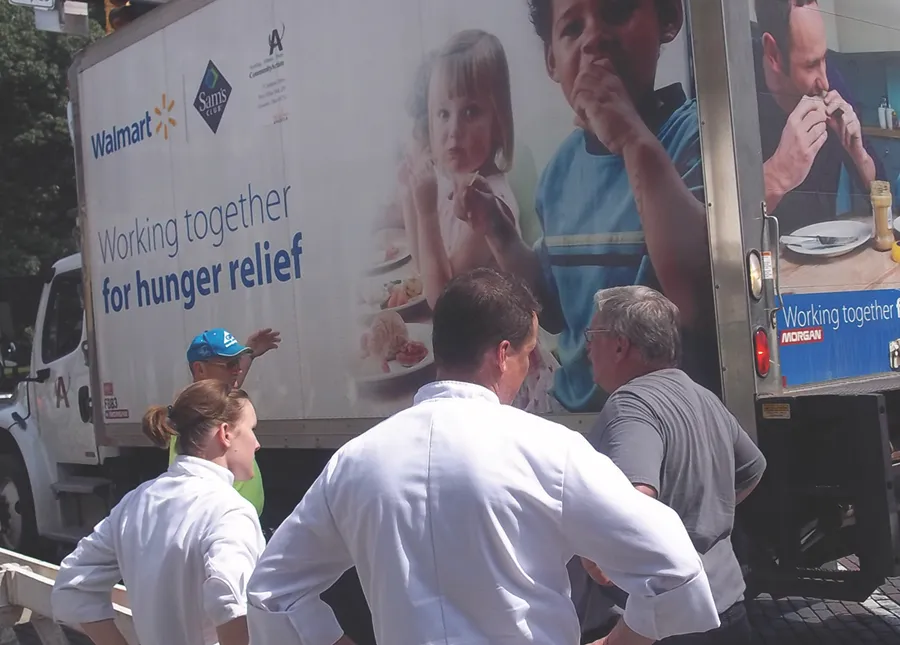
Southeast Ohio Foodbank loans hot and cold trucks from its Meals on Wheels program to caterers for an event. Photo courtesy of Jo Carpenter
If you choose to serve alcohol at your event, you’ll need to check your state requirements. Permits may take several months to gain approval. You will need a copy of the license before you order alcohol from your wholesaler. Each state will have its own regulations. (For example, in Ohio, wholesalers are not permitted to donate alcohol, unless you are selling it at auction.) Whether you serve alcohol or not, check with your insurance agent about the need for additional liability ...