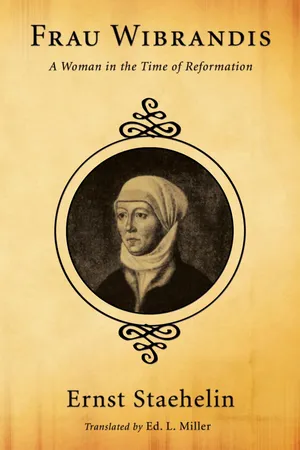
Frau Wibrandis
eBook - ePub

Frau Wibrandis

A Woman in the Time of Reformation

  1. 72 pages
  2. English
  3. ePUB (mobile friendly)
  4. Available on iOS & Android
eBook - ePub

Frau Wibrandis

A Woman in the Time of Reformation

About this book

The sixteenth century in Europe was a tumultuous time. It was the time of plagues, a time of wars, and a time of reformation. The Protestant Reformation was a decisive moment. We hear a great deal about men who shaped that time, such as Martin Luther, John Calvin, Ulrich Zwingli, Thomas Butzer, and innumerable others. But who were the women who stood behind those men? One of them was Wibrandis Rosenblatt.Hers is a remarkable story. She married and buried four men in succession, all of them Protestant reformers. She endured the daily hardships and annoyances of the Protestant parsonage. She cracked the whip on a wayward son. She liked family outings, especially during the grape harvest. Eventually she was swept away by the plague of 1564. Through all this, Wibrandis was a faithful witness to Christianity. The author of Frau Wibrandis, Ernst Staehelin, was a church historian and a professor at the University of Basel. He himself was Swiss and a descendent of Wibrandis.ĂŚĂŚĂŚĂŚĂŚĂŚĂŚĂŚFrom the Translator's Preface: Wibrandis is the story of a woman in a man's world, almost totally eclipsed by the illustrious men in her life. She bore the brunt of it.

Frequently asked questions

Yes, you can cancel anytime from the Subscription tab in your account settings on the Perlego website. Your subscription will stay active until the end of your current billing period. Learn how to cancel your subscription.
No, books cannot be downloaded as external files, such as PDFs, for use outside of Perlego. However, you can download books within the Perlego app for offline reading on mobile or tablet. Learn more here.
Perlego offers two plans: Essential and Complete
  • Essential is ideal for learners and professionals who enjoy exploring a wide range of subjects. Access the Essential Library with 800,000+ trusted titles and best-sellers across business, personal growth, and the humanities. Includes unlimited reading time and Standard Read Aloud voice.
  • Complete: Perfect for advanced learners and researchers needing full, unrestricted access. Unlock 1.4M+ books across hundreds of subjects, including academic and specialized titles. The Complete Plan also includes advanced features like Premium Read Aloud and Research Assistant.
Both plans are available with monthly, semester, or annual billing cycles.
We are an online textbook subscription service, where you can get access to an entire online library for less than the price of a single book per month. With over 1 million books across 1000+ topics, we’ve got you covered! Learn more here.
Look out for the read-aloud symbol on your next book to see if you can listen to it. The read-aloud tool reads text aloud for you, highlighting the text as it is being read. You can pause it, speed it up and slow it down. Learn more here.
Yes! You can use the Perlego app on both iOS or Android devices to read anytime, anywhere — even offline. Perfect for commutes or when you’re on the go.
Please note we cannot support devices running on iOS 13 and Android 7 or earlier. Learn more about using the app.
Yes, you can access Frau Wibrandis by Staehelin, Miller in PDF and/or ePUB format, as well as other popular books in Theology & Religion & Religion. We have over one million books available in our catalogue for you to explore.

Information

1

Basel and Strasbourg

Zurich, Basel, and Strasbourg formed the great centers of the Reformation movement in the region of the upper Rhine.1 The Reformers of these three cities formed a close alliance that fought the great battle of faith.
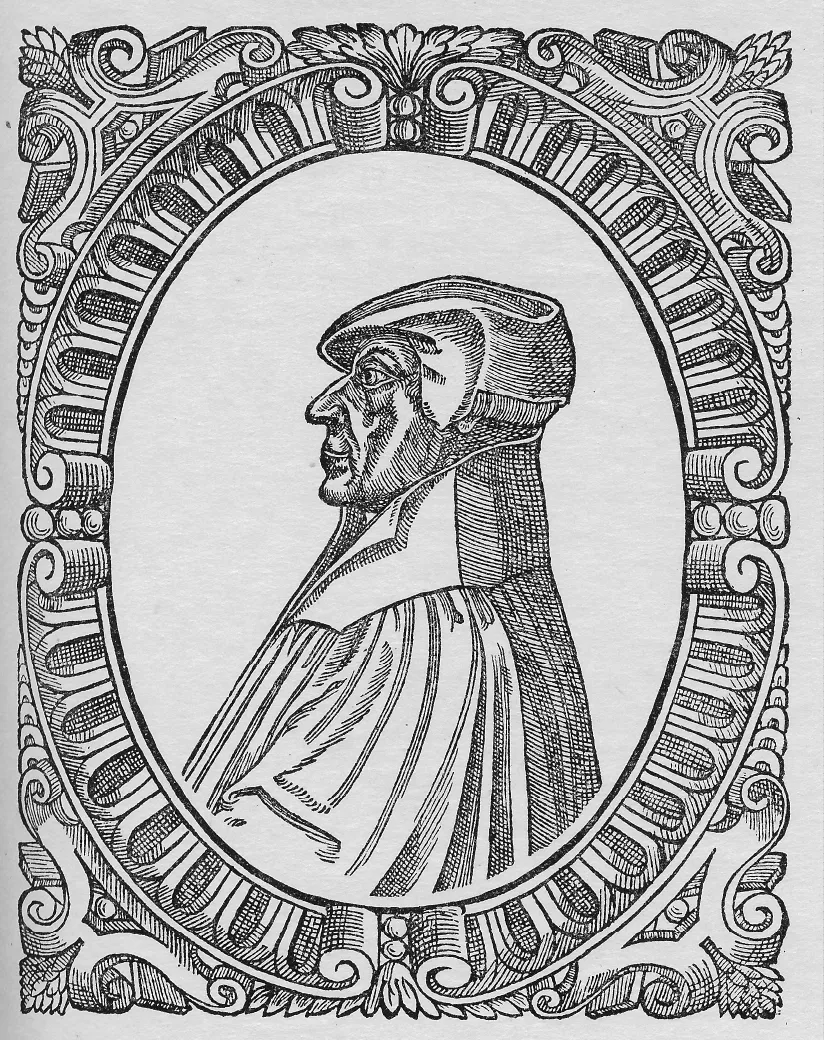
Oecolampadius.tif
Johannes Oecolampadius
The bond between the Zurich Reformer, Ulrich Zwingli,2 and the Basel Reformer, Johannes Oecolampadius,3 is well-known. No sooner had Oecolampadius arrived in November 1522 for his last sojourn in Basel before he turned to the bold leader in Zurich:
Who could not regard as friend one who so zealously defends the things of Christ, who so faithfully tends his sheep, whom the wolves must greatly fear, who positions himself as a strong wall before the house of Israel, who, in word and deed, exemplifies to us the old men of faith. . . . Fight on and be victorious! I don’t mean for your own sake, for that certainly isn’t what you want. You know the passage: “Let each of you look not to your own interests, but to the interests of others.”4 So, be victorious for Christ.
Dear Zwingli, may our solidarity in Christ be established through this little letter.5
Thus, the two men found each other. From now on they fought together for the renewal of the church in the Swiss Federation, and together they grappled with Luther6 over the interpretation of the Lord’s Supper. In fact, even their callings from the earthly theater occurred in common: A few weeks after Zwingli’s death on the battlefield of Kappel,7 Oecolampadius also died. The cause was blood poisoning occasioned by an abscess, though his shock over the catastrophe of the Kappel War must have also left its mark.
Zwingli.tif
Ulrich Zwingli
No less important was Oecolampadius’ relation to the Reformers of Strasbourg: Matthäus Zell, Wolfgang Fabricius Capito, Martin Bucer, and Kaspar Hedio. Especially with Capito8 and Bucer,9 he formed a close circle of friendship as well as a partnership of thought and work.
The relationship between Oecolampadius and Capito was established about 1514: Oecolampadius was studying Greek and Hebrew in Heidelberg while Capito held the office of Preacher in Bruchsal. From that time they were closely associated. In January 1522, Oecolampadius fled the Alto Münster monastery10 to escape silencing by his adversaries and went into hiding temporarily; Capito arranged with his master, the Archbishop of Mainz and Madgeburg, for an immediate leave, and rushed from Halle in an exhausting ride south to search out and possibly rescue his friend from the plottings of his enemies. The way led him also to Mainz, and to Kasper Hedio who, at the time, was Cathedral Preacher there. What a surprise and pleasure it was when Capito found the refugee in congenial conversation with Hedio! Soon all three were working in the two allied sister cities on the upper Rhine: Oecolampadius became Professor in Basel, and, at the same time, Pastor at St. Martin’s Church and later at the Cathedral11; Capito moved to Strasbourg as Provost of St. Thomas’ Stift,12 and soon also took over the office of Preacher at New St. Peter’s, as well as Theological Lecturer. In a copious exchange of letters, they supported one another in their struggles and troubles. And when Oecolampadius died, Capito took it on himself to finish and publish Oecolampadius’ uncompleted commentaries on the Prophets Jeremiah and Ezekiel.
Oecolampadius’ connection with Martin Bucer began when the latter came to Strasbourg as a refugee preacher, and, in 1524, became Pastor at St. Aurelien’s. An increasingly close working relationship developed. Together they struggled for the independence of the church over against the state, for the introduction of the Office of Elders of the Church, and for the maintenance of discipline within the church. Together, they sought to prevent the split of Protestantism into a Lutheran faction and a Reformed faction.13 Together, they laid the foundation for the reorganization of the Waldensian Church.14 Together, in the summer of 1531, along with Ambrosius Blarer of Constance,15 they carried out the Reformation of the city and region of Ulm. Soon after Oecolampadius died, Bucer wrote to Blarer:
You are rightly shaken by Oecolampadius’ passing. We had no greater theologian than him, and his whole concern was the formation of a pure Church.
Hand in hand with these connections between Strasbourg and Basel, there are others.
The City Chancellor of Basel, Kasper Schaller, a leading personality in Basel at that time, hailed from Strasbourg and maintained important connections with the men of influence in his hometown. He visited there often to discuss and settle common concerns.
A connection between Basel and Strasbourg was also established through Konrad Hubert from Bergzabern. As a youth he was Oecolampadius’ secretary, and for many years, on Ember Day,16 he fetched Oecolampadius’ professor’s pay at the city treasury. In 1529, Oecolampadius released him so he could be a proper student, but then on the occasion of his trip to Ulm took him along once more. There, Bucer met him and persuaded him to become his own assistant at St. Thomas’ in Strasbourg, and also immediately produced for him a godly wife from Constance. Pastor Konrad and his wife, Margaretha, would be pillars of Reformed Strasbourg well into the second half of the sixteenth century.
In this partnership of struggle and labor on behalf of the church of Jesus Christ linking Basel and Strasbourg, stood the remarkable Wibrandis Rosenblatt.
Blarer.tif
Ambrosius Blarer
1. The Rhine River flows out of Lake Constance northward to Mainz; its head­waters lie in the Alps, whence it flows into the east end of Lake Constance.
2. Ulrich Zwingli (1484–1531) was a native of Switzerland, educated at Bern, Basel, and Vienna, and was ordained to the Roman Catholic priesthood in 1506. Through the influence of the great Roman Catholic humanist, Erasmus, he became critical of church abuses. In 1518, he was appointed Minister in Zurich where he remained the rest of his life. Here he inaugurated ecclesiastical and political reforms, wrote many influential works, and led Zurich into the Reformed movement that was gaining momentum in Switzerland. He was killed in the Second Battle of Kappel (Reformers vs. Catholics) in 1531.
3. Johannes Oecolampadius (1482–1531), originally “Huszgen,” which was refashioned into “Hausschein,” “light of the house,” and then Latinized into “Oecolampadius,” hailed from Weinsberg, Germany. He was educated in Weinsberg, Heilbronn, and Heidelberg, and appointed Priest in Weinsberg. At one point he joined a monastery, but fled it because of his own increasingly Reformed ideas. He made several sojourns in Basel where he assisted Erasmus in producing the first printed edition of the New Greek Testament, and where he finally settled as a theology professor, pastor, and leader of the Reformation in that city.
4. Phil. 2:4 (all scripture quotations are from the New Revised Standard Version).
5. Johannes Oecolampadius (1482–1531), originally “Hu...

Table of contents

  1. Title Page
  2. Translator’s Introduction
  3. Chapter 1: Basel and Strasbourg
  4. Chapter 2: Wibrandis’ Origins
  5. Chapter 3: With Oecolampadius in Basel
  6. Chapter 4: With Capito in Strasbourg
  7. Chapter 5: With Bucer in Strasbourg
  8. Chapter 6: Years of Exile: England
  9. Chapter 7: A Widow in Strasbourg and Basel
  10. Chapter 8: Children and Grandchildren
  11. Picture Credits
  12. Bibliographical Note