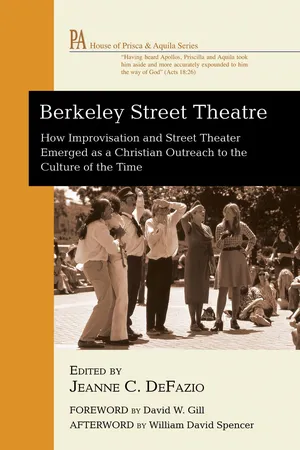
eBook - ePub
Berkeley Street Theatre
How Improvisation and Street Theater Emerged as a Christian Outreach to the Culture of the Time
- 148 pages
- English
- ePUB (mobile friendly)
- Available on iOS & Android
eBook - ePub
Berkeley Street Theatre
How Improvisation and Street Theater Emerged as a Christian Outreach to the Culture of the Time
About this book
Berkeley Street Theatre chronicles Christian World Liberation Front's 1969-1975 ministry to the counterculture. Founded by Jack Sparks, CWLF was featured in the June 1971 Time Magazine's epic "Jesus Revolution" edition. Reverend Billy Graham sponsored the CWLF outreach and referred to CWLF as a highly effective outreach to the counterculture. The book included a foreword by David W. Gill, former CWLF leader, scholar, and author, contributing chapters from BST's members: Gene Burkett, Charlie Lehman, Susan Dockery Andrews, Father James Bernstein, and Jeanne DeFazio, editor of the book. Part Two of this work outlines Christian Guerilla theater following the timeline of BST with contributing chapters from: JMD Myers, Joanne Petronella, Jozy Pollock, Olga Soler, and Sheri Pedigo. William David Spencer's afterword details the cultural contributions of the Jesus movement. This book will appeal to the baby boom generation as well as millennials. It is a resource work for anyone interested in religious history, Christian theater and the arts, and in how baby boomers embraced the Jesus Movement. The photos of BST's Sproul Plaza performances will charm all readers.
Tools to learn more effectively

Saving Books

Keyword Search

Annotating Text

Listen to it instead
Information
Part 1
Christian Guerilla Theater Then
1
Berkeley Street Theatre
The Jesus Revolution and the California Dream Merge in a Dramatic Outpouring of the Holy Spirit
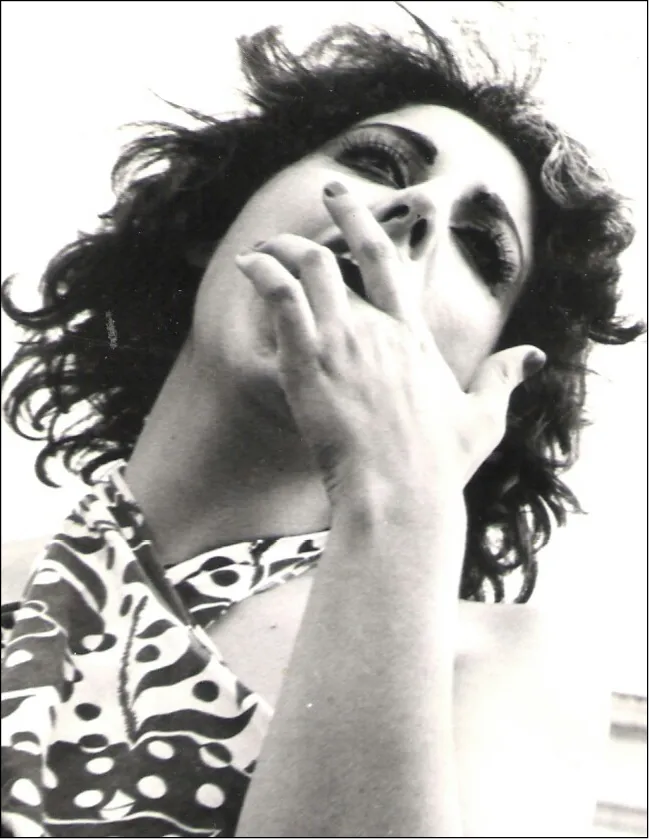
Jeanne DeFazio performing in Choose or Lose on Sproul Plaza, at the UC Berkeley Campus, 1974
In the mid-1970s, many ideologies and cultures merged on Sproul Plaza, the gateway to the UC Berkeley Campus. Clancy Dunigan describes Berkeley Street Theatre’s integral part of that cultural mix:
The 1970s, the Berkeley Campus was a cauldron of activism, and lunch table politics of the right, left, and center. Berkeley Street Theatre was part of the mix, along with religious outlaws, former university professors, Marxists, gay and straight activists, Jews for Jesus, Anabaptists, Southern Folk, Bronx Puerto Ricans, New York Theater Actors, Floridians seminary trained, marrieds, ex-addicts, and all true believers around the USA. Berkeley-bound, they took buses, planes, cars, or bummed rides looking for the kindness of strangers spiced with God’s grace and street savvy lessons. There were PhDs, BAs, no degrees, and a few Bible college professors. Mars Hill could have been next door, but instead it was the Berkeley Free Kitchen, where Steve Jobs also bummed and ate. Get the picture?1
The California Dream
In the dedication of the book entitled Creative Ways to Build Christian Community, I reflect on the impact of this California awakening on my spiritual journey: “This book is dedicated to all those who feel God tugging at their heartstrings to serve him. If you are feeling unworthy to serve God, you are not alone. My youth was spent in the time and state of ‘California Dreamin’.’”2 The 1970s’ mass migration to the UC Berkeley campus was a direct result of the unique phenomenon known as the California Dream, which historically identified the desire to “get rich quick” during the California Gold Rush Days (1849). By the administration of Governor Edmund G. Brown Jr., it manifested as a tuition-free, world-class University of California education. I attended UC Berkeley in 1971 and in 1974 graduated from the University of California at Davis. After graduation, I visited the Berkeley campus, and saw a production of Berkeley Street Theatre on Sproul Plaza. I was struck by the authenticity of the performance and shocked that there was a Christian message. After the performance, I spoke with the actors and asked if I could join the group. Just previous to joining, I met Jack Sparks, founder of the high profile Christian World Liberation Front, on Telegraph Avenue. He smiled at me and sensed the burden in my heart. I looked at all the people in the street and said, I don’t know how to help these people. If you had seen Telegraph Avenue in the 1970s, you would understand. It was the boulevard of the broken California Dream for so many runaways and lost souls. I recall the sad looking young people strung out on drugs, lying on the street, while Krishna devotees, wearing orange togas, chanting and drumming with shaved heads, passed among them. So many displaced young people looking for the California Dream found their way to the Telegraph Avenue street scene. Many needy and lost people lived a nightmare on the streets. Jack understood my concern and assured me that God would use me to reach the heartbroken for Jesus as an actress in Berkeley Street Theatre. With Jack’s encouragement, in 1974, I joined Berkeley Street Theatre, eager to use my passion for theater to reach the disenchanted and despairing with the message of Jesus’s redemptive love.
Asked in the troupe’s newsletter to share my thoughts and feelings as a Christian doing street theater for the first time, I concluded: When I recall the huge responsive audiences, all the wonderful people I have met, and the honor that it has been to serve God with my work, I am most happy.3
Looking back, it is clear that my journey to Berkeley Street Theatre was providential. Reared in a large Italian/Spanish Roman Catholic family, I felt the love and presence of Jesus when I was a child attending Roman Catholic schools and the Catholic Church. As a junior at the University of California, I said the “sinner’s prayer” with a “born again” friend, expecting nothing at all like what happened. As C.S. Lewis described in his autobiographical work, Surprised by Joy,4 I felt Jesus’s presence and great joy, and began attending both Catholic charismatic as well as Protestant evangelical services.5
Through all the twists and turns of my spiritual journey, the Holy Spirit impressed upon me the words of Exodus 23:20: “I am going to send an angel in front of you, to guard you on the way and to bring you to the place that I have prepared” (NRSV). I realize now that these performing artists were “angels”6 who God sent to guide me. Each day as I joined with this group to rehearse under the direction of Gene Burkett, I learned the craft of street theater. In Berkeley Street Theatre I had the opportunity to pray and to grow spiritually in a community of unusually forward-minded and caring performers who put their hearts and souls into making their own Christian experience real to audiences.
One Whole Earth Day in the spring of 1975, Berkeley Street Theatre performed on the University of California Davis campus. My parents attended the performance and had mixed feelings. They invited the Berkeley Street Theatre members to lunch after the performance. In conversation afterward, my father complimented my friends from Berkeley Street Theatre. He did not understand the drive to create alternative theater, but he discerned in that group genuinely positive young people who were living out their convictions in an innovative and interesting way. I had supported myself as a waitress in local Berkeley restaurants and coffee houses while participating in Berkeley Street Theatre. After seeing the performance, my dad supported my experience by paying down my student loans each month. That was a big thing for him to do at the time.
Berkeley Street Theatre’s Dramatic Outpouring of the Holy Spirit
In 2010, I met with former Berkeley Street Theatre members in a coffee house on Shattuck Avenue in Berkeley, California. Over three decades later, we paused to reflect on Berkeley Street Theatre and the lasting impact of the Jesus Movement: the contemporary Christian music and literature explosion in the 1960s and 1970s, which led to widespread Christian TV, radio, and other media entertainment after the 1970s. While we chatted, very polished and polite young Asian tourists at an adjacent table took our photos and asked me questions about us. I explained that Berkeley Street Theatre was a talented and prayerful team that successfully brought youth to Jesus. How? Revelation 12:11 explains it: “We were victorious by the blood of the Lamb and the word of his testimony” (Aramaic Bible in Plain English). I want to conclude by encouraging readers to use their performing talents in Christian outreach on the streets. If I can help you in anyway contact me: jcdefazio55@gmail.com.
Resources
View LeaAnn Pendergrass’s Uniting the Nations interview with Jeanne DeFazio: https://www.youtube.com/watch?v=nSFMoAJuPRk. View LeaAnn Pendergrass interview of Gemma Wenger: http://www.thecrosstv.com/media-gallery/918-uniting-the-nations-6-16-15?category_id=237.
1. Clancy Dunigan, Street Theatre member, interview by email, December 2010.
2. “California Dreamin’” is a song written by John Phillips and Michelle Phillips in 1963, and made famous by The Mamas and the Papas.
3. Berkeley Street Theatre Newsletter, Spring 1975.
4. Lewis, Surprised by Joy, vii.
5. DeFazio and Spencer, Redeeming the Screens, xiv–xv. “Used by permission of Wipf and Stock Publishers.” www.wipfandstock.com.
6. Malak, a messenger specifically of God, short definition: angel. The word occurs 213 times in the Old Testament, James Strong’s Exhaustive Concordance #4397, www.bibletools.com.
2
Choose or Lose

Left to right: Gene Burkett, Peggy Vanek-Titus, Jeanne DeFazio, Clancy Dunigan, Bill Shepherd, Charlie Lehman, Susan Dockery, and Carol Rowley in The Museum
Eugene H. Burkett (Gene) was a member of Christian World Liberation Front from 1972 to 1975, director of the Berkeley Street Theatre, and member of the CWLF Leaders Council. He graduated from South Dade High School in Homestead, Florida in 1966. In 1970, he received a BA in Speech from the University of South Florida in Tampa and went on to complete an MA in Speech from the University of South Florida in 1972. He received a California Community College Teaching Credential and a California Adult School Teaching Credential in 1976, and became an agent for John Hancock Life Insurance Company in Oakland, CA in 1977. In 1978, Gene qualified for a California Life and Health Insurance License. Gene has worked for Insurance Link in Capitola, CA since 1991, becoming the owner and president in 2008. He also received CASA (Court Appointed Special Advocate) training and certification in Santa Cruz, CA in 1996. In 2008, Gene became a Life in Learning Institute (LILI) graduate in insurance leadership training, which is part of the National Association of Financial Advisors. He completed Dominican Hospital Auxiliary Training and Certification in Santa Cruz, CA in 2009. From 2009 to 2011, Gene’s further educational experience included church leaders’ training and vision planning, various vocal choir singing, chanting and choir directors’ workshops and seminars, and dozens of continuing education classes to maintain a California insurance license.
Gene is married to Peggy (Anna) Burkett and they have four children: David, Justin, Erik, and Catherine. Gene and Anna have three grandchildren and have lived in Felton, CA since 1984. Gene is a member of St. Lawrence Orthodox Church in Felton where he sings in the choir, is a cantor, and is the director of the social committee. He is a member of the National Association of Insurance and Financial Advisors (NAIFA). He is a past president of his local association and is currently its National Committeeman.
I recently contacted Gene Burkett for the first time in thirty years. He responded immediately. It was almost as if I was that twenty-five-year old amateur actress again. Each time I asked Gene for artistic advice on this project he responded with amazing guidance. Gene is low key and brilliant. He does not advertise his talent; instead, he gets you to be the best you can be. Here is his story.
I came to Berkeley in the fall of 1972 just after receiving an MA in Speech with an emphasis in Oral Interpretation that summer. I spent the previous four years in college in performance, and directing fiction and nonfiction adapted for the stage. My former college roommate Frank Couch had started a street theater in Berkeley with the Christian World Liberation Front. Frank asked me to come to Berkeley and join him.
I joined CWLF7 at this time, when I was searching for a meaningful Christianity. I wanted a faith that related to my entire being. I needed something much more than attending church on Sunday and then having an unrelated secular life for the rest of the week. I wasn’t really a radical, nor did I really relate to the countercultural scene. To paraphrase David in Psalm 28:7: Th...
Table of contents
- Title Page
- By the Same Authors
- Acknowledgments
- Foreword by David W. Gill
- Introduction by Jeanne DeFazio
- Part 1: Christian Guerilla Theater Then
- Part 2: Christian Guerilla Theater Now
- Afterword by William David Spencer
- Bibliography
Frequently asked questions
Yes, you can cancel anytime from the Subscription tab in your account settings on the Perlego website. Your subscription will stay active until the end of your current billing period. Learn how to cancel your subscription
No, books cannot be downloaded as external files, such as PDFs, for use outside of Perlego. However, you can download books within the Perlego app for offline reading on mobile or tablet. Learn how to download books offline
Perlego offers two plans: Essential and Complete
- Essential is ideal for learners and professionals who enjoy exploring a wide range of subjects. Access the Essential Library with 800,000+ trusted titles and best-sellers across business, personal growth, and the humanities. Includes unlimited reading time and Standard Read Aloud voice.
- Complete: Perfect for advanced learners and researchers needing full, unrestricted access. Unlock 1.4M+ books across hundreds of subjects, including academic and specialized titles. The Complete Plan also includes advanced features like Premium Read Aloud and Research Assistant.
We are an online textbook subscription service, where you can get access to an entire online library for less than the price of a single book per month. With over 1 million books across 990+ topics, we’ve got you covered! Learn about our mission
Look out for the read-aloud symbol on your next book to see if you can listen to it. The read-aloud tool reads text aloud for you, highlighting the text as it is being read. You can pause it, speed it up and slow it down. Learn more about Read Aloud
Yes! You can use the Perlego app on both iOS and Android devices to read anytime, anywhere — even offline. Perfect for commutes or when you’re on the go.
Please note we cannot support devices running on iOS 13 and Android 7 or earlier. Learn more about using the app
Please note we cannot support devices running on iOS 13 and Android 7 or earlier. Learn more about using the app
Yes, you can access Berkeley Street Theatre by Jeanne C. DeFazio, DeFazio in PDF and/or ePUB format, as well as other popular books in Théologie et religion & Ministère chrétien. We have over one million books available in our catalogue for you to explore.